Mushfiq

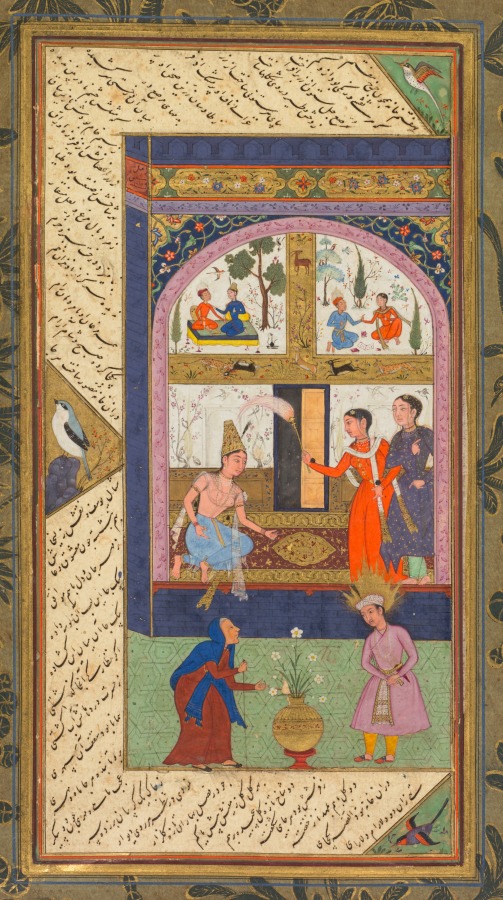
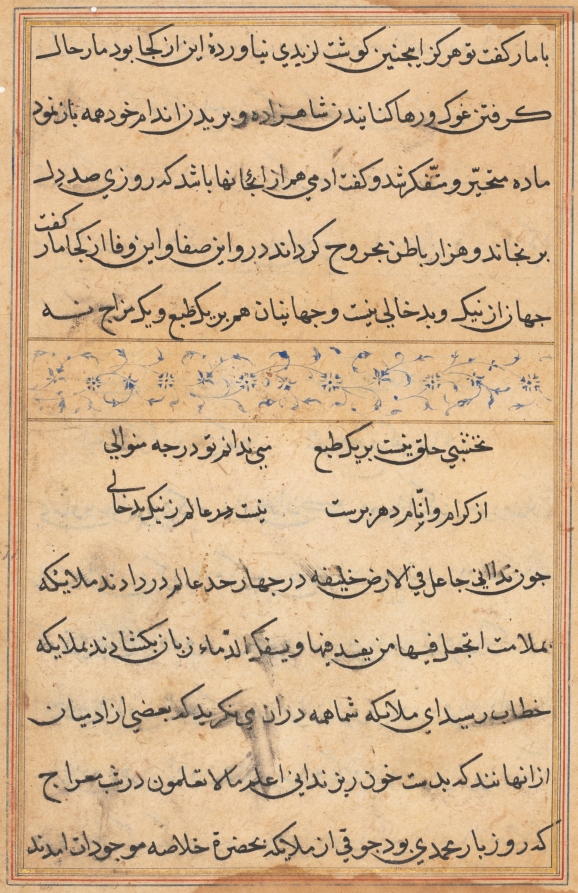
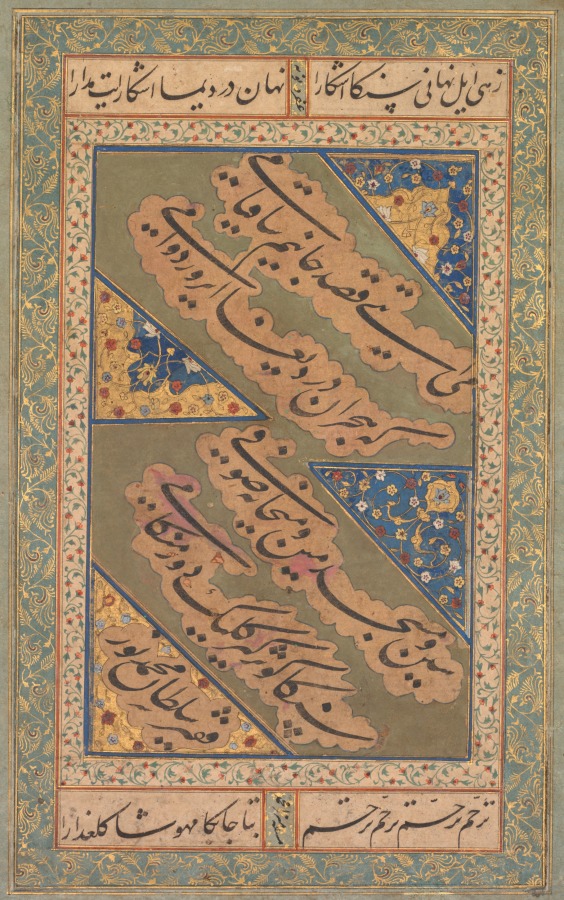
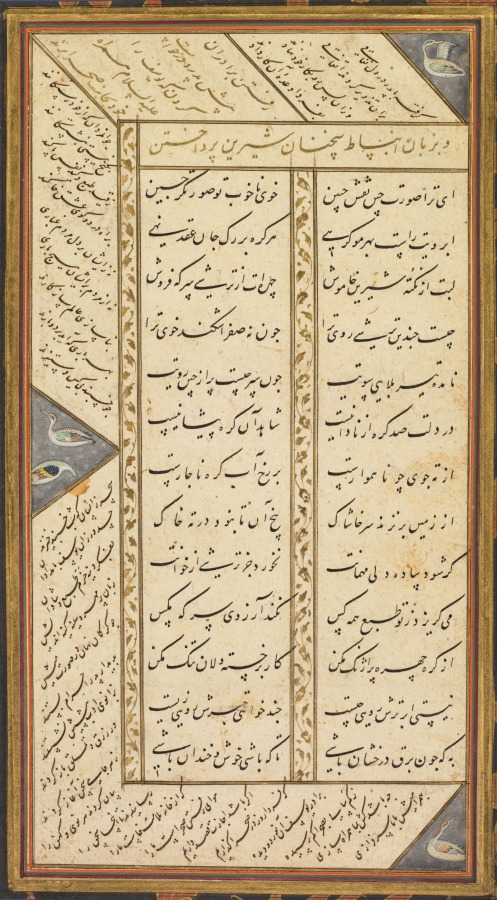
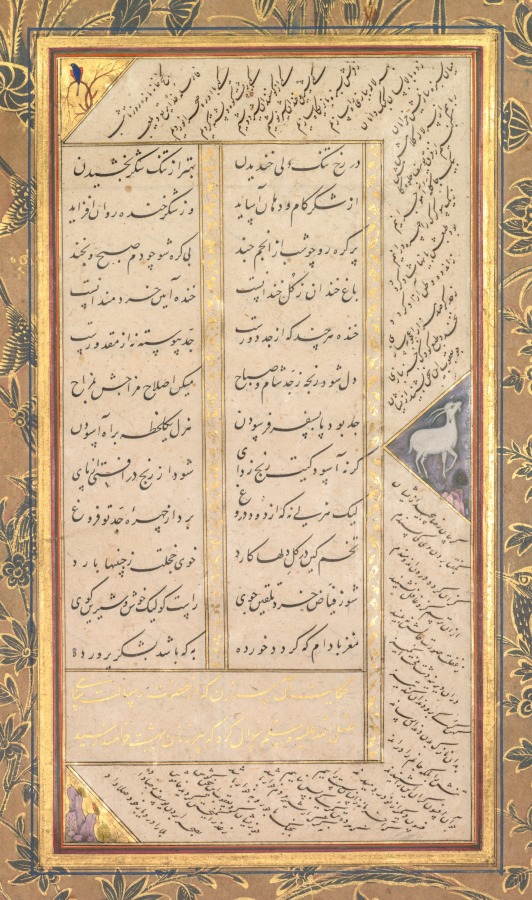
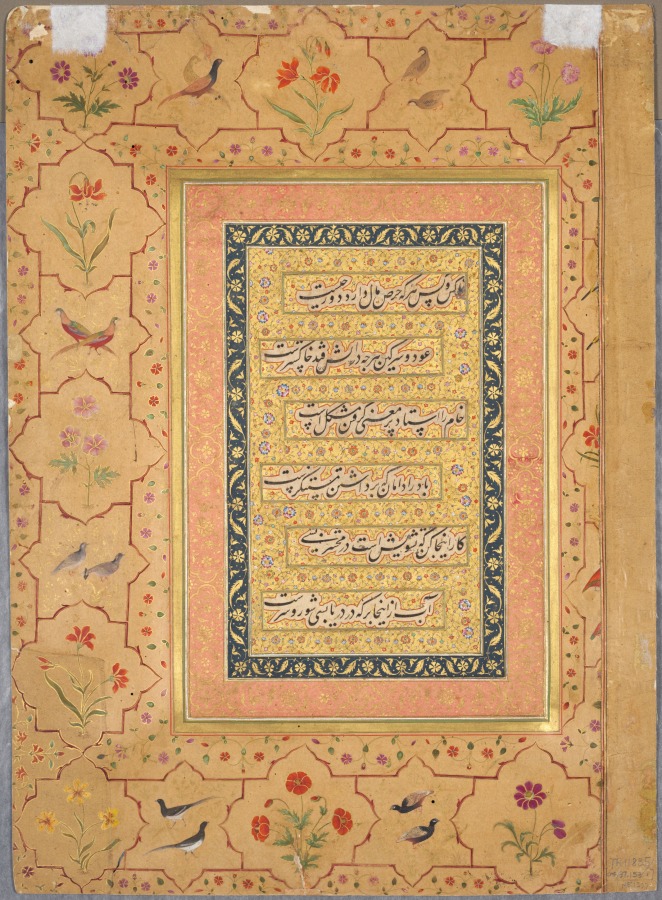
Illuminated page (verso), from a Panj Ganj (Five Treasures) of Abd al- Rahman Jami (Persian, 1414–1492) with two Persian masnavis: Yusuf va Zulaykha (Joseph and Zulaykha) and Khirad-nama-i Iskandari (Alexander’s Book of Wisdom)

1603–7
Gum tempera, ink, and gold on paper

SEE IT IN PERSON

Not currently on view

In the collection of Cleveland Museum of Art, Cleveland · as of July 2026

View at clevelandart.orgPlan a visit ↗

Discussion

FROM THE CLEVELAND MUSEUM OF ART’S CATALOG

This section of text from Jami’s poem of Joseph and Zulaykha, written diagonally in the margins, describes the beauties of Zulaykha’s house, in which she intends to seduce Joseph. It includes the following verses: Jeweled lamps on the walls were hung / And odorous herbs were beneath them flung. / She gathered together all things most fair, / And unrolled the carpet of pleasure there. / But amid the charms of the sumptuous hall / She longed only for Joseph, far dearer than all. / A heavenly palace is dark and dim / To a lover whose darling is far from him. The longing of Zulaykha for Joseph metaphorically describes an imperfect devotee’s mystical love for God. With patience, forbearance, and virtuous actions, unification with the divine will eventually occur, even for the most flawed among us. On this page also begins the Khirad-nama-i Iskandari (Alexander’s Book of Wisdom), another of the five narrative poems that make up the Panj Ganj .

Source ↗

Be the first to share your thoughts.

Sign in to join the discussion.

Community guidelines

More by Mushfiq

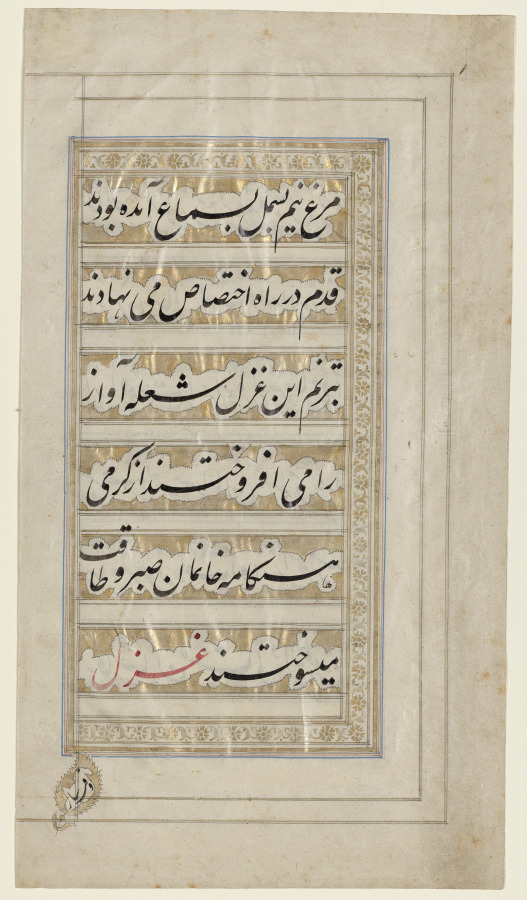
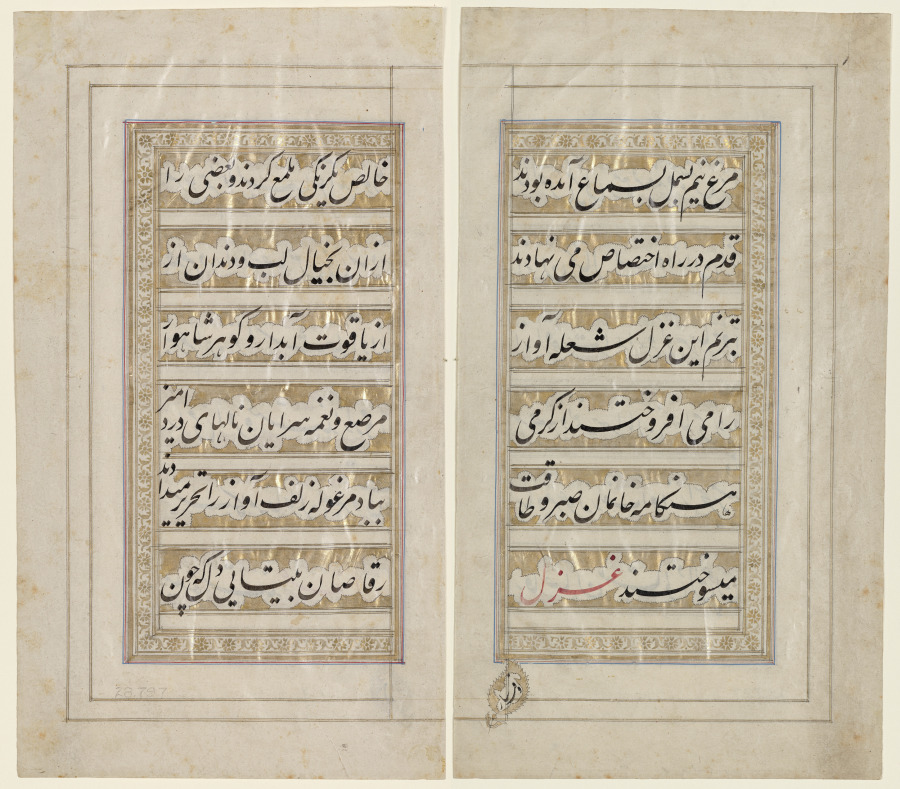
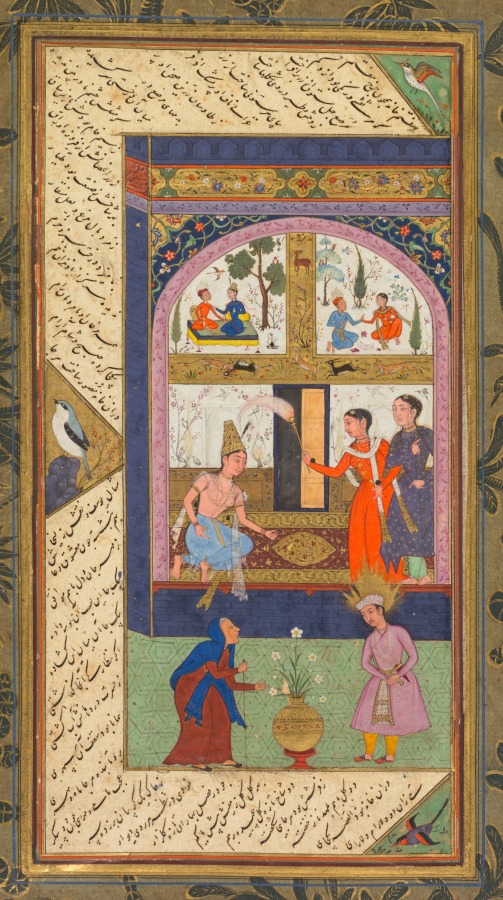
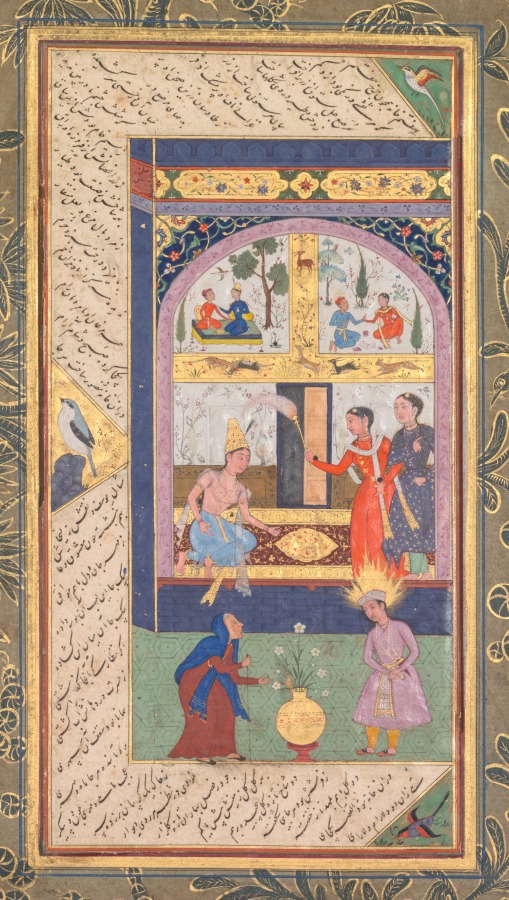
Zulaykha in her palace and as an old woman with Joseph, from a Panj Ganj (Five Treasures) of Abd al-Rahman Jami (Persian, 1414–1492); verso from a Panj Ganj of Abd al-Rahman Jami (Persian, 1414–1492), with two masnavis: Yusuf va Zulaykha (Joseph and Zulaykha) and Khirad-nama-i Iskandari (Alexander’s Book of Wisdom)Zulaykha in her palace and as an old woman with Joseph, fromFolios A and B from the "Five Treasures" (Panj Ganj) of JamiFolios A and B from the "Five Treasures" (Panj Ganj) of JamiZulaykha in her palace and as an elderly woman with Joseph (recto), from a Panj Ganj (Five Treasures) of Abd al- Rahman Jami (Persian, 1414–1492)Zulaykha in her palace and as an elderly woman with Joseph (Folio B: Folio from the "Five Treasures" (Panj Ganj) of Jami (recto)Folio B: Folio from the "Five Treasures" (Panj Ganj) of JamiPage from the Panj Ganj (Five Treasures) of Abd al-Rahman Jami (Persian, 1414–1492), with two Persian masnavis (narrative poems): Yusuf va Zulaykha (Joseph and Zulaykha) and Subhat al-abrar (Rosary of the Righteous)Page from the Panj Ganj (Five Treasures) of Abd al-Rahman JaPage from a Panj Ganj (Five Treasures) of Abd al-Rahman Jami (Persian, 1414–1492), with two Persian
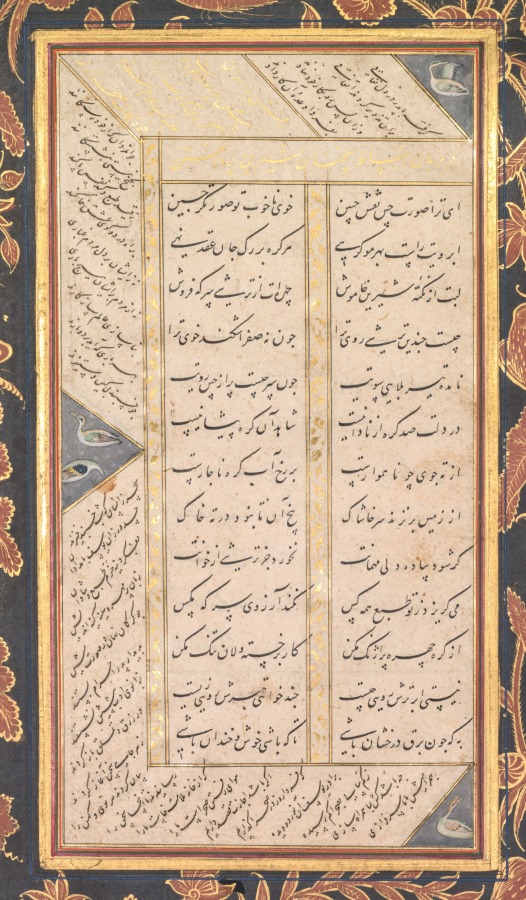
masnavis: Yusuf va Zulaykha (Joseph and Zulaykha) and Subhat al-abrar (Rosary of the Righteous) (verso)Page from a Panj Ganj (Five Treasures) of Abd al-Rahman Jami
More like this

An Illuminated Folio from the Royal Manuscript of the Farhang-i Jahangiri (recto)An Illuminated Folio from the Royal Manuscript of the FarhanFrom the Farhang-i Jahangiri (Persian-language Dictionary) compiled by Mir Jamal al-Din Husayn Inju of Shiraz (Persian, d. 1626)From the Farhang-i Jahangiri (Persian-language Dictionary) cCalligraphy (verso)Calligraphy (verso)Poetry Fragment (Qit'a) written in Nasta'liq ScriptIslamic — Poetry Fragment (Qit'a) written in Nasta'liq ScripCalligraphy framed by an ornamental border with poppies and pairs of birds, from the Late Shah Jahan Album  (verso)Calligraphy framed by an ornamental border with poppies and Page of Shikasta Nasta'liq Calligraphy with Floral MarginsAbdul Majid Talaqani — Page of Shikasta Nasta'liq CalligraphPage from the Poem of Beauty and LovePage from the Poem of Beauty and LovePage from the Poem of Beauty and LovePage from the Poem of Beauty and LoveAn Illuminated Folio from the Royal Manuscript of the Farhang-i Jahangiri (verso)An Illuminated Folio from the Royal Manuscript of the FarhanPage from a manuscript in Nasta'liq with an illuminated borderIslamic — Page from a manuscript in Nasta'liq with an illumiText of Rustam and Suhrab, from the Shah-nama of Firdausi (Persian, c. 934–1020) (recto)Text of Rustam and Suhrab, from the Shah-nama of Firdausi (PPage from Tales of a Parrot (Tuti-nama): text pagePage from Tales of a Parrot (Tuti-nama): text page