Mushfiq

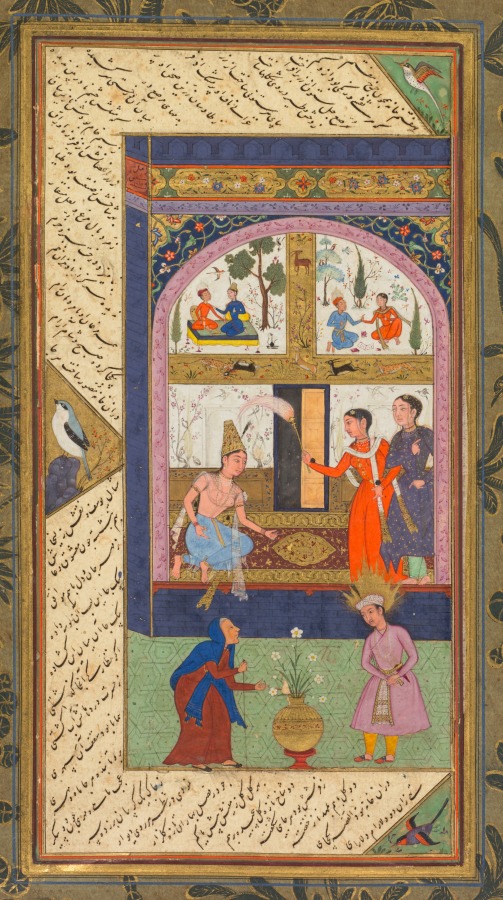
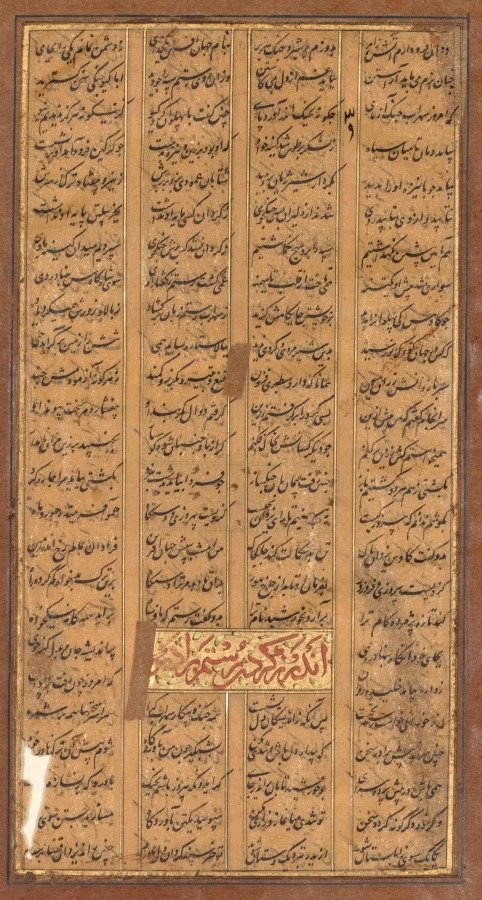
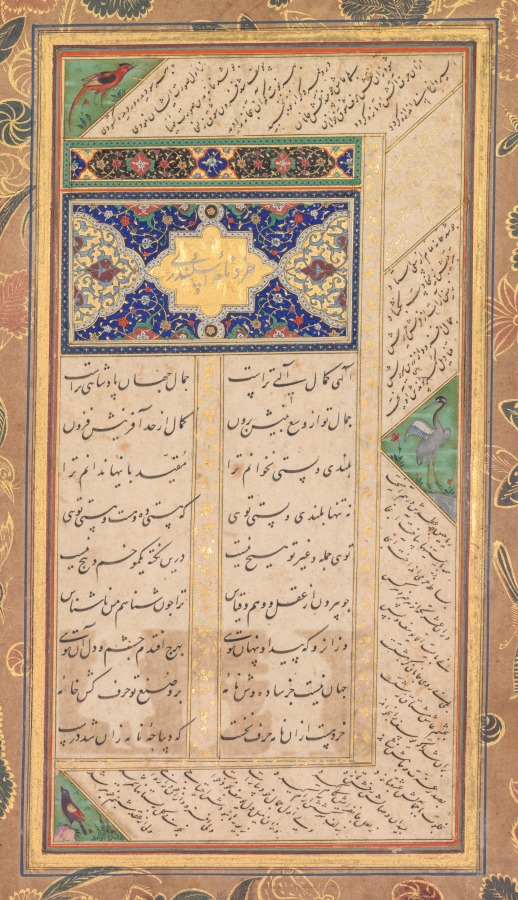
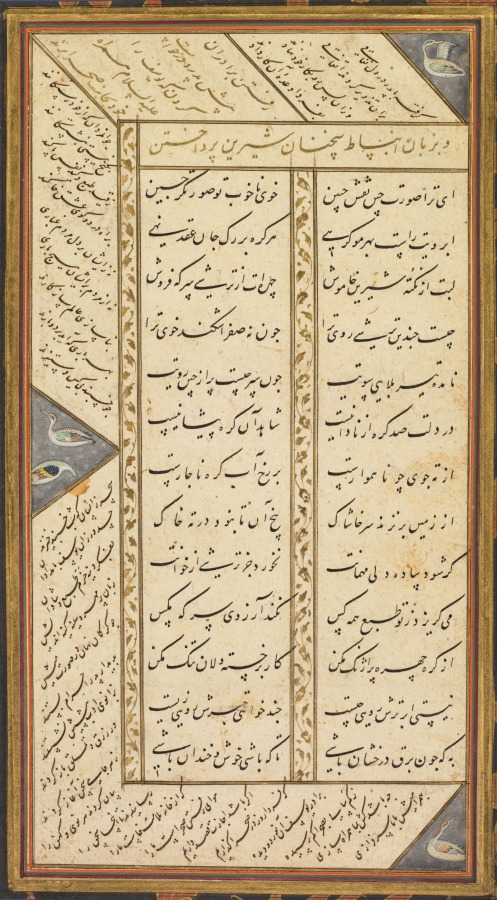
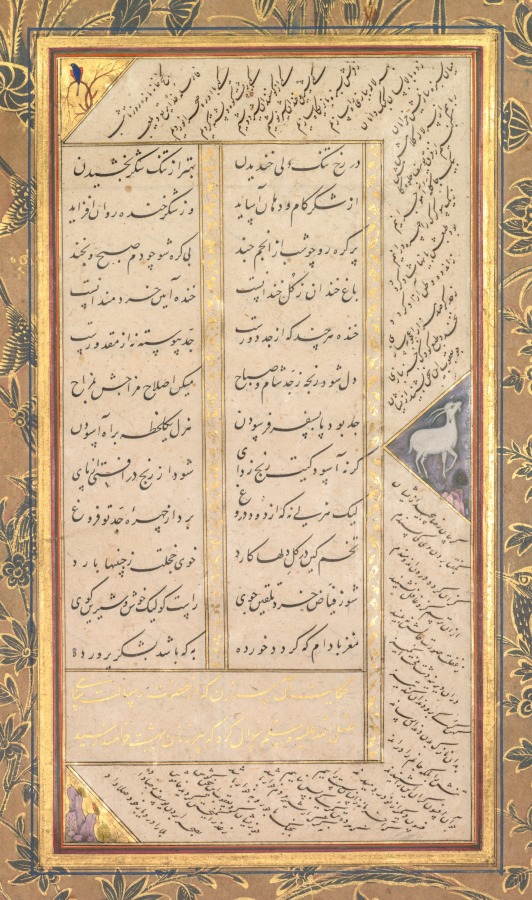
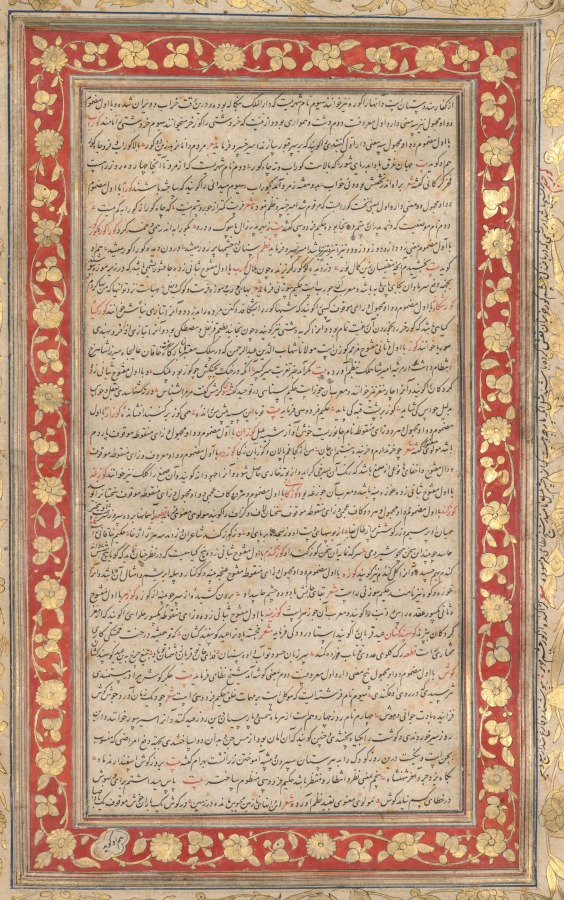
Folio B: Folio from the "Five Treasures" (Panj Ganj) of Jami (recto)

1520–1607
Gum tempera, ink, and gold on paper

SEE IT IN PERSON

Not currently on view

In the collection of Cleveland Museum of Art, Cleveland · as of July 2026

View at clevelandart.orgPlan a visit ↗

Discussion

FROM THE CLEVELAND MUSEUM OF ART’S CATALOG

This page contains two different texts, one written diagonally in the border and the other in the two central columns. The section of poetry in the border describes an episode from Joseph’s childhood in which his older brothers suggest to Jacob, their father, that they take Joseph into the countryside so that the boy can learn the area, although they actually plan to kill him. The poem in the central columns advises the reader to smile often, as a smile is sweeter and more pleasing than sugar.

Source ↗

Be the first to share your thoughts.

Sign in to join the discussion.

Community guidelines

More by Mushfiq

Zulaykha in her palace and as an old woman with Joseph, from a Panj Ganj (Five Treasures) of Abd al-Rahman Jami (Persian, 1414–1492); verso from a Panj Ganj of Abd al-Rahman Jami (Persian, 1414–1492), with two masnavis: Yusuf va Zulaykha (Joseph and Zulaykha) and Khirad-nama-i Iskandari (Alexander’s Book of Wisdom)Zulaykha in her palace and as an old woman with Joseph, fromFolios A and B from the "Five Treasures" (Panj Ganj) of JamiFolios A and B from the "Five Treasures" (Panj Ganj) of JamiZulaykha in her palace and as an elderly woman with Joseph (recto), from a Panj Ganj (Five Treasures) of Abd al- Rahman Jami (Persian, 1414–1492)Zulaykha in her palace and as an elderly woman with Joseph (Illuminated page (verso), from a Panj Ganj (Five Treasures) of Abd al- Rahman Jami (Persian, 1414–1492) with two Persian masnavis: Yusuf va Zulaykha (Joseph and Zulaykha) and Khirad-nama-i Iskandari (Alexander’s Book of Wisdom)Illuminated page (verso), from a Panj Ganj (Five Treasures) Page from the Panj Ganj (Five Treasures) of Abd al-Rahman Jami (Persian, 1414–1492), with two Persian masnavis (narrative poems): Yusuf va Zulaykha (Joseph and Zulaykha) and Subhat al-abrar (Rosary of the Righteous)Page from the Panj Ganj (Five Treasures) of Abd al-Rahman JaPage from a Panj Ganj (Five Treasures) of Abd al-Rahman Jami (Persian, 1414–1492), with two Persian
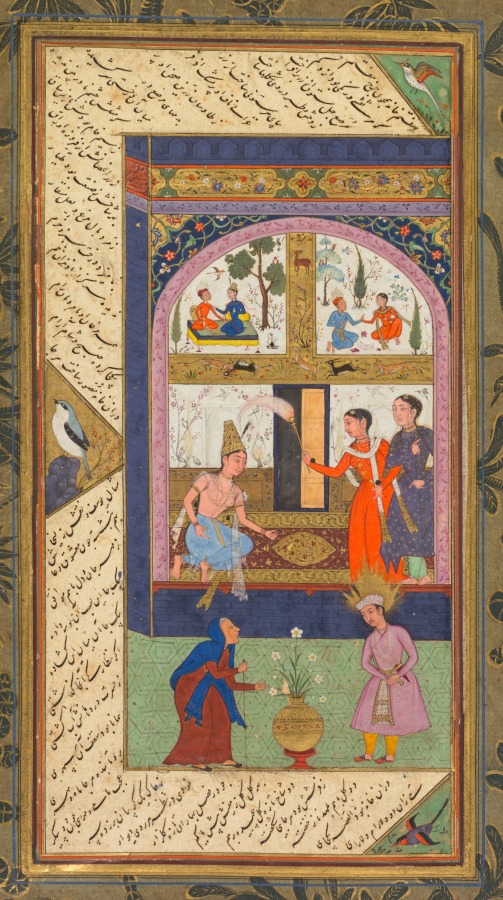
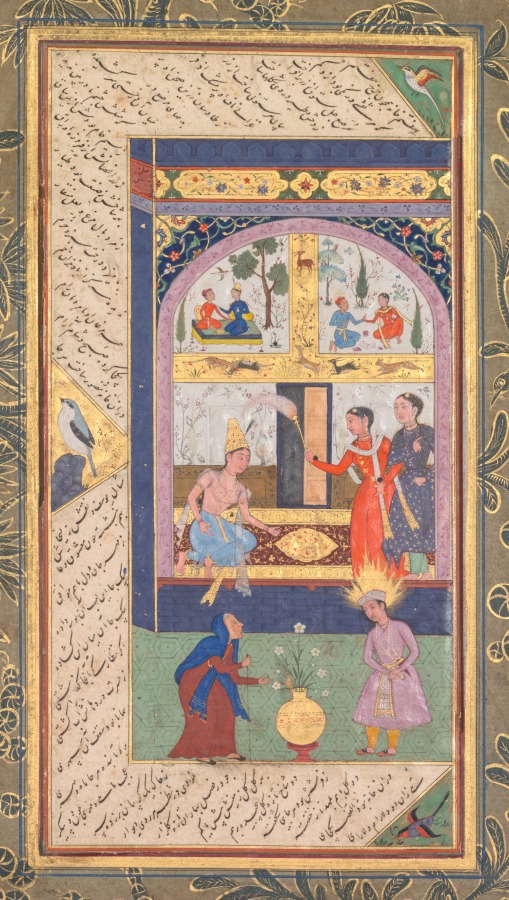
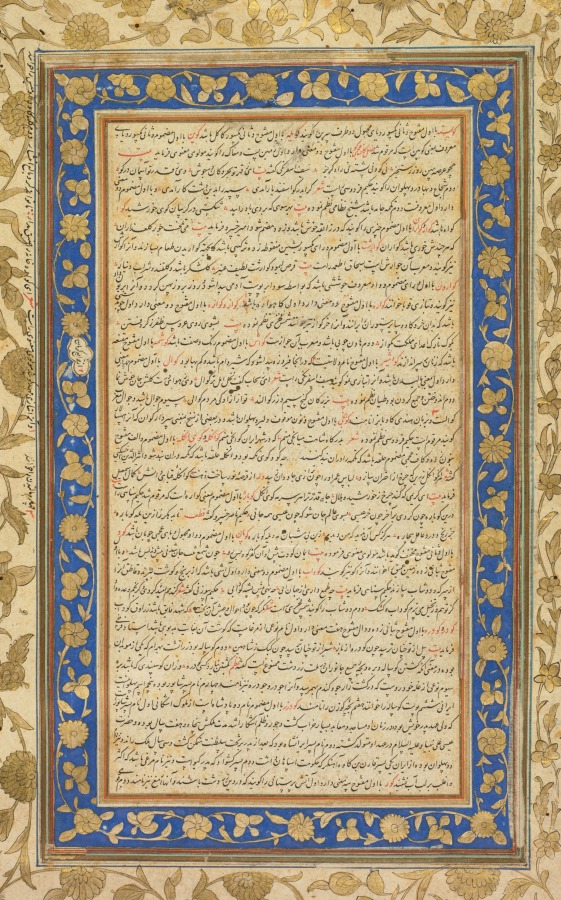
masnavis: Yusuf va Zulaykha (Joseph and Zulaykha) and Subhat al-abrar (Rosary of the Righteous) (verso)Page from a Panj Ganj (Five Treasures) of Abd al-Rahman Jami
More like this

Calligraphy (verso)Calligraphy (verso)An Illuminated Folio from the Royal Manuscript of the Farhang-i Jahangiri (recto)An Illuminated Folio from the Royal Manuscript of the FarhanFrom the Farhang-i Jahangiri (Persian-language Dictionary) compiled by Mir Jamal al-Din Husayn Inju of Shiraz (Persian, d. 1626)From the Farhang-i Jahangiri (Persian-language Dictionary) cAn Illuminated Folio from the Royal Manuscript of the Farhang-i Jahangiri (verso)An Illuminated Folio from the Royal Manuscript of the FarhanText of Rustam and Suhrab, from the Shah-nama of Firdausi (Persian, c. 934–1020) (recto)Text of Rustam and Suhrab, from the Shah-nama of Firdausi (PPage from Tales of a Parrot (Tuti-nama): text pagePage from Tales of a Parrot (Tuti-nama): text pagePage from Tales of a Parrot (Tuti-nama): text pagePage from Tales of a Parrot (Tuti-nama): text pagePage from Tales of a Parrot (Tuti-nama): text pagePage from Tales of a Parrot (Tuti-nama): text pagePage from Tales of a Parrot (Tuti-nama): text pagePage from Tales of a Parrot (Tuti-nama): text pagePage from Tales of a Parrot (Tuti-nama): text page (blank)Page from Tales of a Parrot (Tuti-nama): text page (blank)Page from Tales of a Parrot (Tuti-nama): text pagePage from Tales of a Parrot (Tuti-nama): text pagePage from the Poem of Beauty and LovePage from the Poem of Beauty and Love