FROM THE CLEVELAND MUSEUM OF ART’S CATALOG
Treated as a jewel set in gold and floral arabesques, this work is an example of how Mughal patrons held the art of calligraphy in higher esteem than figural painting. This work is unsigned, so the calligrapher remains unknown, but the lines are excerpts from a didactic ode composed by Amir Khusrau (1253–1325) of Delhi, known as the "Parrot of India," one of the most accomplished authors of the Persian language in India. The text itself reads: "Anyone, whether noble or ignoble, who covets wealth, is destined for hell. Aloe-wood and dung, once thrown in the fire, turn to ash. It is hard for an unrefined mind to master sophisticated thought. For the wind to lift up the feet of a mountain is impossible. See to your tasks here and now, for there is mayhem on the Day of Judgment. Draw your water from here, for there is much tumult and mischief out in the sea."
Source ↗︎
Be the first to share your thoughts.
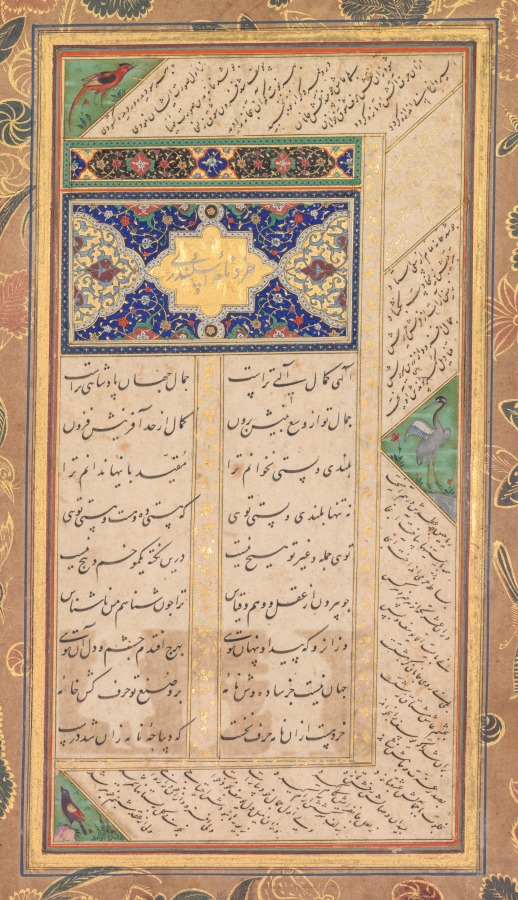 Mushfiq (Indian, active early 1600s) — Illuminated page (ver
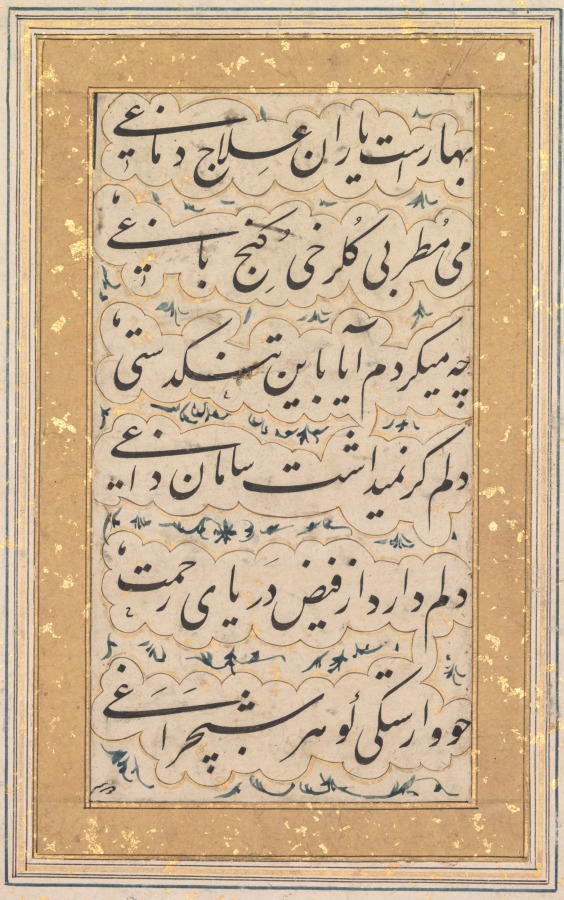 Calligraphy (verso)
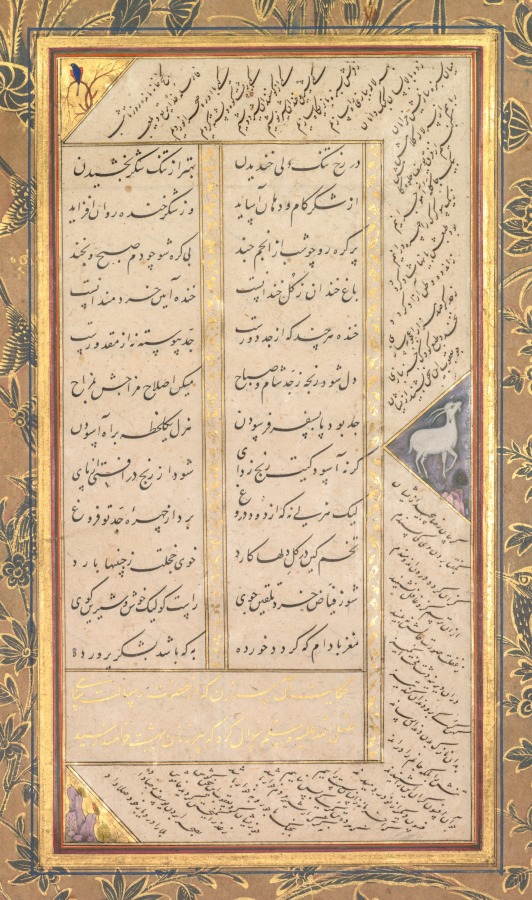 Mushfiq (Indian, active early 1600s) — Page from a Panj Ganj
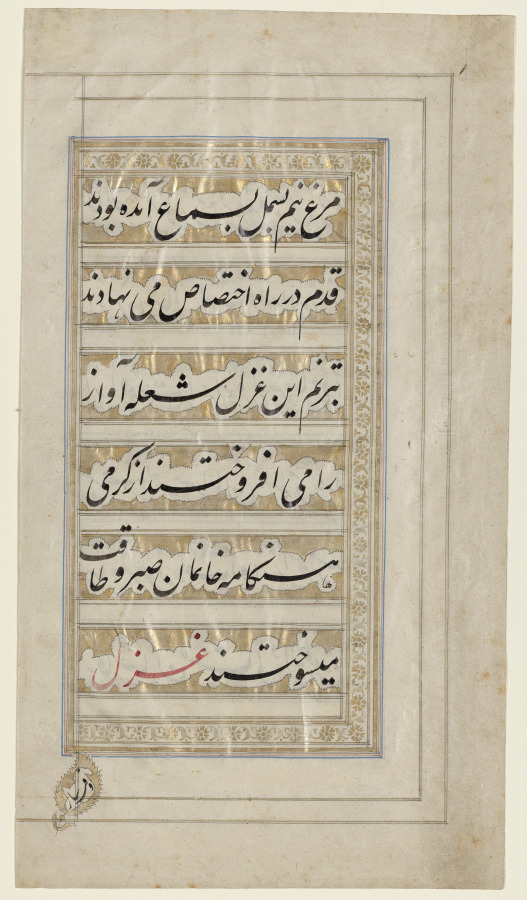 Page from the Poem of Beauty and Love
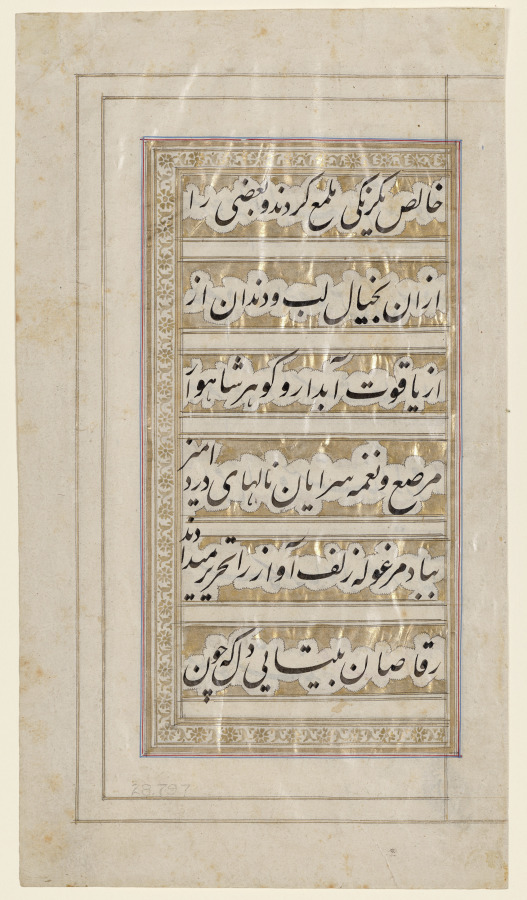 Page from the Poem of Beauty and Love
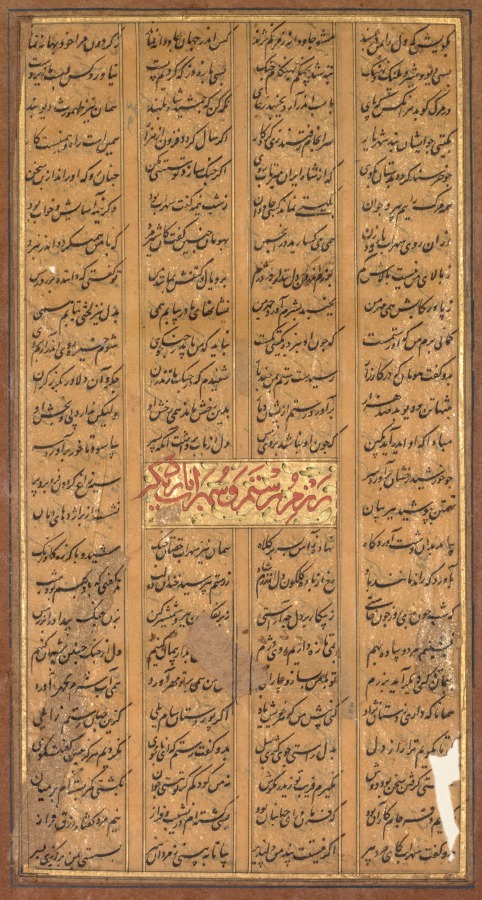 Text of Rustam and Suhrab, from the Shah-nama of Firdausi (P
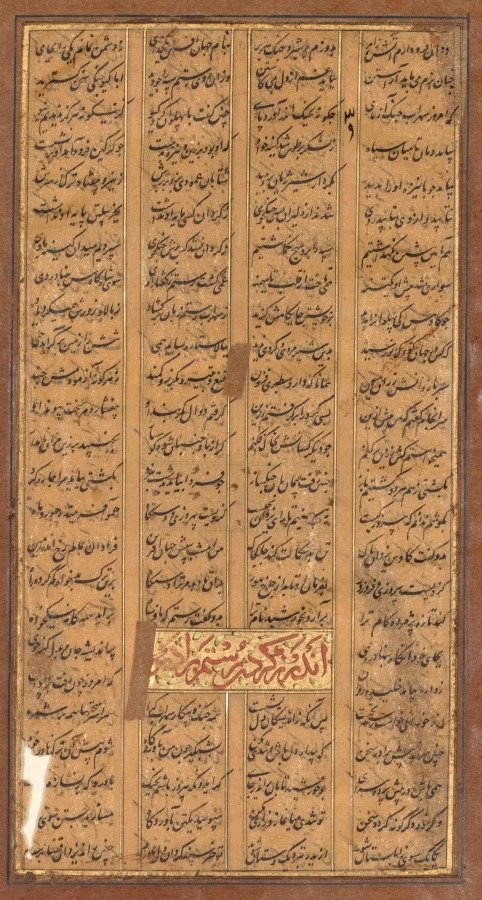 Text of Rustam and Suhrab, from the Shah-nama of Firdausi (P
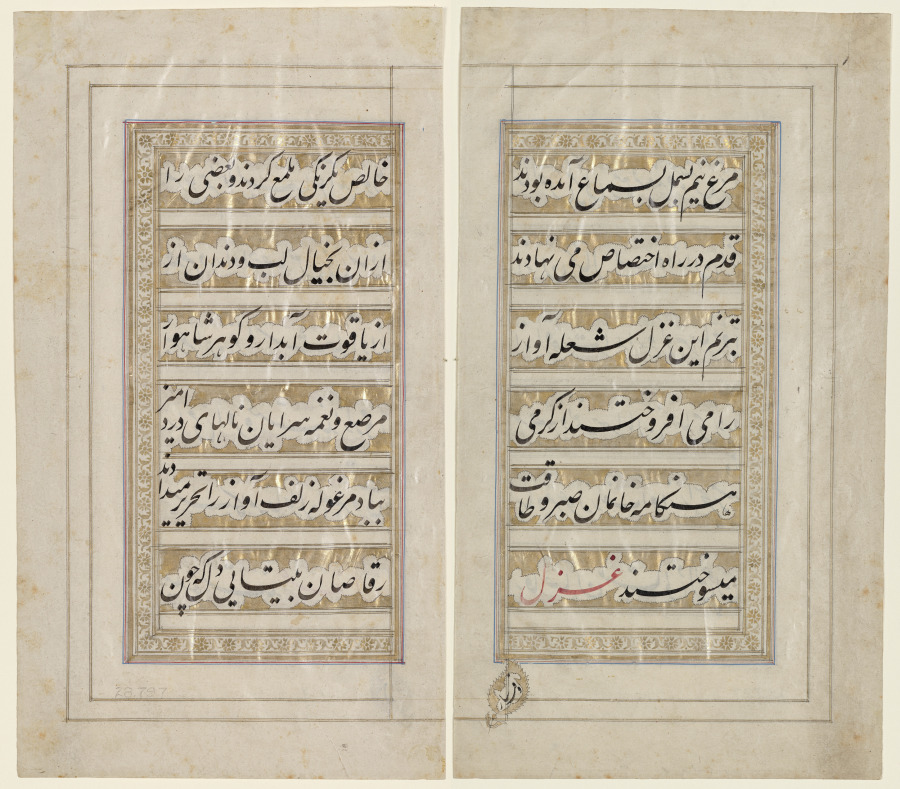 Page from the Poem of Beauty and Love
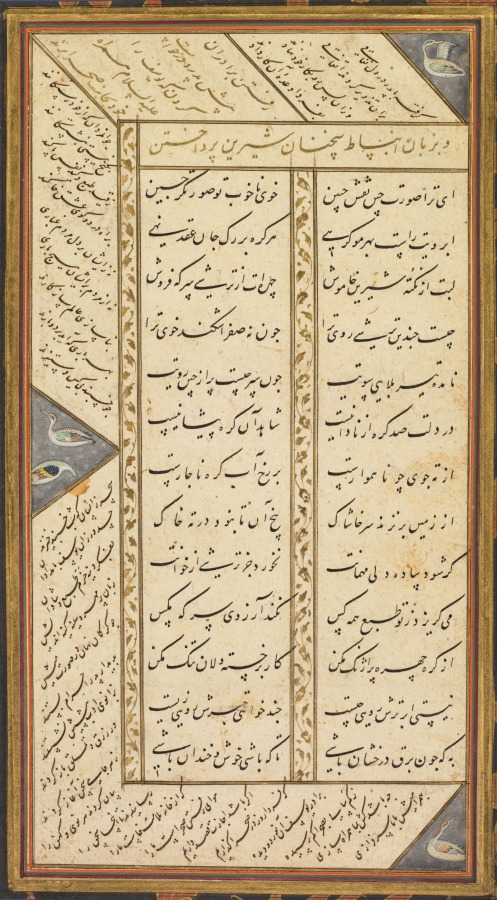 Mushfiq (Indian, active early 1600s) — Page from the Panj Ga
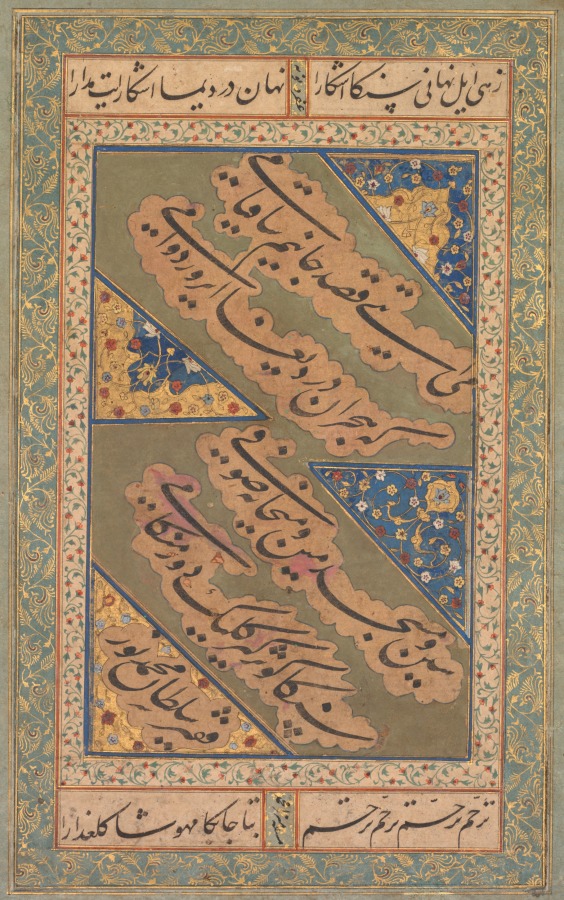 Mirza Muhammad (probably Persian, active c. 1520s) — Calligr
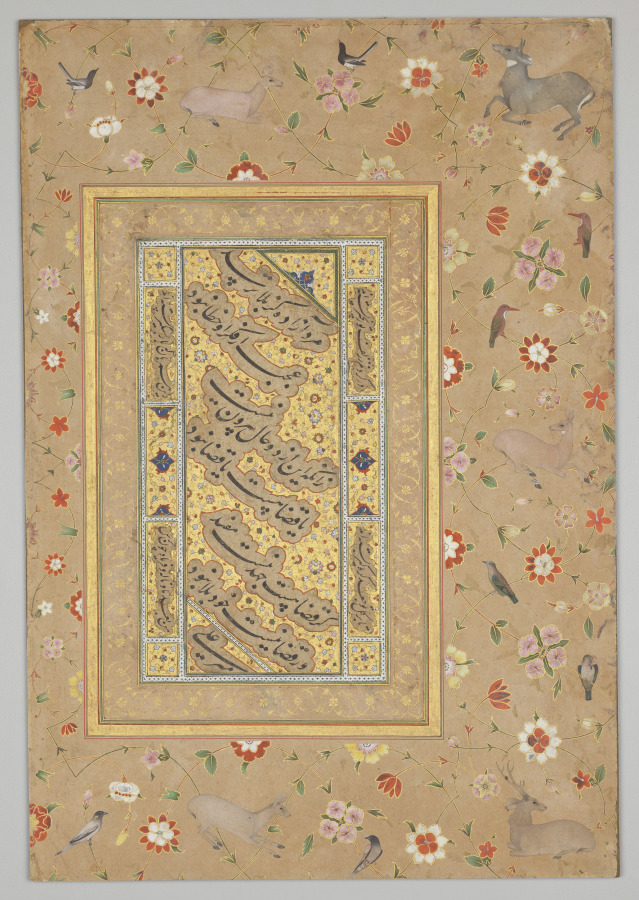 Mir 'Ali Haravi (Persian, active in Herat, Afghanistan, died
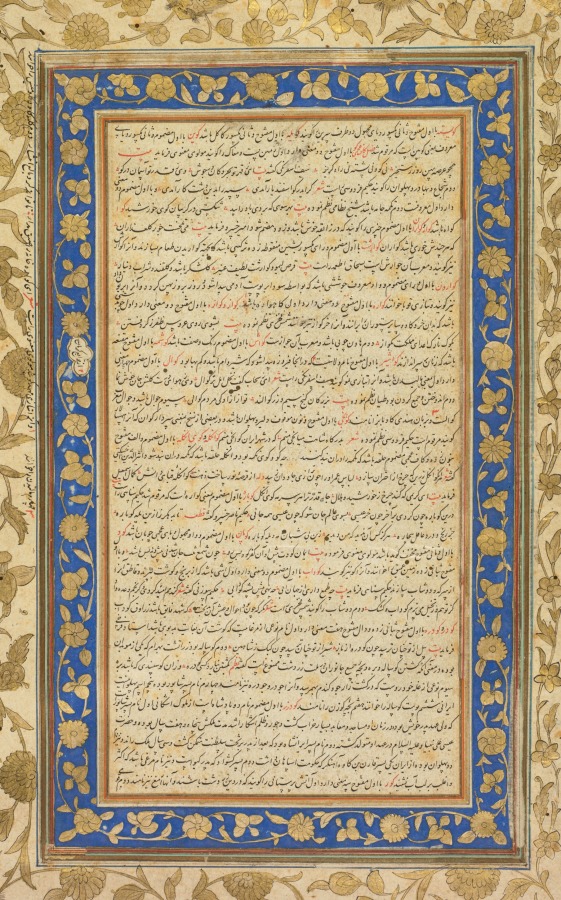 An Illuminated Folio from the Royal Manuscript of the Farhan