Maize and Cockscombs
SEE IT IN PERSON
Not currently on view
In the collection of Art Institute of Chicago, Chicago · as of July 2026
Discussion
FROM THE ART INSTITUTE OF CHICAGO’S CATALOG
During the Edo period, the prosperity and political unification of Japan under the ruling Tokugawa shoguns led to the emergence of a magnificent Japanese decorative style characterized by a love of bold patterns and bright colors. This new style was supported by the military class, a disenfranchised aristocracy, and a thriving class of merchants and entrepreneurs. The surviving half of an original pair, this splendid screen elegantly embodies both the techniques of ancient court painters and the curiosity and confidence so prevalent in the Edo period. Bursting with sensual fullness, the maize and cockscombs are rendered with the accuracy of a botanical drawing, a testimony to the era’s interest in natural science. The appearance of maize, a grain not native to Japan, indicates a willingness to assimilate new subject matter on the part of Edo artists and patrons.
Be the first to share your thoughts.
Sign in to join the discussion.
More by Artist unknown Japanese


More like this
 Watanabe Shikō (Japanese, 1683–1755) — Flowers and Trees of
  Tosa Mitsuoki — Bamboo and Fences
 Ogata Kōrin
 Kitagawa Sōsetsu (Japanese, active 1639–50) — Flowers and Gr
 Sino-Portuguese, Probably Macau — Folding Screen (Biombo)
 Susuki Grass
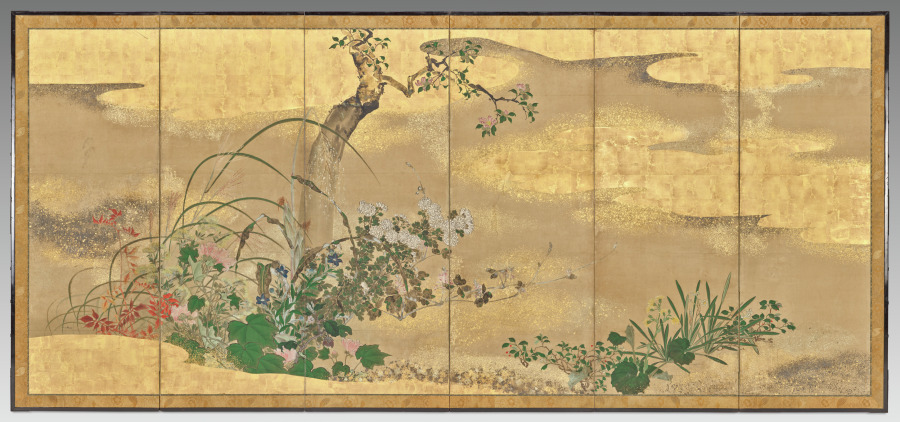 Watanabe Shikō (Japanese, 1683–1755) — Flowers and Trees of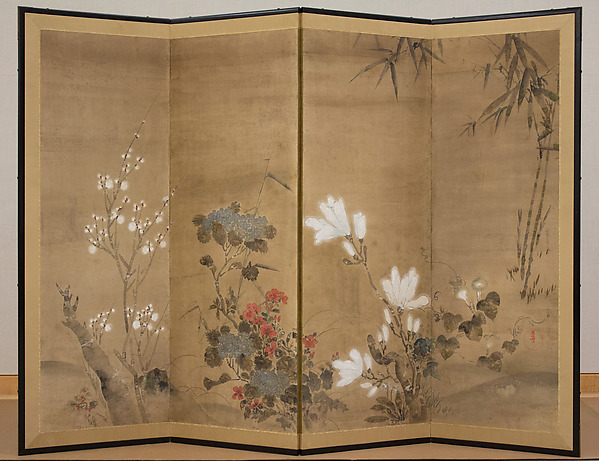
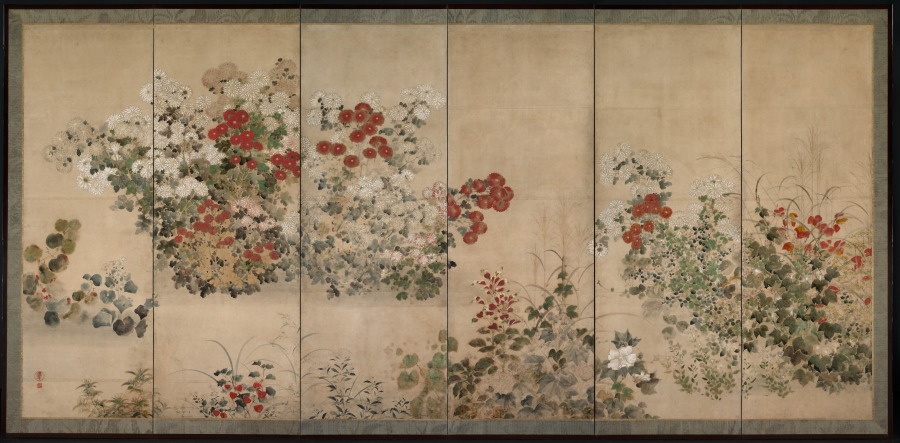 Kitagawa Sōsetsu (Japanese, active 1639–50) — Flowers and Gr
 Sesson Shukei — Landscape of the Four Seasons
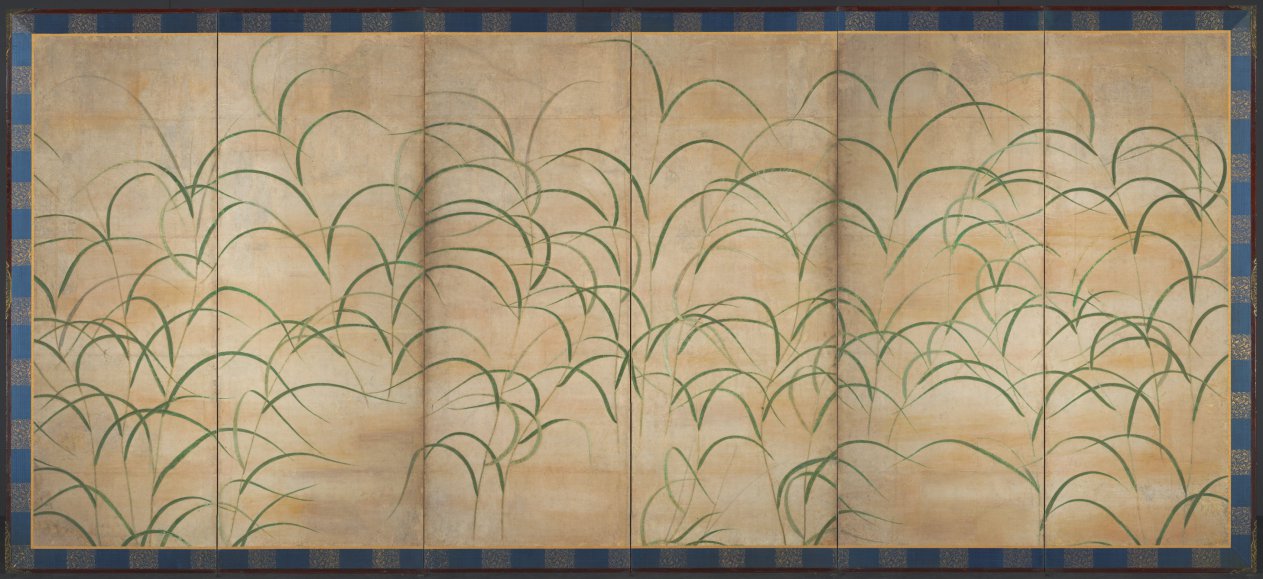 Susuki Grass
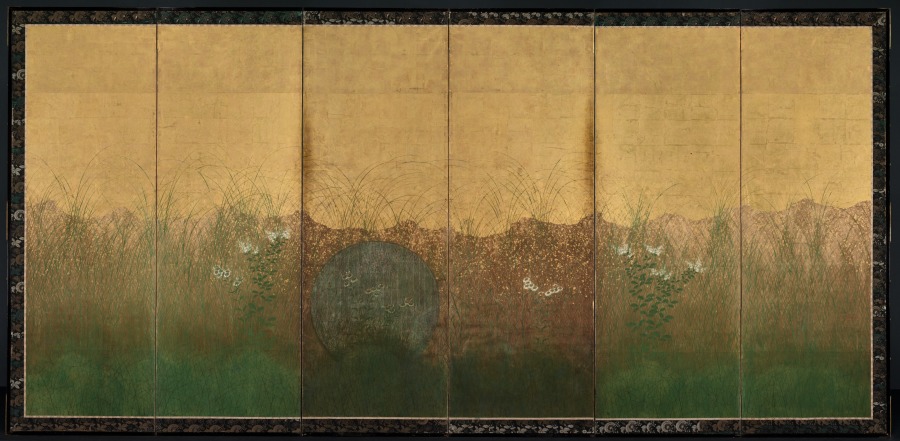 Autumn Evening with Full Moon on Musashino Plain