The Tale of Taishokan
SEE IT IN PERSON
Not currently on view
In the collection of Art Institute of Chicago, Chicago · as of July 2026
Discussion
FROM THE ART INSTITUTE OF CHICAGO’S CATALOG
This screen narrates the medieval Taishokan tale, an action-adventure story that captivated medieval and early modern audiences whether they saw it performed on the Noh, Bunraku or Kabuki stage, or depicted in paintings and prints. The many variants of the tale combine elements from early Japanese mythology and history; 14th-century Buddhist temple origin legend ( engi ) that reflects continuing anxiety about foreign invasion in the wake of the Mongol attacks of the late 13th century, and Noh play motifs. The story unfolds from right to left, opening with a scene in and around the courtyard of Fujiwara Kamatari’s residence in the Nara area. Kamatari, the most powerful courtier of the seventh century, was the first and only person ever granted the rank of ‘Taishokan,’ the highest rank in a system used only between 647 and 685. According to legend, reputation of Kamatari daughter’s beauty made its way to China, where the emperor Taizong fell in love with her sight unseen, and asked to marry her. Kamatari’s daughter, Kohakunyo, is shown boarding her carriage to be sent abroad on the ships depicted below. Her new home, the Chinese court, is shown to the left. On the left screen, the tr
Be the first to share your thoughts.
Sign in to join the discussion.
More by Artist unknown Japanese


More like this
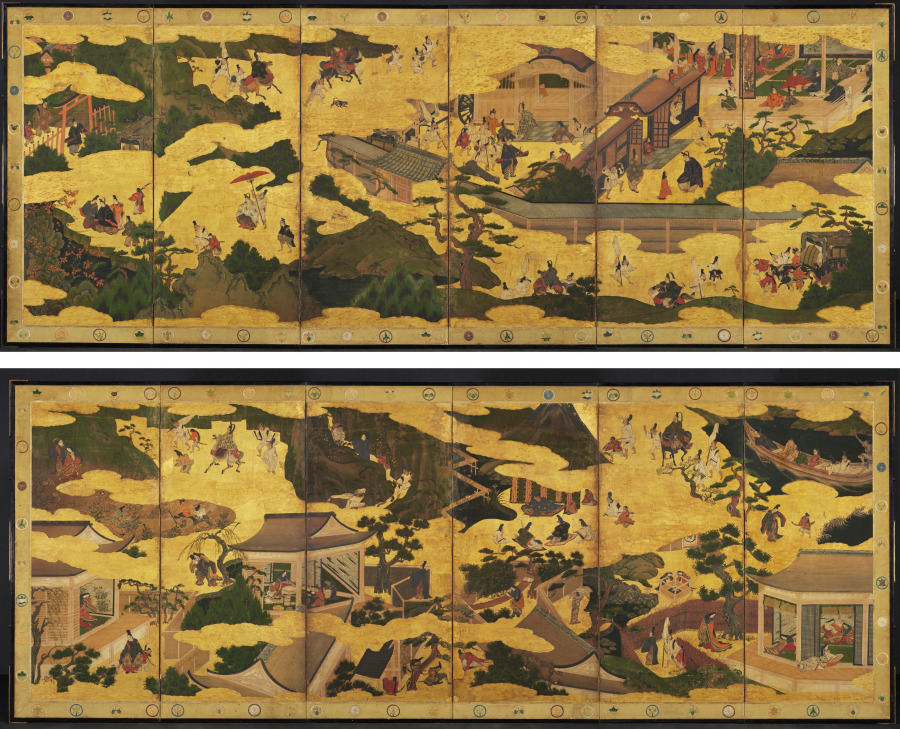 Scenes from the Tales of Ise
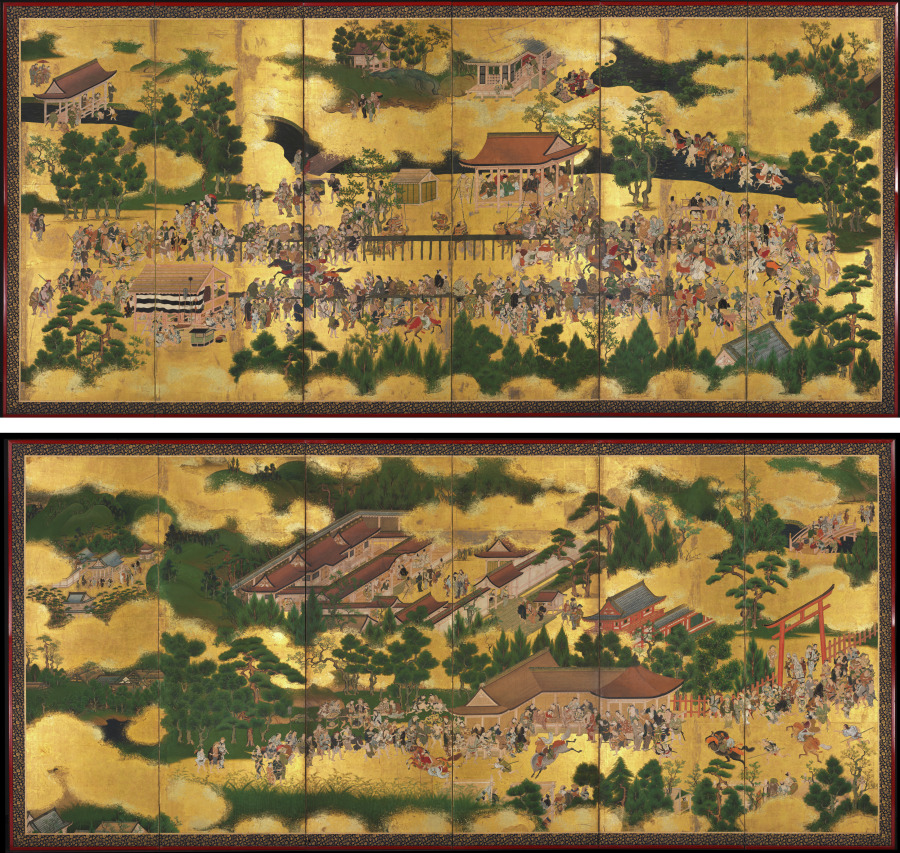 Horse Race at the Kamo Shrine
 Artist Unknown
Japanese — The Tale of Genji
Artist Unknown
Japanese — The Tale of Genji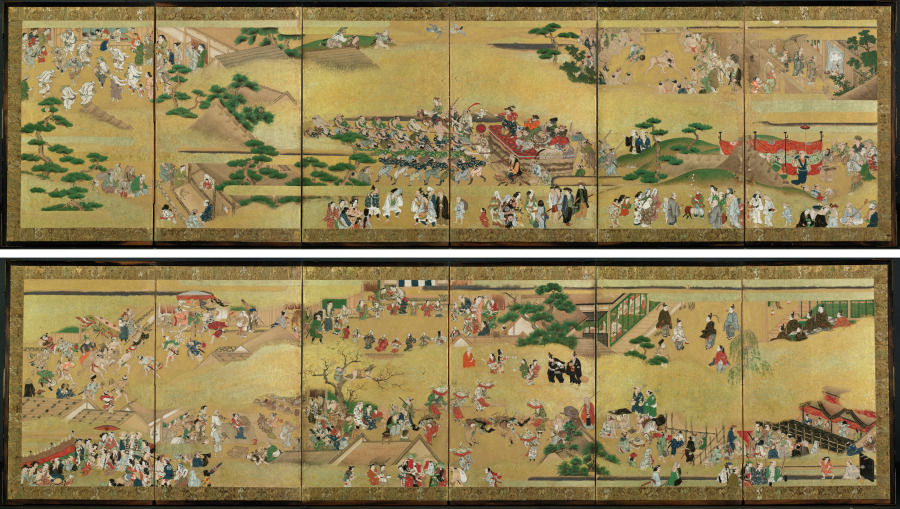 Festival Scenes
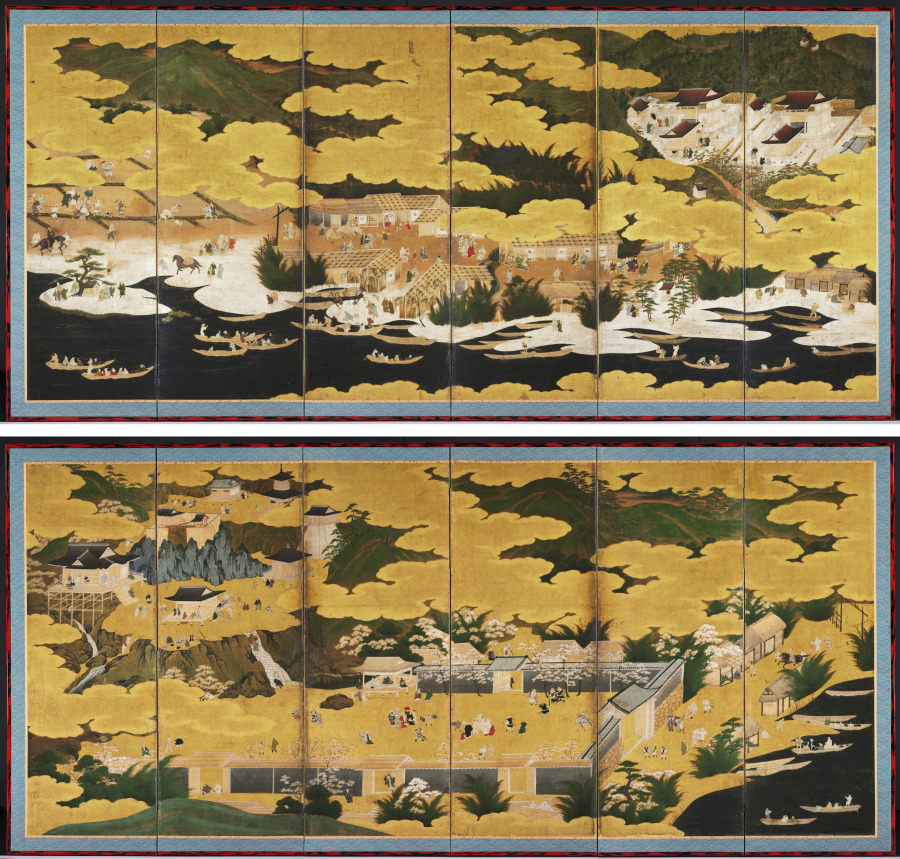 Famous Views of Ōmi
 Scenes from the Tale of Genji
 Kō Sūkoku (Japanese, 1730–1804) — Spring and Autumn Farming
  Arrival of the "Southern Barbarians"
 Scenes from the Tales of Ise
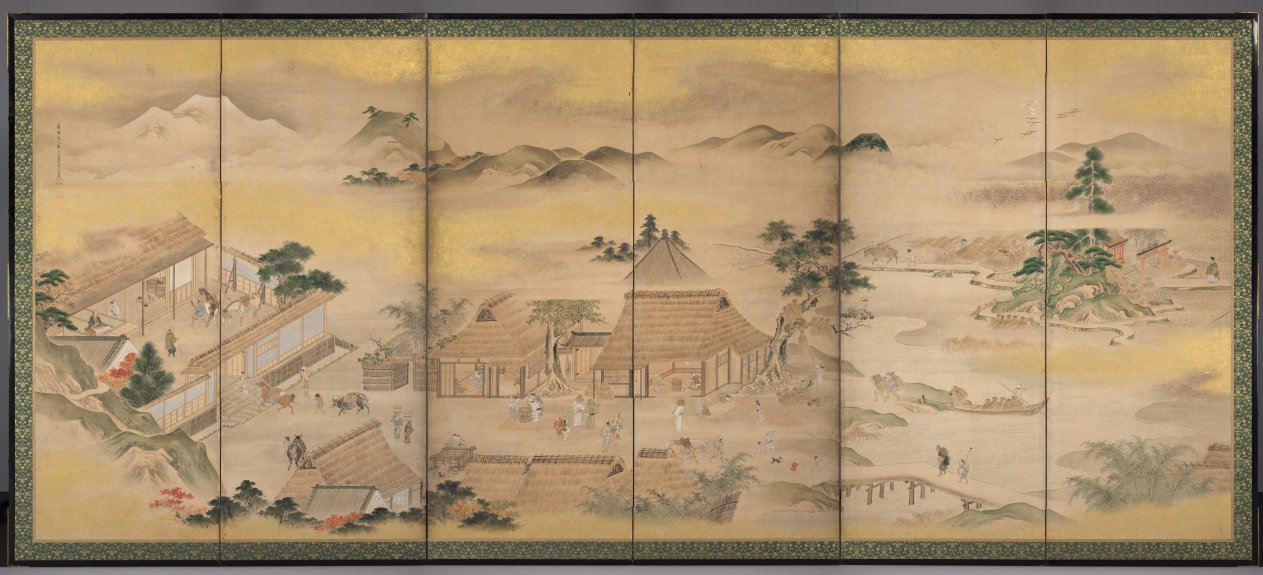 Kō Sūkoku (Japanese, 1730–1804) — Spring and Autumn Farming
  Artist Unknown
Japanese — The Tale of Genji
Artist Unknown
Japanese — The Tale of Genji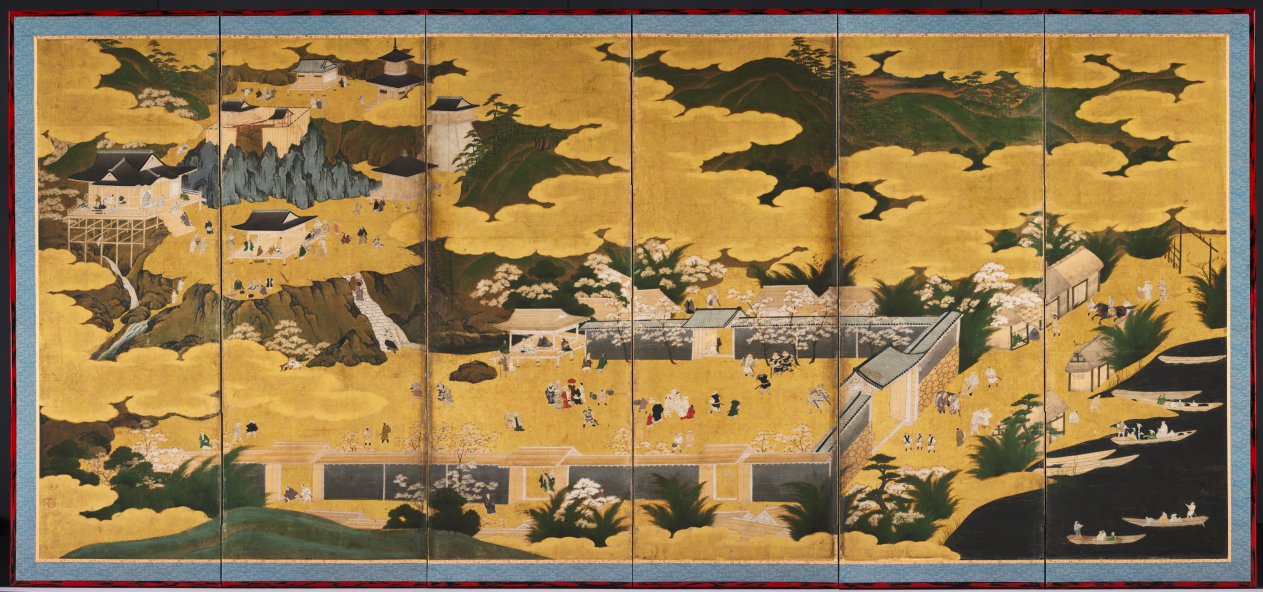 Famous Views of Ōmi