FROM THE CLEVELAND MUSEUM OF ART’S CATALOG
Susuki grass has a seasonal association with autumn in the Japanese visual and literary tradition. It is one of the “Seven Flowers of Autumn,” along with bush clover, arrowroot, pink, patrinia , mistflower, and bellflower. This composition immerses the beholder in a field of grasses and golden bands of mist. The design may have served as a backdrop for poems brushed in ink on decorated papers and attached to the surface of the screens, a practice with a long tradition in Japan.
Source ↗︎
Be the first to share your thoughts.
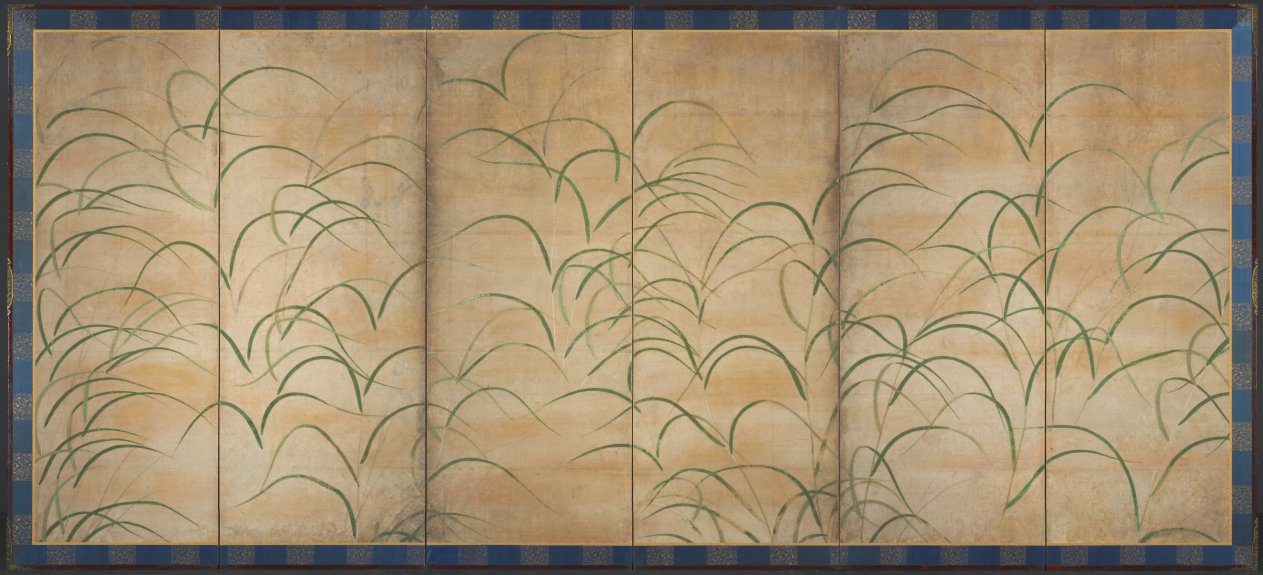 Susuki Grass
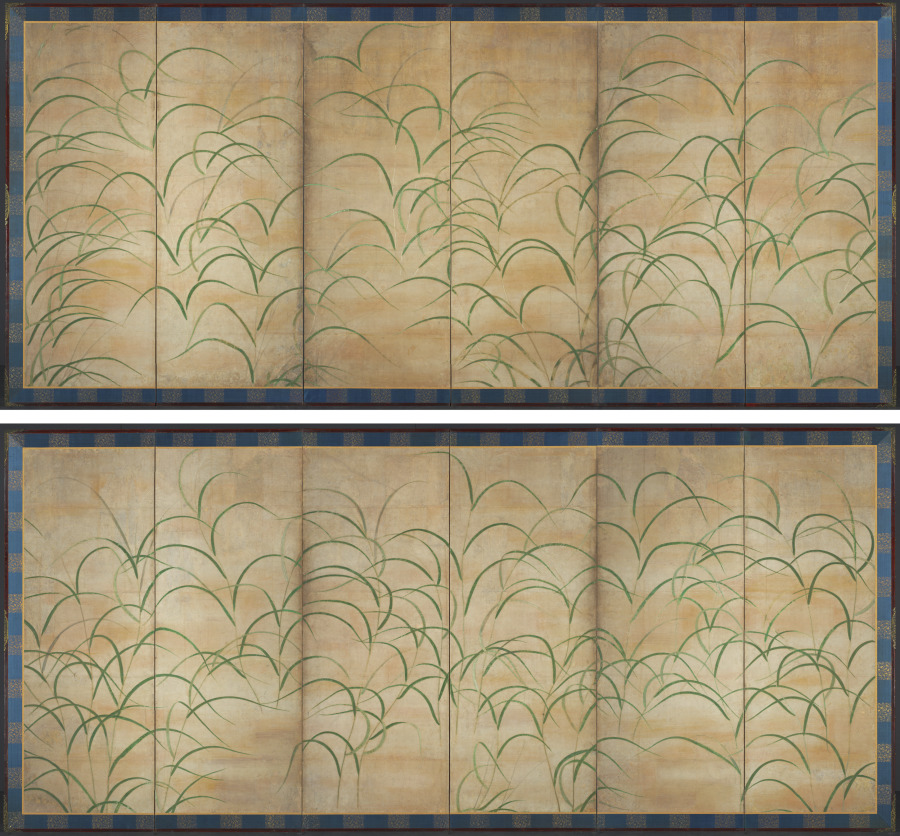 Susuki Grass
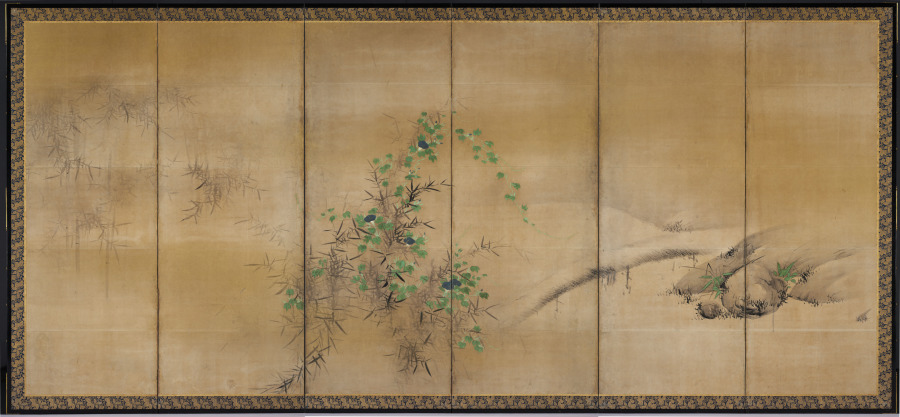 Kaihō Yūshō (Japanese, 1533–1615) — Winter and Summer Flower
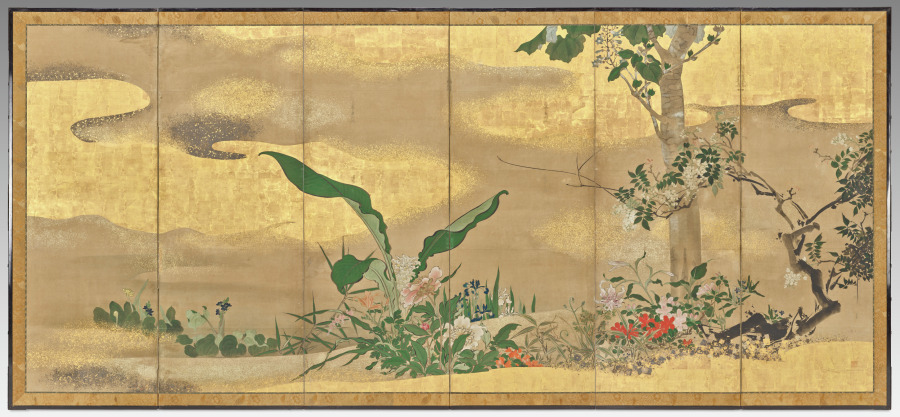 Watanabe Shikō (Japanese, 1683–1755) — Flowers and Trees of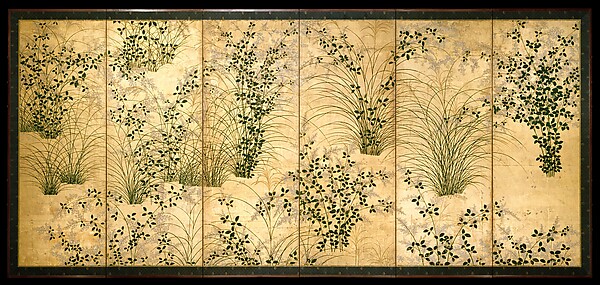
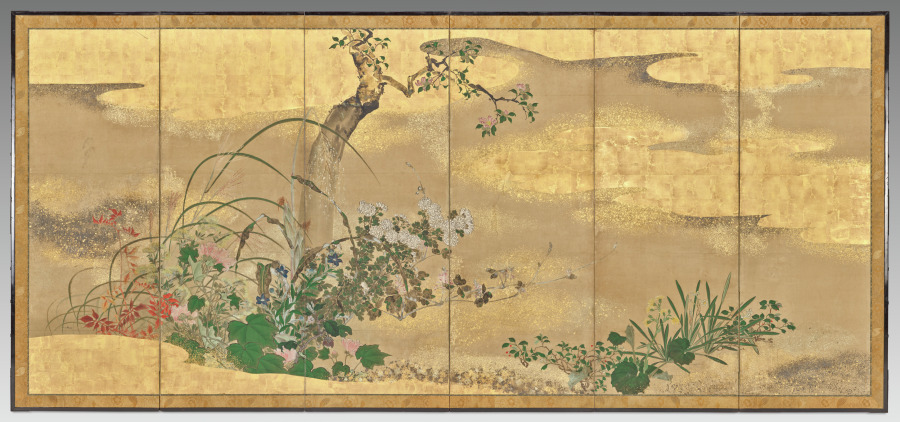 Watanabe Shikō (Japanese, 1683–1755) — Flowers and Trees of
 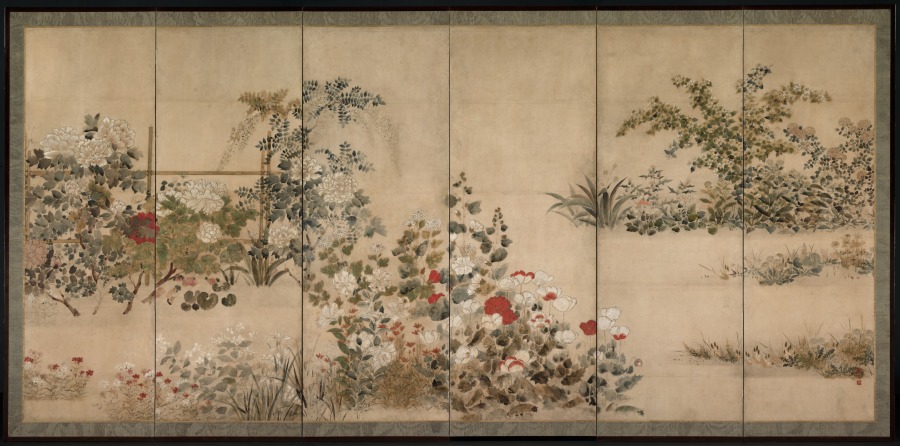 Kitagawa Sōsetsu (Japanese, active 1639–50) — Flowers and Gr
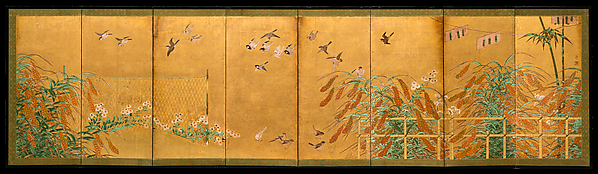 Kano Sanraku — 伝狩野山楽筆 粟に小禽図屏風|Autumn Millet and Small Birds
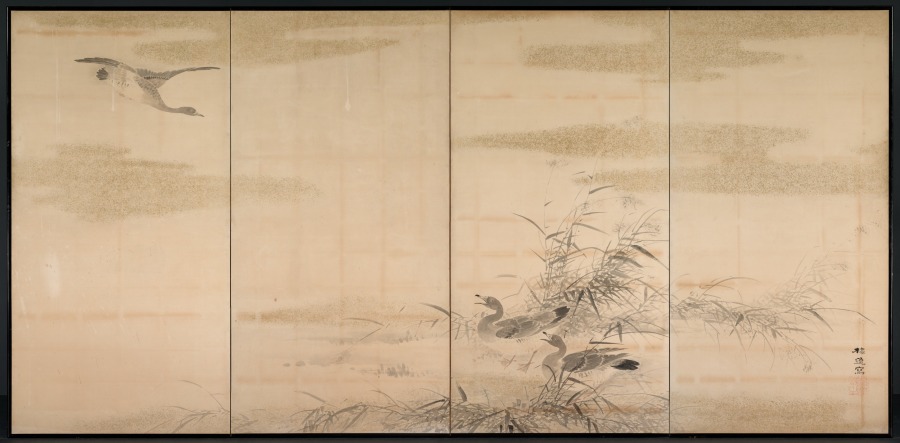 Yamamoto Baiitsu (Japanese, 1783–1856) — Geese, Reeds, and W
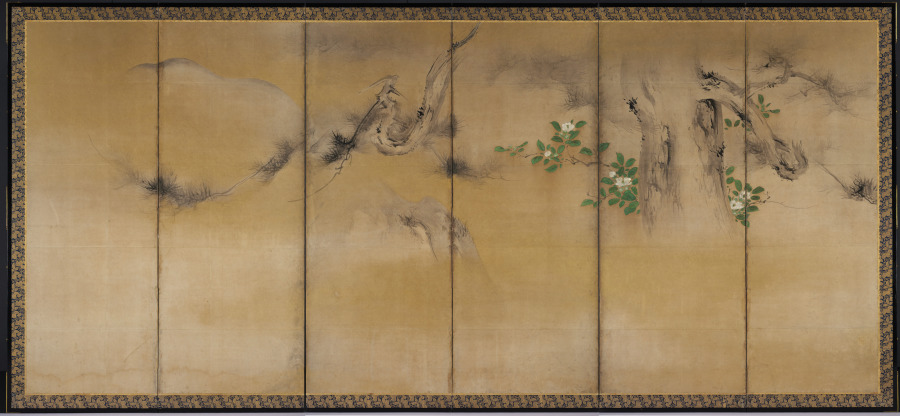 Kaihō Yūshō (Japanese, 1533–1615) — Winter and Summer Flower
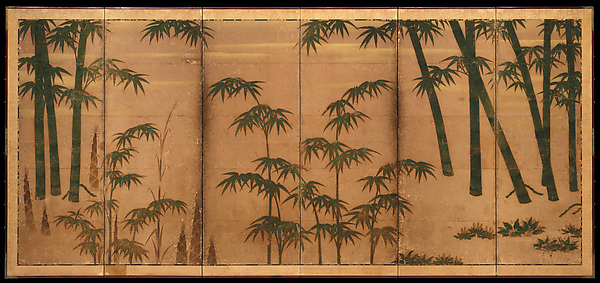 Tosa Mitsunobu — 伝土佐光信筆 四季竹図屏風|Bamboo in the Four Seasons
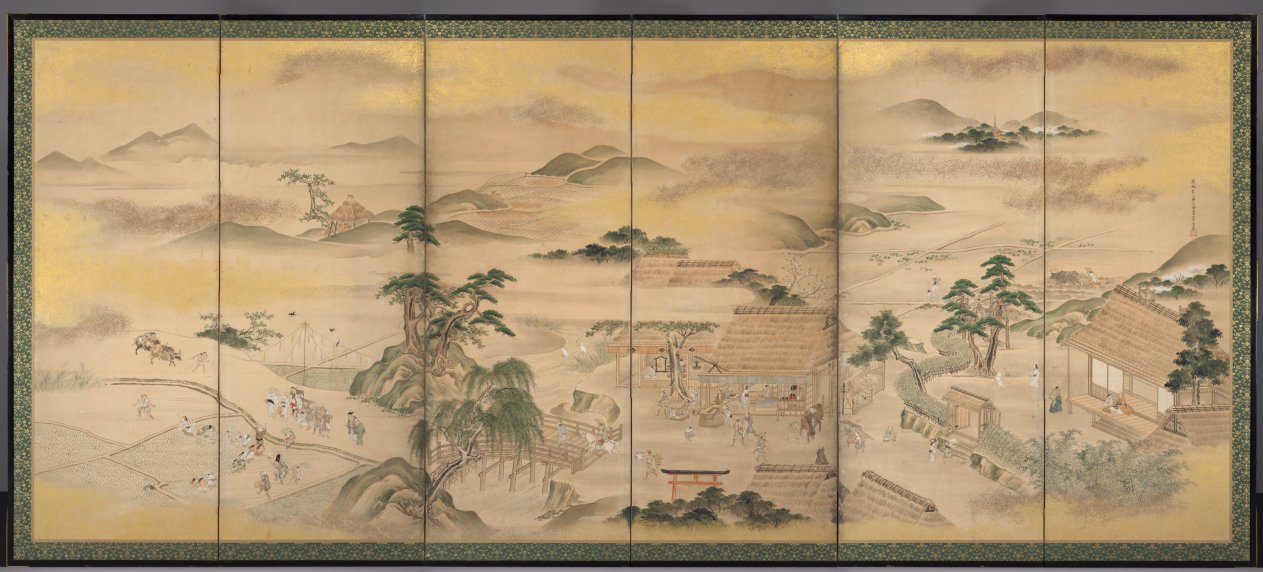 Kō Sūkoku (Japanese, 1730–1804) — Spring and Autumn Farming