Daruma
SEE IT IN PERSON
Not currently on view
In the collection of Art Institute of Chicago, Chicago · as of July 2026
Discussion
FROM THE ART INSTITUTE OF CHICAGO’S CATALOG
Zen rose to prominence in Japan in the 13th century, after receiving support from the ruling Kamakura shogunate. In this sect of Buddhism, images of patriarchs were especially revered because the relationships between masters and disciples are of primary importance to the transmission of Zen teachings. Zen’s semilegendary founder, Daruma (A.D. c. 470–c. 543), came from southern India and crossed the Yangzi River in China, where he meditated in a cave at the Shaolin monastery for nine years. In this Japanese painting, his facial features are Indian, and his head is covered as befits a southern Indian monk. According to an inscription on the back of this painting, it was originally in the possession of Shorinji temple in Okayama prefecture.
Be the first to share your thoughts.
Sign in to join the discussion.
More by Artist unknown Japanese


More like this
 Artist unknown (Chinese) — Portrait of a Gentleman
 Unidentified artist|Yao Wenhan — 清 佚名 傳姚文瀚 歷代帝王真像 冊|Portrait
 Artist unknown
Chinese — Portrait of a Gentleman
Artist unknown
Chinese — Portrait of a Gentleman Portrait Study of Seigen
 Wu Yu|Unidentified artist — 明 佚名(仿)吳育 新安汪氏譜牒 卷|Portrai
 Unidentified artist
 Artist unknown (Chinese) — Portrait of a Gentleman
 Unidentified artist — 明 佚名 人物肖像 圖 鏡面|Portrait of a Gentle
 Kakinomoto no Hitomaro
 Portrait of an Official
 Fujiwara no Muchimaro
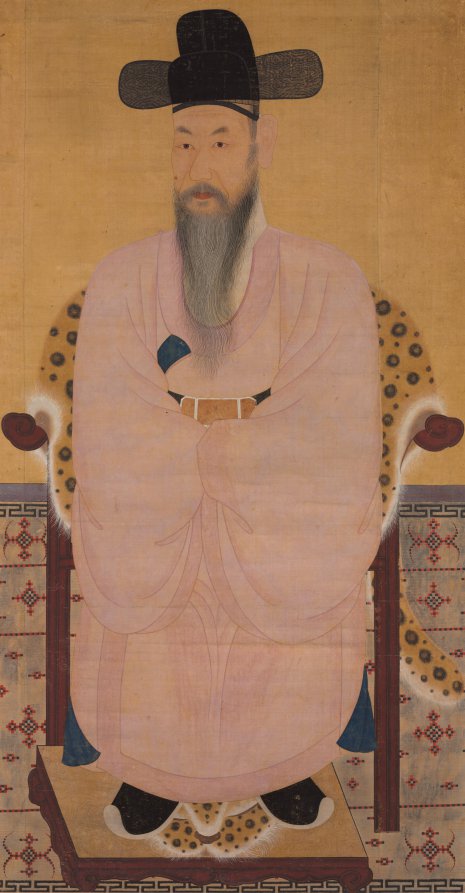 Portrait of an Official