In the collection of Barnes Foundation, Philadelphia — check current display status with the museum.
FROM THE BARNES FOUNDATION’S CATALOG
Four nude female figures pose by the edge of a pool in a glade. The bathers theme originated in the Renaissance, symbolizing the harmony of nature and the female body. Cézanne alluded to this tradition by quoting famous classical sculpture: the standing figure, for instance, stretches her arm in imitation of an athlete by Lysippos, the classical Greek sculptor. But Cézanne departed from the classical ideal—and from the current impressionist concern with the fleeting effects of light and atmosphere—to search for the structure undergirding the figures and the landscape.
Be the first to share your thoughts.
Sign in to join the discussion.
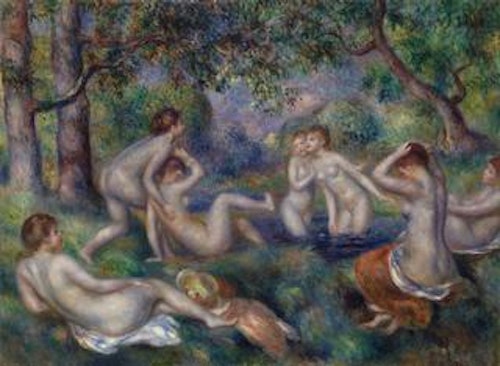 Pierre-Auguste Renoir — Bathers in the Forest (Baigneuses da
 Pierre-Auguste Renoir — Bathers in the Forest (Baigneuses da
 Ernst Ludwig Kirchner — Five Bathing Women at a Lake
 Émile Bernard — Bathers with water lilies
 Henri Matisse — Three Bathers
 Suzanne Valadon — Joy of Life
 Pierre-Auguste Renoir — Bathing Group
 Paul Cezanne — The Battle of Love
 Franz Marc — Nudes under Trees
 Pierre-Auguste Renoir — Badende kvinner
 Otto Mueller — Bathers
 Émile Bernard — Bathers with Red Cow