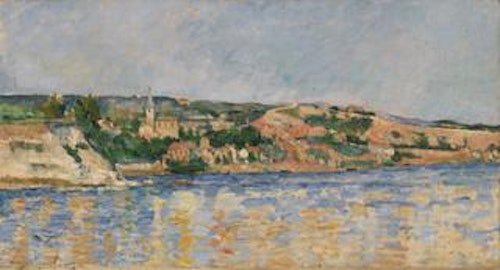
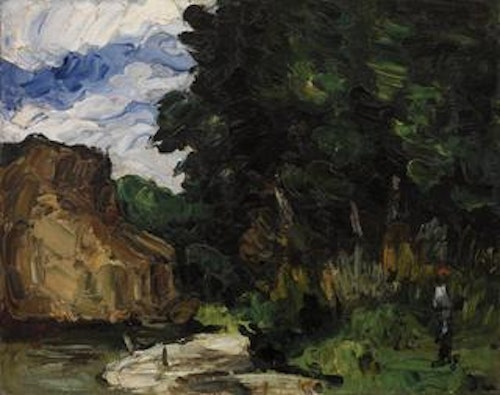
In the collection of Barnes Foundation, Philadelphia — check current display status with the museum.
FROM THE BARNES FOUNDATION’S CATALOG
The bathers theme originated in the Renaissance and traditionally showed idealized female bodies in total harmony with nature. Yet Cézanne disturbs this easy relationship here and in his other works on the subject. In this canvas, thick with paint, space is hard to read, and the landscape —note the dead tree branches and ominous clouds—seems harsh and threatening. While he derived many of the figures' poses from classical statuary, Cézanne overturns tradition as soon as he references it: bodies are deliberately distorted, with obliterated faces, truncated limbs, and uneven flesh.
Be the first to share your thoughts.
Sign in to join the discussion.
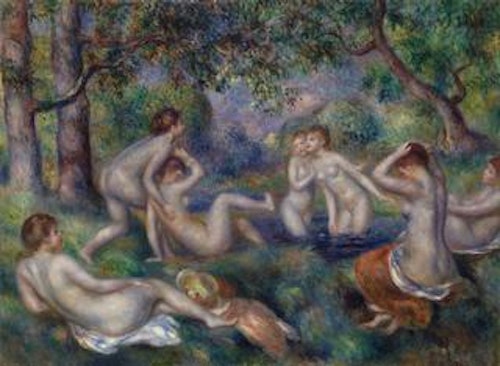 Pierre-Auguste Renoir — Bathers in the Forest (Baigneuses da
 Pierre-Auguste Renoir — Bathers in the Forest (Baigneuses da
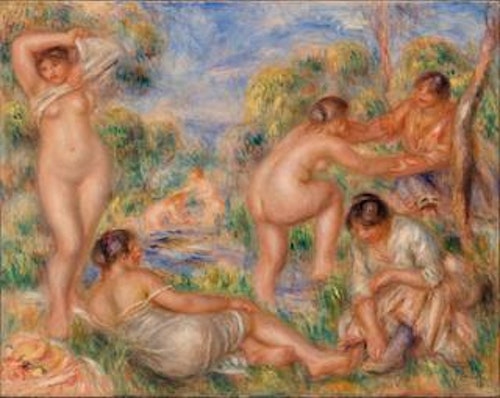 Pierre-Auguste Renoir — Bathing Group
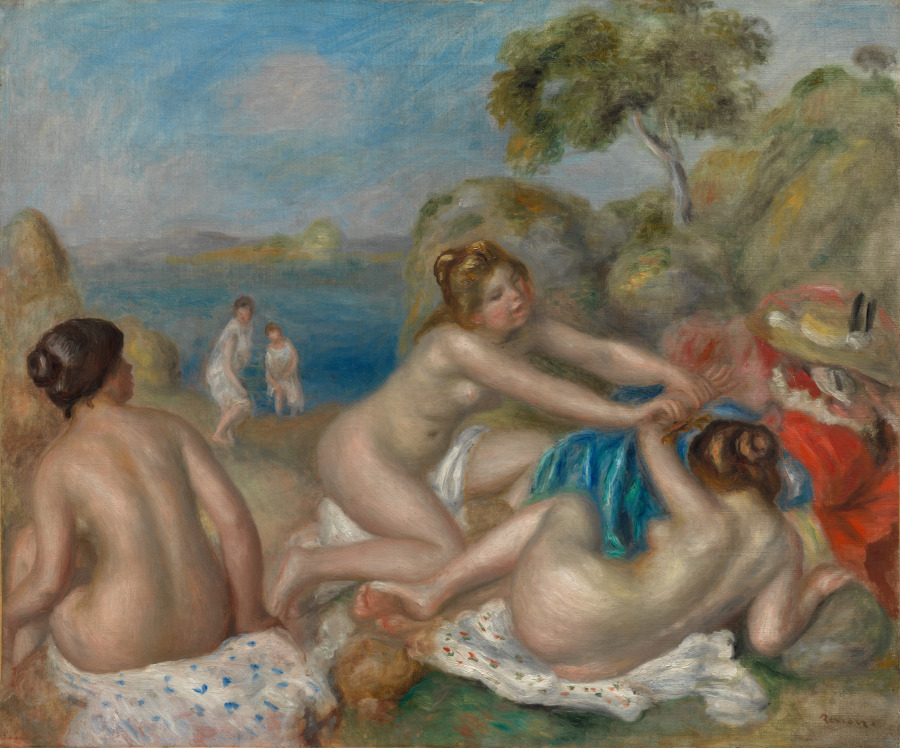 Pierre-Auguste Renoir (French, 1841–1919) — Bathers Playing
 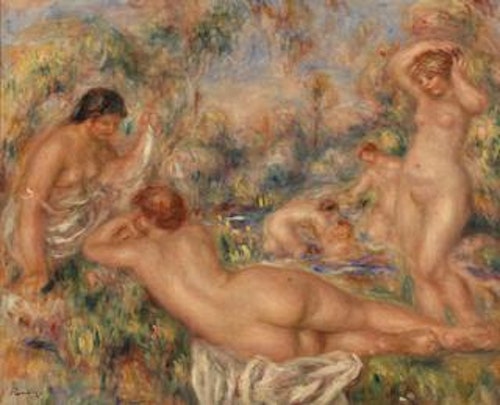 Pierre-Auguste Renoir — Bathers (Baigneuses)
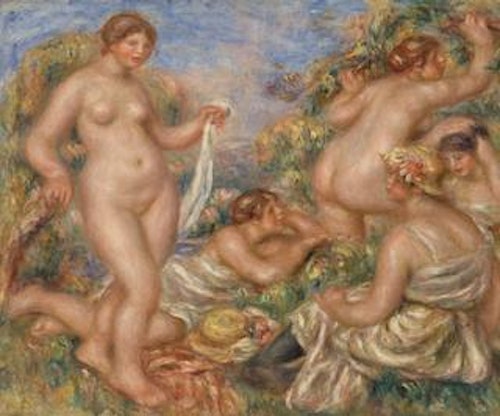 Pierre-Auguste Renoir — Composition, Five Bathers (Compositi
 Pierre-Auguste Renoir — Bathing Group
 Franz Marc — Nudes under Trees
 Pierre-Auguste Renoir — Les Grandes Baigneuses
 Paul Cezanne — The Battle of Love
 Pierre-Auguste Renoir — Picnic (Le Déjeuner sur l'herbe)
 Ernst Ludwig Kirchner — Five Bathing Women at a Lake