Mount Fuji and the Miho Pine Forest
SEE IT IN PERSON
Not currently on view
In the collection of Art Institute of Chicago, Chicago · as of July 2026
Discussion
FROM THE ART INSTITUTE OF CHICAGO’S CATALOG
Japanese painter Soga Shōhaku created this scene over two folding screens, pairing a rising dragon with a forested landscape and the iconic Mount Fuji. A rare expression of this auspicious subject, this is the earliest and largest known version of the theme of Mount Fuji and the dragon together in one composition. Mount Fuji and its surrounding landscape is a quintessential symbol of Japan. The inclusion of a dragon is particularly meaningful, as homonyms in Japanese for “Fuji” and “dragon” combine to create the meaning of “removing all unhappiness.” Shōhaku was not associated with any established school of painting and little is known about his biography. The artist earned his reputation for his technical skills with monochrome ink painting and his irreverence for traditional norms—both qualities on display in this work. Here, Shōhaku adeptly rendered lush trees, craggy rocks, and a snow-covered mountain, as well as intangible atmospheric details such as wind, rain, and clouds. Mount Fuji itself is painted in the negative with the white of the paper expressing the snow-covered mountain whose contours are created with layers of ink wash surrounding it. Reading the composition from
Be the first to share your thoughts.
Sign in to join the discussion.
More by Soga Shohaku


More like this
 Sesson Shukei — Landscape of the Four Seasons
 Sesson Shukei — Landscape of the Four Seasons
 Sesson Shūkei
 Sesson Shukei — Landscape of the Four Seasons
 Yamamoto Baiitsu — 山本梅逸筆 四季山水図|Landscapes of the Four Season
 Kano Yasunobu — Monkey Trainers and Scenes of Chinese Life (
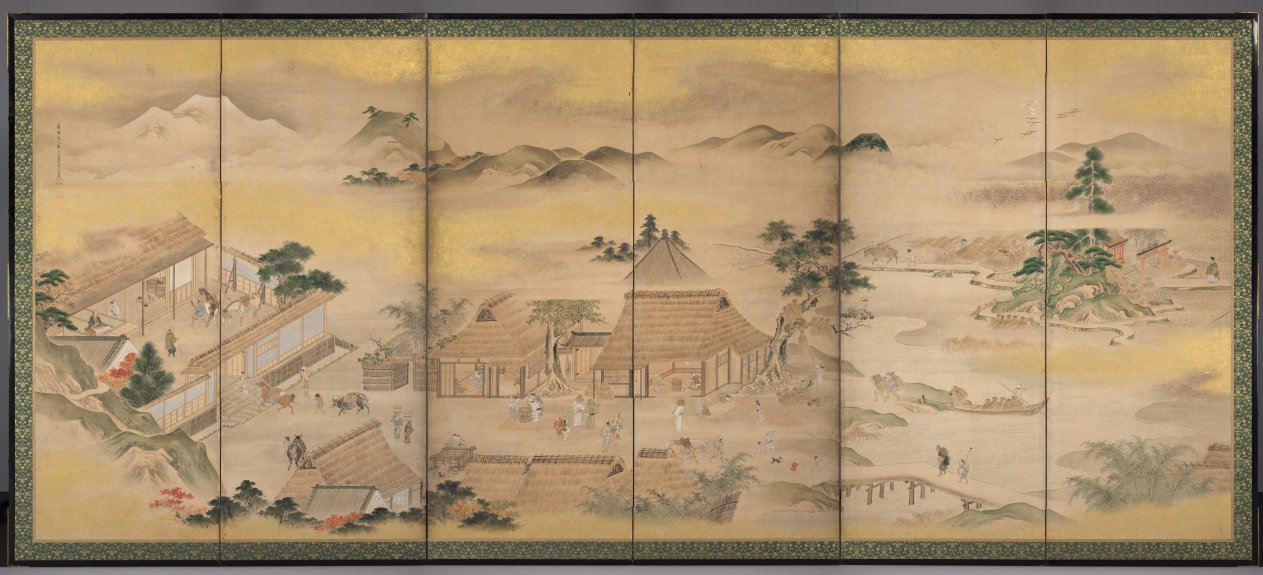 Kō Sūkoku (Japanese, 1730–1804) — Spring and Autumn Farming
  Andō Baiho
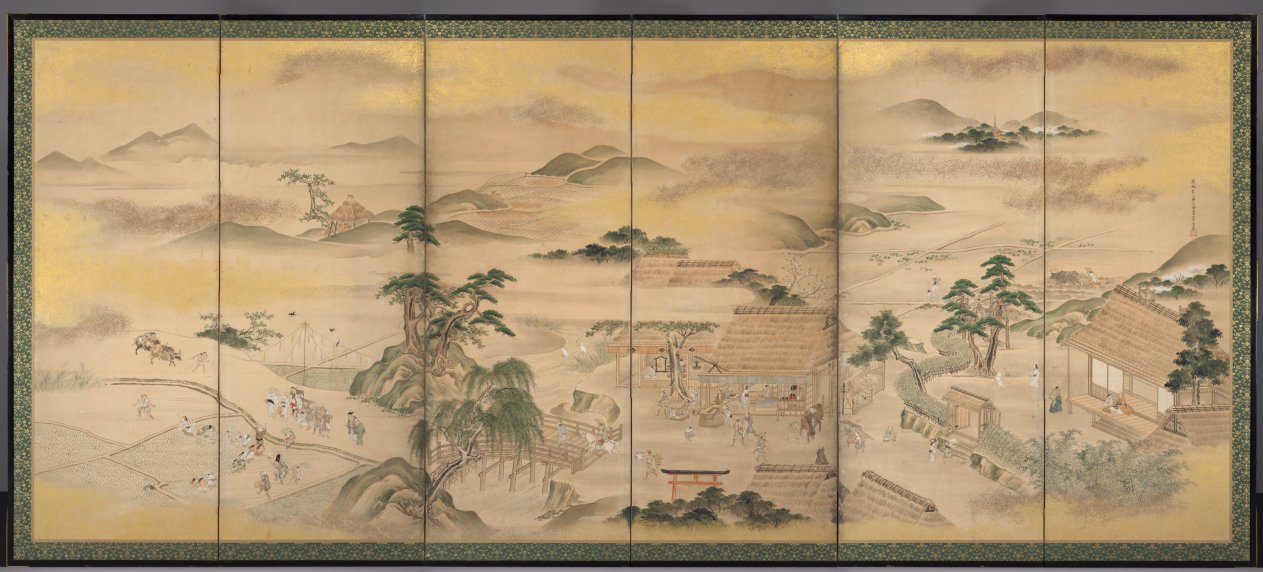 Kō Sūkoku (Japanese, 1730–1804) — Spring and Autumn Farming
  Tosa Mitsuoki — Bamboo and Fences
 Kano Yasunobu — Monkey Trainers and Scenes of Chinese Life (