Landscape of the Four Seasons
SEE IT IN PERSON
Not currently on view
In the collection of Art Institute of Chicago, Chicago · as of July 2026
Discussion
FROM THE ART INSTITUTE OF CHICAGO’S CATALOG
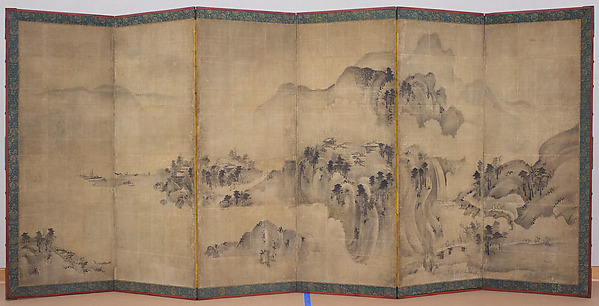
<BIG>雪村周継は、室町時代の禅宗の画僧である。京都を訪れたとみなされておらず、独自の画風を確立したのは、関東地方を遍歴した時期であった。 この作品は、本展覧会唯一の、16世紀の作品である。夢幻的な中国の山水が、眼前に、空間奥深く広がっている。屏風の折れにより、その効果は一層、高められている。絵の構成は、縦書きの日本の書と同様に、右から左へと展開しており、四季の移り変わりは、右隻の1年のはじまりとなる紅梅から、左隻の積雪の山へと表わされている。右隻の山寺と左隻の村落は、舟の往来する入江を取り囲んでいる。人々は、せわしなく動き回り、岩の形は、地形的にあり得ない程ねじれ、滝水は、指を広げたように、しぶきをあげている。 このように、中国を起源とする禅宗の信者たちが理想とした風景画とは、知性と信仰の営みを妨げられることなく探求できまた四季の一巡が自然の世界が本来もっている調和と再生を物語るような楽園を表わすものであった。</BIG> The artist Sesson Shukei was a Zen Buddhist monk-painter who achieved his idiosyncratic painterly style during an itinerant career in eastern Japan, seemingly without traveling to Kyoto, Japan’s cultural and political capital at the time. His Landscape of the Four Seasons is the only work in the exhibition from the 16th century. Sesson’s dreamlike Chinese landscape expands before our eyes in understandable spatial depth, an effect that is enhanced by the folds of the screen. We read the composition like the Japanese language, from right to left, and follow the flow of the seasons from the first red plum blossoms of the year, all the way across to the snow-covered mountains on the far left. A mountain temple on the right and a village on the left enclose an i
Be the first to share your thoughts.
Sign in to join the discussion.
More by Sesson Shukei


More like this
 Soga Shohaku — Mount Fuji and the Miho Pine Forest
 Ōhara Donshū (Japanese, d. 1857) — Fish in a Lotus Pond
 Sino-Portuguese, Probably Macau — Folding Screen (Biombo)
 Tosa Mitsuoki — Bamboo and Fences
 Andō Baiho
 Soga Shohaku — Mount Fuji and the Miho Pine Forest
 Sesson Shūkei
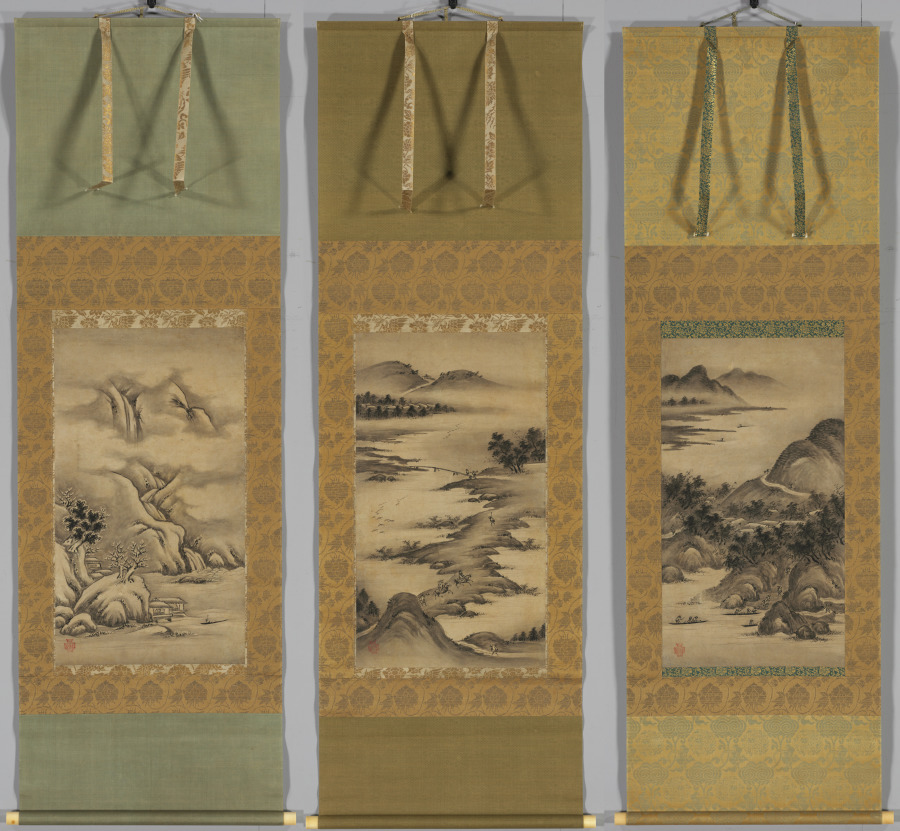 Kano Hideyori (Japanese, active mid- to late 1500s) — Season
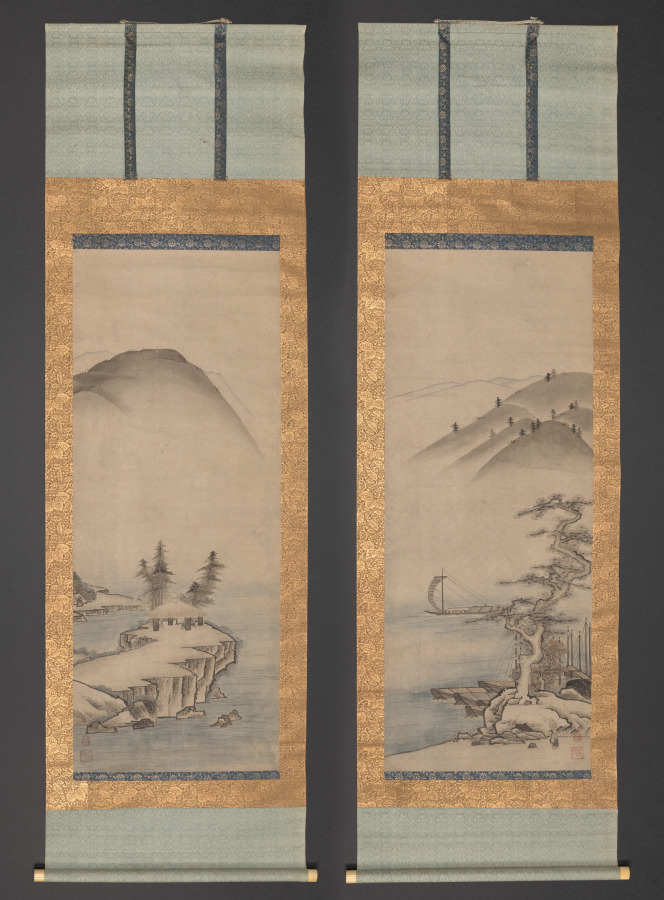 Unkoku Tōyo (Japanese, 1612–1688?) — Landscapes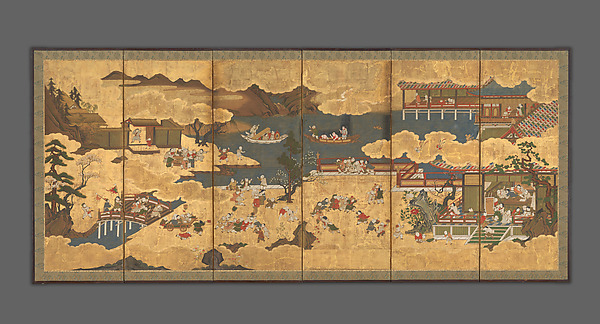
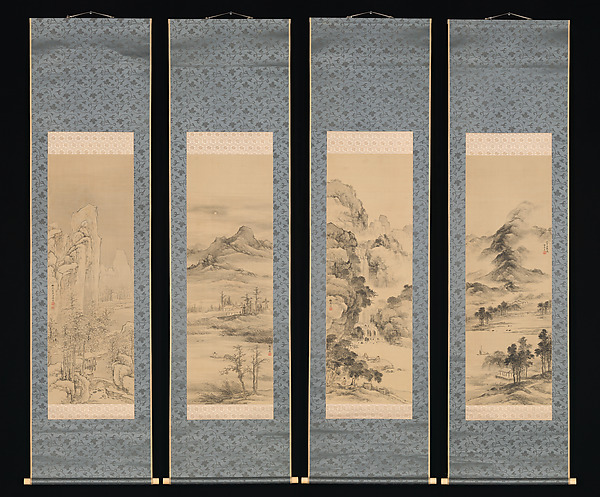 Yamamoto Baiitsu — 山本梅逸筆 四季山水図|Landscapes of the Four Season
 Kano Yasunobu — Monkey Trainers and Scenes of Chinese Life (