In the collection of Cleveland Museum of Art, Cleveland — check current display status with the museum.
FROM THE CLEVELAND MUSEUM OF ART’S CATALOG
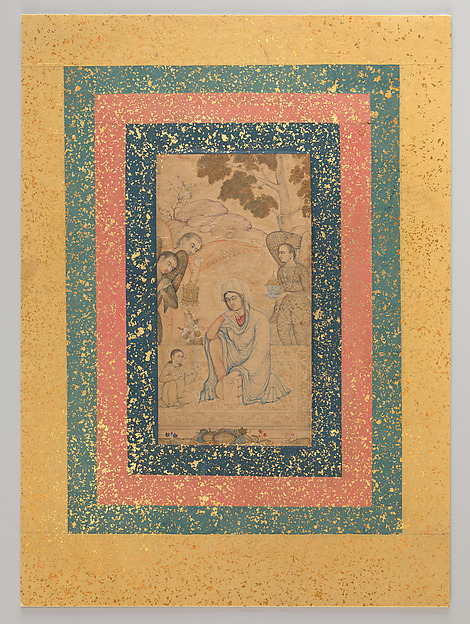
Manohar riffs on the work of his father, Basavana, by showing a holy man bowing at the feet of a prince, instead of another holy man. Those who could recognize the relationship between this work and that of his father ( CMA 2013.296 ) would impress gatherings of courtly connoisseurs, who prided themselves on being able to identify the hand of individual artists just by looking at the paintings. Recitation of poetry would accompany the viewing of paintings and drawings. Virtuoso artists reflected glory on their patrons. As an Islamic ruler, Akbar and his court participated in these activities—a new purpose for art that Indian artists had to learn.
Be the first to share your thoughts.
Sign in to join the discussion.
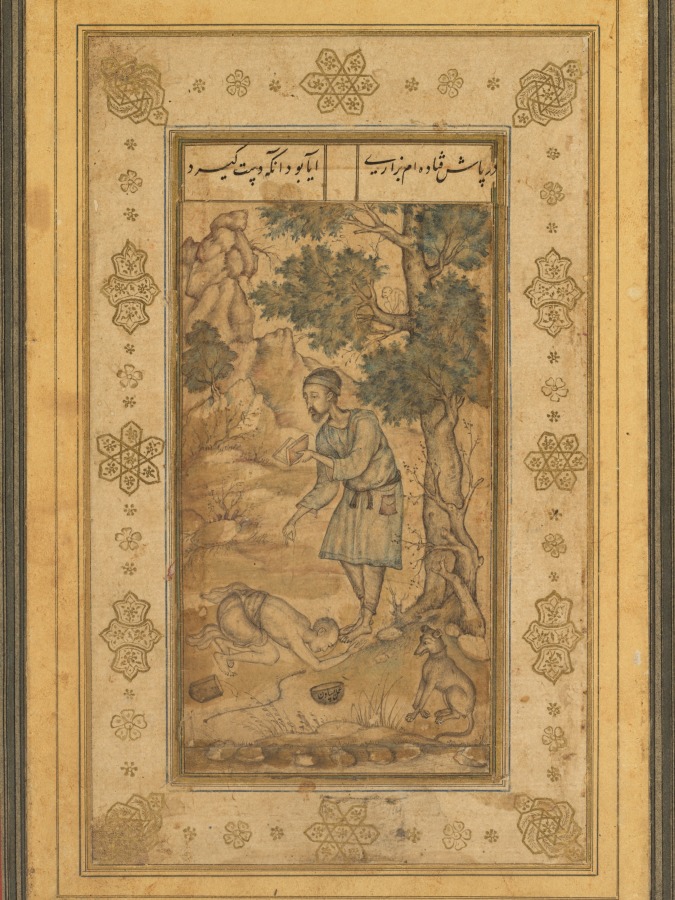 Basavana (Indian, active c. 1560–1600) — A mendicant bowing
 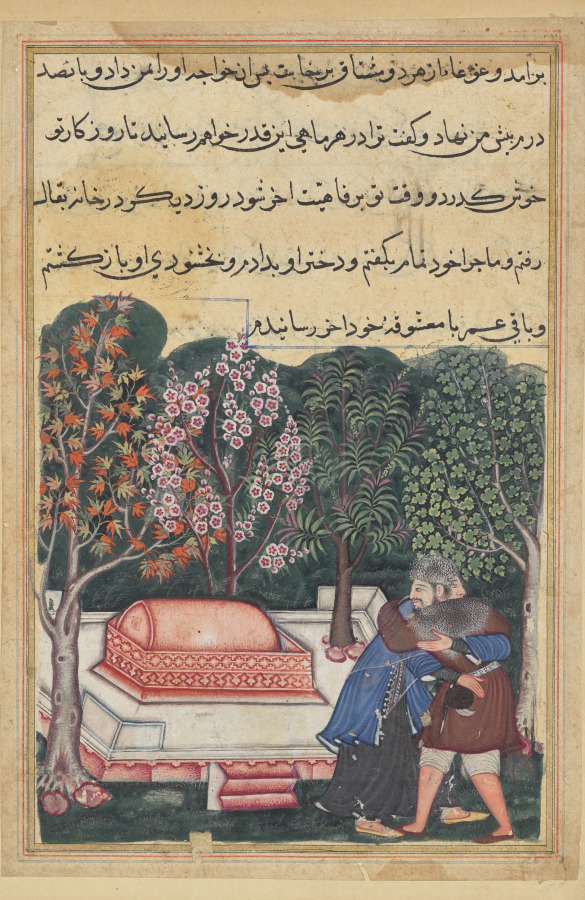 The young man of Baghdad reunited with his slave-girl, from
 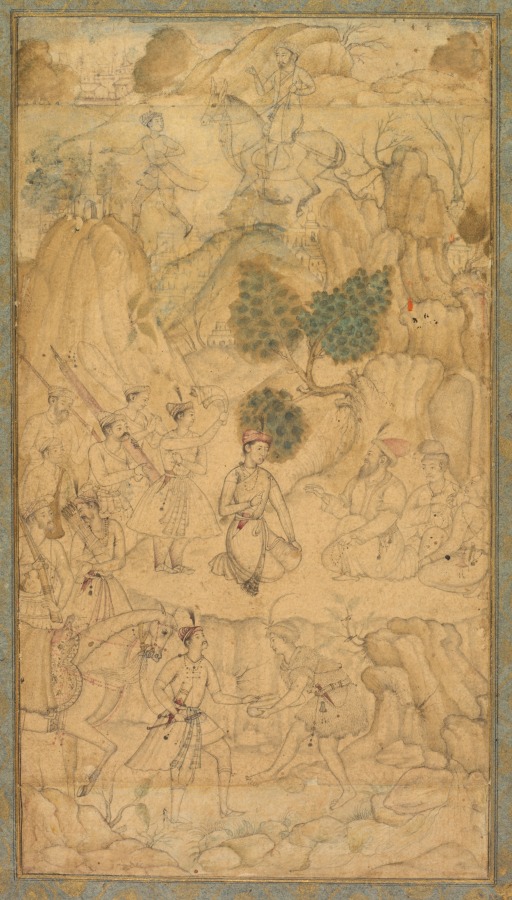 A prince visiting a holy man in a rocky landscape
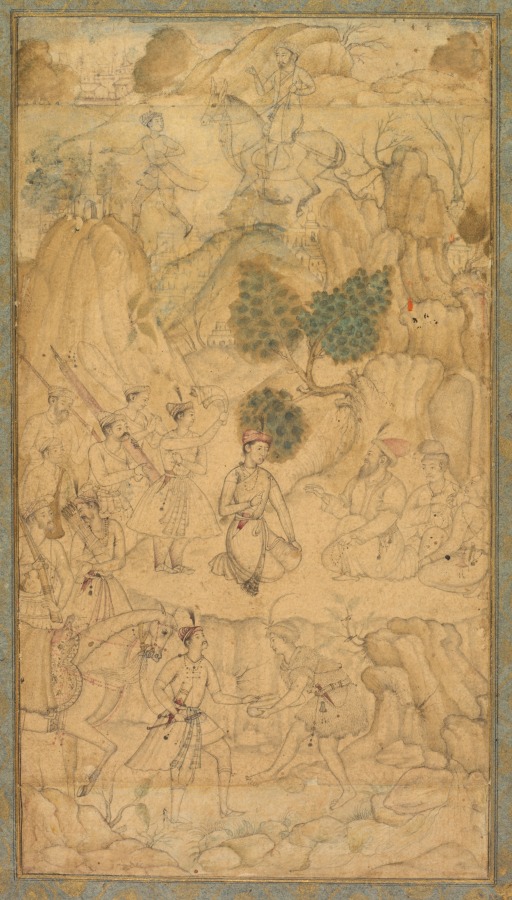 A Prince Visiting a Holy Man in a Rocky Landscape (recto)
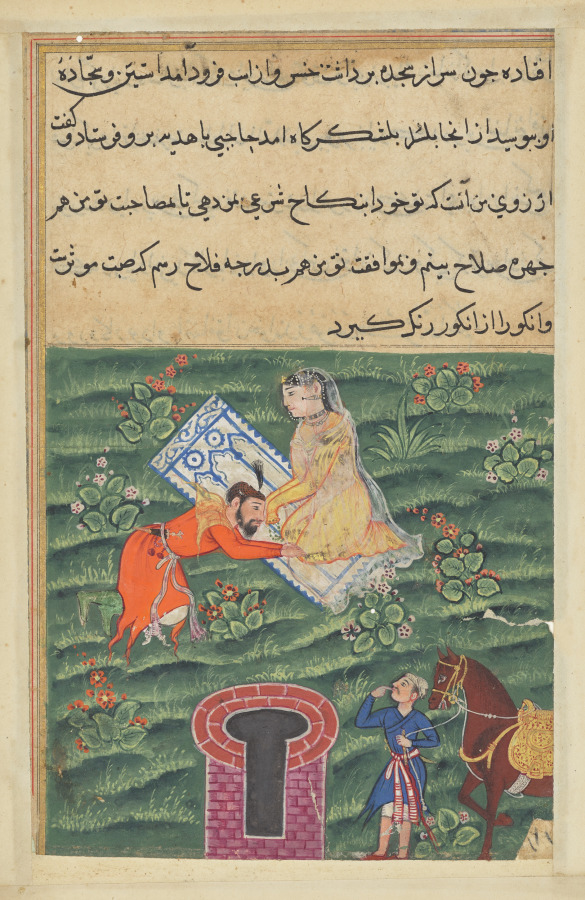 Khusrau, the King of Kings, pays homage to the pious daughte
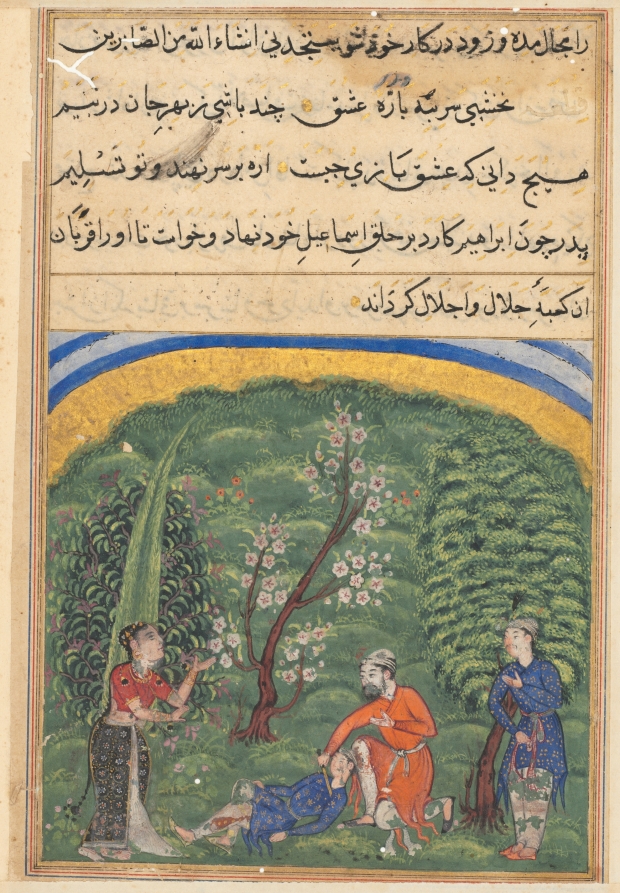 The sentinel in the employ of the Shah of Tabaristan prepare
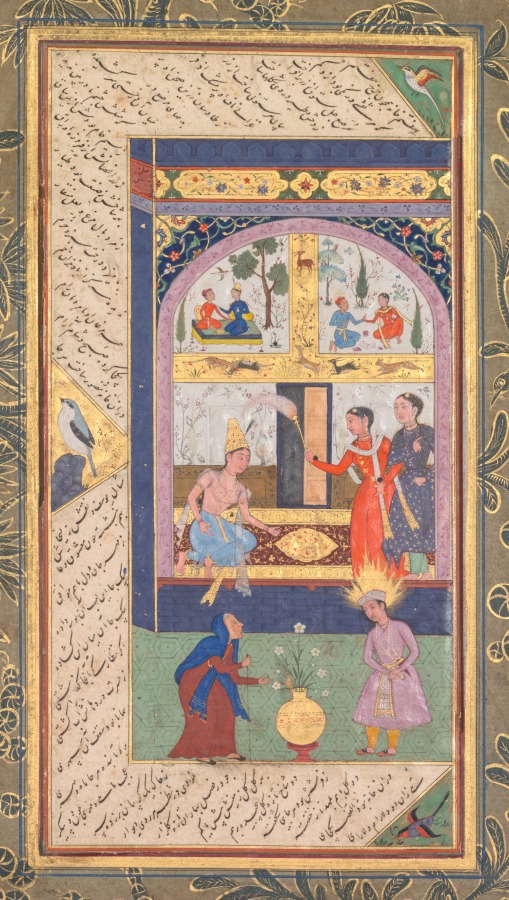 Mushfiq (Indian, active early 1600s) — Zulaykha in her palac
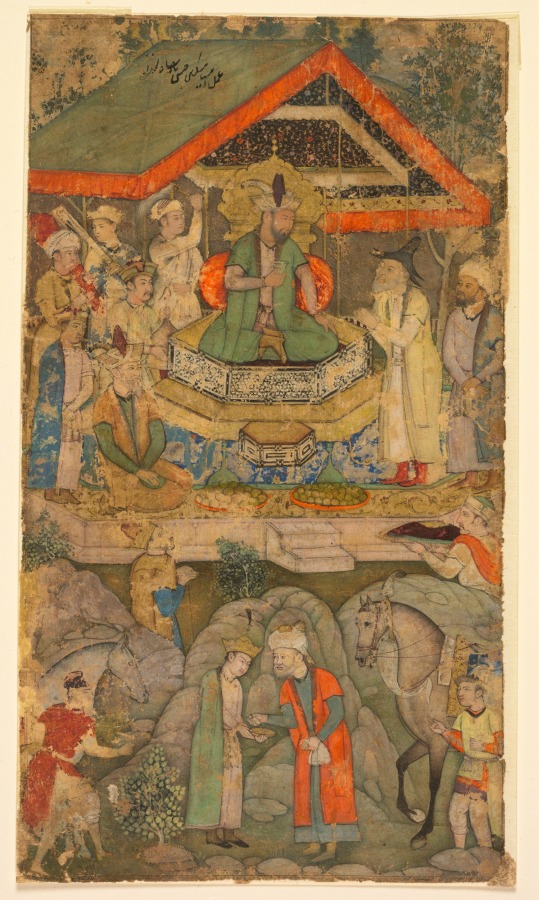 Miskin (Indian, active 1570s–c. 1604) — An Ambassador before
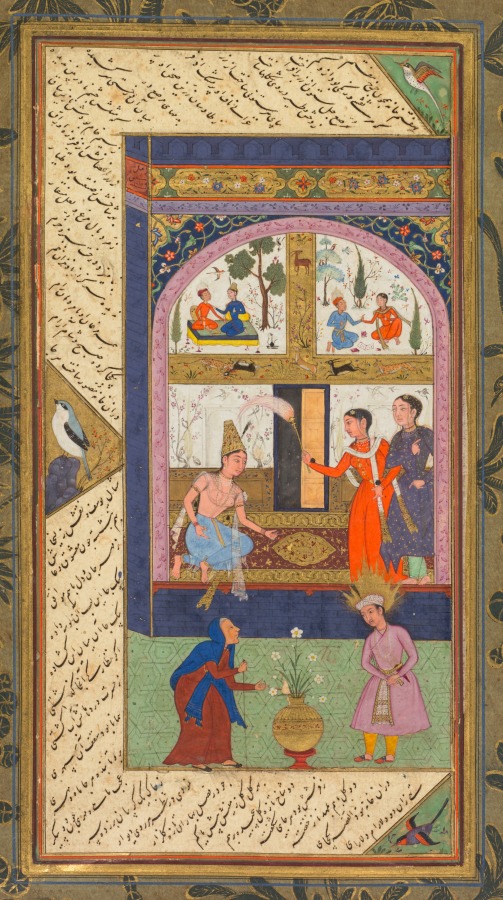 Mushfiq (Indian, active early 1600s) — Zulaykha in her palac
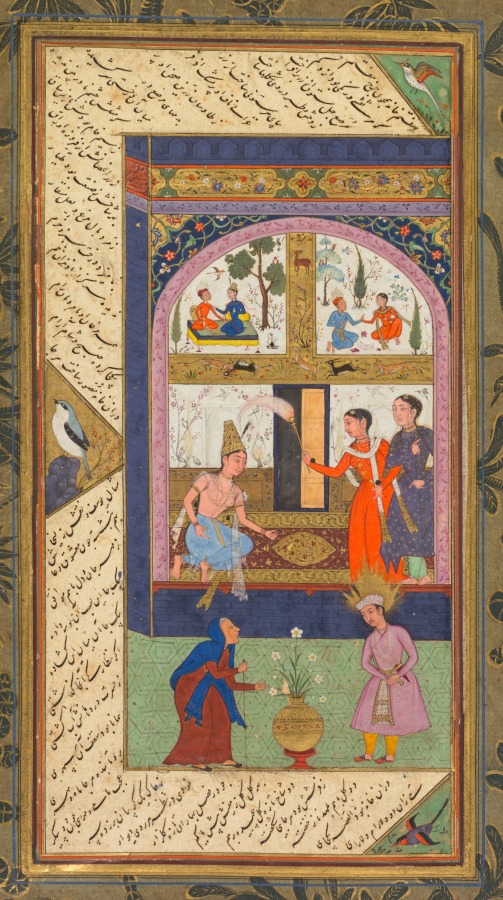 Mushfiq (Indian, active early 1600s) — Folios A and B from t
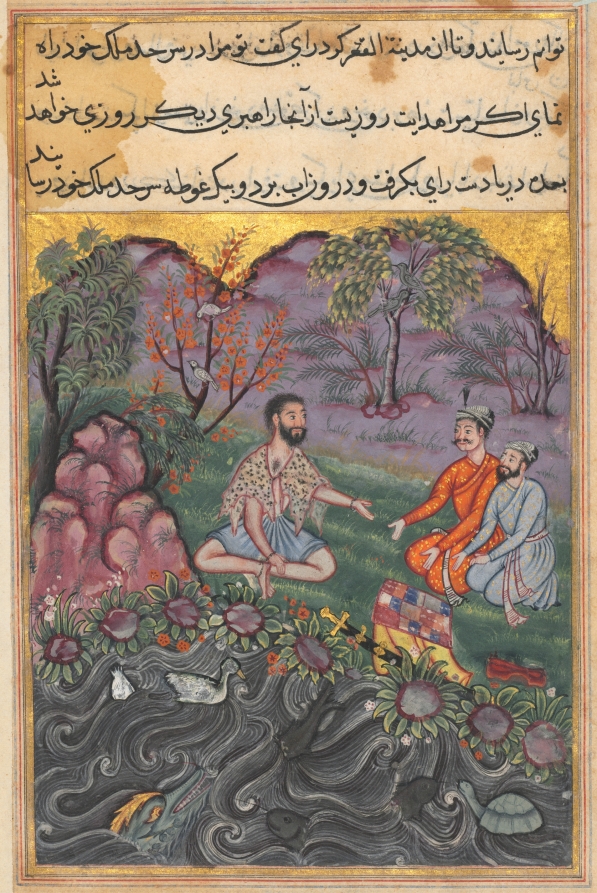 The Raja of Ujjain, who is traveling in the guise of a yogi,
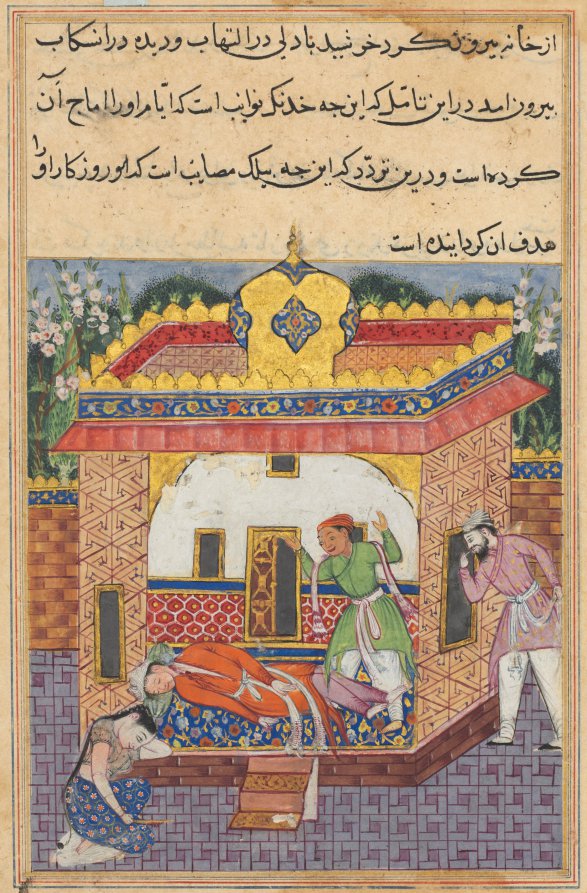 Latif, who has murdered his brother, falsely accuses Khurshi