FROM THE CLEVELAND MUSEUM OF ART’S CATALOG
Much smaller in size than standard Japanese folding screens, this lively pair depicts all manner of entertainments. Although at first they seem to show an ongoing festival, closer examination reveals that the screens comprise a series of isolated scenes from disparate occasions. In one screen, crowds gather around a bout of sumo wrestling as well as juggling and balancing acts. Elsewhere, teams of men pull a float bearing musicians costumed in foreign dress. There is also a dance circle with drums, a performing monkey, and a party of falconers. In the other screen, male courtiers observe a game of kickball played by noblemen, while their female counterparts watch from behind bamboo curtains. Others enjoy a theater performance. A children’s dance circle and a dance performance with ladies sporting elaborate headgear occupy the center of the screen. A group wielding huge parasols at the upper left of the screen reenacts episodes from legend, as still other performances, including dancing dogs, entertain the crowds below.
Source ↗︎
Be the first to share your thoughts.
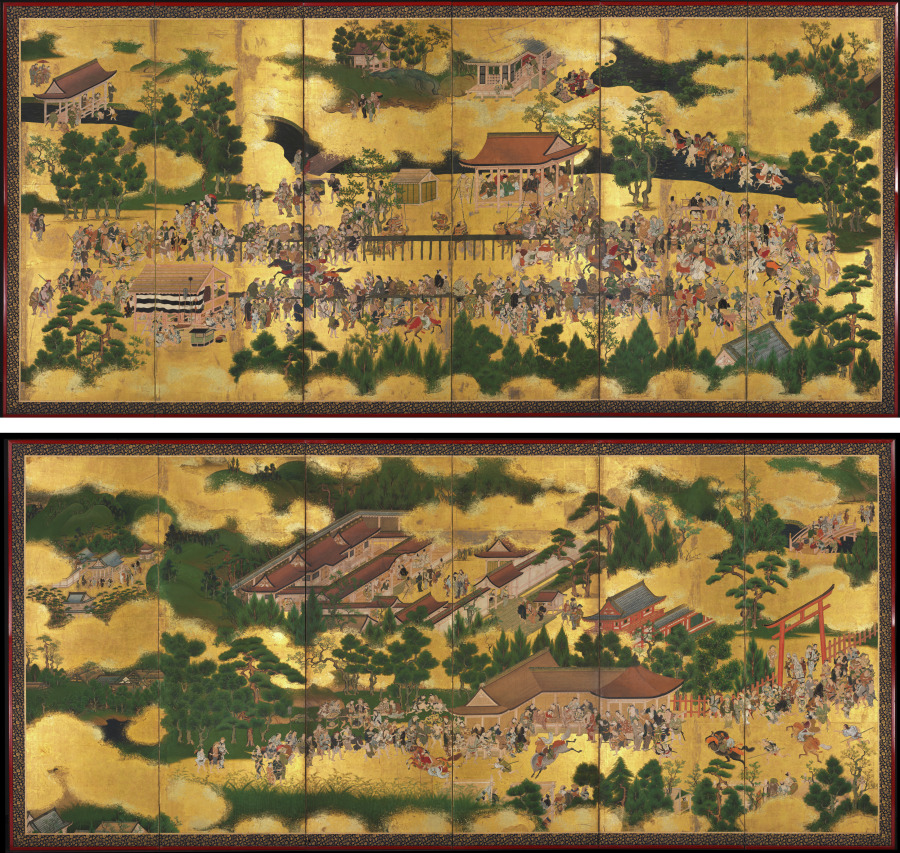 Horse Race at the Kamo Shrine
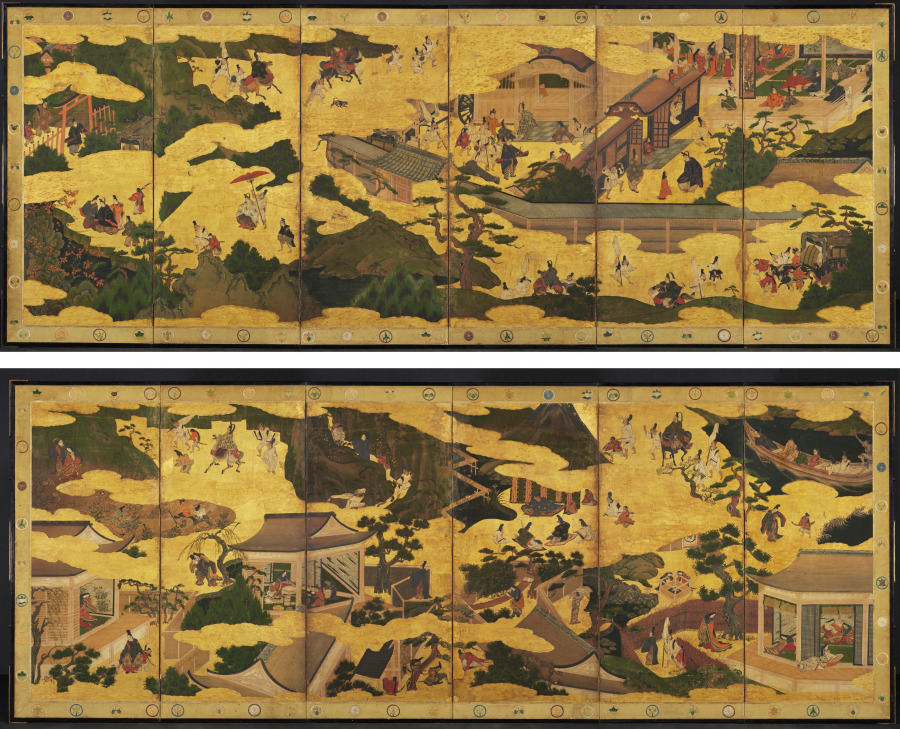 Scenes from the Tales of Ise
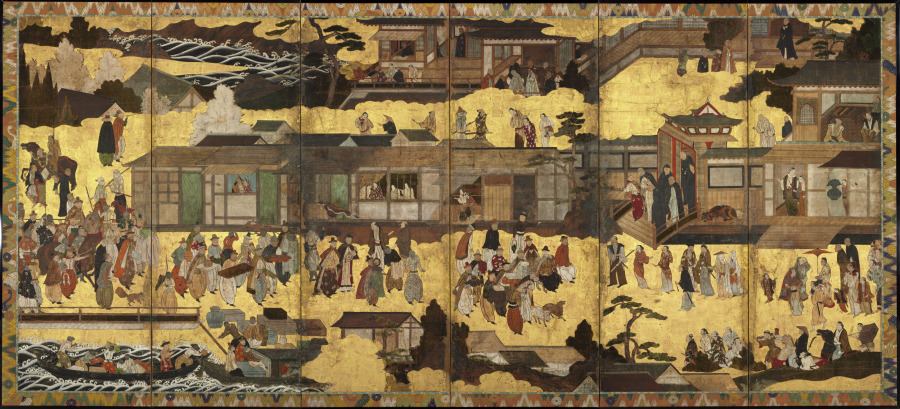 Arrival of the "Southern Barbarians"
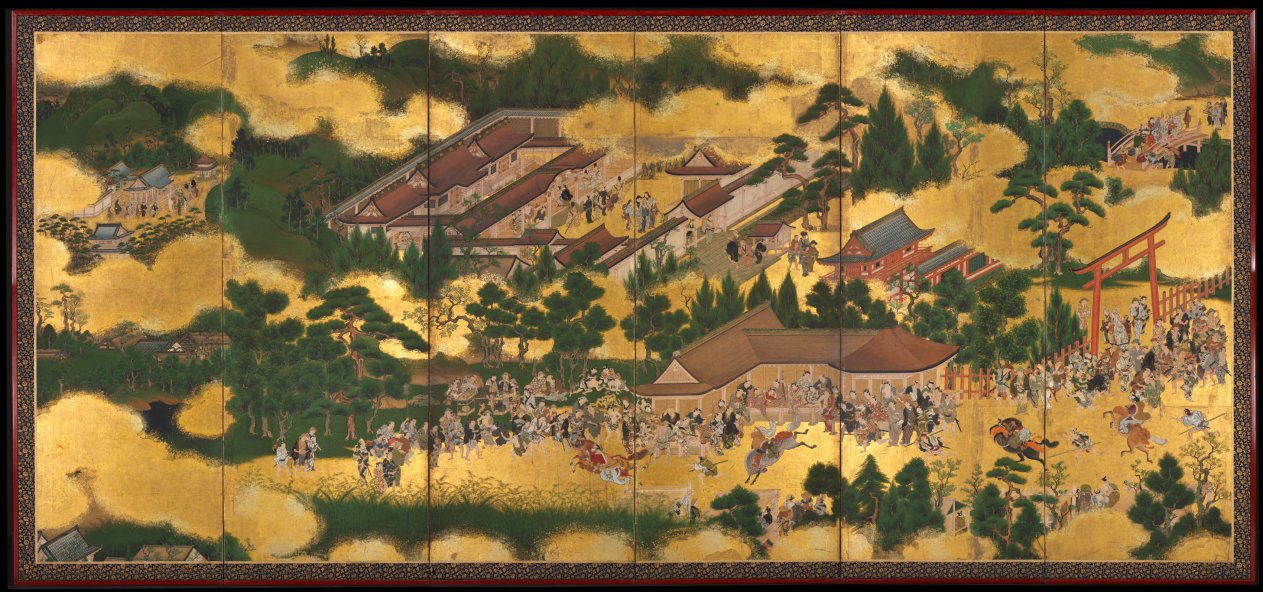 Horse Race at the Kamo Shrine
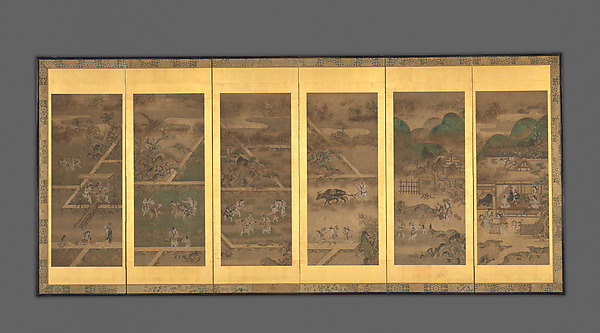 農耕作月次図屏風|Farmers' Lives in the Twelve Months
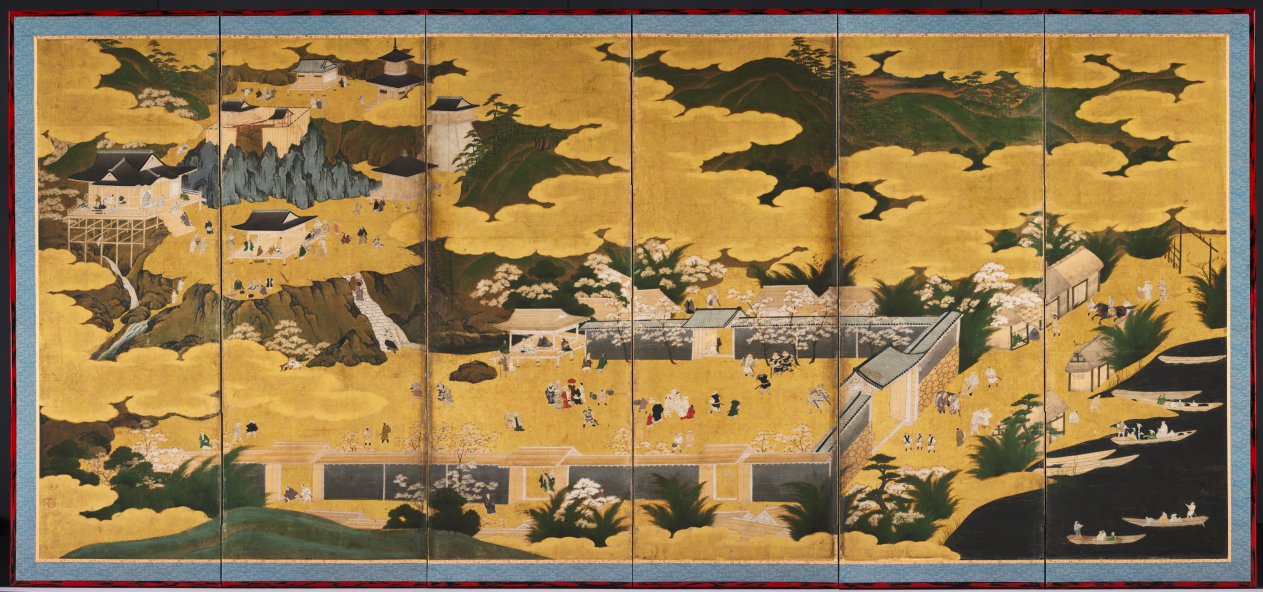 Famous Views of Ōmi
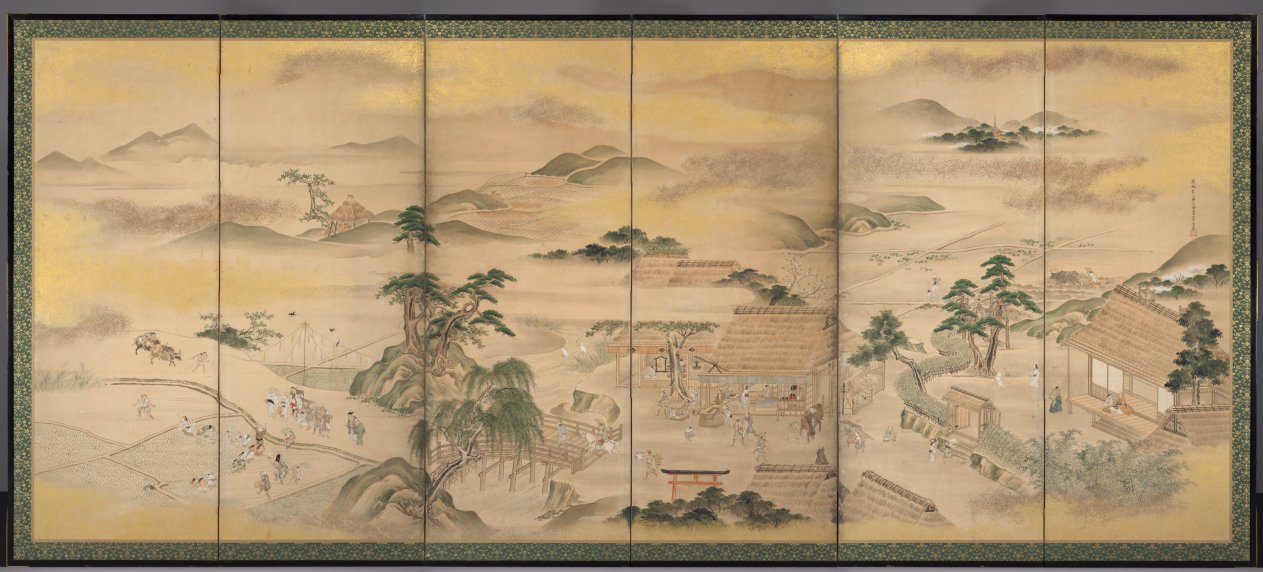 Kō Sūkoku (Japanese, 1730–1804) — Spring and Autumn Farming
 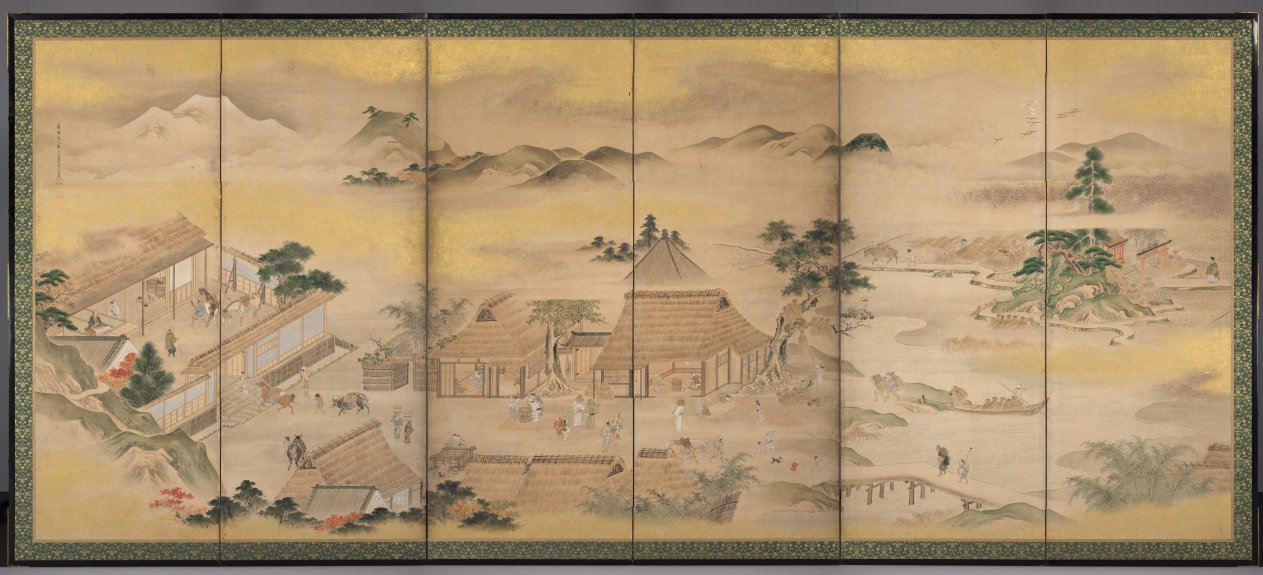 Kō Sūkoku (Japanese, 1730–1804) — Spring and Autumn Farming
 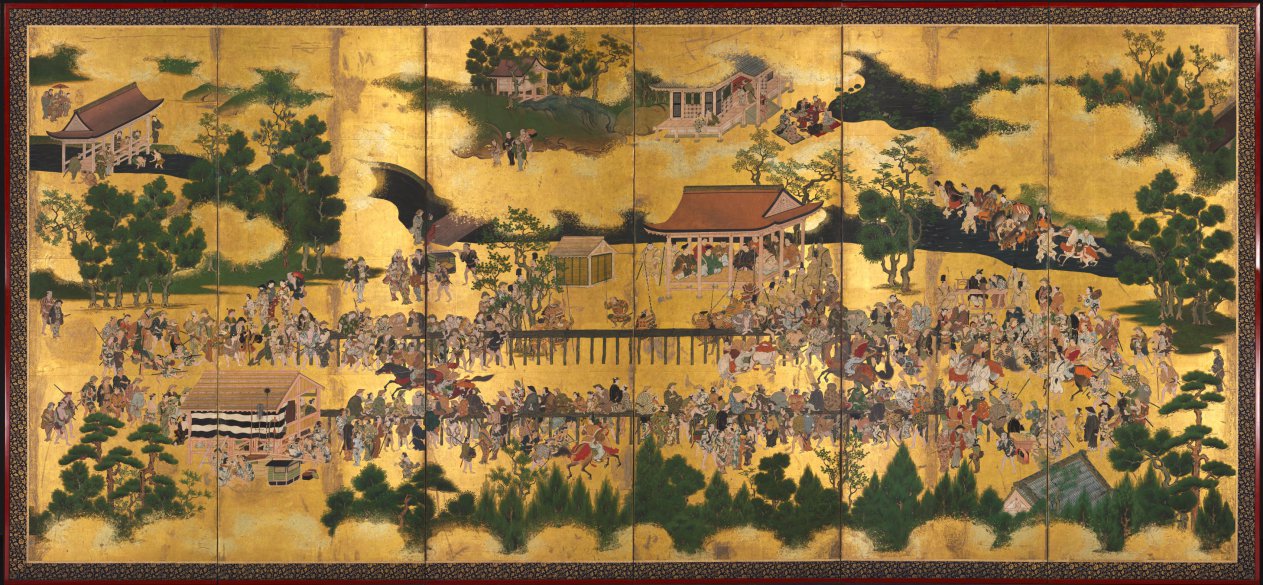 Horse Race at the Kamo Shrine
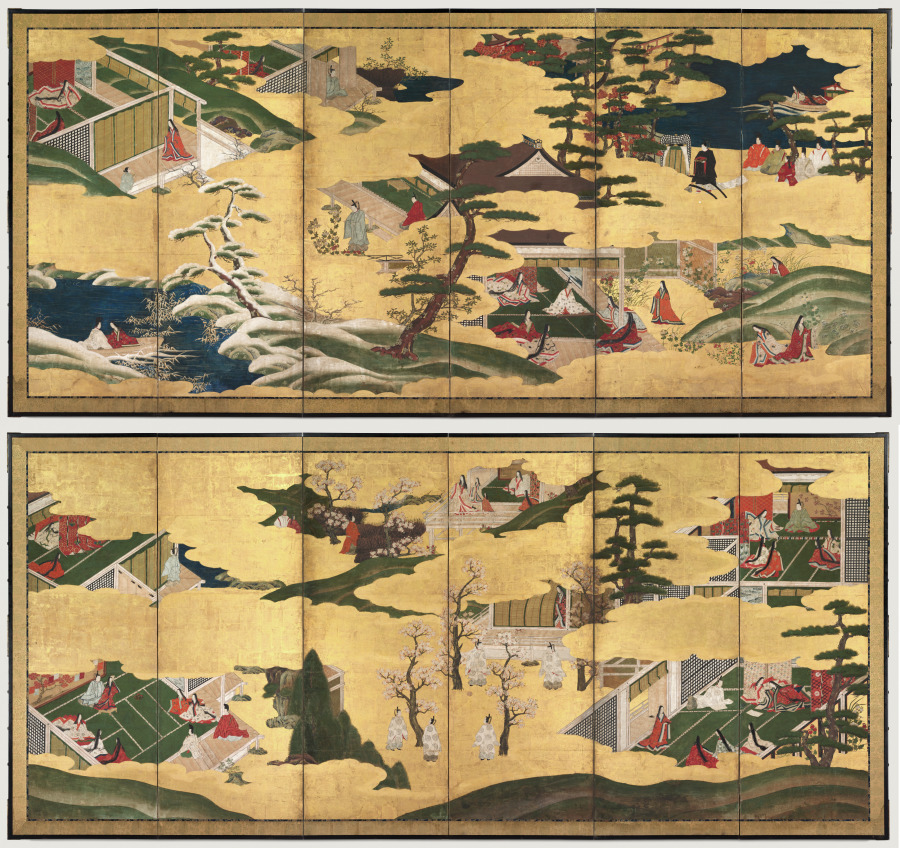 Scenes from the Tale of Genji
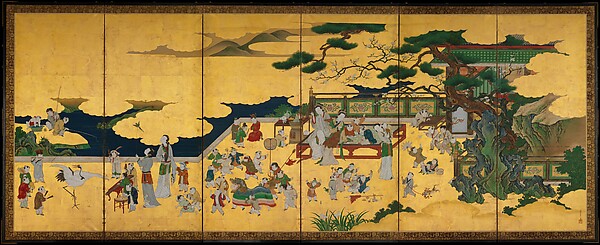 Kano Einō — 狩野永納筆 唐子遊図屏風|One Hundred Boys
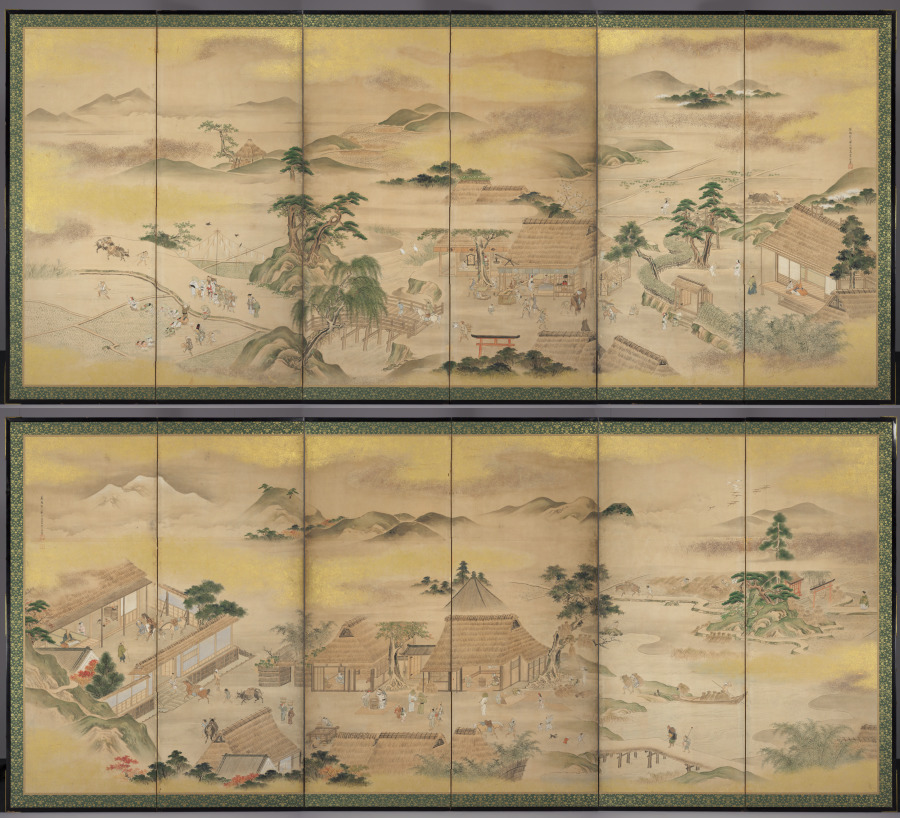 Kō Sūkoku (Japanese, 1730–1804) — Spring and Autumn Farming