Who Was Vincent van Gogh?
He sold almost nothing in his lifetime and became, a century later, the most beloved painter alive or dead.

Vincent van Gogh (1853–1890) was a Dutch Post-Impressionist painter whose vivid color and urgent brushwork reshaped modern art. He came to painting late, worked for barely a decade, struggled with mental illness and poverty, and sold almost nothing before dying at 37. Today his sunflowers, starry skies, and self-portraits are among the most loved images in the world.
Almost everyone knows the paintings before they know the man. Vincent van Gogh — the Dutch Post-Impressionist behind those swirling skies and blazing sunflowers — packed one of the most influential bodies of work in art history into roughly ten years, and he did it while barely selling a thing.
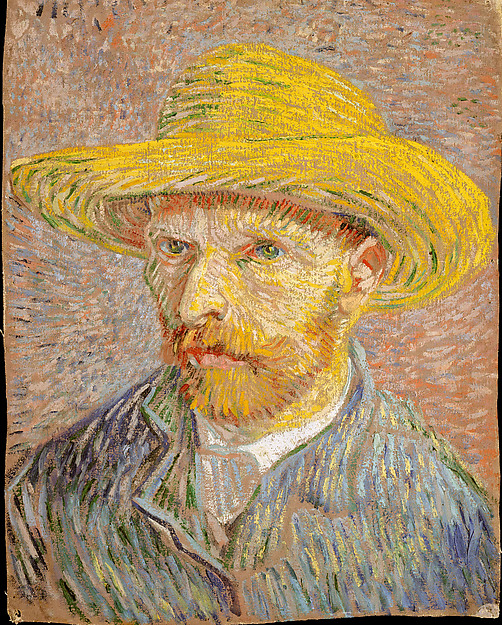
The face below is his own. He painted himself constantly, partly because he was too poor to pay models.
How did Van Gogh become a painter?
He came to it late, after failing at nearly everything else. Before he ever picked up a brush in earnest, Van Gogh worked as an art dealer, a teacher, and a lay preacher among poor mining families — and was let go or gave up on each in turn. He only committed to art around the age of 27, teaching himself with grim determination and the steady financial and emotional support of his younger brother, Theo.
His early work was nothing like the sunlit canvases people picture. It was dark, earthy, and deliberately unlovely — peasants, weavers, laborers. His first real masterpiece shows a family hunched over a bare meal by lamplight.

What are his most famous works?
The famous ones came in a rush after he moved south to France and discovered color. In Paris and then in Arles, his palette exploded — yellows, blues, violent greens — and his brushstrokes turned into visible, rhythmic marks that seem to move on the canvas.
From these last few years come the works the whole world knows: the Sunflowers, the yellow Bedroom, the wheat fields, and the night skies. The Starry Night — painted from an asylum in Saint-Rémy — has become one of the most reproduced images ever made (why is it so famous?).

If you have wondered why he returned to one flower again and again, we go deeper in why did Van Gogh paint so many sunflowers.
Was he really unrecognized in his lifetime?
Largely, yes — though the tidy legend of the artist who "sold only one painting" oversimplifies things. It's long been repeated that he sold a single canvas before he died; in truth a small number of works and drawings changed hands, and a few critics had begun to notice him in his final year. What's beyond doubt is that fame arrived far too late for him to enjoy it.
He lived on Theo's money, battled severe mental illness, and died in 1890 at 37 from a gunshot wound generally understood to be self-inflicted. Much of what "everyone knows" about him — including the ear he cut off — has hardened into myth worth untangling; we sort fact from story in was Van Gogh really unknown in his lifetime.
The paintings reward exactly the thing he never got: slow, generous attention. Spend a few unhurried minutes with a Van Gogh on DiscoverArt and let the marks do what they were built to do.
Sources
Discussion
Be the first to share your thoughts.
Sign in to join the discussion.