Did Van Gogh Really Cut Off His Ear — and Why?
The most famous act of self-harm in art history, minus the myths.
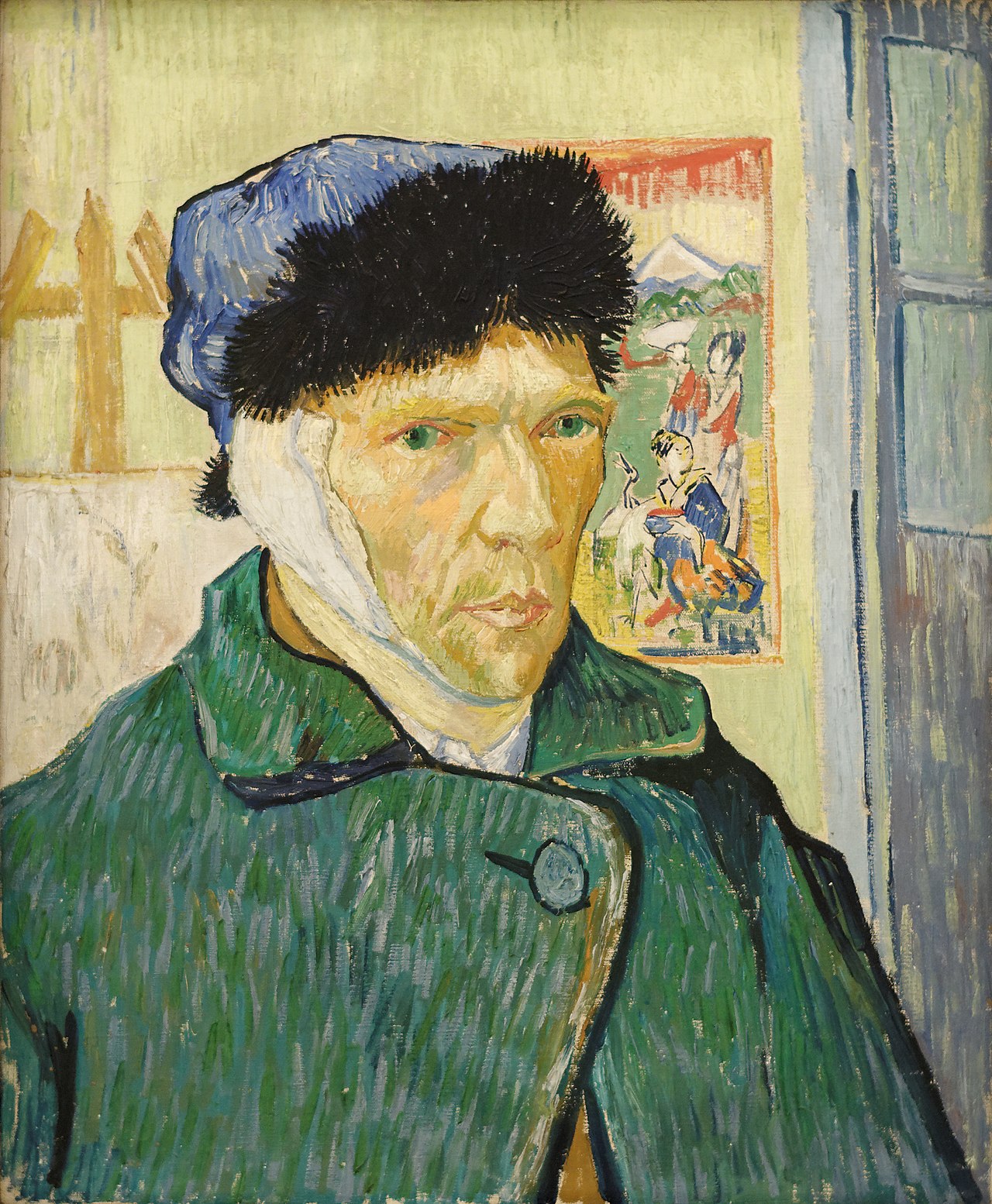
Yes. On the night of 23 December 1888 in Arles, Vincent van Gogh cut off most of his left ear with a razor during a mental breakdown, after a bitter falling-out with the painter Paul Gauguin. He wrapped the ear and delivered it to a woman near a local brothel, then was found bleeding the next morning.
Almost everyone knows Vincent van Gogh cut off his ear. Almost everything people add to that sentence is where the myths creep in. Here is what the evidence actually supports.
The night it happened
By December 1888, Van Gogh was living in the "Yellow House" in Arles, in the south of France, sharing it with the painter Paul Gauguin. The two argued constantly about art and money, and Van Gogh — exhausted, drinking heavily, and almost certainly in the grip of a serious mental illness — was unraveling.
On the night of 23 December 1888, after a final confrontation with Gauguin, Van Gogh took a razor and severed most of his left ear. He wrapped the piece, walked to a maison de tolérance (a brothel) nearby, and handed it to a young woman with instructions to keep it safe. He was found the next morning in bed, soaked in blood, and taken to the hospital in Arles.

The parts that got exaggerated
- "He gave his ear to his girlfriend." For a century, as the story went, the woman was a lover known only as "Rachel," and the gesture a romantic gift. But in 2016 the researcher Bernadette Murphy identified her instead as a young farm girl working at the brothel — not a lover at all. Rumor turned it into a love story; the evidence points to a man in crisis.
- "He cut off the whole ear." Most accounts, including a diagram drawn by the doctor who treated him, indicate he removed most — though possibly not quite all — of the ear.
Why he did it
There is no tidy answer, and honest sources resist one. Van Gogh suffered severe episodes — variously theorized as epilepsy, bipolar disorder, or the effects of absinthe and malnutrition — and the ear was the first of several breakdowns. He spent much of the next year in an asylum at Saint-Rémy, where, astonishingly, he painted some of his greatest work, including the beloved *Irises*.

He sold almost nothing in his lifetime and died in 1890. The ear became legend; the paintings became immortal. It's worth remembering the order those things happened in.
Sources
- Vincent van Gogh — Wikipedia
- Van Gogh's ear — Wikipedia
- Bernadette Murphy, 'Van Gogh's Ear: The True Story' (2016)
Discussion
Be the first to share your thoughts.
Sign in to join the discussion.