Who Was Paul Cézanne, "the Father of Modern Art"?
Picasso and Matisse both called him their master. In his own lifetime, critics called his work a mess.
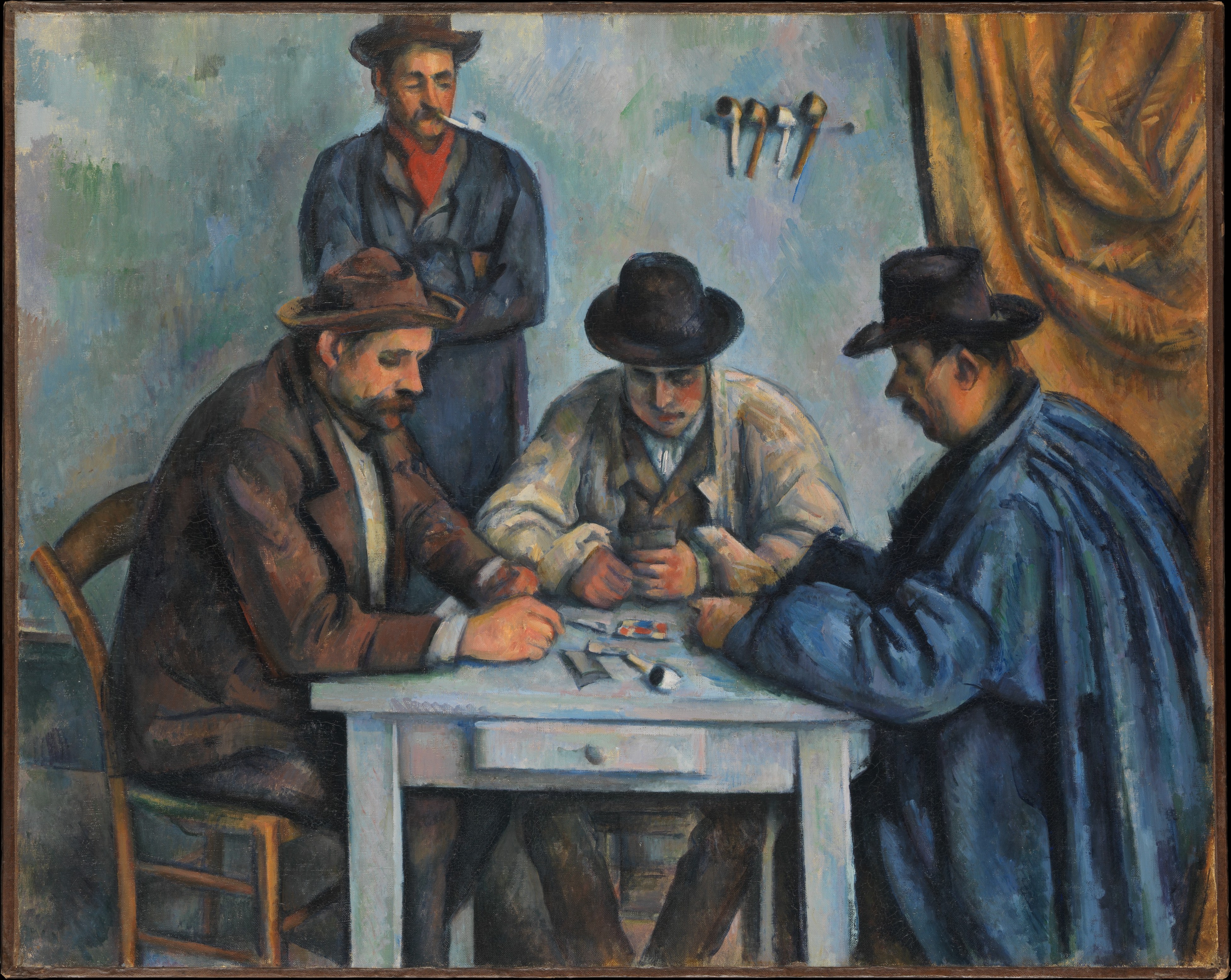
Paul Cézanne (1839–1906) was a French Post-Impressionist whose patient analysis of form and color became the bridge from Impressionism to modern art. Working obsessively in Provence — on apples, bathers, and Mont Sainte-Victoire — he treated painting as structure, not just impression. Both Picasso and Matisse called him "the father of us all."
Two of the most important painters of the twentieth century agreed on their common ancestor. Paul Cézanne was mocked for much of his life, yet both Picasso and Matisse would later call him "the father of us all" — the man who quietly opened the door to modern art.

Why is Cézanne called the father of modern art?
Because he stopped painting the surface of things and started painting their structure. Where the Impressionists chased fleeting light, Cézanne slowed everything down, breaking objects into planes and small patches of color that lock together like masonry.
That way of seeing — a jug as a set of tilted facets, a mountain as a mosaic of colored blocks — was the seed of Cubism. Picasso and Georges Braque took his method and pushed it further, which is why art historians trace so much of modernism back through Cézanne's obsessive, unglamorous work. He belongs to the generation that came after Impressionism, explored in what is Post-Impressionism.
What did he paint over and over?
A handful of subjects, again and again, for years. Chief among them was Mont Sainte-Victoire, the limestone ridge near his home in Provence, which he painted dozens of times in changing light and from shifting angles.
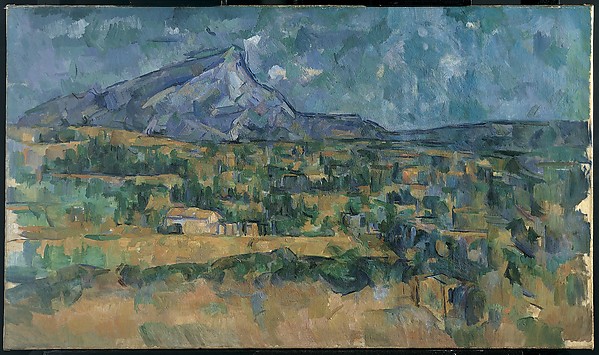
He was just as devoted to the still life — apples, oranges, and crockery arranged on a rumpled cloth — and to groups of bathers set in the landscape, a subject he wrestled with to the end of his life. Repetition was the point: each pass let him test how form, color, and space could hold together on a flat canvas.
Was he appreciated in his lifetime?
Mostly no. For decades critics dismissed his paintings as crude or unfinished, and he showed rarely, retreating to Provence to work in relative isolation. Recognition arrived late — a major dealer gave him a solo exhibition in 1895, and younger artists began to seek him out in his final years.
By the time he died in 1906, that admiration was turning into something like reverence among the avant-garde, even if the wider public still hadn't caught up. Today his work anchors collections at The Metropolitan Museum of Art and the Barnes Foundation, which holds one of the great concentrations of his paintings.
Cézanne rewards exactly the kind of patience he practiced. Sit with one of his canvases on DiscoverArt and let the loose patches resolve into solid form — that shift is the whole revolution, happening in your own eye.
Sources
Discussion
Be the first to share your thoughts.
Sign in to join the discussion.