The Cave of Despair
SEE IT IN PERSON
Not currently on view
In the collection of Art Institute of Chicago, Chicago · as of July 2026
Discussion
FROM THE ART INSTITUTE OF CHICAGO’S CATALOG
All the formulae that would come to define Fuseli’s unique style are already present in this extremely accomplished early drawing: the stage-like setting and dramatic gestures that reveal the influence of the theater; a powerful use of line and contour; extreme contrasts of dark and light; and heroic physiques influenced by ancient sculpture and Michelangelo. The subject is from Edmund Spenser’s epic poem The Faerie Queene (published 1590). It depicts the temptation of suicide offered by Despair, who bends over his latest victim. The Red Cross Knight, the hero of book 1, stands with Una, symbol of Truth, at the mouth of the cave.
Be the first to share your thoughts.
Sign in to join the discussion.
More by Henry Fuseli
 The Night-Hag Visiting Lapland Witches
 Two Heads of Damned Souls from Dante's "Inferno" (front and
  Milton Dictating to His Daughter
 Perseus Starting from the Cave of the Gorgons
 Sketch for 'Dido on the Funeral Pyre' (recto); Erotic Sketch
 Study for Inquisition, Illustration to Columbiad
 Hagen and the Nymphs of the Danube
 Prospero, Miranda, Caliban and Ariel
More like this
 Jean Bernard Restout — Martyrdom of Saints Processus and Mar
 Henry Fuseli (Swiss, 1741–1825) — Satan Starts from the Touc
 James Jefferys — Nude Male Figures Bearing the Bodies of the
 Giovanni Battista Tiepolo — Time Seated, Clutching a Putto
 Pietro Testa|Vicenzo Billi — The Suicide of Dido
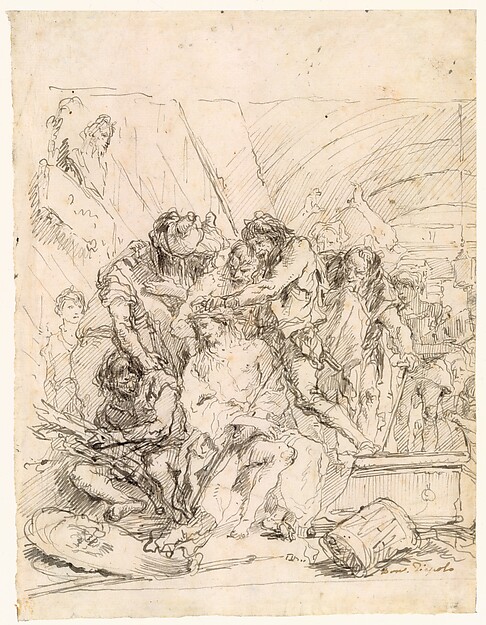 Giovanni Domenico Tiepolo — Christ Crowned with Thorns
![Long Live the Chains! ("Vivan las caenas [cadenas]")](https://images.metmuseum.org/CRDImages/dp/web-large/DP800046.jpg) Leonardo Alenza y Nieto — Long Live the Chains! ("Vivan las
Leonardo Alenza y Nieto — Long Live the Chains! ("Vivan las  Peter Paul Rubens|Anthony van Dyck — Martyrdom of Saint Lawr
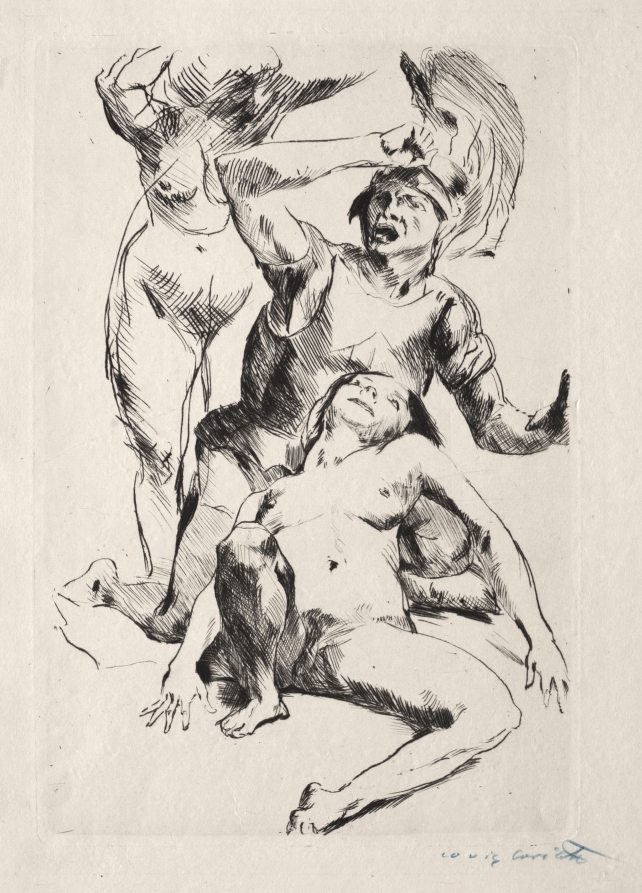 Lovis Corinth (German, 1858–1925) — Theseus and Ariadne
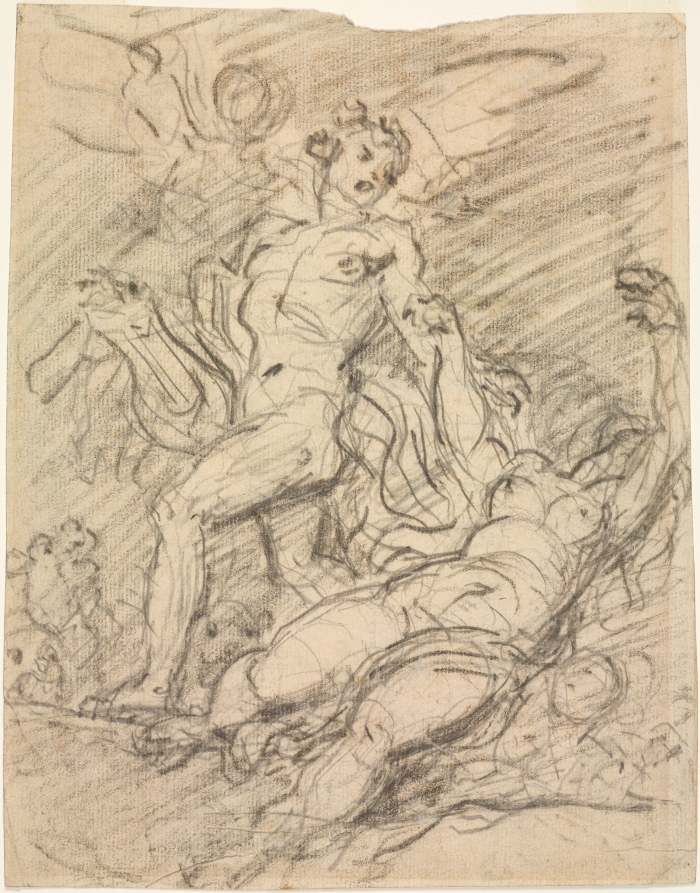 Jean-Honoré Fragonard (French, 1732–1806) — Orpheus and Eury
 Giovanni Domenico Tiepolo — Venice Receiving Neptune's Homag
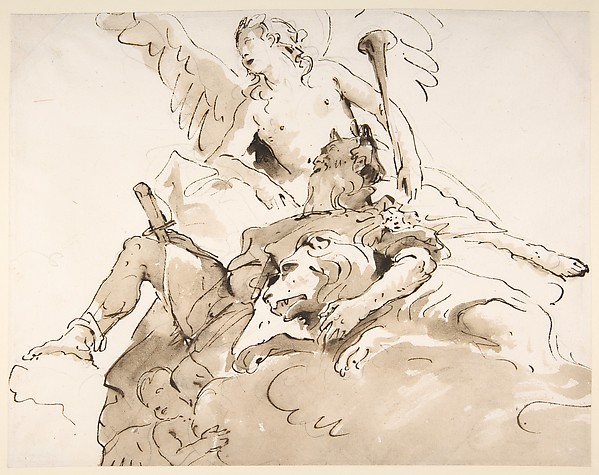 Giovanni Battista Tiepolo — Apotheosis of a Warrior