Perseus Starting from the Cave of the Gorgons
SEE IT IN PERSON
Not currently on view
In the collection of Art Institute of Chicago, Chicago · as of July 2026
Discussion
FROM THE ART INSTITUTE OF CHICAGO’S CATALOG
Fuseli’s unfinished painting depicts the ancient Greek hero Perseus, son of Zeus, a demigod who slew Medusa, the snake-haired Gorgon whose glance turned men to stone. On the ground lies the decapitated body of Medusa, above which the airborne Perseus flees with her head, which retained its deadly power. Medusa’s two sisters, at right, unsuccessfully attempt to stop Perseus. The painting’s source was the ancient Greek poet Hesiod’s the Shield of Heracles (translated into English in 1815), an imagined description in verse of the scenes found on Heracles’s beautifully crafted shield, including Perseus slaying Medusa.
Be the first to share your thoughts.
Sign in to join the discussion.
More by Henry Fuseli
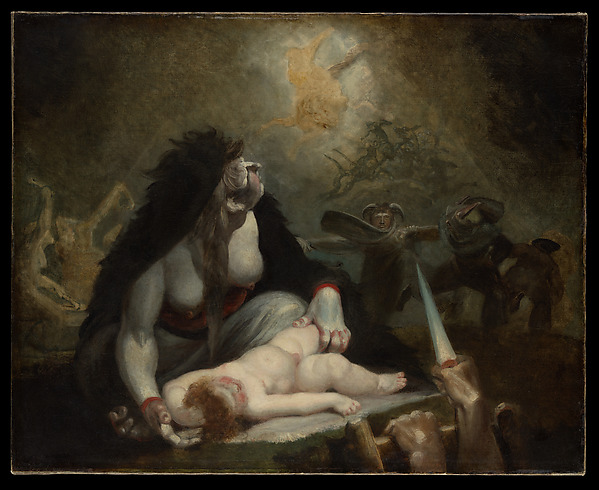 The Night-Hag Visiting Lapland Witches
 Two Heads of Damned Souls from Dante's "Inferno" (front and
  Milton Dictating to His Daughter
 Sketch for 'Dido on the Funeral Pyre' (recto); Erotic Sketch
 Study for Inquisition, Illustration to Columbiad
 Hagen and the Nymphs of the Danube
 Prospero, Miranda, Caliban and Ariel
 Ugolino and His Sons Starving to Death in the Tower
More like this
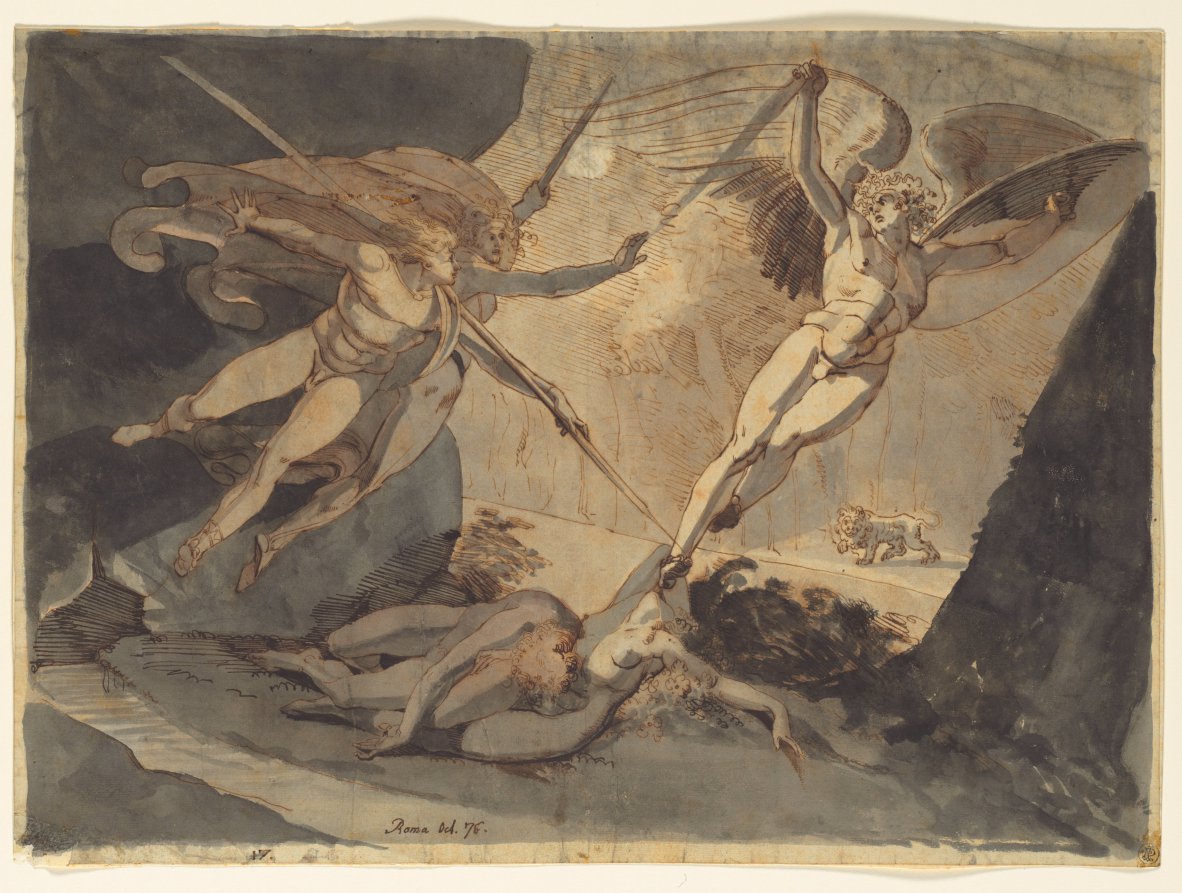 Henry Fuseli (Swiss, 1741–1825) — Satan Starts from the Touc
 William Blake — Nude Figure of a Man with Flaming Torch
 William Young Ottley — The Flood
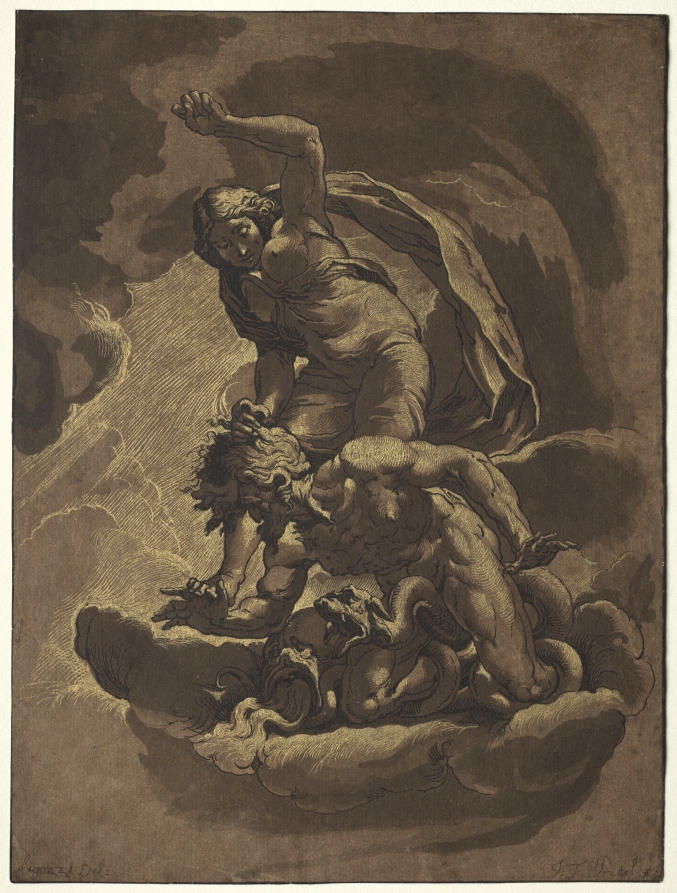 Maria Catharina Prestel (German, 1747–1794) — The Triumph of
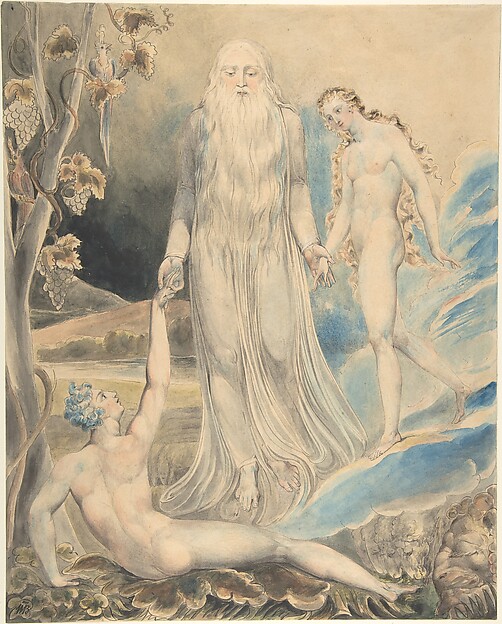 William Blake — Angel of the Divine Presence Bringing Eve to
 Dante Alighieri|William Blake — The Circle of Corrupt Offici
 William Blake — Urizen
 William Blake — The Circle of the Corrupt Officials; the Dev
 Max Klinger — Back into Nothingness, plate fifteen from A Li
 Nicolas de Largillierre (or Largillière) — Two Nude Male Fig
 William Blake|William Shakespeare — Pity
 Luca Cambiaso — Apollo Flaying Marsyas