In the collection of Barnes Foundation, Philadelphia — check current display status with the museum.
FROM THE BARNES FOUNDATION’S CATALOG
Mont Sainte-Victoire, which towered over the Aix-en-Provence region of southern France, was one of Cézanne's favorite motifs. He spent his childhood exploring its terrain, and he painted it several dozen times from different vantage points. The mountain also held symbolic meaning to the artist, representing the ancient countryside—the authentic France—during a moment of rapid industrialization and modernization. On the right side of the canvas, one can just make out an ancient Roman aqueduct.
Be the first to share your thoughts.
Sign in to join the discussion.
 Johann Wilhelm von Tscharner — Tessiner Dorf
 Henri Manguin — Paysage à Sanary
 Paul Cezanne — Montagne Sainte-Victoire, from near Gardanne
 Pierre-Auguste Renoir — Mount of Sainte-Victoire
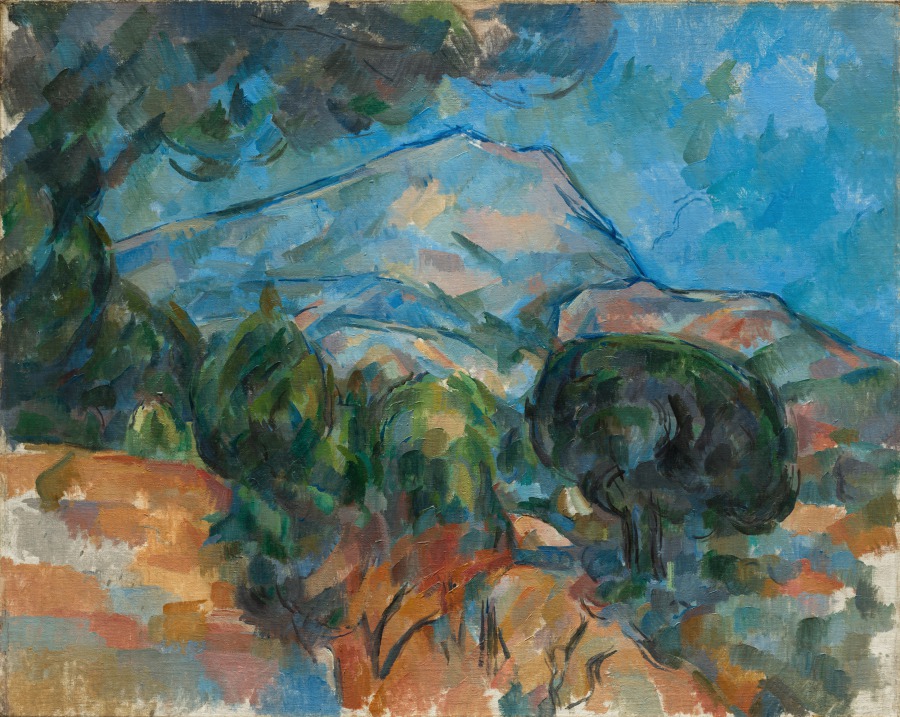 Paul Cezanne (French, 1839–1906) — Mount Sainte-Victoire
 Paul Cezanne — Houses in Provence: The Riaux Valley near L'E
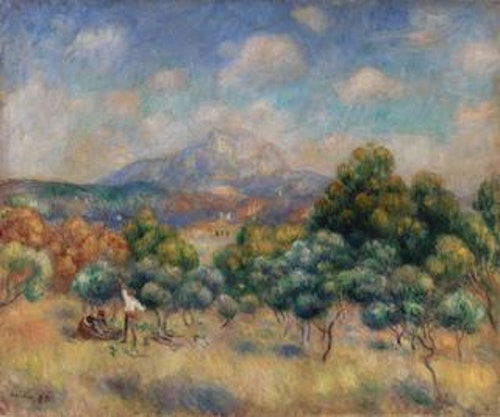 Pierre-Auguste Renoir — Montagne Sainte-Victoire (Paysage)
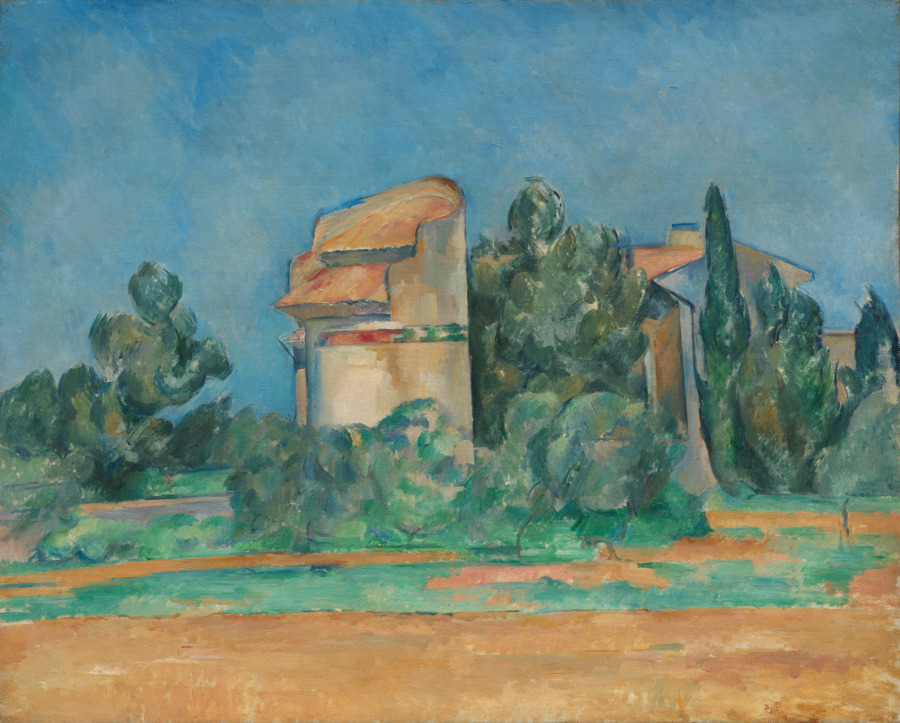 Paul Cezanne (French, 1839–1906) — The Pigeon Tower at Belle
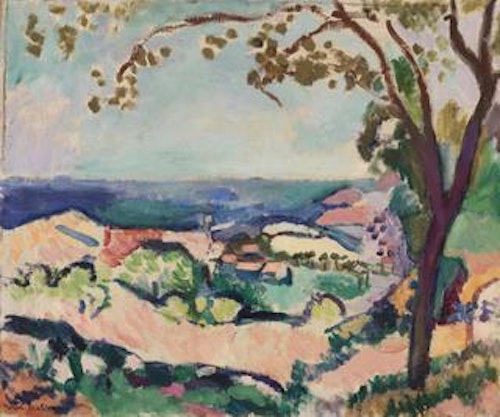 Henri Matisse — The Sea Seen from Collioure (La Mer vue de C
 Paul Cezanne — The Bend in the Road
 Claude Monet — Le Mont Riboudet à Rouen au Printemps
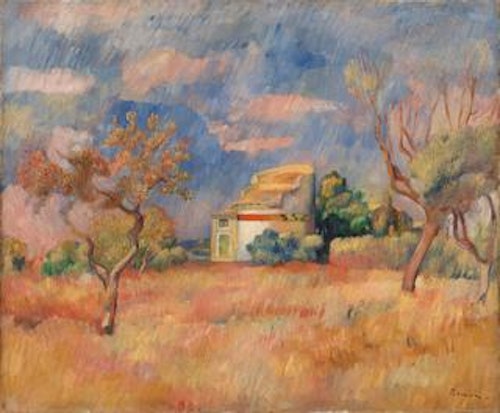 Pierre-Auguste Renoir — Dovecote at Bellevue (Pigeonnier de