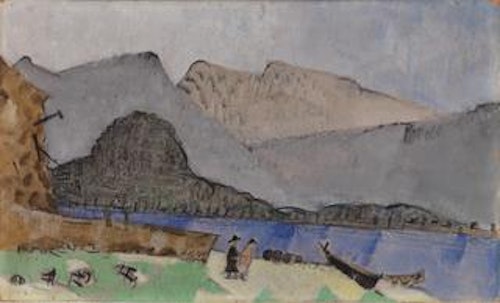
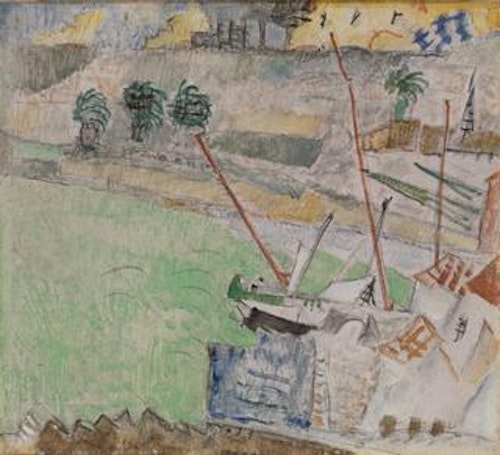
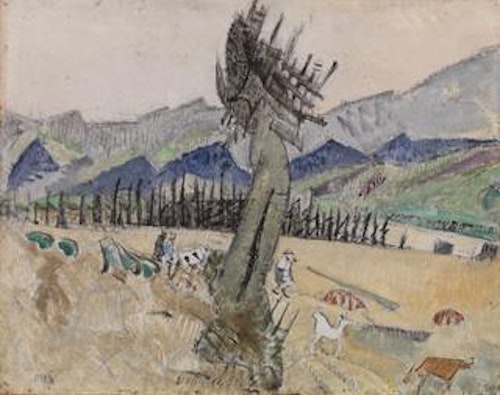
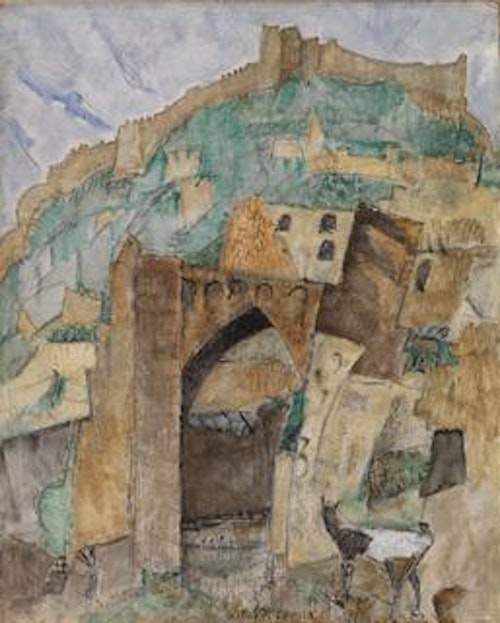
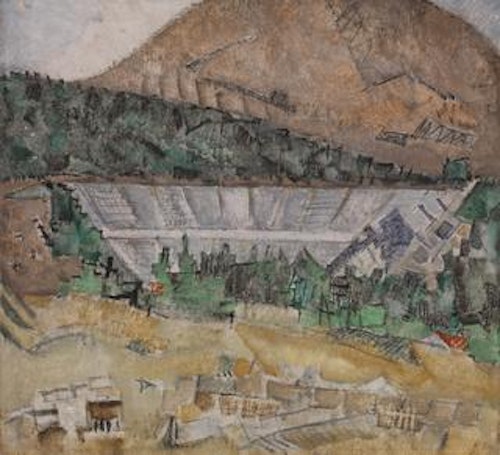
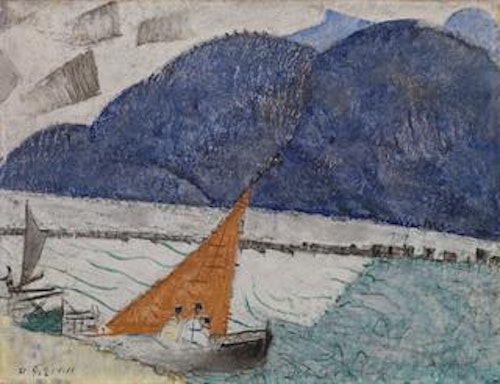
In the collection of Barnes Foundation, Philadelphia — check current display status with the museum.
FROM THE BARNES FOUNDATION’S CATALOG
The Ukrainian painter Alexis Gritchenko launched his career in 1910s Moscow, where his relationships with collectors Sergei Shchukin and Ivan Morozov afforded him simultaneous intimacy with French modernism and Orthodox icon painting. In 1919, following the Russian Revolution, Gritchenko fled to the Mediterranean, where he painted a series of historical cities. Positioned on a steep hill near ancient Sparta, Mistra (Mystras) was originally a Frankish Crusader and later became one of the most important cities of the Late Byzantine Empire. Gritchenko's painting is a site-appropriate fusion of cubism and Orthodox icons, traditions that he believed shared the ability to reveal the inner essence of their subjects.
Be the first to share your thoughts.
Sign in to join the discussion.
 Paul Cézanne — The Village of Gardanne
 Paul Cézanne — House in Bellevue
 Paul Cézanne — The François Zola Dam
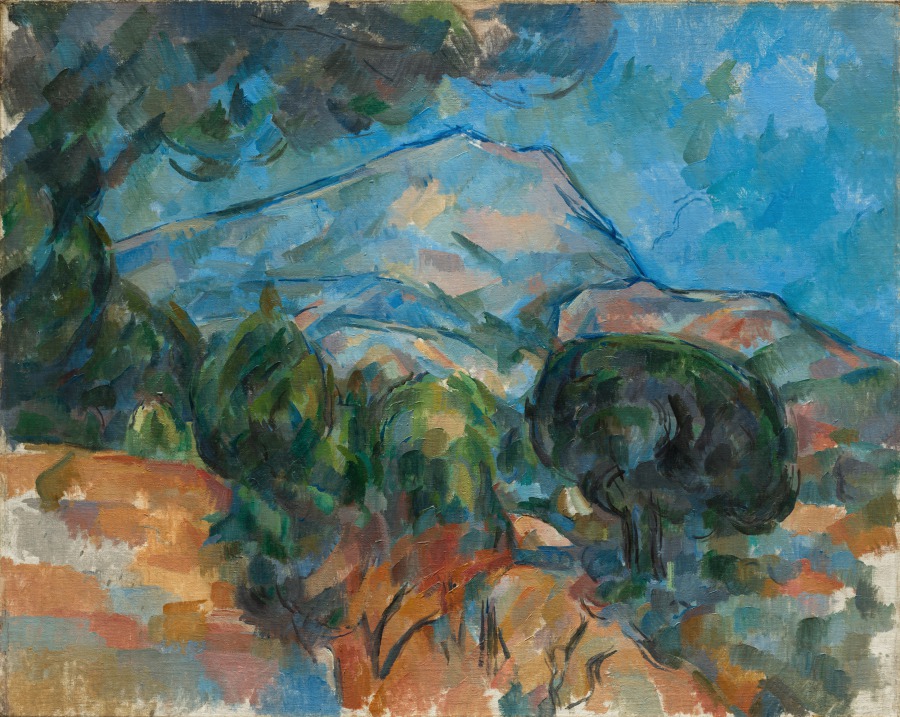 Paul Cezanne (French, 1839–1906) — Mount Sainte-Victoire
 Paul Cezanne — Château Noir
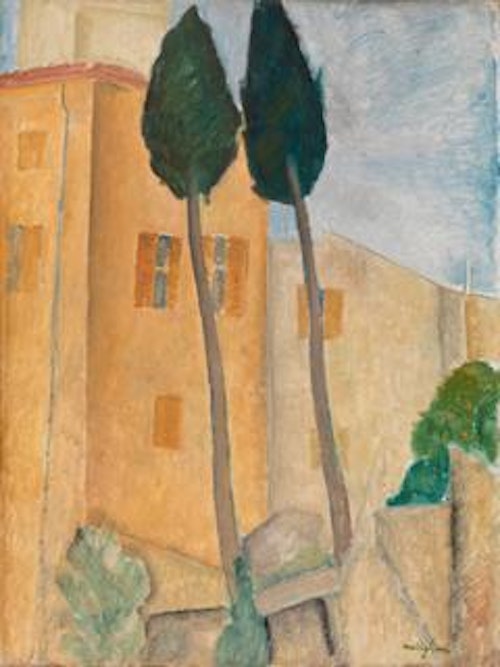 Amedeo Modigliani — Cypresses and Houses at Cagnes (Cyprès e
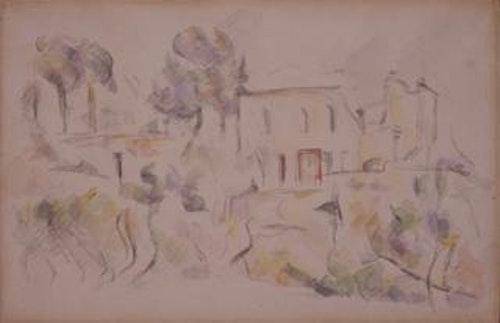 Paul Cézanne — The Coach House (La Remise à Château Noir)
 Johann Wilhelm von Tscharner — Tessiner Dorf
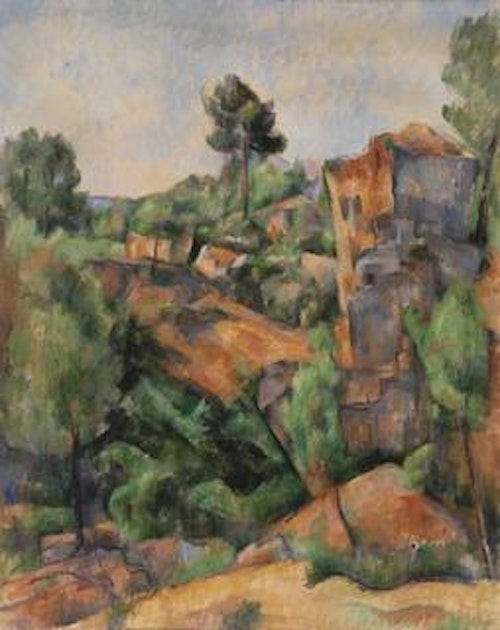 Paul Cézanne — Bibémus Quarry (Carrière de Bibémus)
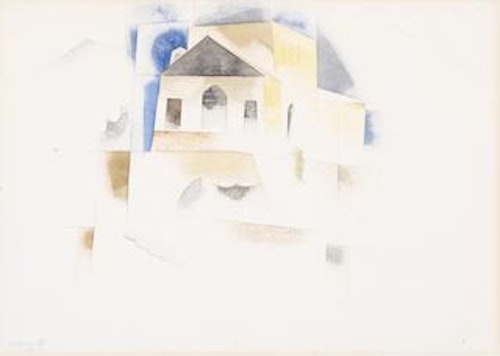 Charles Demuth — Bermuda: Houses
 Amedeo Modigliani — Paysage du midi
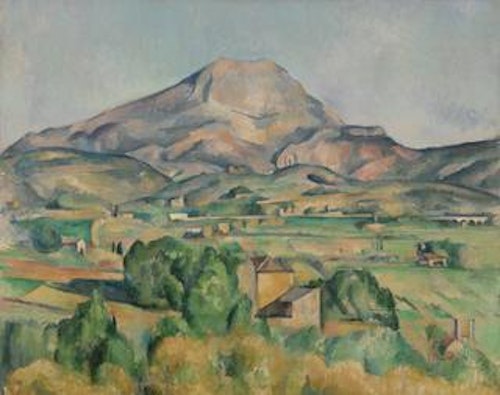 Paul Cézanne — Mont Sainte-Victoire (La Montagne Sainte-Vict