FROM THE CLEVELAND MUSEUM OF ART’S CATALOG
This page of delicately illuminated calligraphy from the pre-Mughal period was mounted into a Mughal album. The poems are written in the native language of the Mughals, a form of Turkish called Chaghatai, using a flowing form of Arabic script called nasta‘liq. The Mughals self-consciously adopted Persian as their official court language, so few Chaghatai books or works of calligraphy were made for them. The quatrain in the center reads: The wine has made an attempt on my life, Since it is the wine that can wear down the pain of separation. O Sufi! Let the mosque be for you, and the tavern for me, Since you need to arrive at the Spring of Kowsar, while I am in need of wine! The Spring of Kowsar is where the righteous quench their thirst in the afterlife.
Source ↗︎
Be the first to share your thoughts.
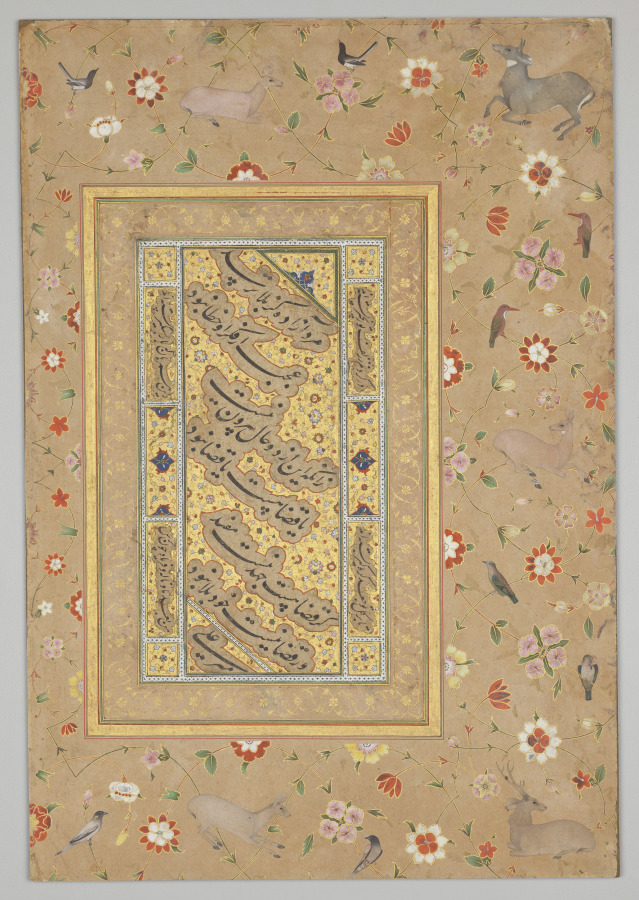 Mir 'Ali Haravi (Persian, active in Herat, Afghanistan, died
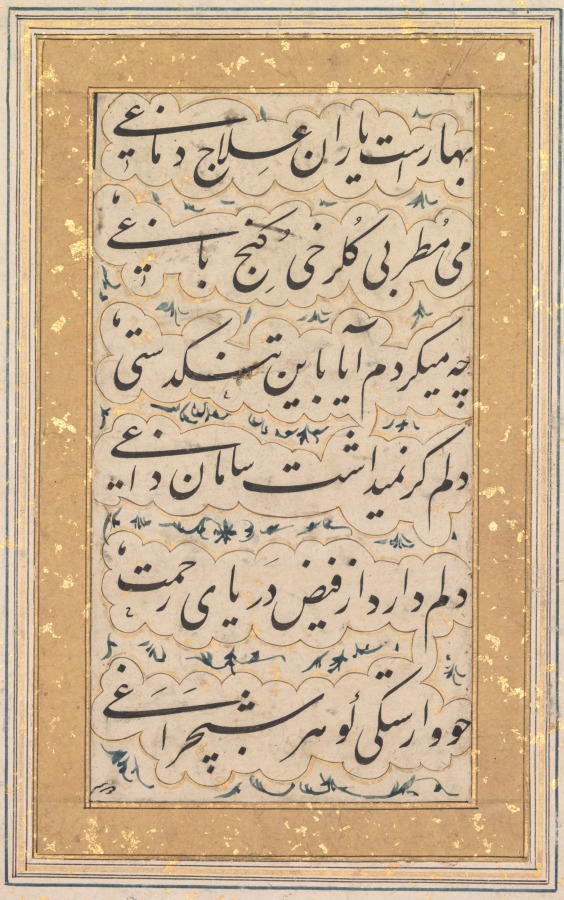 Calligraphy (verso)
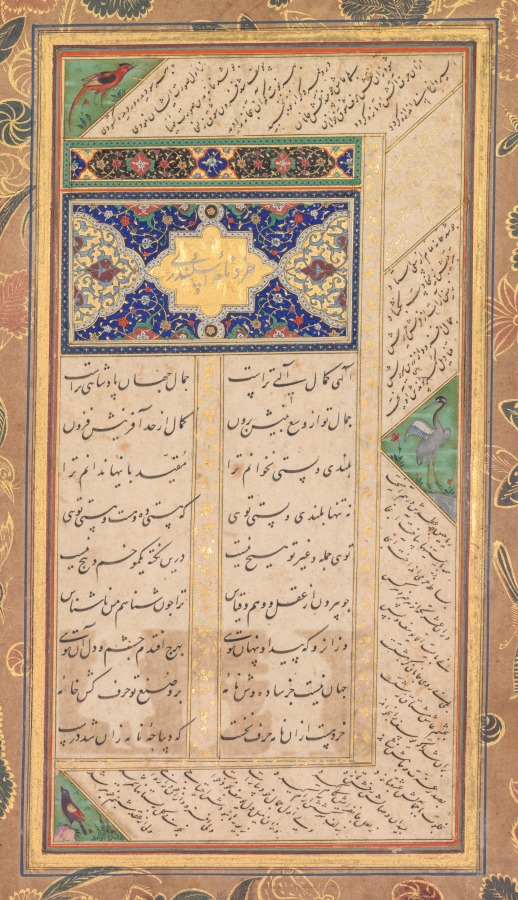 Mushfiq (Indian, active early 1600s) — Illuminated page (ver
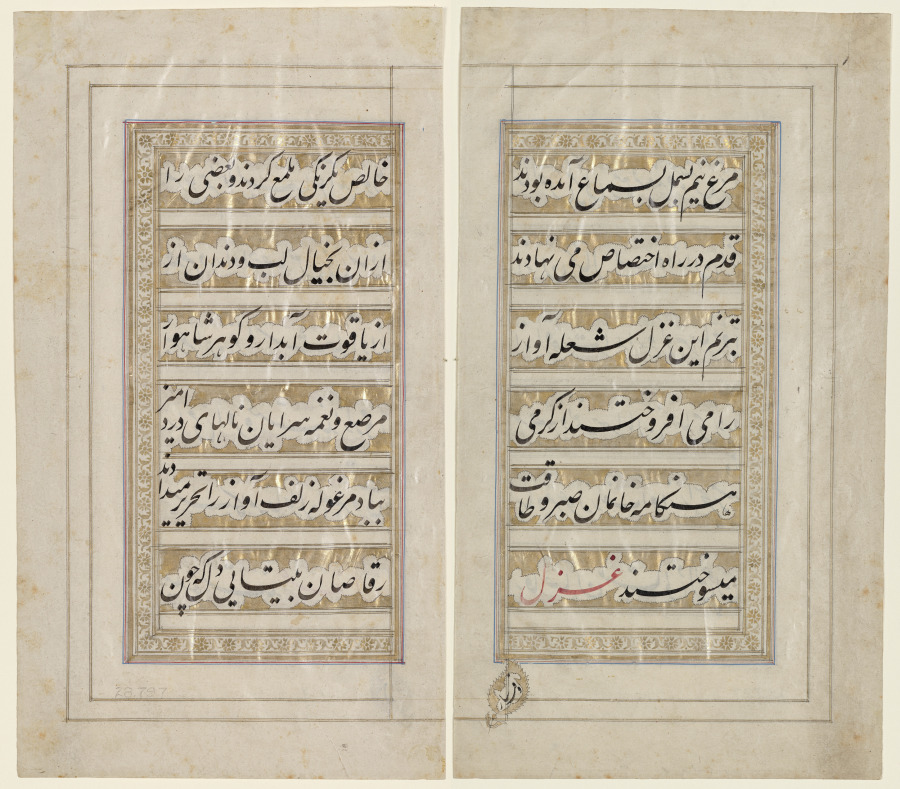 Page from the Poem of Beauty and Love
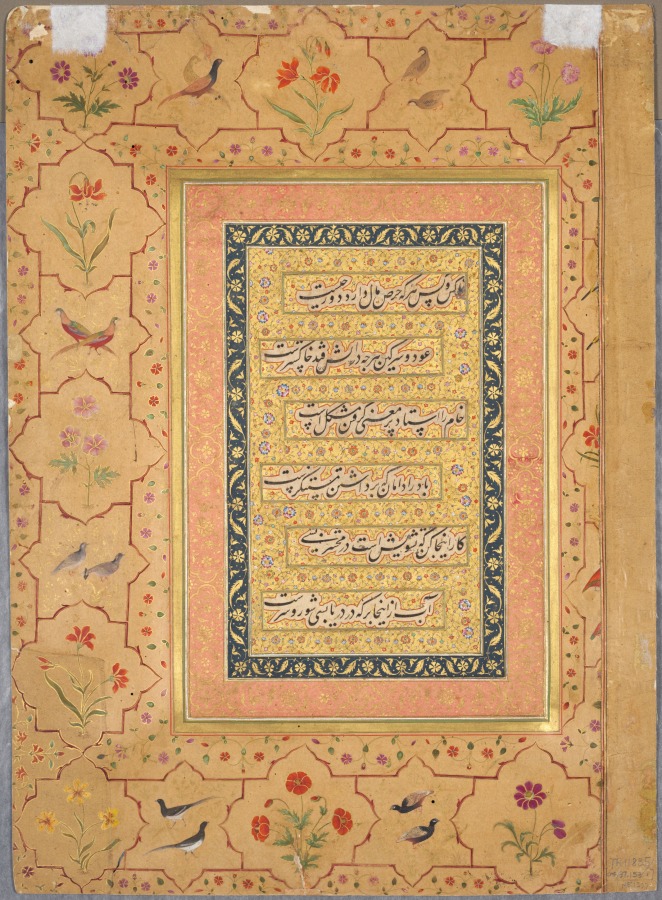 Calligraphy framed by an ornamental border with poppies and
 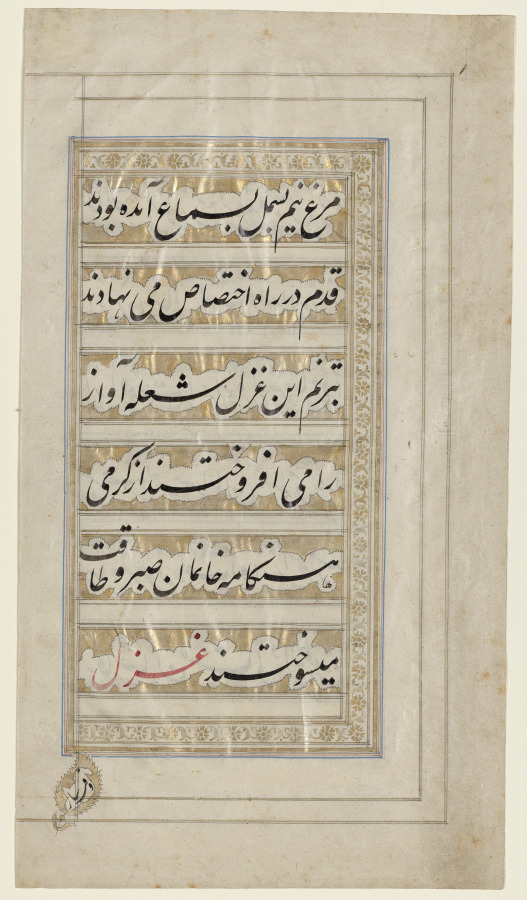 Page from the Poem of Beauty and Love
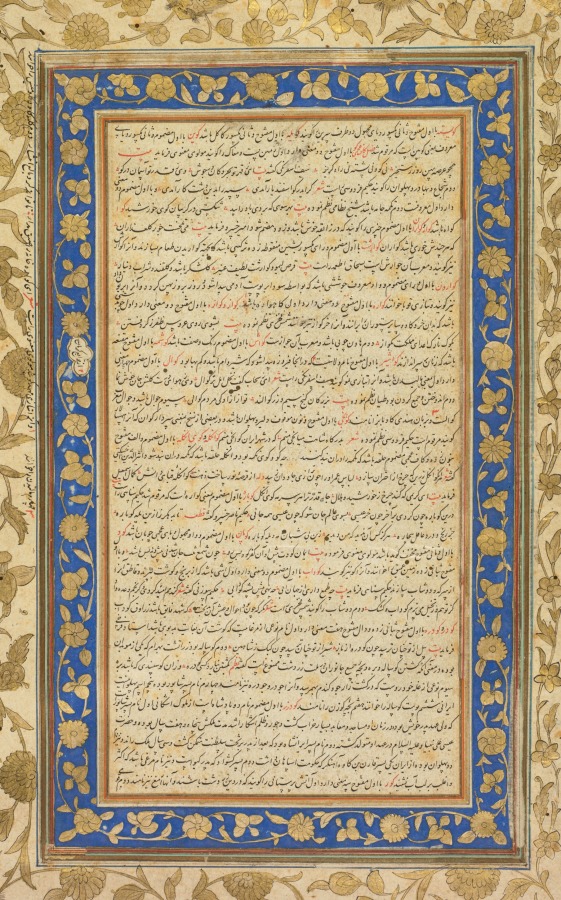 An Illuminated Folio from the Royal Manuscript of the Farhan
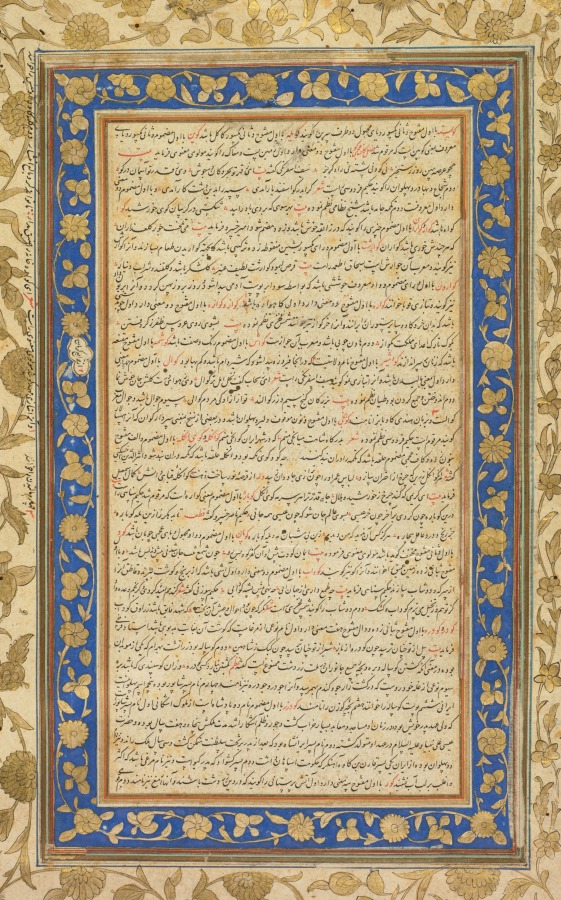 From the Farhang-i Jahangiri (Persian-language Dictionary) c
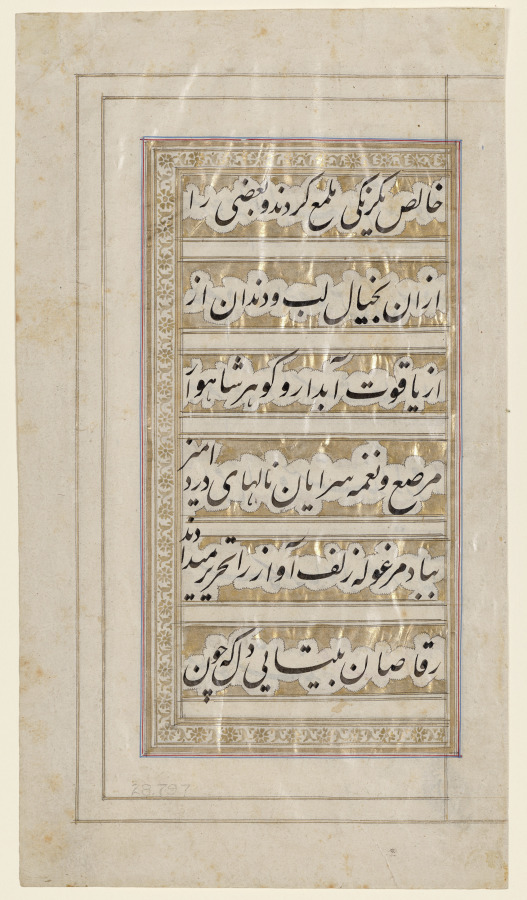 Page from the Poem of Beauty and Love
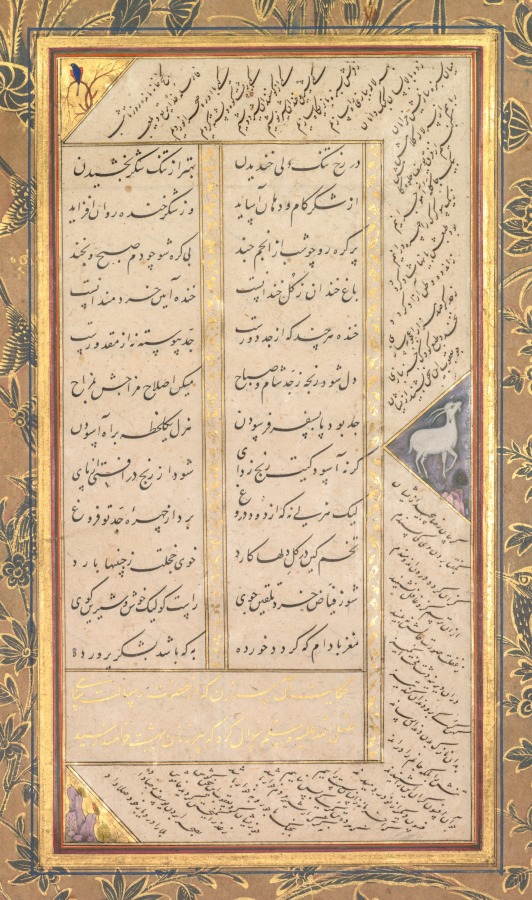 Mushfiq (Indian, active early 1600s) — Page from a Panj Ganj
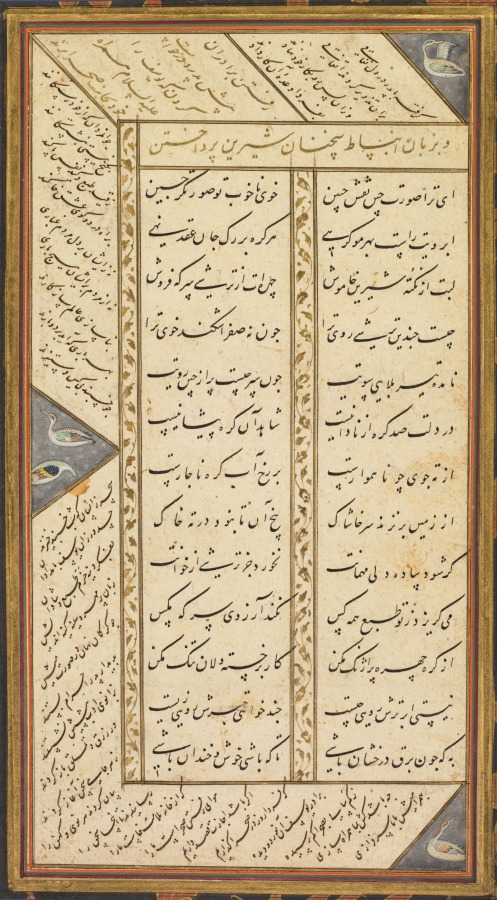 Mushfiq (Indian, active early 1600s) — Page from the Panj Ga
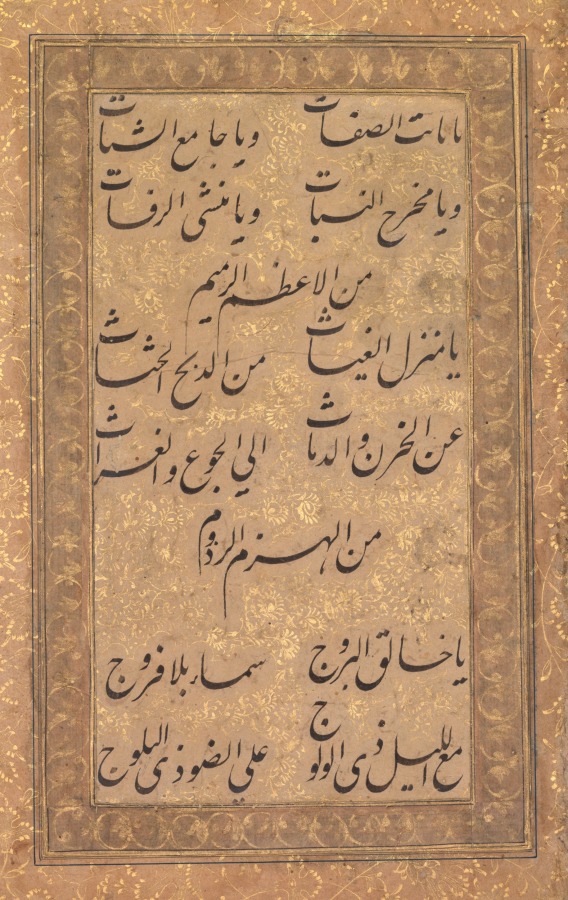 Calligraphy of a Pious Invocation in Rhyme (verso)