A Woman Sitting by the Window (“Evening Thou Bringest All”), from the first issue of Specimens of Polyautography
SEE IT IN PERSON
Not currently on view
In the collection of Art Institute of Chicago, Chicago · as of July 2026
Discussion
FROM THE ART INSTITUTE OF CHICAGO’S CATALOG
Specimens of Polyautography (published 1803), the portfolio of lithographs that included Fuseli’s print (as well as James Barry’s Eastern Patriarch and Benjamin West’s Angel of the Resurrection ), contained the first lithographs published in Britain. Lithography is a form of printing in which a drawing is made directly on limestone, which is then moistened and inked, the ink adhering only to the drawn marks. The resulting print thus retains the immediacy of the original drawing. The Greek inscription on Fuseli’s print, a quote from the ancient Greek lyric poet Sappho which was reversed in the printing process, means “Evening, thou bringest all [things home].”
Be the first to share your thoughts.
Sign in to join the discussion.
More by Henry Fuseli
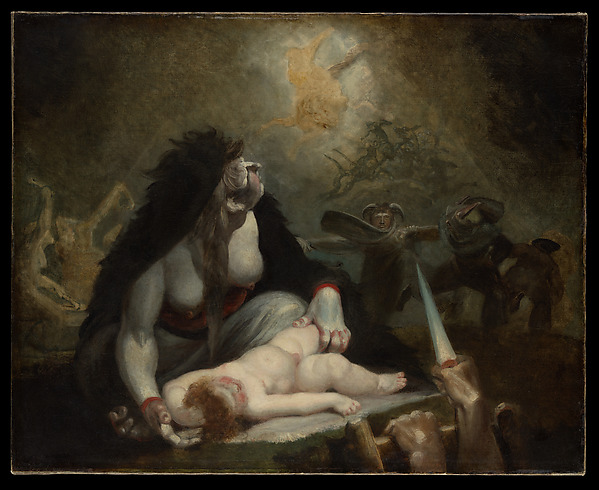 The Night-Hag Visiting Lapland Witches
 Two Heads of Damned Souls from Dante's "Inferno" (front and
  Milton Dictating to His Daughter
 Perseus Starting from the Cave of the Gorgons
 Sketch for 'Dido on the Funeral Pyre' (recto); Erotic Sketch
 Study for Inquisition, Illustration to Columbiad
 Hagen and the Nymphs of the Danube
 Prospero, Miranda, Caliban and Ariel
More like this
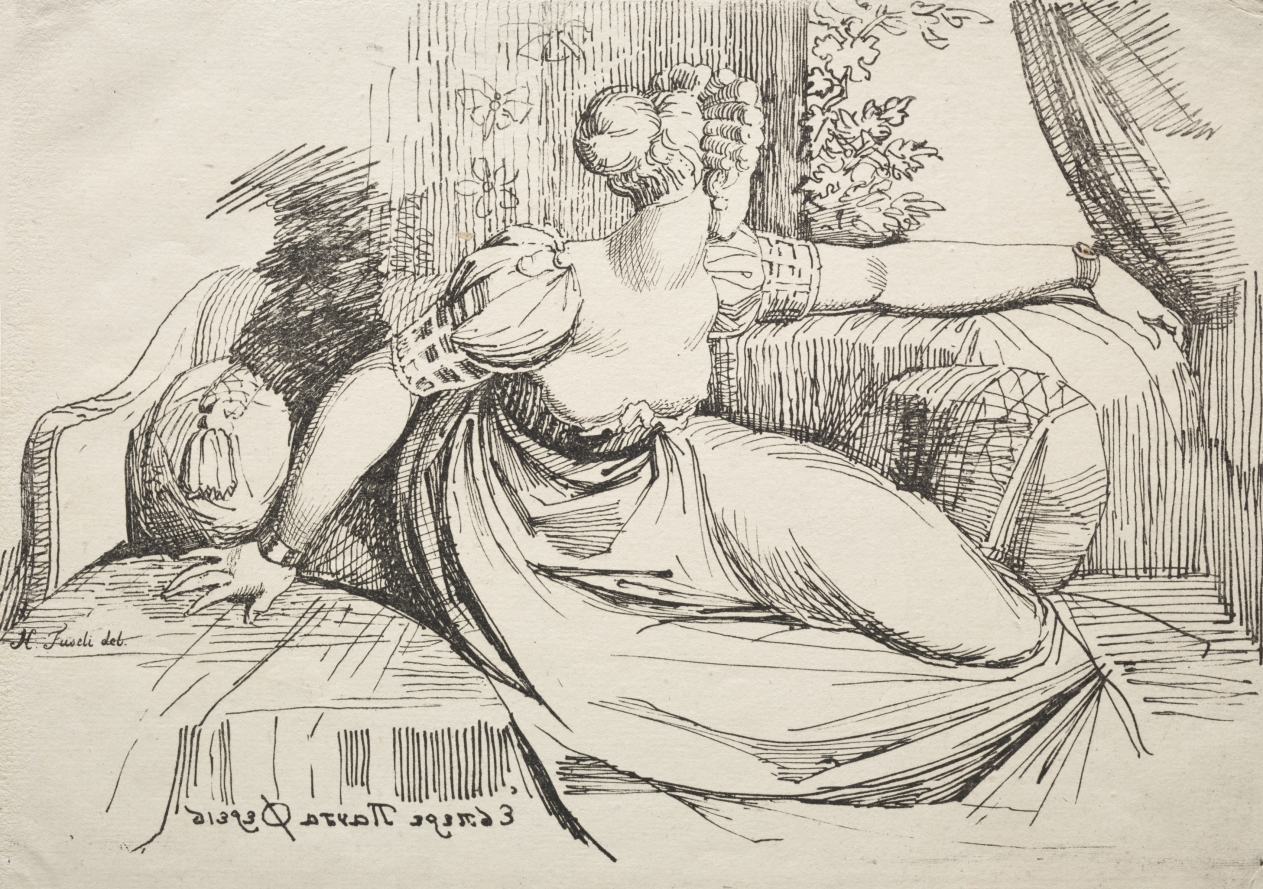 Henry Fuseli (Swiss, 1741–1825) — Evening Thou Bringest All
 James McNeill Whistler — Nude Model, Reclining
 James McNeill Whistler — Nude Model, Reclining (Nude Model R
 James McNeill Whistler — Nude Model, Reclining
 James McNeill Whistler — The Draped Figure, Seated
 David Bles — Tekenende vrouw
 Antonio da Correggio — Cardinal Virtues or Saint Euphemia
 Benoit II Audran (French, 1700–1772) — Woman Holding a Fan
 Henri Lehmann — Studies of a Draped Female Figure, Kneeling,
 Nicolas Lancret — Studies of a Couple Seated on the Ground,
  James McNeill Whistler (American, 1834–1903) — The Draped Fi
 James McNeill Whistler — Reclining Draped Figure