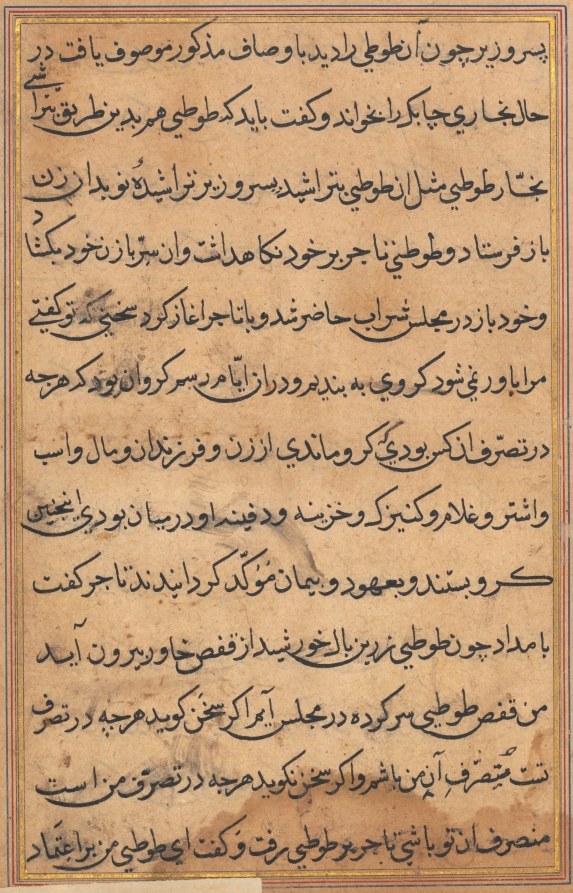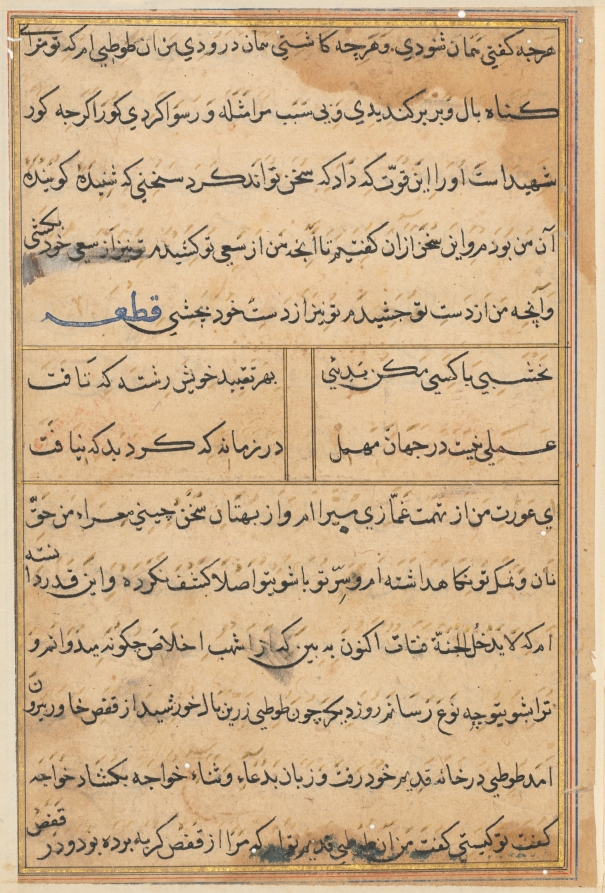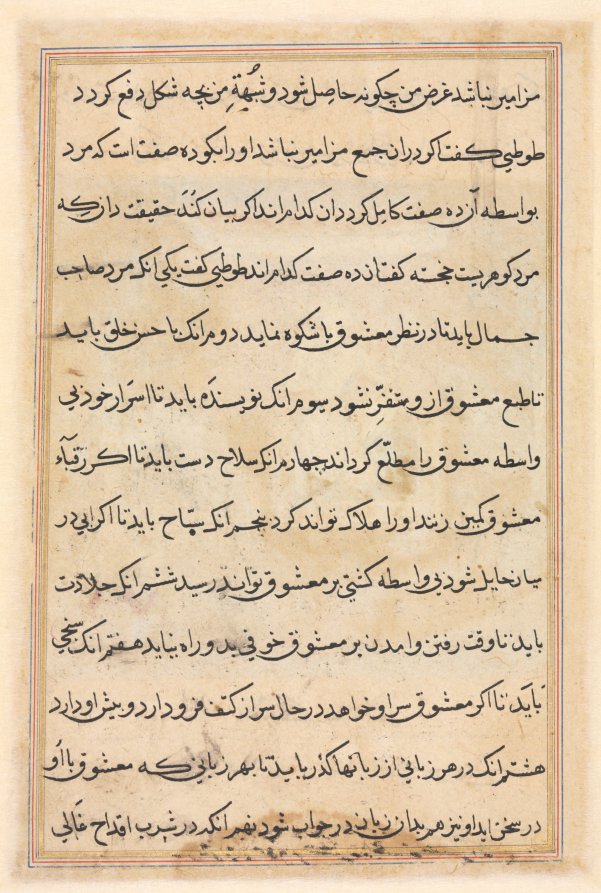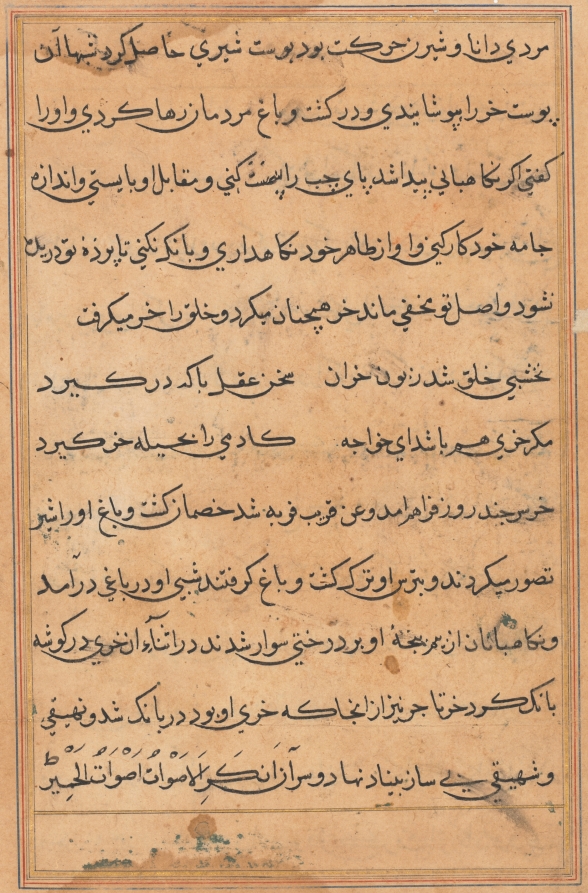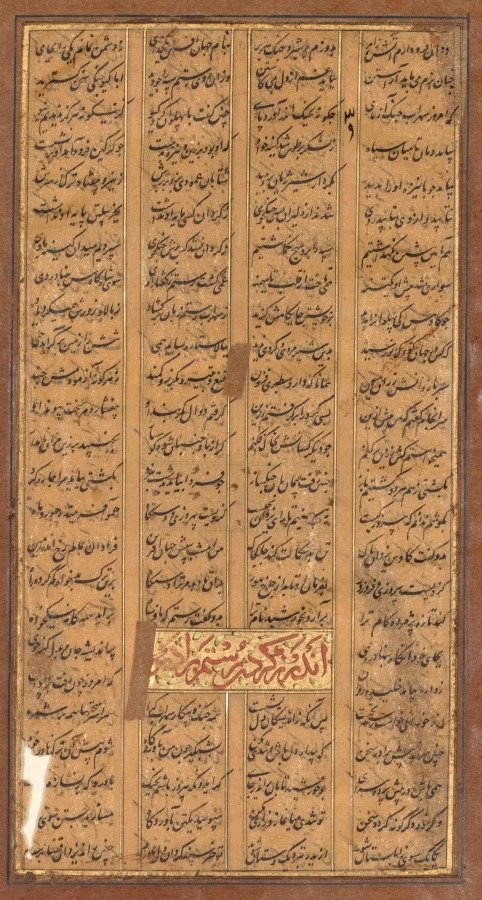
Text of Rustam and Suhrab, from the Shah-nama of Firdausi (Persian, c. 934–1020) (verso)
c. 1610
Gum tempera, ink, and gold on paper

SEE IT IN PERSON

Not currently on view

In the collection of Cleveland Museum of Art, Cleveland · as of July 2026

View at clevelandart.orgPlan a visit ↗

Discussion

FROM THE CLEVELAND MUSEUM OF ART’S CATALOG

This page of text from the jewel-like copy of the Shah-nama made in the southern Indian city of Bijapur describes the events leading to Rustam’s accidental slaying of his own son Suhrab. The larger text in red is a chapter heading, which reads: “The single combat between Rustam and Suhrab once more.”

Source ↗

Be the first to share your thoughts.

Sign in to join the discussion.

Community guidelines

More like this

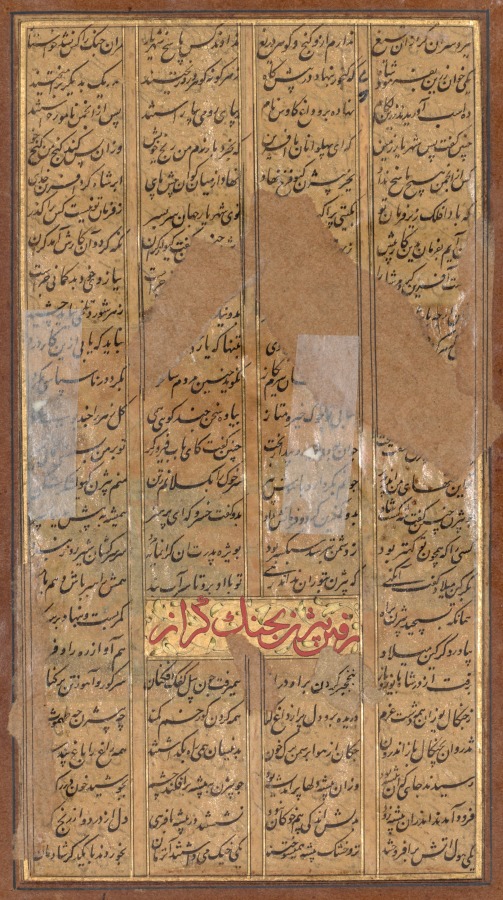
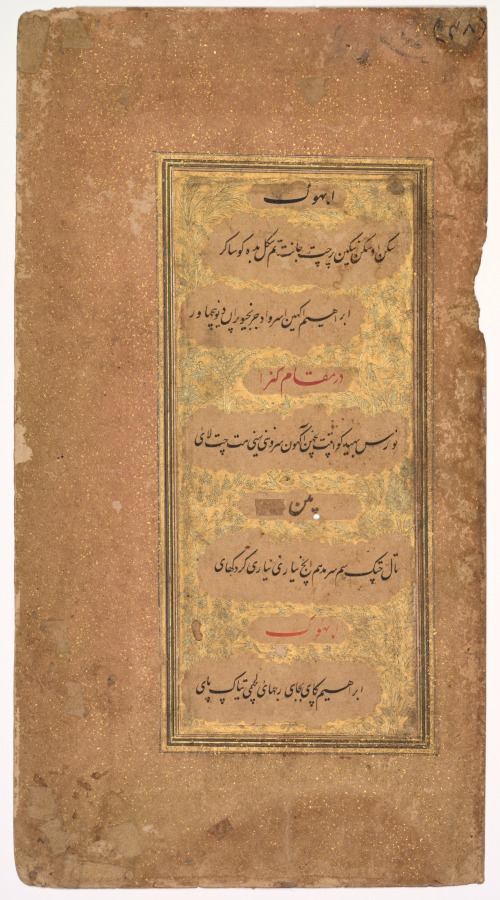
Text of Rustam and Suhrab, from the Shah-nama of Firdausi (Persian, c. 934–1020) (recto)Text of Rustam and Suhrab, from the Shah-nama of Firdausi (PBijan killing the wild boars of Irman, from a Shah-nama (Book of Kings) of Firdausi (Persian, about 934–1020), (recto)Bijan killing the wild boars of Irman, from a Shah-nama (BooFrom Dohras (Songs) 40 and 42 from the Kitab-i Nauras (Book of Nine Essences) of Sultan Ibrahim Adil Shah II of Bijapur (r. 1580–1627); verso: From Dohras (Songs) 40 and 36 from the Kitab-i Nauras of Sultan Ibrahim Adil Shah IIKhalilullah Butshikan (Persian, active in India 1596–c. 1620From Dohras (Songs) 40 and 42 from the Kitab-i Nauras (Book of Nine Essences) of Sultan Ibrahim Adil Shah II of Bijapur (r. 1580–1627) (recto)Khalilullah Butshikan (Persian, active in India 1596–c. 1620From Dohras (Songs) 40 and 36 from the Kitab-i Nauras of Sultan Ibrahim Adil Shah II (verso)Khalilullah Butshikan (Persian, active in India 1596–c. 1620Illuminated page (verso), from a Panj Ganj (Five Treasures) of Abd al- Rahman Jami (Persian, 1414–1492) with two Persian masnavis: Yusuf va Zulaykha (Joseph and Zulaykha) and Khirad-nama-i Iskandari (Alexander’s Book of Wisdom)Mushfiq (Indian, active early 1600s) — Illuminated page (verCalligraphy framed by an ornamental border with poppies and pairs of birds, from the Late Shah Jahan Album  (verso)Calligraphy framed by an ornamental border with poppies and Page from a Panj Ganj (Five Treasures) of Abd al-Rahman Jami (Persian, 1414–1492), with two Persian
masnavis: Yusuf va Zulaykha (Joseph and Zulaykha) and Subhat al-abrar (Rosary of the Righteous) (verso)Mushfiq (Indian, active early 1600s) — Page from a Panj GanjPage from Tales of a Parrot (Tuti-nama): text pagePage from Tales of a Parrot (Tuti-nama): text pagePage from Tales of a Parrot (Tuti-nama): text pagePage from Tales of a Parrot (Tuti-nama): text pagePage from Tales of a Parrot (Tuti-nama): text pagePage from Tales of a Parrot (Tuti-nama): text pagePage from Tales of a Parrot (Tuti-nama): text pagePage from Tales of a Parrot (Tuti-nama): text page