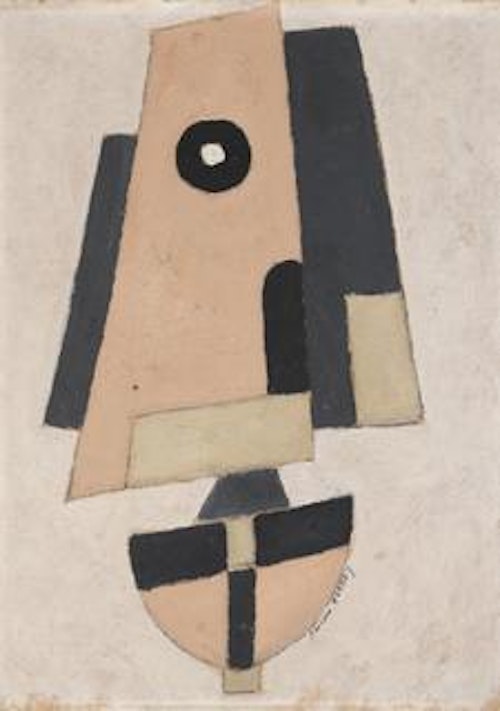
FROM THE BARNES FOUNDATION’S CATALOG
Founded in 1878 to showcase human progress over time, the Trocadéro museum in Paris housed ethnographic artifacts, many of which originated from colonies in France's expanding empire. On his first visit to the collection in 1907, Picasso was instantly drawn to the wide array of African objects he encountered, framed there as emblems of a primitive past. These included Kota reliquary fragments and Baule and Fang masks that resembled works from present-day Côte d'Ivoire, Gabon, and Equatorial Guinea on display at the Barnes. This densely striated painting—where a masklike head seemingly floats atop a man's collarbone, the neck all but eliminated—exemplifies Picasso's interest in and appropriation of African material culture, which dominated his practice in 1907.
Source ↗︎
Be the first to share your thoughts.
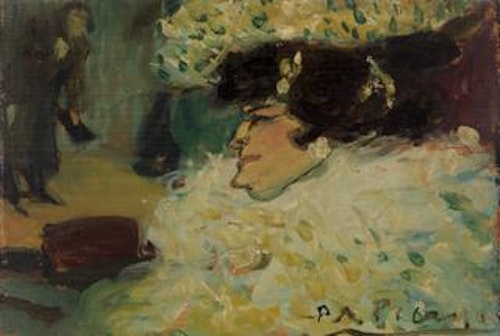 At the Theater (The Courtesan)
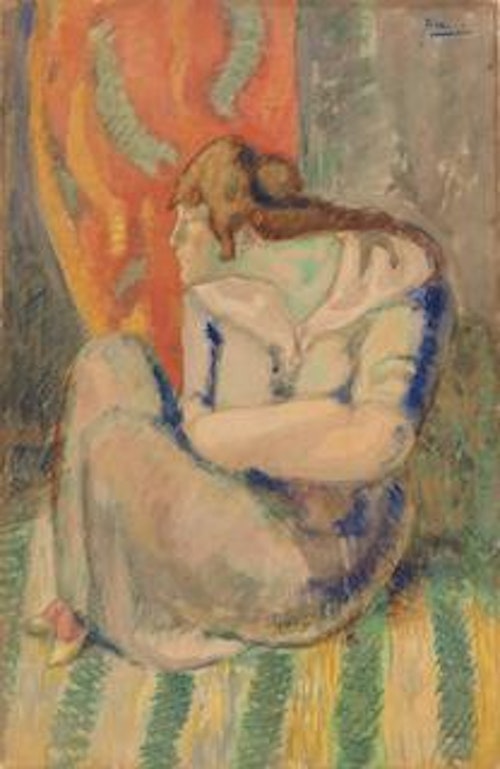 Woman Seated on Striped Floor
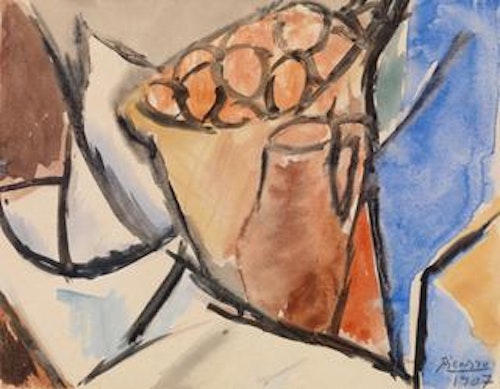 Still Life with Basket of Fruit and Jug
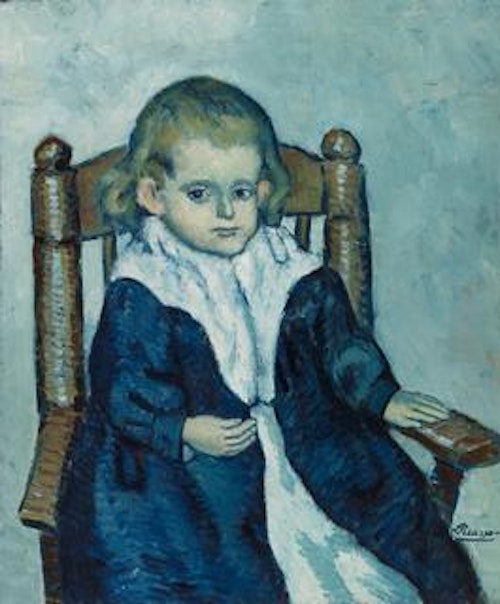 Child Seated in an Armchair (Enfant assis dans un fauteuil)
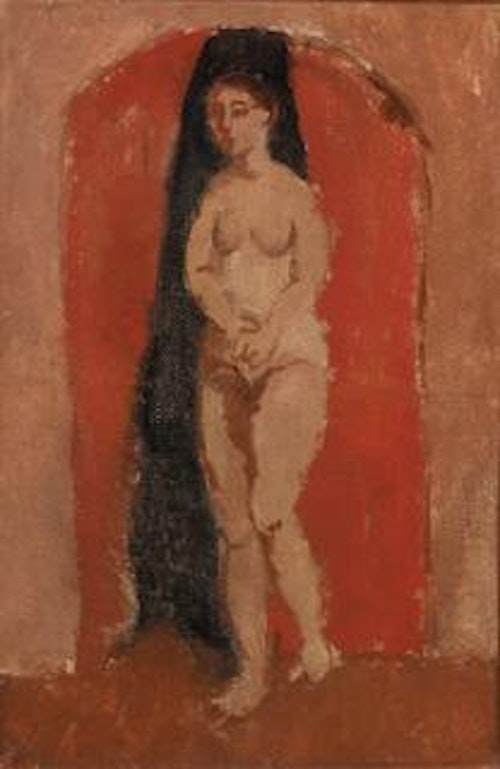 Standing Nude in Front of a Red Arch
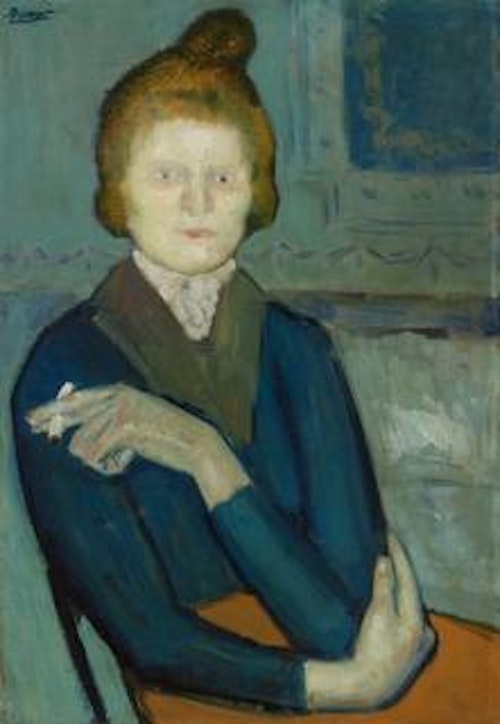 Young Woman Holding a Cigarette (Jeune femme tenant une ciga
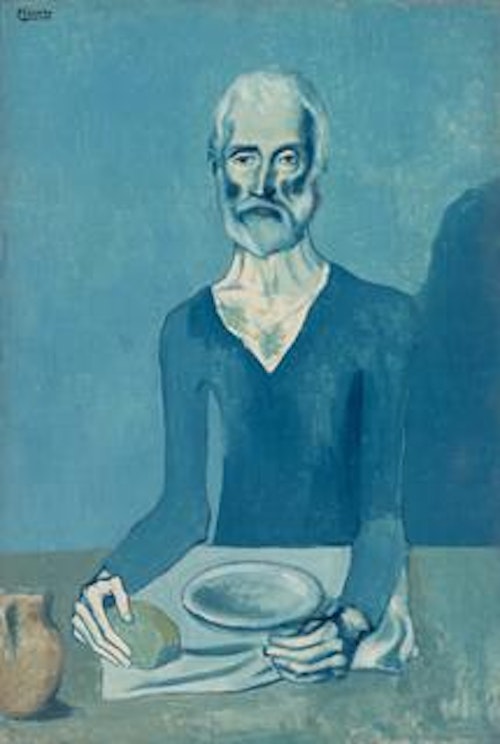 The Ascetic (L' Ascète)
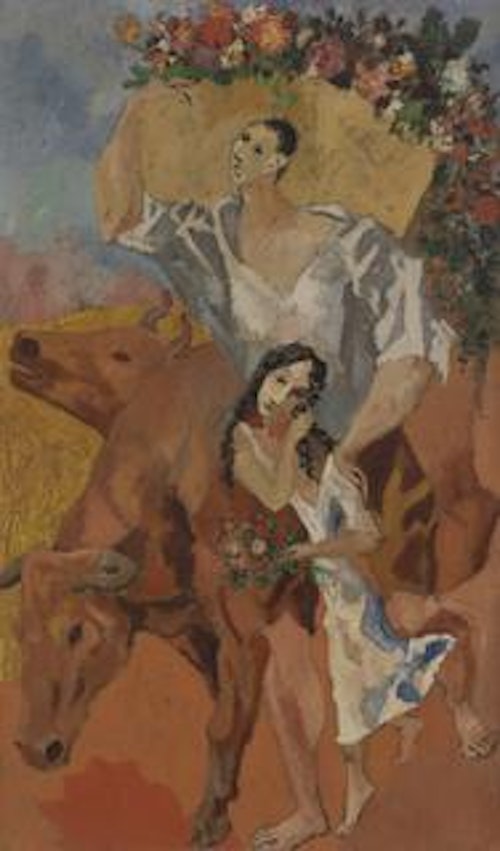 Composition: The Peasants