Tile with Qur'anic Inscription
SEE IT IN PERSON
Not currently on view
In the collection of Art Institute of Chicago, Chicago · as of July 2026
Discussion
FROM THE ART INSTITUTE OF CHICAGO’S CATALOG
Overglaze painted ceramics on a blue background, called lajvardina, were developed by Ilkhanid potters in 14th-century Iran. Lajvardina wares are known for geometric patterns, although calligraphy can also be present, especially on tiles. Such tiles have not survived in large quantities because the gold leaf and overglaze painting have suffered from exposure to the elements.Despite the diminishment of its gold leaf decoration, this tile illustrates the lavish end results of the lajvardina technique: the deep cobalt blue fills the composition, red enamel highlights the calligraphic script, and the few traces of gold leaf shimmer. Cobalt blue and gold leaf were among the most expensive materials used by potters in the medieval world.
Be the first to share your thoughts.
Sign in to join the discussion.
More by Islamic


More like this
 Mughal — Album Page with Calligraphic Specimen and Animal Bo
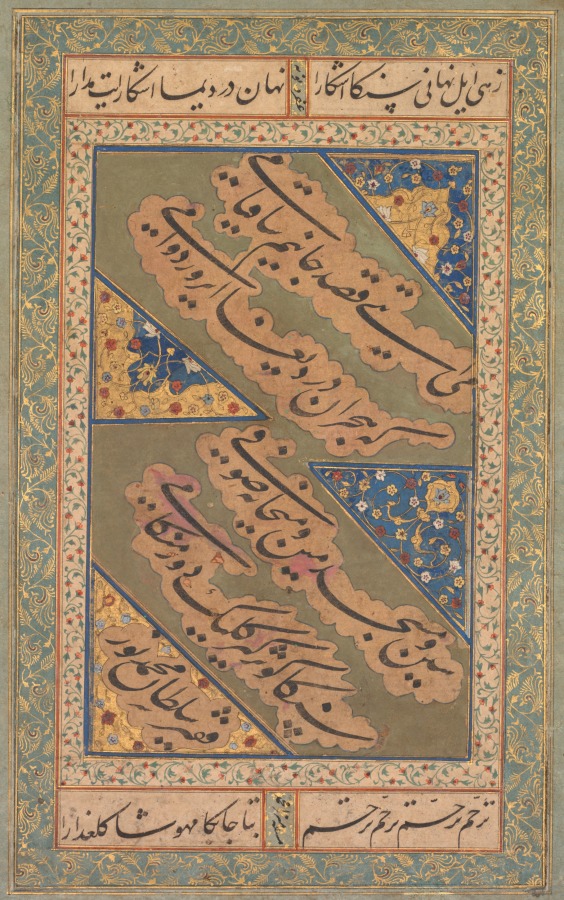 Mirza Muhammad (probably Persian, active c. 1520s) — Calligr
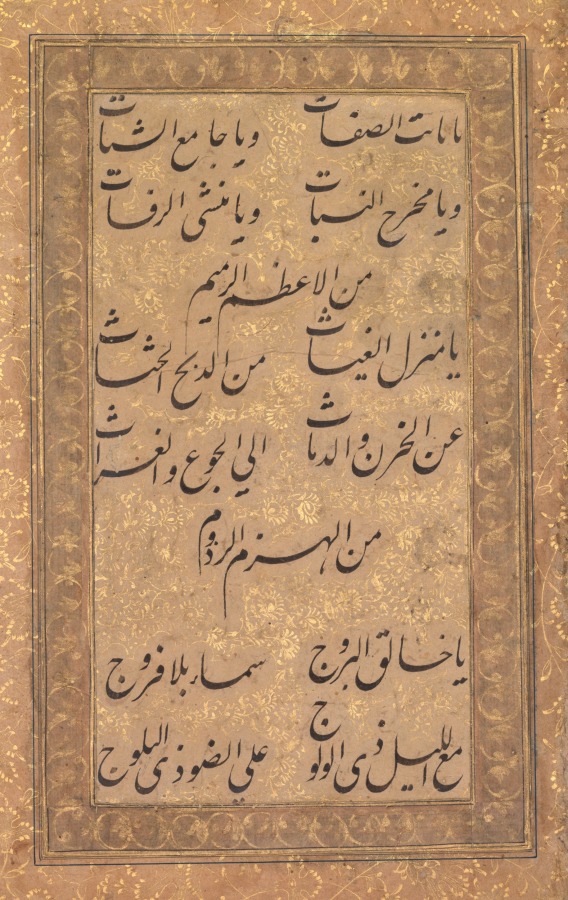 Calligraphy of a Pious Invocation in Rhyme (verso)
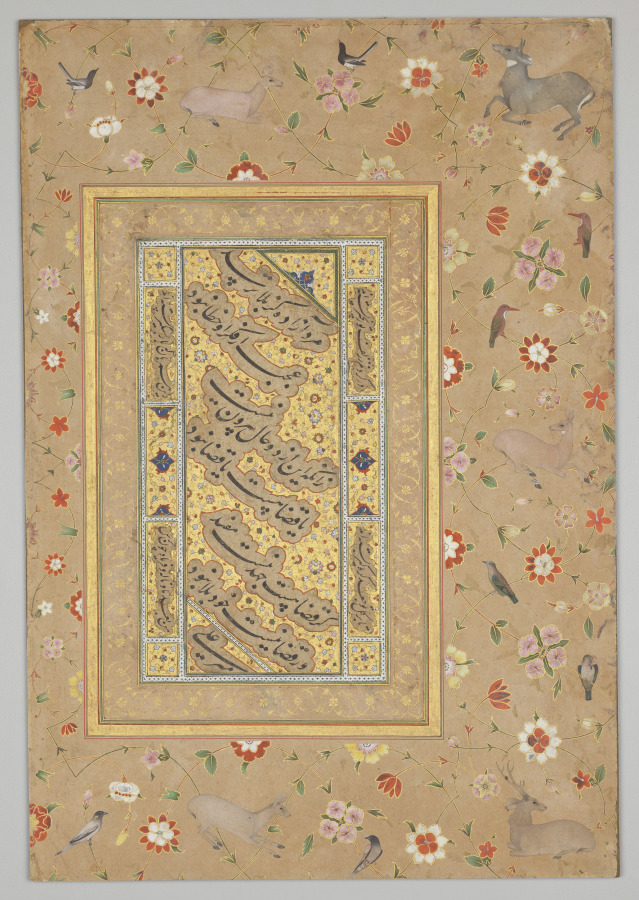 Mir 'Ali Haravi (Persian, active in Herat, Afghanistan, died
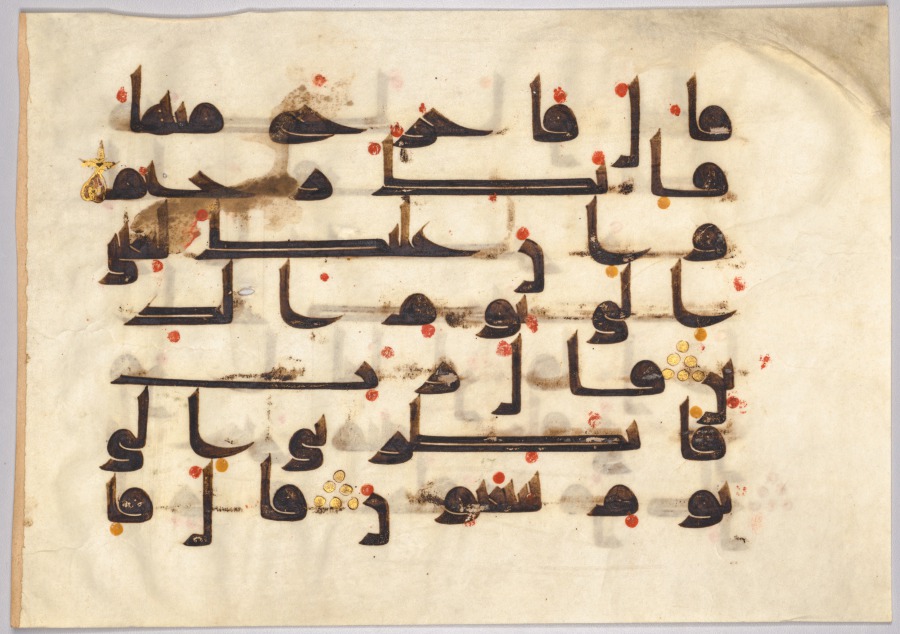 Folio from a Qur'an (verso)
 Folio from a Qur'an
 Iran
Probably Tehran — Tile depicting Khusrau Happening upon
Iran
Probably Tehran — Tile depicting Khusrau Happening upon Mushfiq (Indian, active early 1600s) — Illuminated page (ver
 Folio from a Qur'an (recto)
 Abdul Majid Talaqani — Page of Shikasta Nasta'liq Calligraph
 Page from the Poem of Beauty and Love
 Page from the Poem of Beauty and Love