FROM THE CLEVELAND MUSEUM OF ART’S CATALOG
The sacred book of Islam, the Qur'an is believed by Muslims to be a literal transcription of the word of God, spoken in Arabic to the Prophet Muhammad (died 632). In order to convey the importance of the divine word, Arabic calligraphy—sometimes highly elaborate and embellished with gold—was used to create copies of the Qur'an. This folio was written in the oldest style of Arabic calligraphy, called Kufic script, used in earliest surviving copies of the Qur'an. The wide format of the page is well suited to this style of Kufic that has elongated, horizontal strokes. Vowels are indicated by red dots, and the triangles of gold dots mark the end of each verse. The text on the recto recounts an argument between God and Lucifer. Proud Lucifer declares himself superior to humans because he was formed from fire, while humans were molded from clay. In the verses on the verso, God casts Lucifer out of heaven as punishment for his pride.
Source ↗︎
Be the first to share your thoughts.
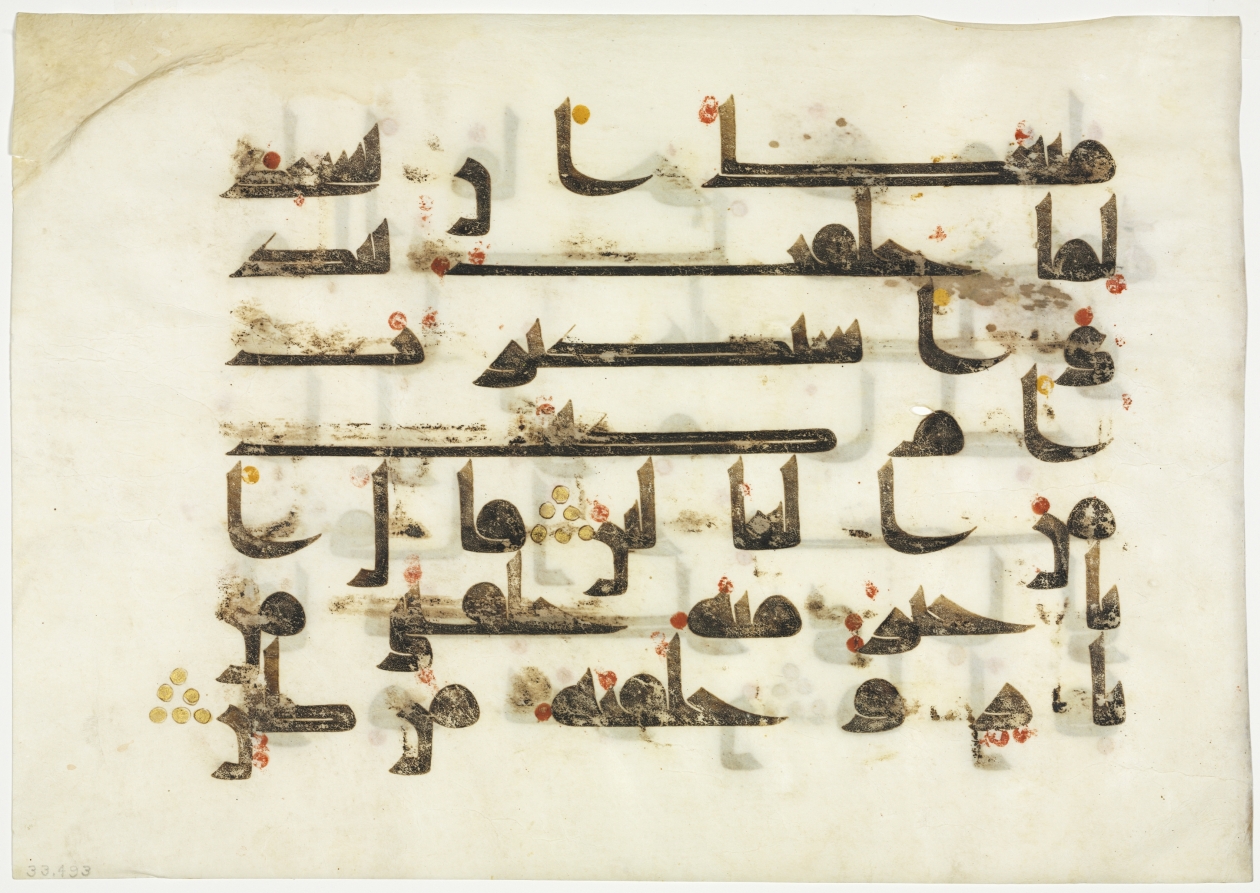 Folio from a Qur'an (recto)
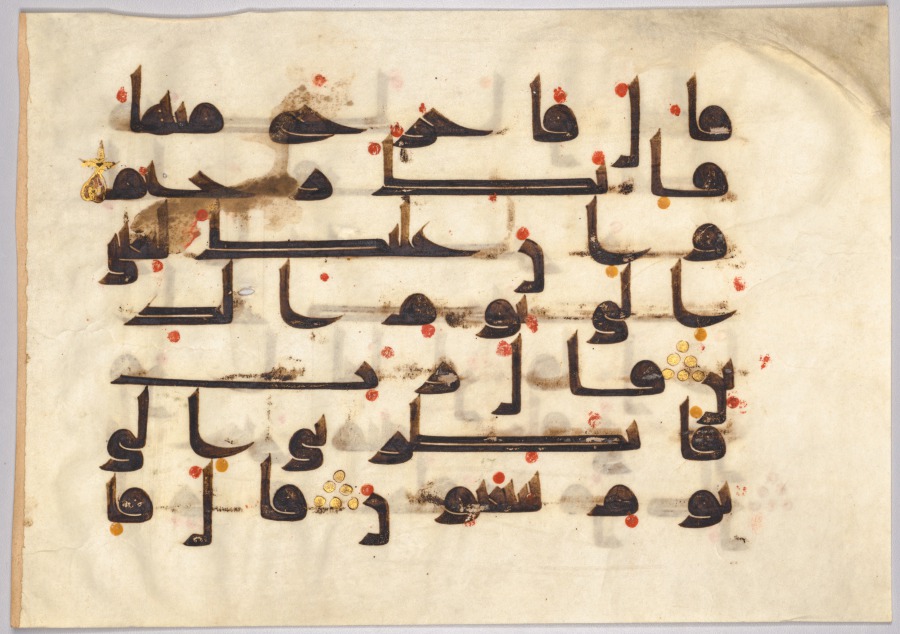 Folio from a Qur'an (verso)
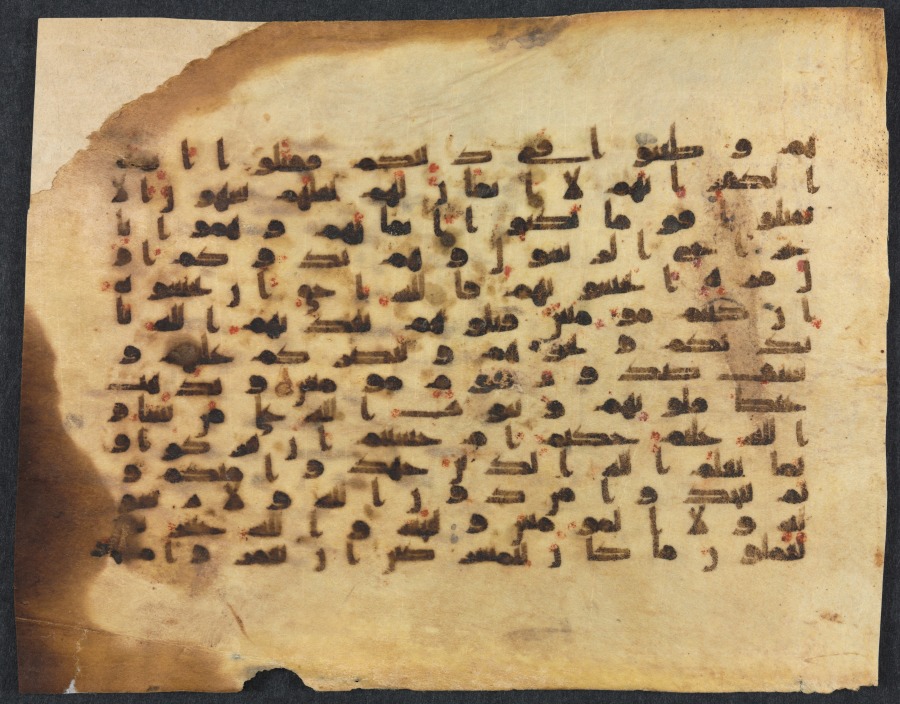 Qur'an Manuscript Folio
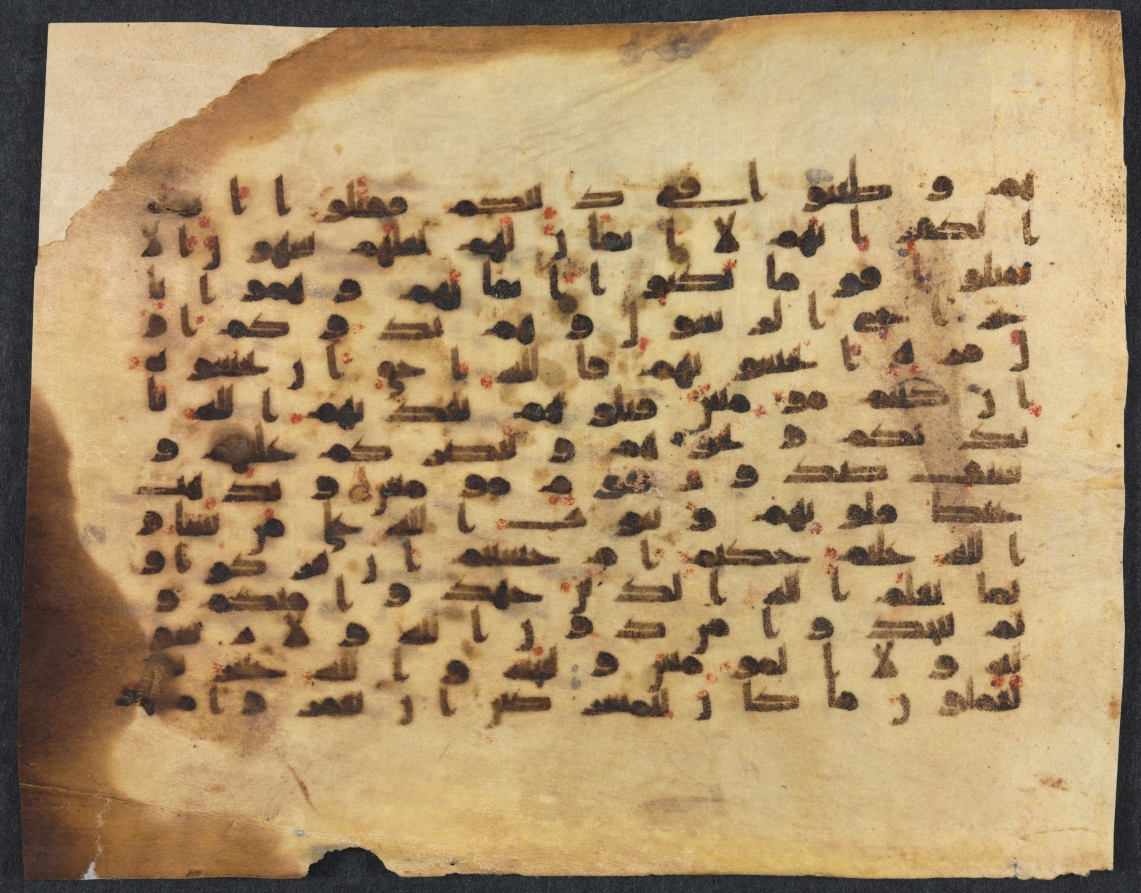 Qur'an Manuscript Folio (recto)
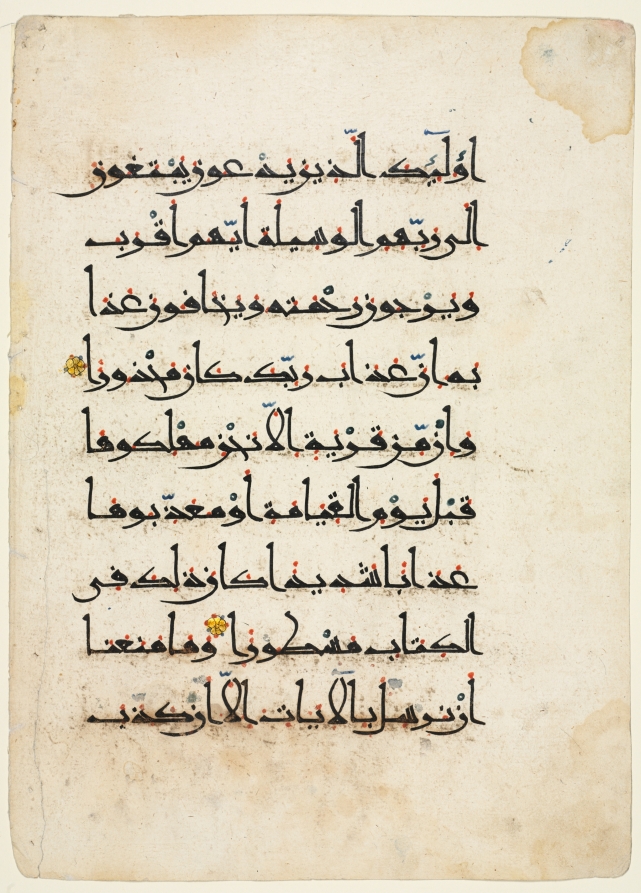 Leaf from a Qur'an (verso)
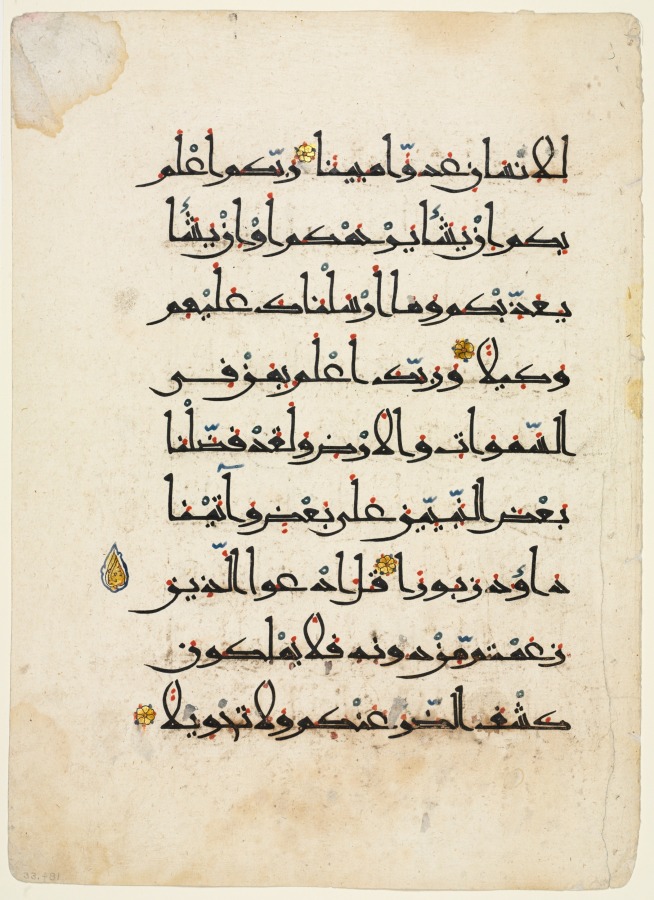 Leaf from a Qur'an
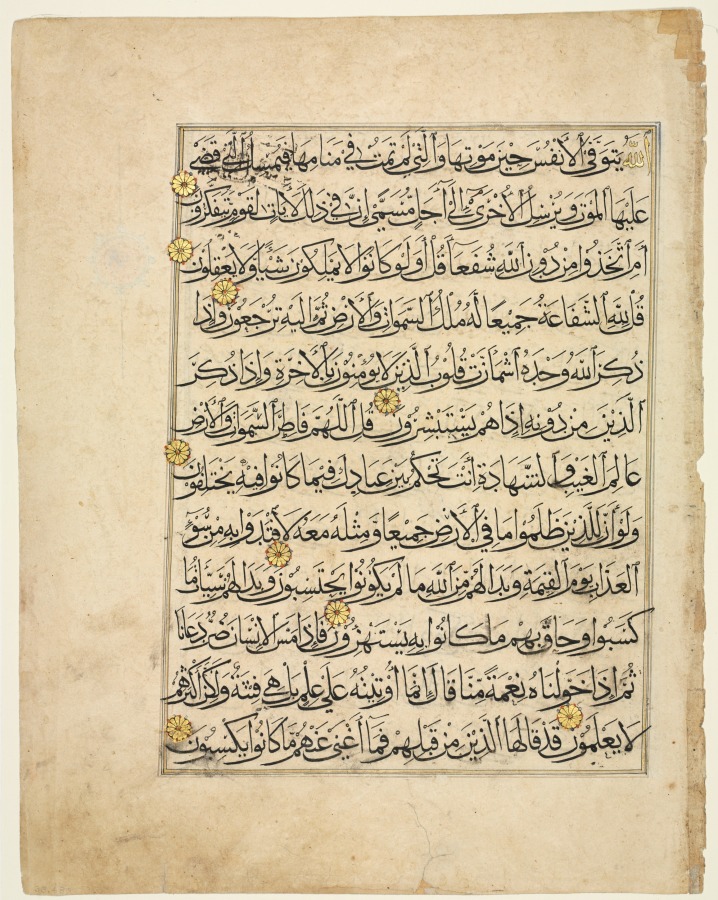 Qur'an Manuscript Folio
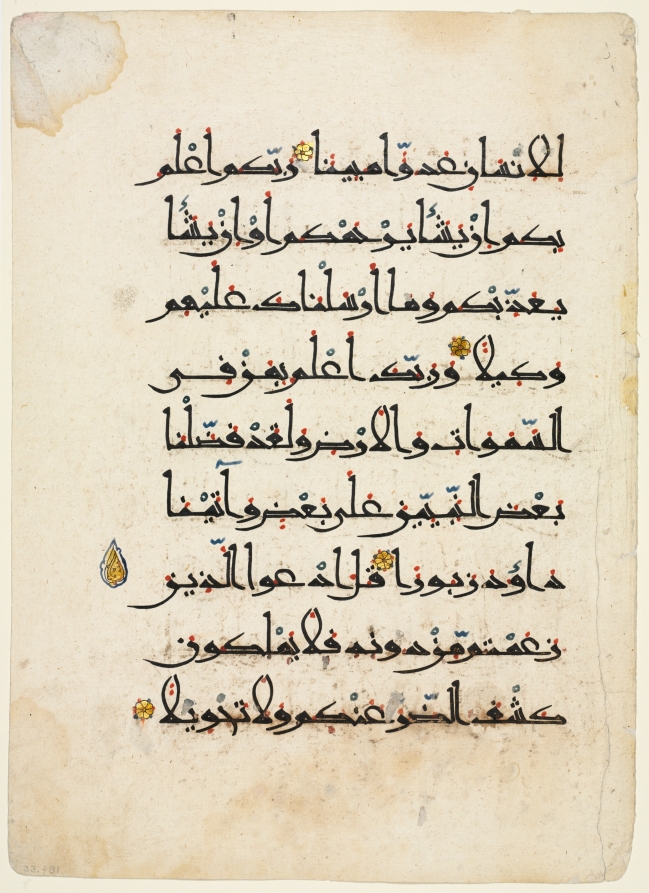 Leaf from a Qur'an (recto)
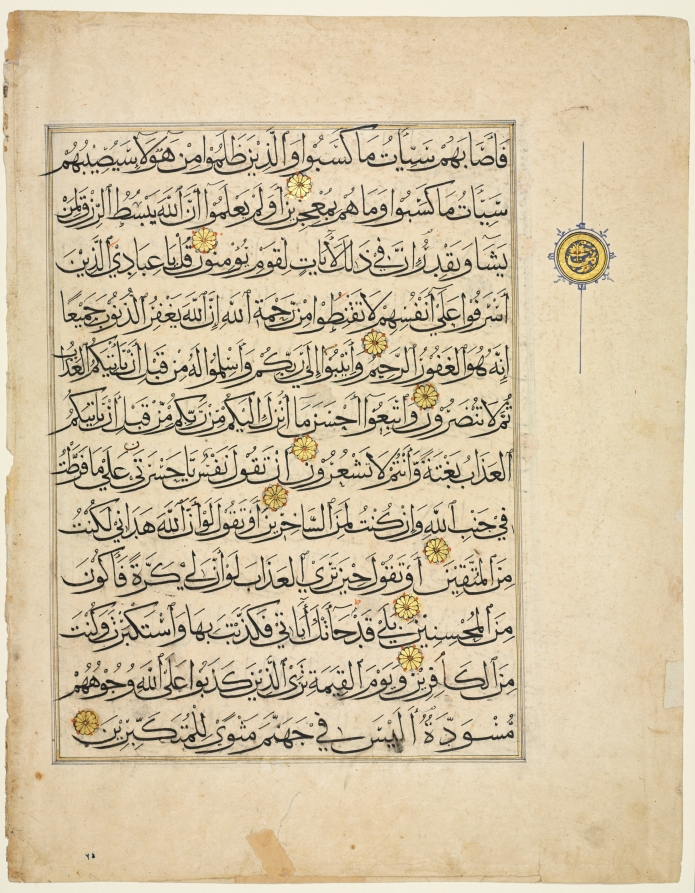 Qur'an Manuscript Folio (verso)
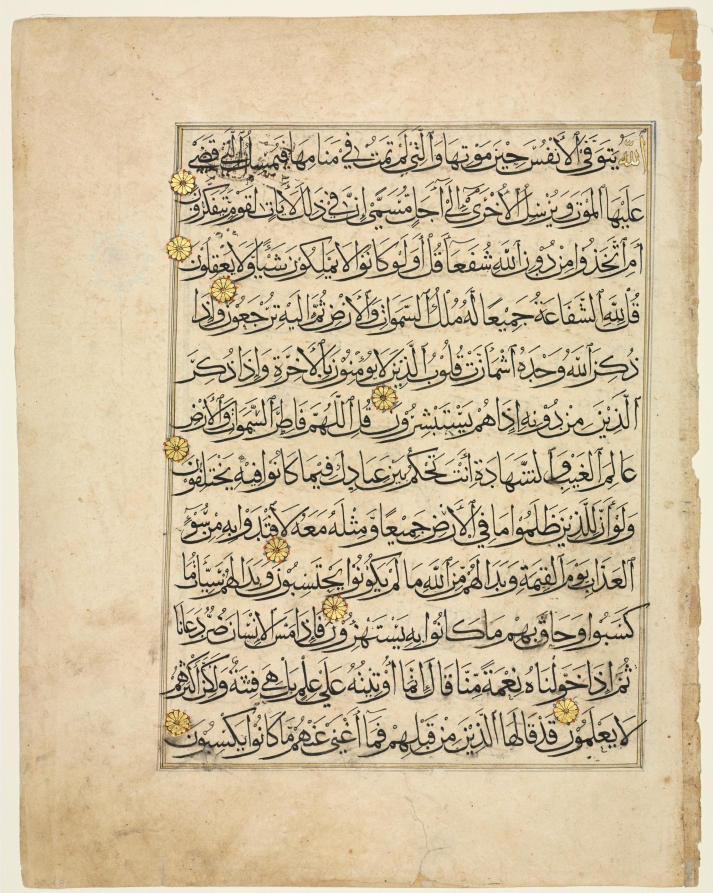 Qur'an Manuscript Folio (recto)
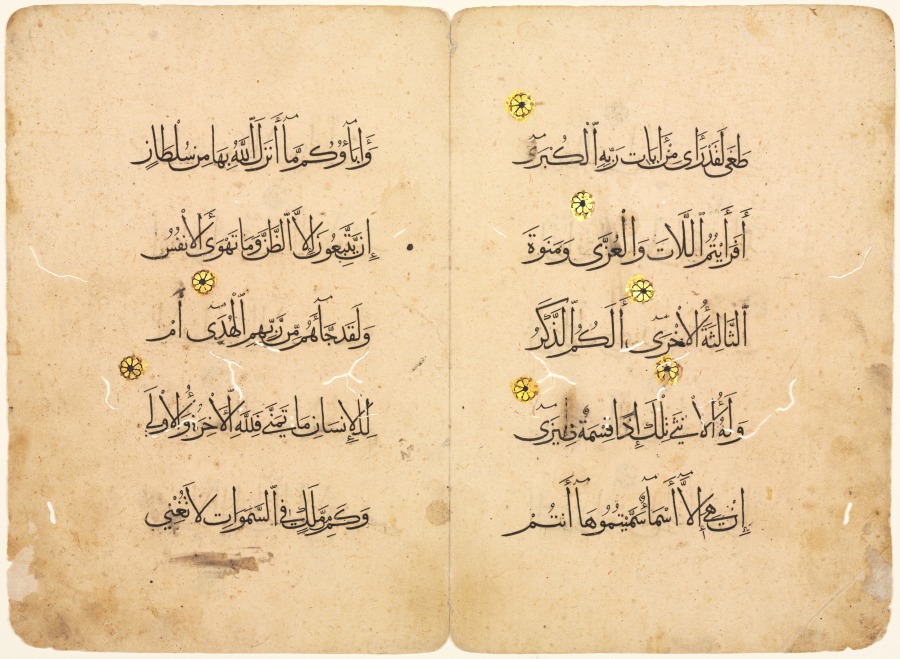 Qur'an Manuscript Folio
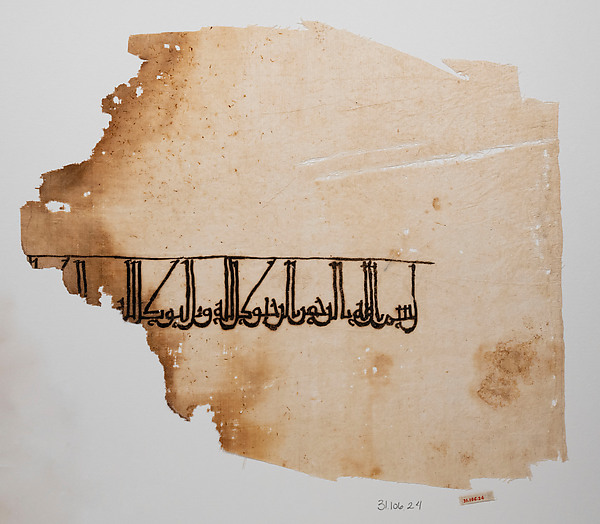 Textile Fragment