Who Was Rembrandt van Rijn?
The Dutch master who painted his own face for forty years — and went spectacularly broke.
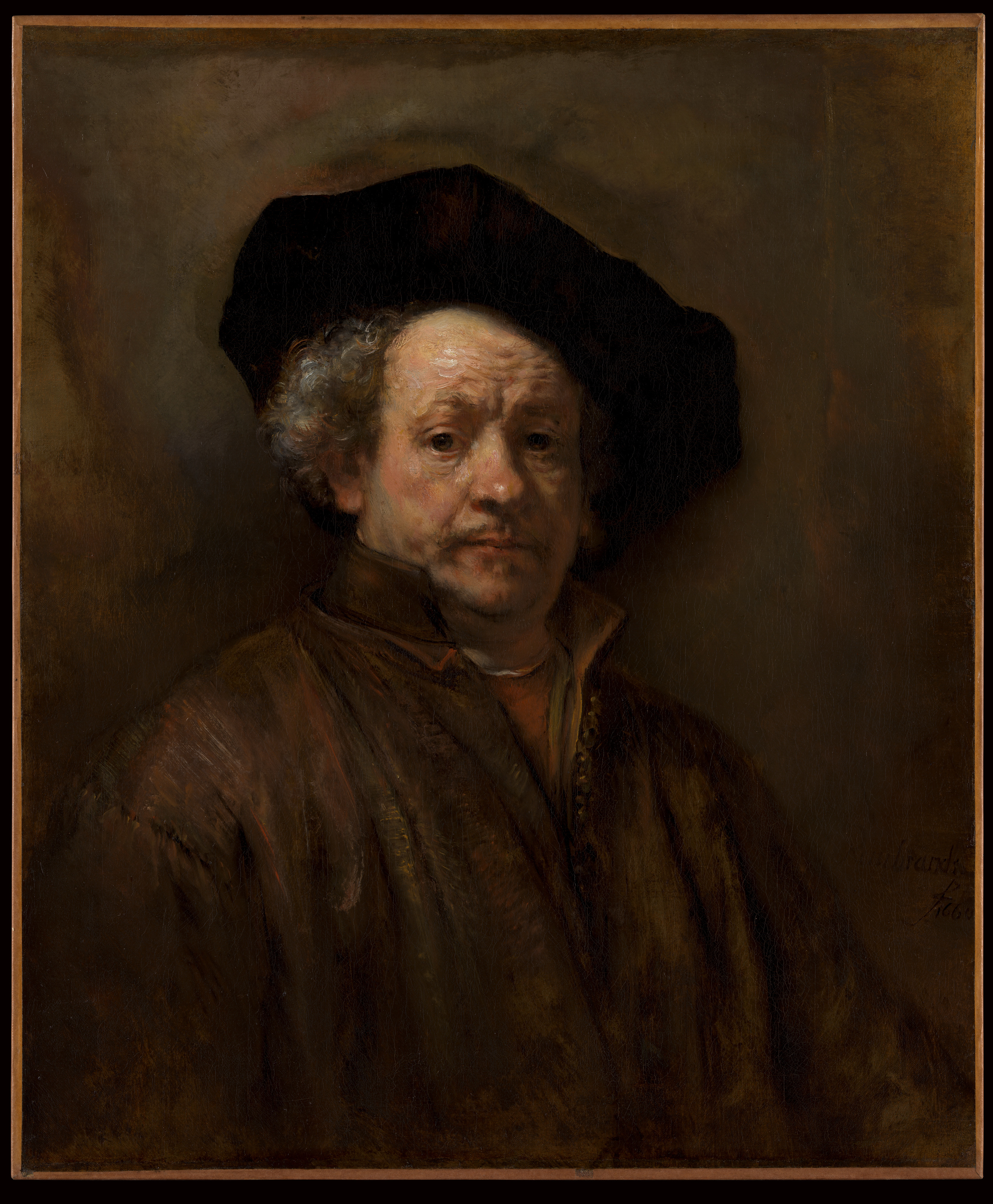
Rembrandt van Rijn (1606–1669) was the towering painter of the Dutch Golden Age, a master of light, shadow, and human feeling. Famous for dramatic group portraits like "The Anatomy Lesson" and "The Night Watch," and for a lifetime of unflinching self-portraits, he achieved fame and wealth, then lost nearly everything — and painted his greatest work anyway.
Rembrandt van Rijn stands at the very center of the Dutch Golden Age — the seventeenth-century boom that made a small republic the richest, most picture-hungry place in Europe. More than three and a half centuries later, his people still look back at us with a warmth and inwardness almost no other painter has matched.
He announced himself young with a jolt of theatrical drama.

What made Rembrandt great?
Two things above all: light and feeling. Rembrandt was a supreme handler of chiaroscuro — the dramatic play of light and deep shadow — pulling faces and gestures out of darkness so that our eye goes exactly where he wants it. That anatomy scene, painted when he was in his mid-twenties, already shows the trick: the pale body and the illuminated faces glow against a dim room.
But technique was never the point. Rembrandt painted psychology — hesitation, grief, tenderness, guilt — with a directness that can still stop you cold.

Why did he paint so many self-portraits?
He painted his own face for forty years — dozens of times, across paintings, etchings, and drawings. No painter before him had ever scrutinized himself so relentlessly. Taken together, the self-portraits form a running record of a life: the cocky young success, the prosperous burgher in fine costume, and finally the old man, worn and unflinching, looking straight through the mirror.
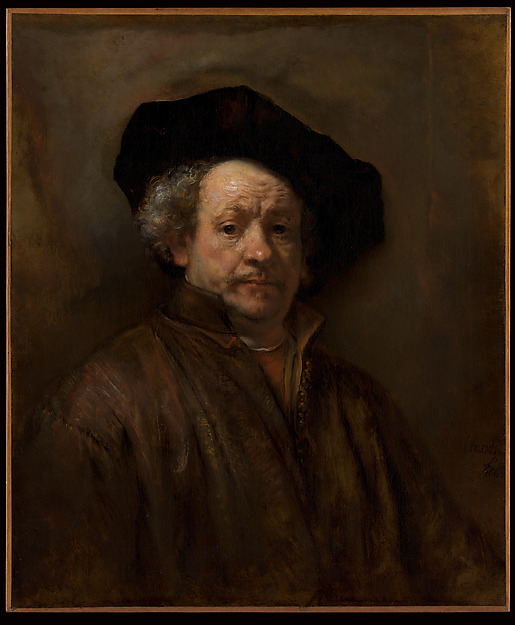
They are less a series of pictures than one long, honest conversation with a mirror.
What happened to his fortune?
He earned a fortune in Amsterdam, then lost it. Rembrandt arrived in the city as a young star, married well, bought a grand house, and spent lavishly on art and curiosities. But commissions slowed, his tastes outran his income, and in 1656 he was forced into a documented insolvency — his house and collection sold off to pay creditors.
What's remarkable is what came next: financially ruined and personally battered, he painted some of the most profound work of his career in his final years. Much of it now hangs at the Rijksmuseum, the Mauritshuis, and The Metropolitan Museum of Art. For a closer look at the picture that made his name, see Rembrandt's The Anatomy Lesson explained.
Rembrandt asks you to meet his subjects' eyes and stay a while. Do that with one of his portraits on DiscoverArt, and you may find someone looking back.
Sources
Discussion
Be the first to share your thoughts.
Sign in to join the discussion.