Who Was Claude Monet?
The painter who gave Impressionism its name — and spent his last decades painting one garden pond.
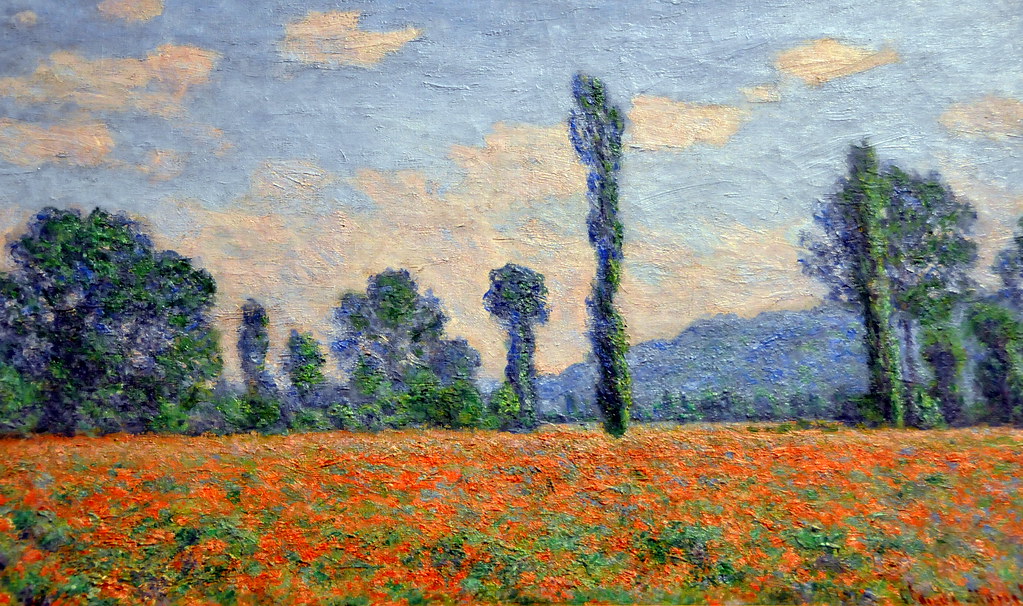
Claude Monet (1840–1926) was the leading French Impressionist. His 1872 painting "Impression, Sunrise" gave the movement its name, and he spent his career chasing light and atmosphere — painting the same haystacks, cathedrals, and water lilies again and again to capture how they changed by the hour. He remains the most popular Impressionist in the world.
Claude Monet may be the most familiar painter most people can't quite place — the one behind the shimmering ponds and hazy sunrises. He was the leading French Impressionist, and more than any other artist he taught the modern eye to care less about what a picture shows than about the light falling across it.
It started, fittingly, with a single hazy harbor at dawn.

How did Monet start Impressionism?
He gave the movement its name almost by accident. When Monet showed this quick, atmospheric harbor view — titled Impression, Sunrise — at an independent 1874 exhibition in Paris, a hostile critic seized on the word "impression" as an insult: these weren't finished paintings, just impressions of them. The label stuck, and Monet and his friends wore it with pride.
That first show was a rebellion against the official Salon, which had little patience for loose brushwork and everyday subjects. We tell the full story of that fight in why the Impressionists were rejected.
Success came slowly and unevenly. For years Monet knew real poverty — scraping by, moving often, and grieving the early death of his first wife, Camille — before the new painting finally found its buyers.
Why did he paint the same thing over and over?
Because his real subject was never the object — it was the light on it. In his mature years Monet worked in series, setting up several canvases at once and moving between them as the sun shifted, painting the same motif under different weather and hours. Haystacks in a field. The facade of Rouen Cathedral. Poplars along a river.

Seen together, a series is really a portrait of time passing. We unpack this obsession in why Monet painted the same thing over and over.
What is Giverny?
Giverny was Monet's home, his garden, and his final great subject. At his house northwest of Paris he built an elaborate garden with a Japanese-style bridge and a lily pond, then spent his last decades painting that water almost exclusively — vast, near-abstract canvases of floating blossoms and reflected sky.

He kept painting these even as his eyesight failed him late in life, a struggle we look at in Monet going blind and the water lilies. The work only grew looser and stranger, and generations of later painters found the future in it. The huge, wall-filling Grandes Décorations he willed to the French state were, in a sense, one man's attempt to wrap a whole room in a pond.
Monet asked viewers to slow down and watch light behave — which is a good reason to linger over one of his canvases on DiscoverArt rather than scroll past it.
Sources
Discussion
Be the first to share your thoughts.
Sign in to join the discussion.