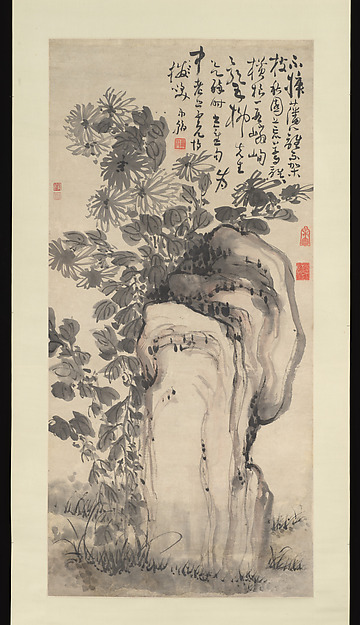
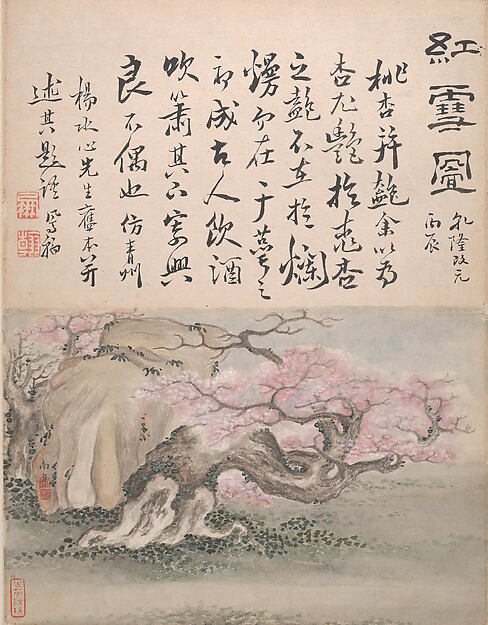
In the collection of Cleveland Museum of Art, Cleveland — check current display status with the museum.
FROM THE CLEVELAND MUSEUM OF ART’S CATALOG
In East Asian art, peonies traditionally symbolize prosperity and wealth.
Be the first to share your thoughts.
Sign in to join the discussion.
 Du Qiong (Chinese, 1396–1474) — Mt. Taibo in the Style of Wa
 Insects and Flowers
 Tao Cheng (Chinese, active c. 1471–after 1502) — Chrysanthem
 Wang Guxiang (Chinese, 1501–1568) — Flowers of Four Seasons,
 Wang Yuanqi (Chinese, 1642–1715) — Green Peaks under Clear S
 Shitao (Chinese, 1642–1707) — Rocks, Orchid, and Bamboo
 Xie Huan (Chinese, c. 1370-c.1450) — The Nine Elders of the
  Cheng Zhengkui (Chinese, 1604–1676) — Dream Journey among Ri
 Wang Hui (Chinese, 1632–1717) — Hall of Lofty Pines
 Oeyama Engi
 Sesson Shūkei (Japanese, c. 1492–c. 1577) — Eight Views of X
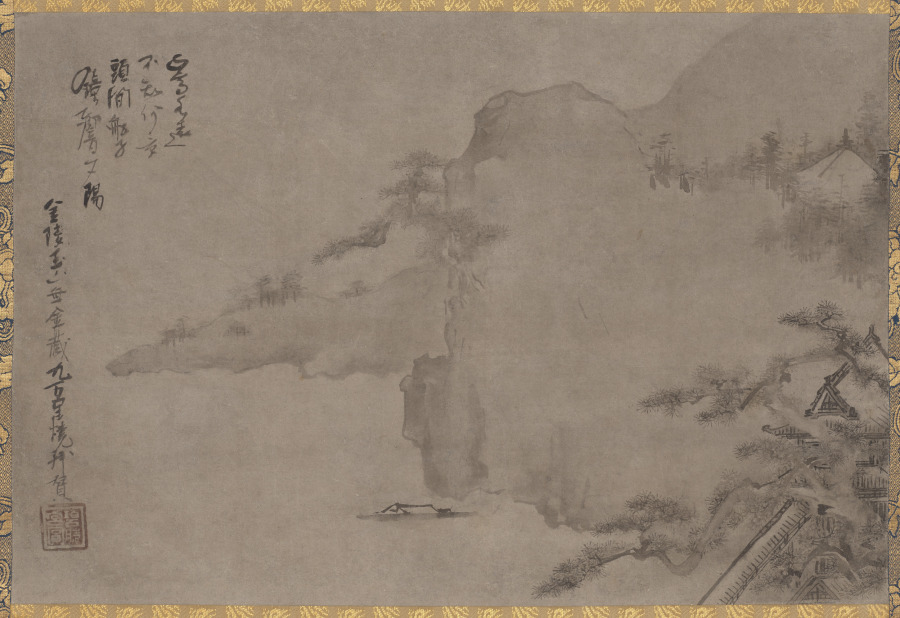 Iwasa Matabei (Japanese, 1578–1650) — Coastal Landscape