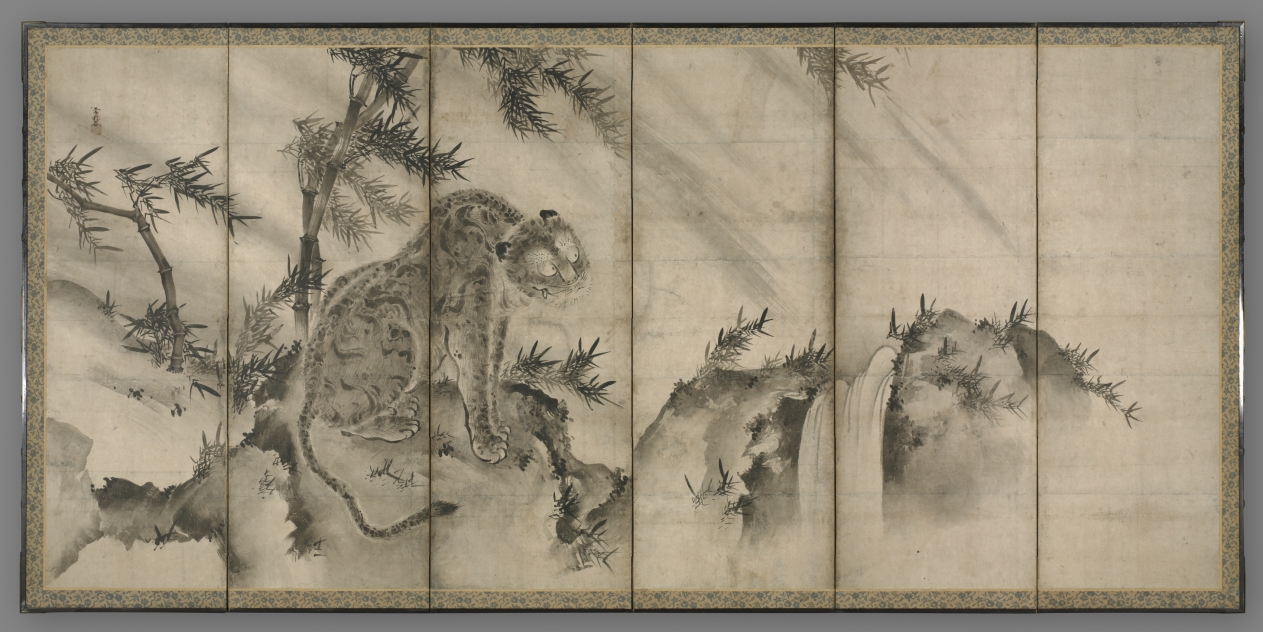
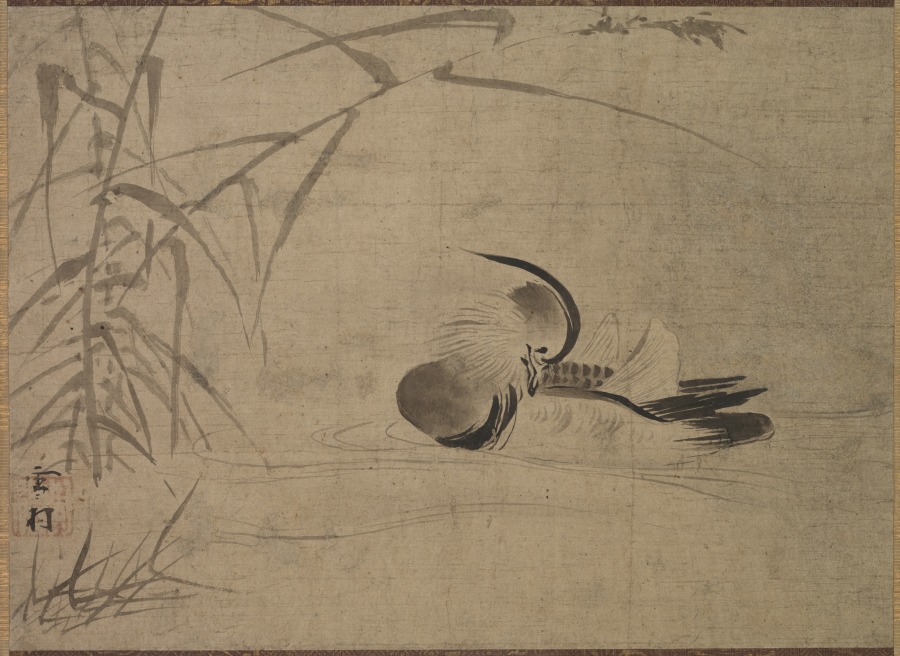
In the collection of Cleveland Museum of Art, Cleveland — check current display status with the museum.
FROM THE CLEVELAND MUSEUM OF ART’S CATALOG
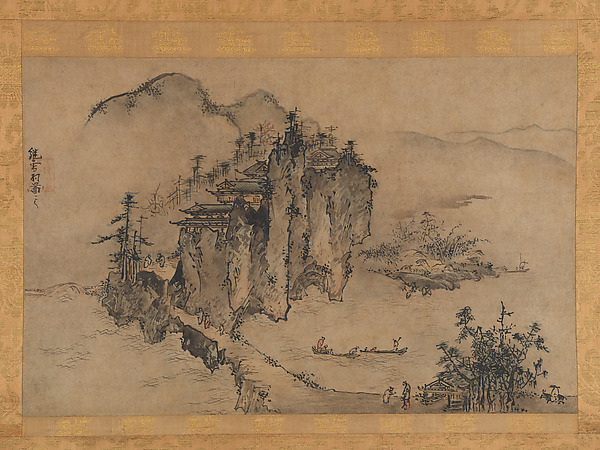
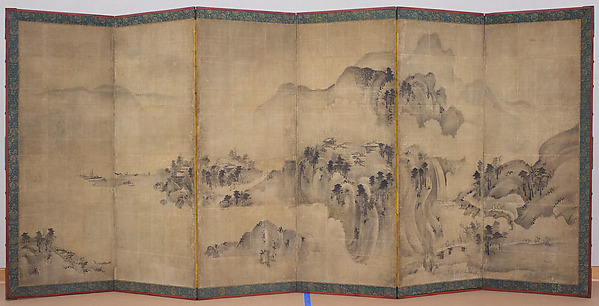
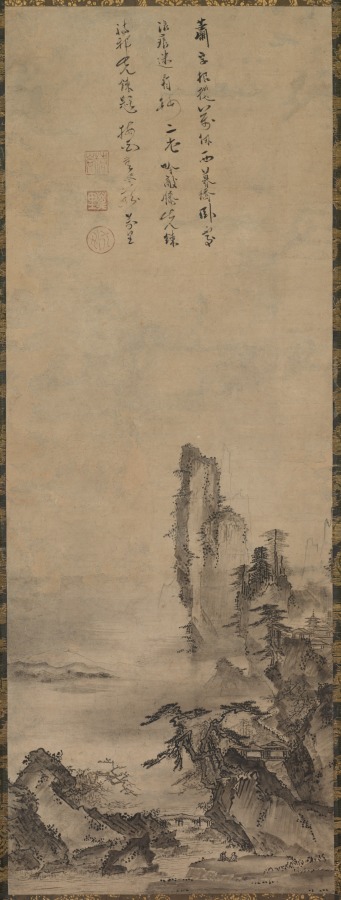
Eight Views of the Xiao and Xiang Rivers can be traced to 11th-century Chinese poems and paintings, the depiction of which had also become popular among Korean and Japanese painters. Xiao-Xiang refers to the region in present-day Hunan province where the Xiao and Xiang rivers converge. Few painters of the Eight Views had in fact seen the scenery; rather, they were trying to portray in ink and wash the lyrical qualities of dim light and a misty atmosphere typical of that region. Each of the poetic titles suggests a time of day, a season, or specific atmospheric conditions—subjects that challenged the abilities of the most talented artists. In this miniature painting ( shukuzu ) of the Muromachi period, Japanese Zen monk and painter Shukei Sesson depicted all eight views featured in Chinese prototypes: Wild Geese Descending to Sandbar; Returning Sails Off a Distant Coast; Mountain Market in Clearing Mist; River and Sky in Evening Snow; Autumn Moon over Dongting Lake; Night Rain on the Xiao and Xiang; Evening Bell from Mist-Shrouded Temple; and Fishing Village in Evening Glow.
Be the first to share your thoughts.
Sign in to join the discussion.
 Insects and Flowers
 Tao Cheng (Chinese, active c. 1471–after 1502) — Chrysanthem
 Shi Rui (Chinese, c. 1400-c. 1470) — Waiting for the Moon in
 Du Qiong (Chinese, 1396–1474) — Mt. Taibo in the Style of Wa
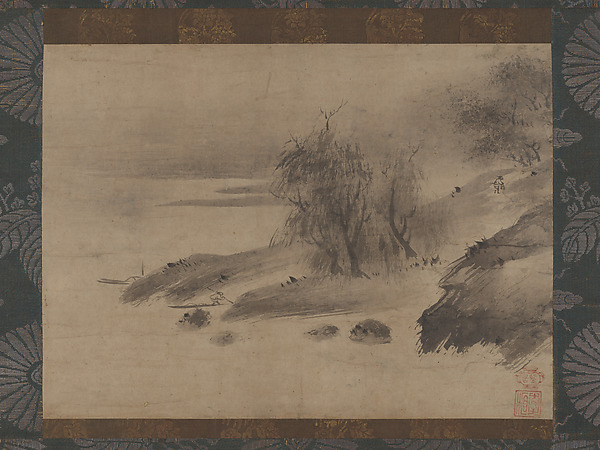 Sōami — 相阿弥筆 山水図|Landscape
 Wen Boren (Chinese, 1502–1575) — Water Village
 Xiao Yuncong (Chinese, 1596–1673) — Pure Tones among Hills a
 Kenkō Shōkei (Japanese, active 1478–1506) — Lonely Temple an
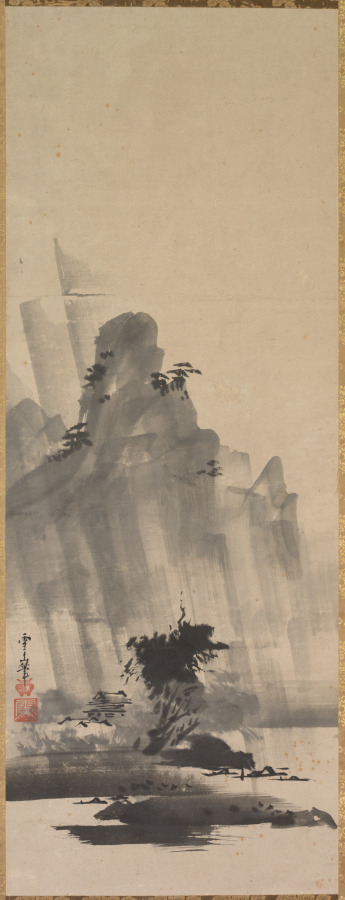 Hirowatari Setsuzan (Japanese, ?-1674) — Mountain and River
  Xie Huan (Chinese, c. 1370-c.1450) — The Nine Elders of the
 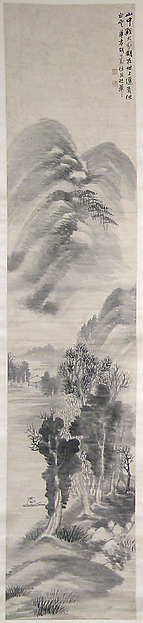 Hu Yuan — 清 胡遠 四季山水圖 四條屏|Landscapes of the Four Sea
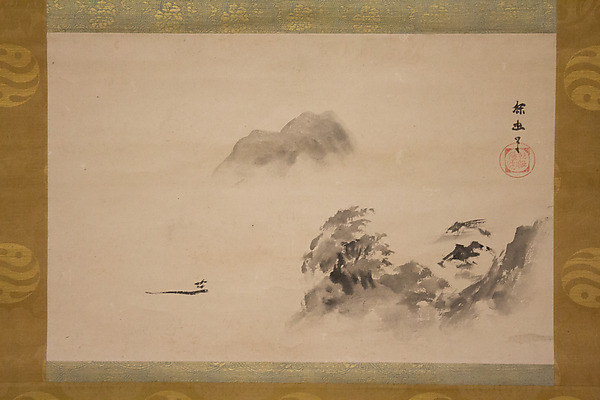 Kano School