FROM THE CLEVELAND MUSEUM OF ART’S CATALOG
More than 26 feet long, this scroll presents insects, reptiles, and plants in delicate brushwork and pale colors, referring in style to earlier Southern Song dynasty (1127–1279) bird-and-flower paintings. Upon closer inspection, ants dismember a butterfly and reptiles wait to ambush their prey. An inscription at the end of the painting gives us an idea of its meaning: Attributed to the Qing dynasty scholar Zhang Xigeng (張錫庚, 1801–1861), the inscriber relates the work to an earlier painting by Qian Xuan (錢選, c. 1235–before 1307) and further suggests that the painting may allude to the relentlessness of natural selection. By drawing a parallel to tumultuous episodes in Chinese history, the writer might even hint at the domestic rebellions and the aggression of Western powers against China in his lifetime, particularly the Opium Wars (1839–60).
Source ↗︎
Be the first to share your thoughts.
 Wang Guxiang (Chinese, 1501–1568) — Flowers of Four Seasons,
 Sesson Shūkei (Japanese, c. 1492–c. 1577) — Eight Views of X
 Shitao (Chinese, 1642–1707) — Rocks, Orchid, and Bamboo
 Tao Cheng (Chinese, active c. 1471–after 1502) — Chrysanthem
 Du Qiong (Chinese, 1396–1474) — Mt. Taibo in the Style of Wa
 Xie Huan (Chinese, c. 1370-c.1450) — The Nine Elders of the
  Gu Tianzhi (Chinese, active mid-1600s) — Landscape in the St
 Wang Hui (Chinese, 1632–1717) — Hall of Lofty Pines
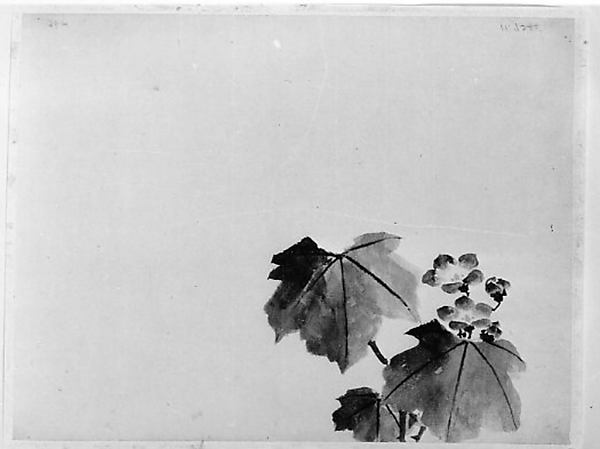 Hokusai School
 Gao Fenghan (Chinese, 1683–1749) — Plum Blossoms and Peonies
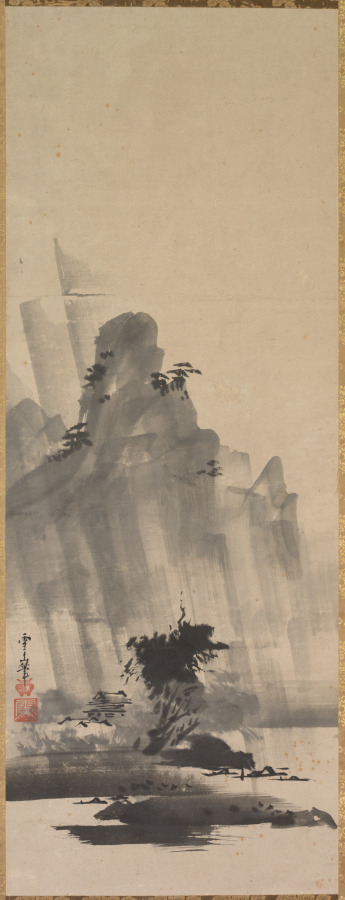 Hirowatari Setsuzan (Japanese, ?-1674) — Mountain and River
  Wang Yuanqi (Chinese, 1642–1715) — Green Peaks under Clear S