FROM THE CLEVELAND MUSEUM OF ART’S CATALOG
In a panorama of mountains and expanses of water, three gentlemen have assembled by moonlight to enjoy one another’s company away from a bustling village. An influx of ink paintings from China in both album and scroll formats beginning in the late 1200s inspired Japanese artists to create landscapes based upon Chinese prototypes. Later, Japanese painters adapted the imagery to the larger format of folding screens, which were used to define spaces in large rooms.
Source ↗︎
Be the first to share your thoughts.
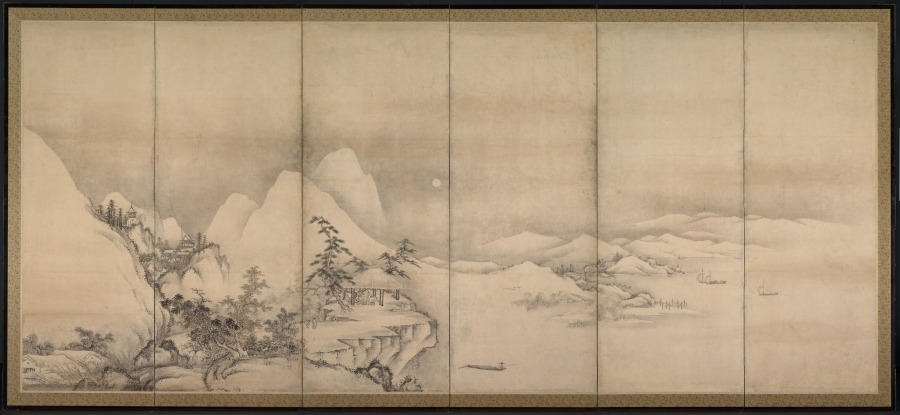 Chinese Landscape
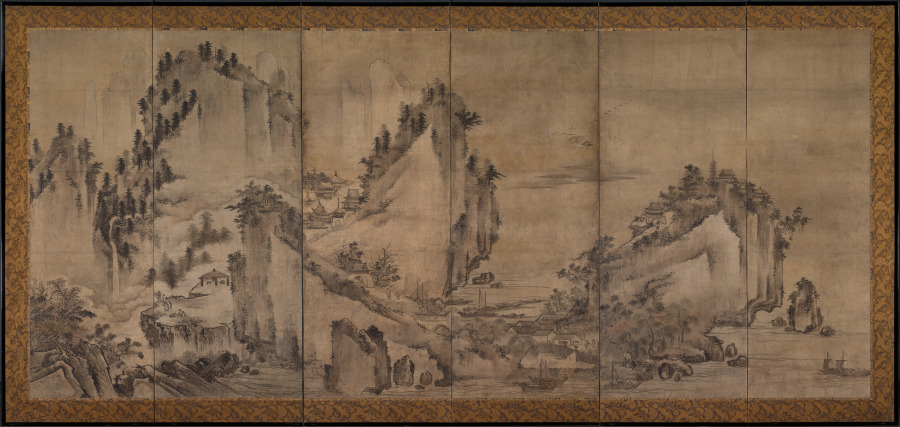 Landscape
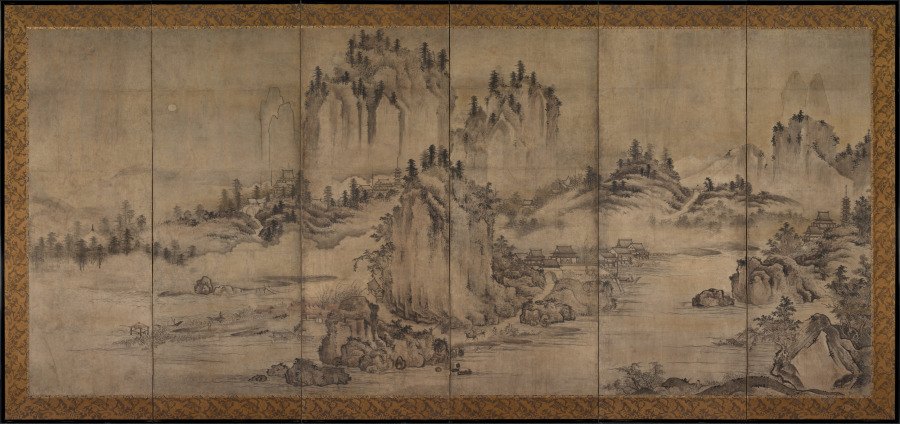 Landscape
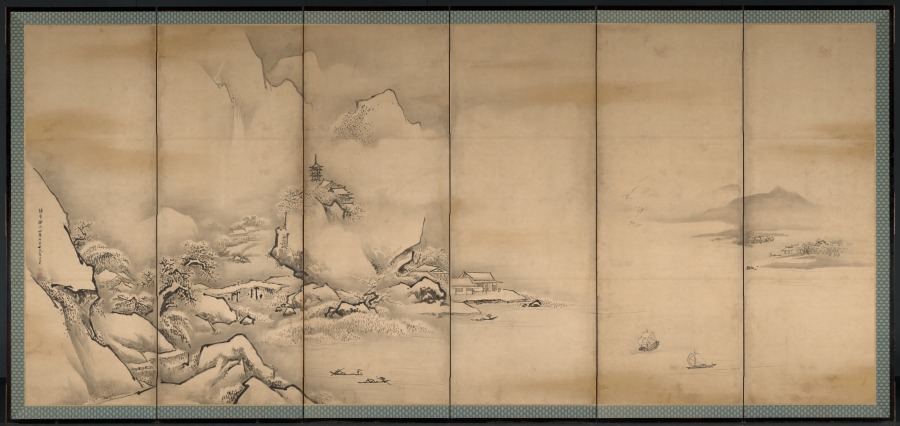 Kano Tan’yū (Japanese, 1602–1674) — The Four Seasons
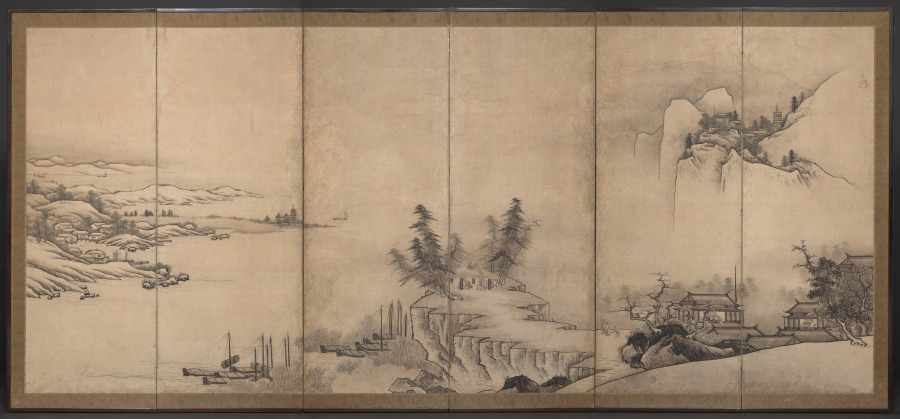 Unkoku Tōeki (Japanese, 1591–1644?) — Chinese Pavilions in a
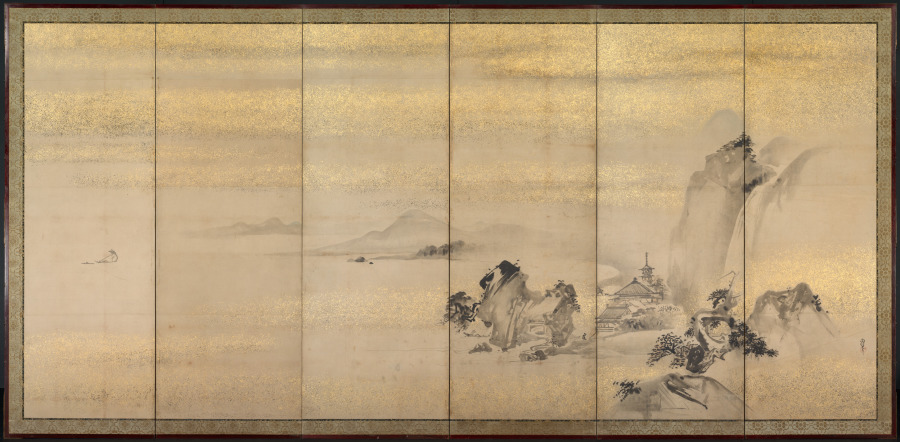 Kano Naonobu (Japanese, 1607–1650) — Summer and Winter Lands
 Kano Tan’yū (Japanese, 1602–1674) — The Four Seasons
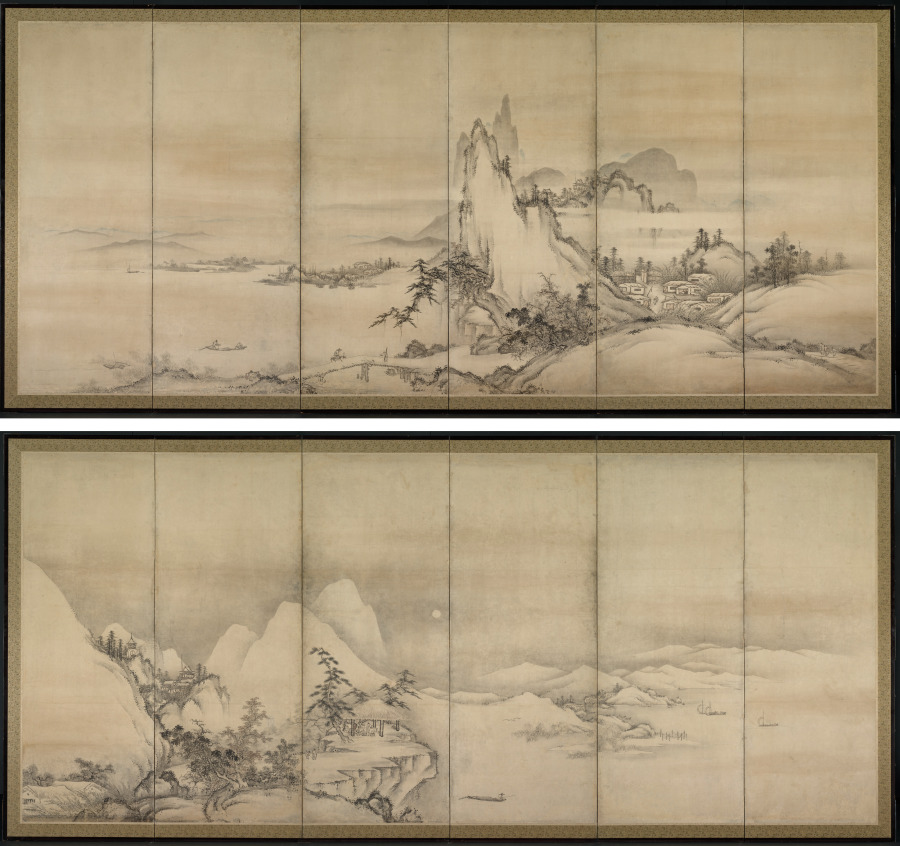 Chinese Landscape
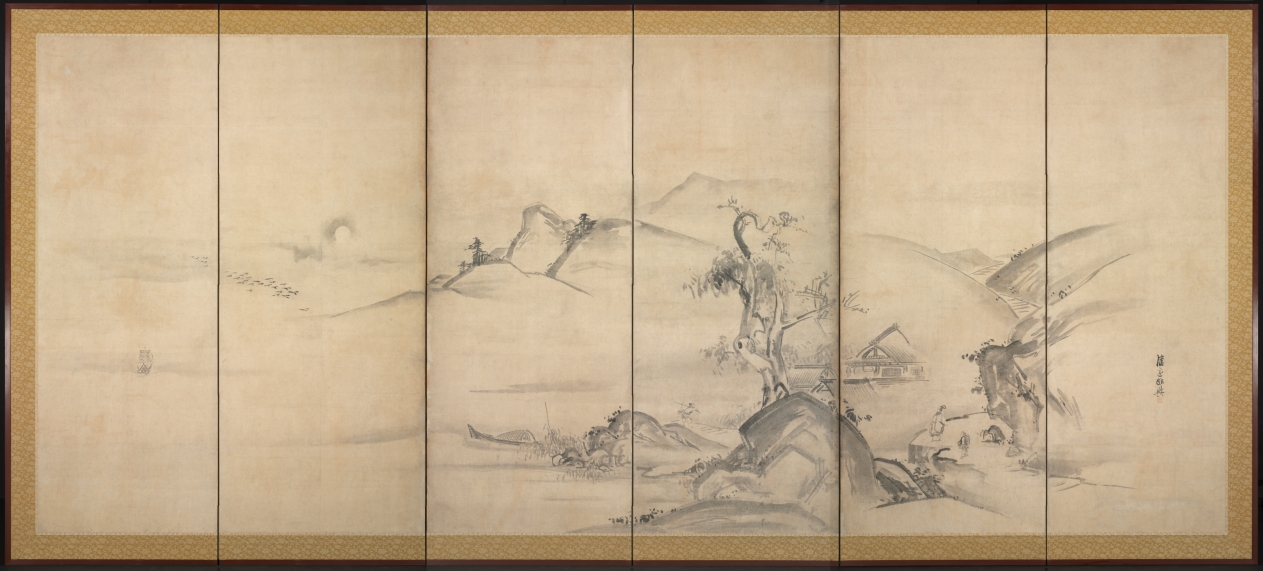 Watanabe Shikō (Japanese, 1683–1755) — Eight Views of the Xi
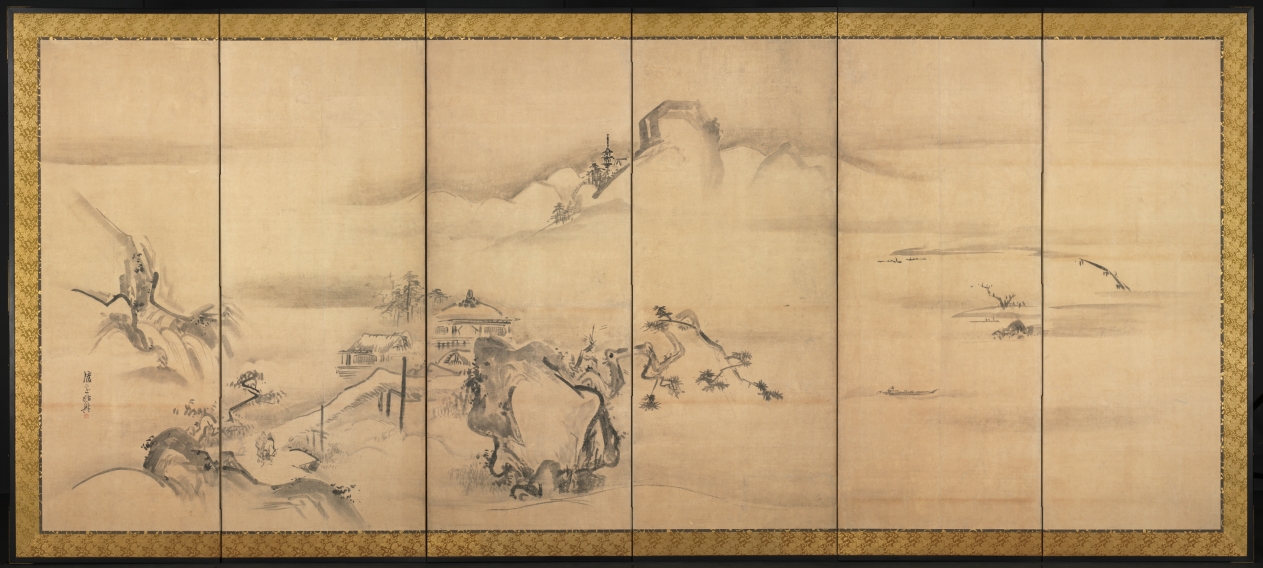 Watanabe Shikō (Japanese, 1683–1755) — Eight Views of the Xi
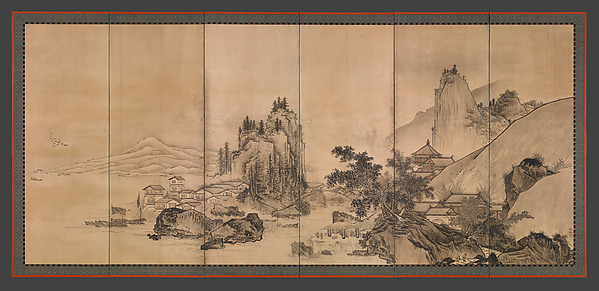 Unkoku Tōgan — 雲谷等顔筆 四季山水図屏風|Landscape of the Four Seasons
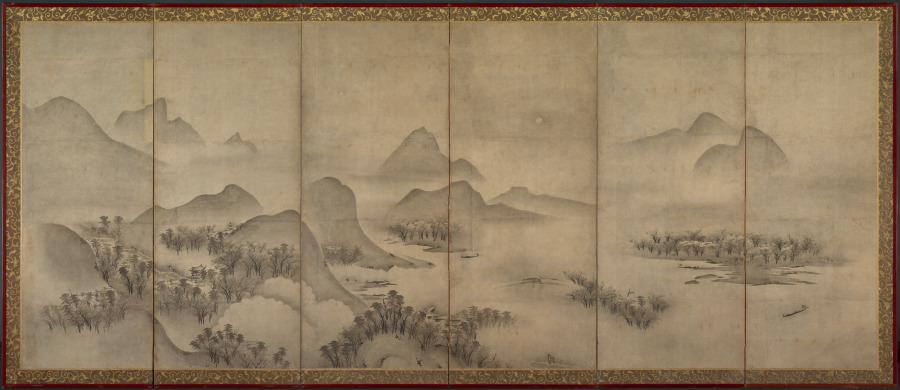 Moonlit Landscape (one of a pair)