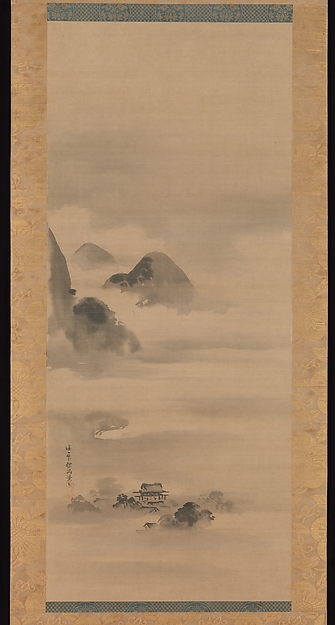
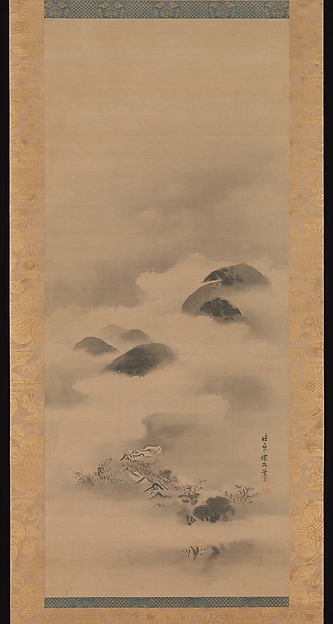
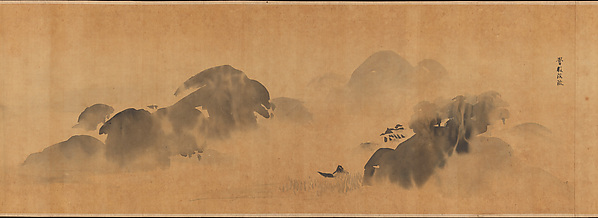
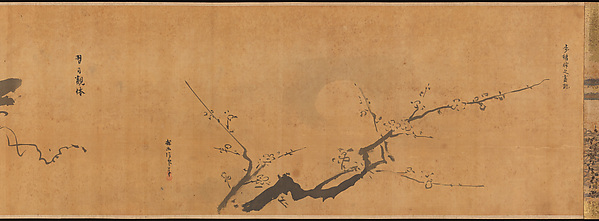
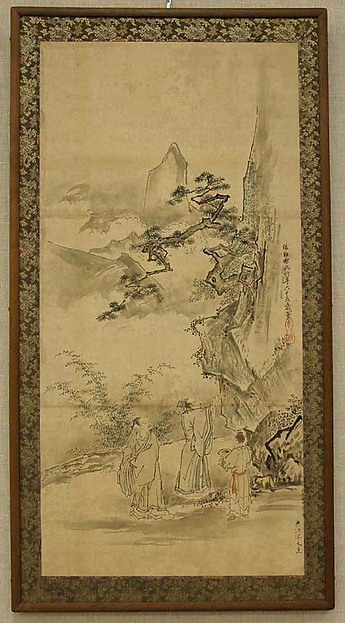
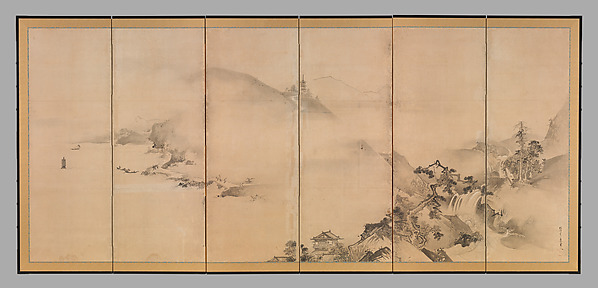
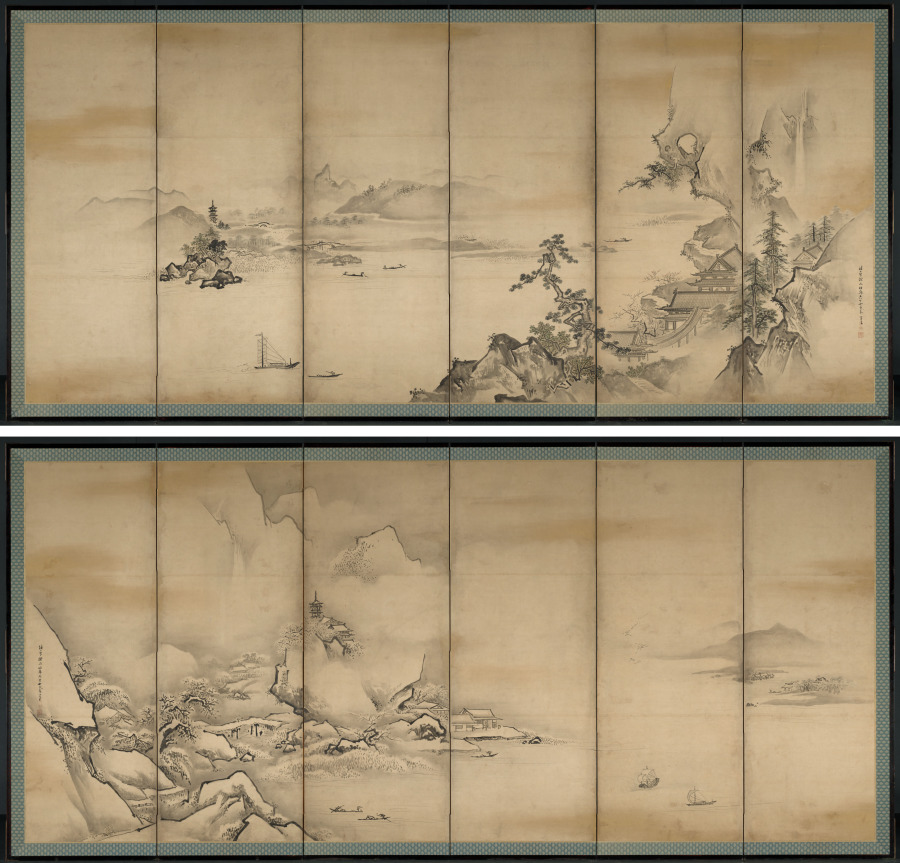
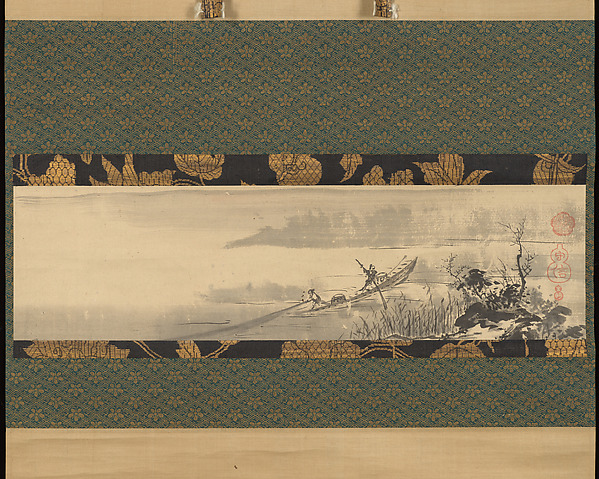
In the collection of Cleveland Museum of Art, Cleveland — check current display status with the museum.
FROM THE CLEVELAND MUSEUM OF ART’S CATALOG
Tan'yū's skills were honed early within the regimen of the Kano family's painting studio. His grandfather, Eitoku (1543–1590) was the Momoyama period's most sought-after painter, a champion of colorful, large-scale painting compositions who worked for several of the country's most powerful leaders. When the young Tan'yū was summoned to Edo in 1617 by the shogun to become a member of the new capital's official painting studio, few opportunities to work on similarly ambitious projects existed. Yet by the end of his career, Tan'yū had supervised the execution and installation of linked mural painting compositions in several of Japan's most prestigious residences and castles. As an official court painter to the first shogun, Tokugawa Ieyasu (reigned 1603–5), and then his successors, Tan'yū appears to have successfully juggled his official duties with private activities as a teacher, as the era's leading connoisseur of classic Chinese and Japanese painting, and as a practicing artist. His surviving compositions as well as thousands of sketches far surpass the oeuvre of any of his contemporaries. While studio assistants surely contributed to his oeuvre, just as later imitators consciousl
Be the first to share your thoughts.
Sign in to join the discussion.
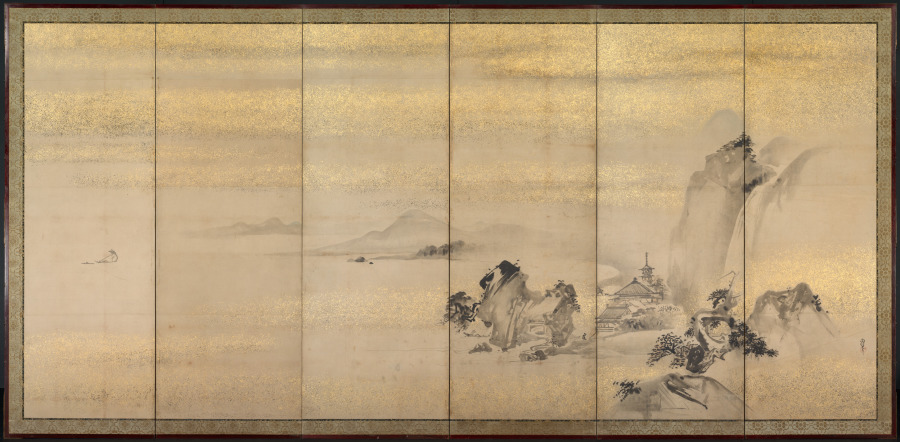 Kano Naonobu (Japanese, 1607–1650) — Summer and Winter Lands
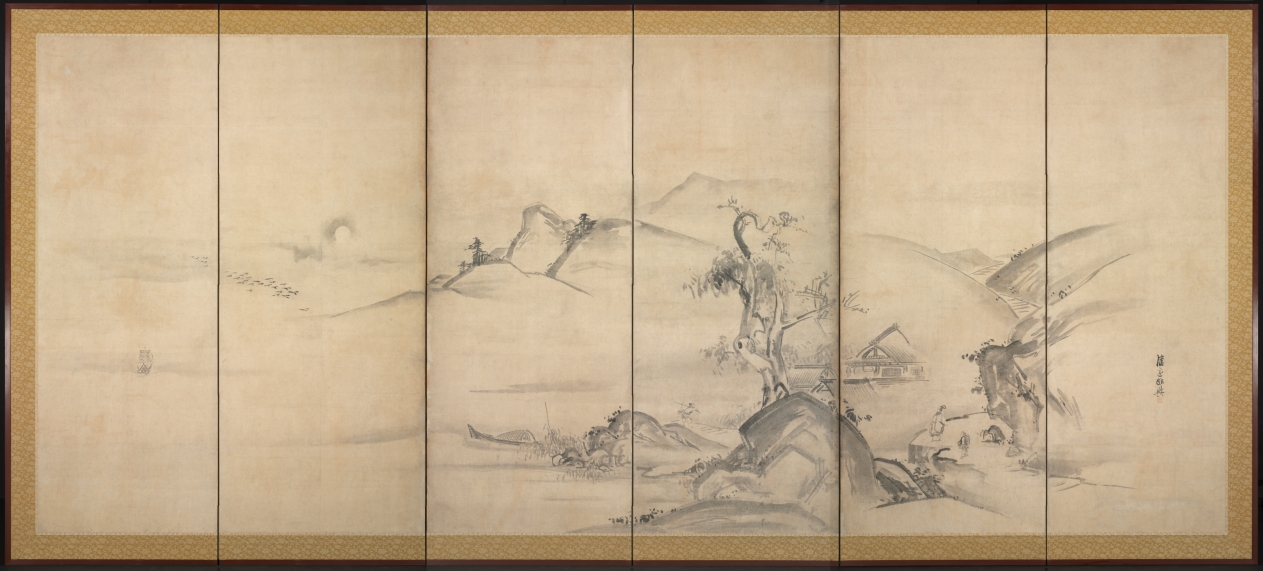 Watanabe Shikō (Japanese, 1683–1755) — Eight Views of the Xi
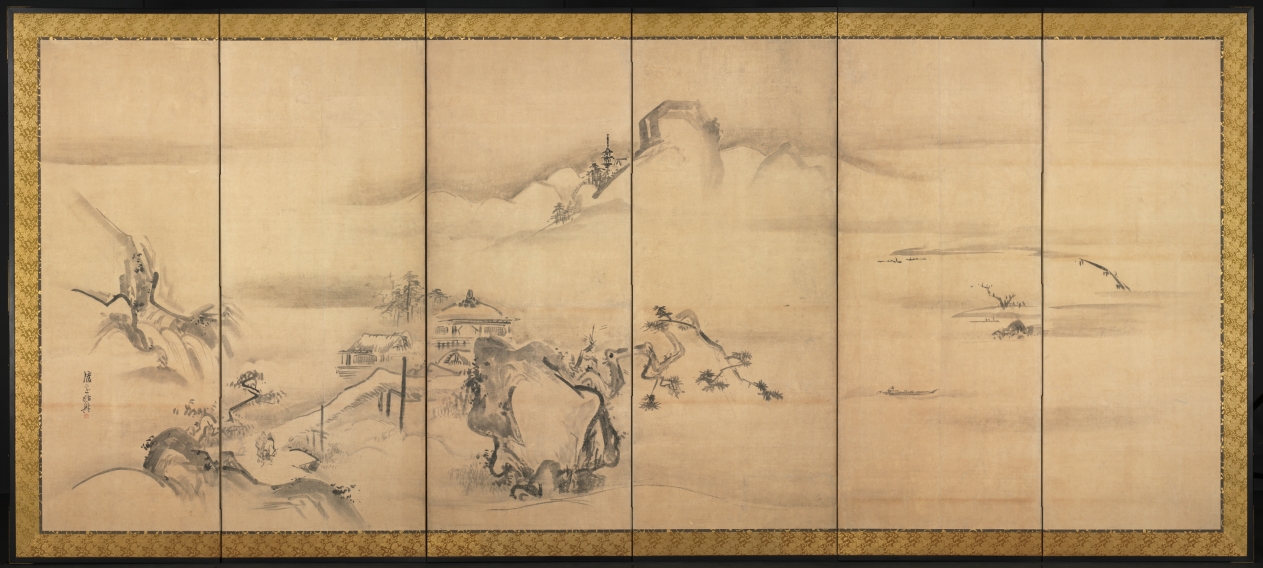 Watanabe Shikō (Japanese, 1683–1755) — Eight Views of the Xi
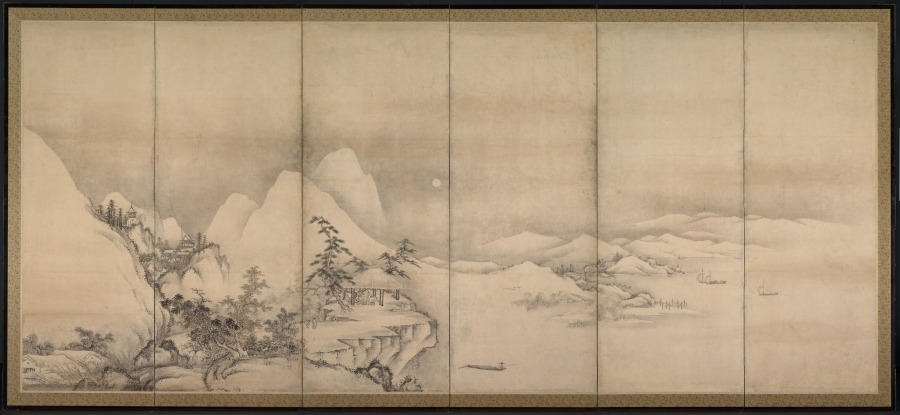 Chinese Landscape
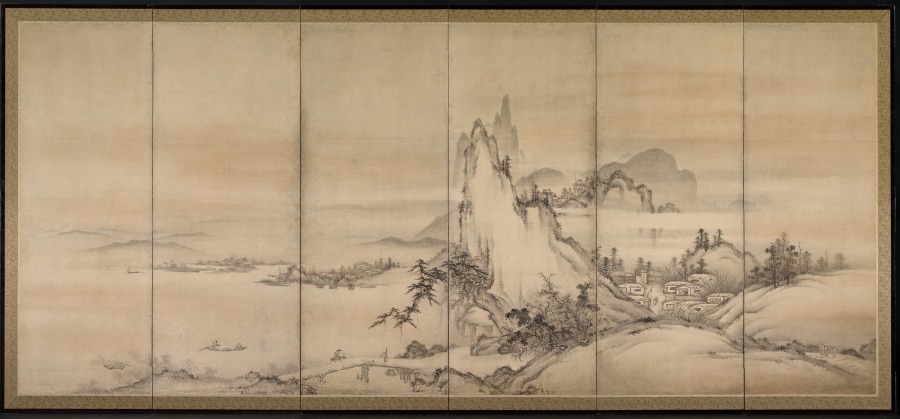 Chinese Landscape
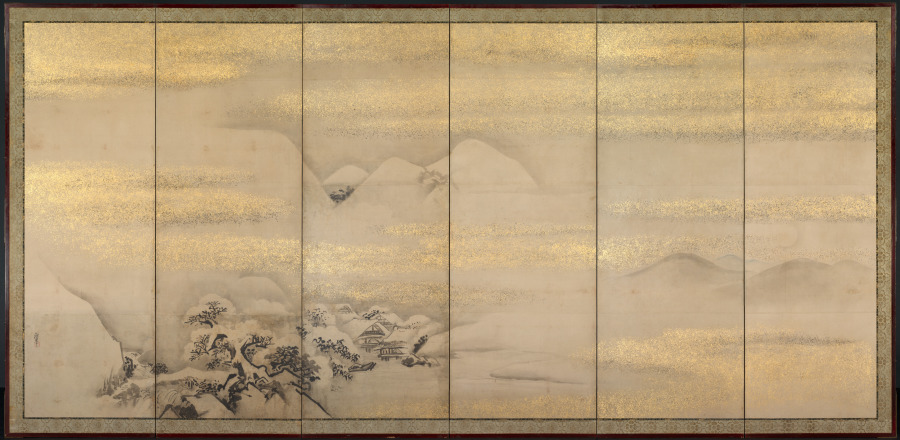 Kano Naonobu (Japanese, 1607–1650) — Summer and Winter Lands
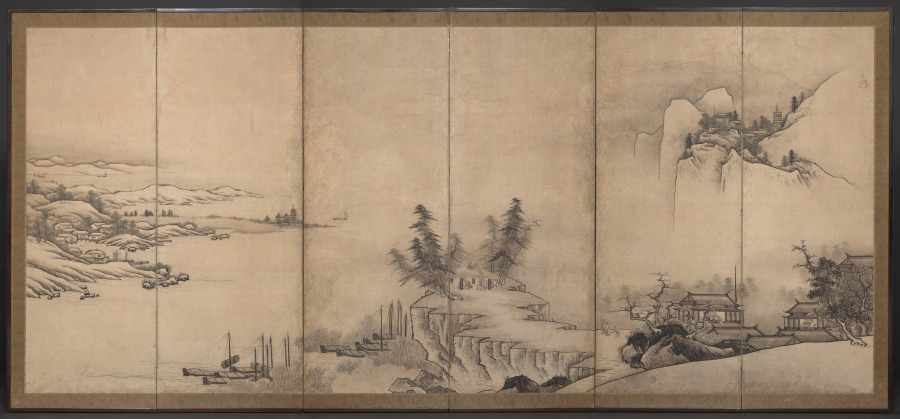 Unkoku Tōeki (Japanese, 1591–1644?) — Chinese Pavilions in a
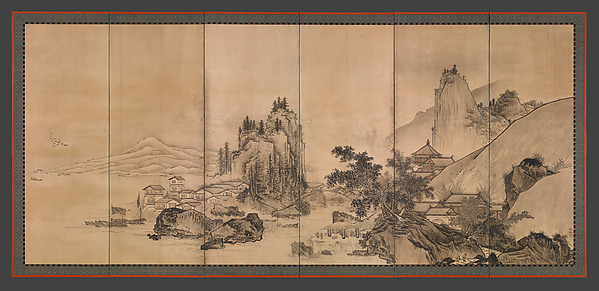 Unkoku Tōgan — 雲谷等顔筆 四季山水図屏風|Landscape of the Four Seasons
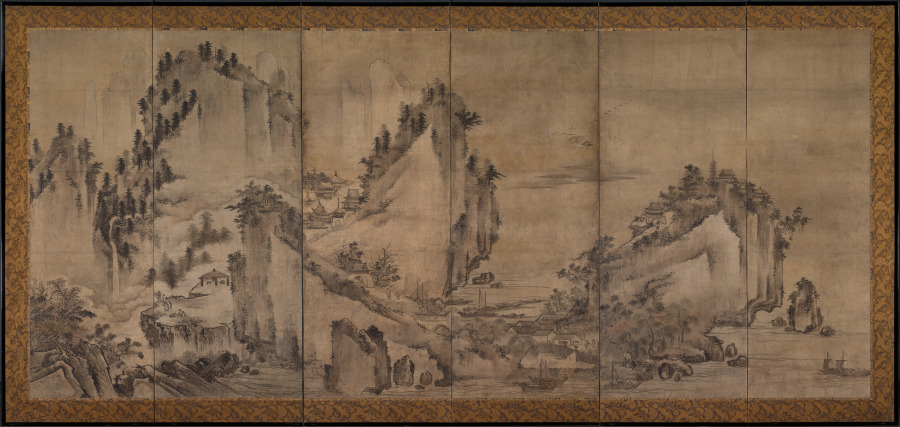 Landscape
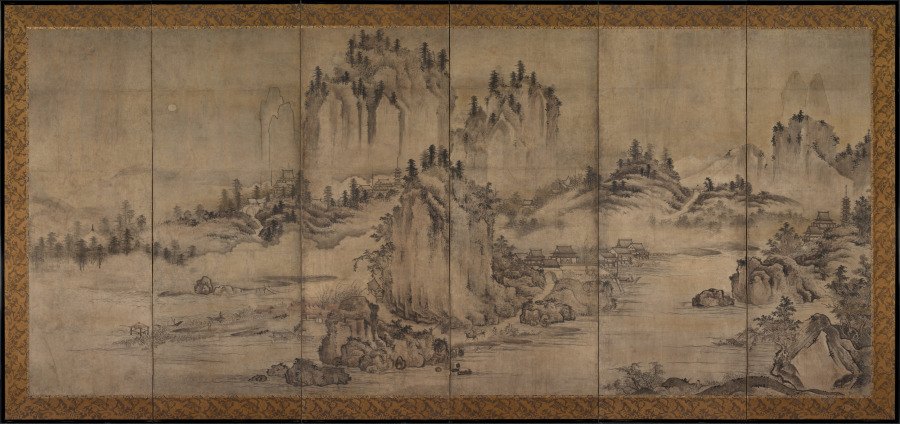 Landscape
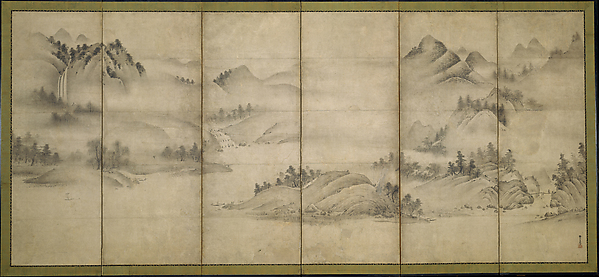 Sōami — 相阿弥筆 四季山水図 (瀟湘八景)|Landscape of the Four Seasons (Ei
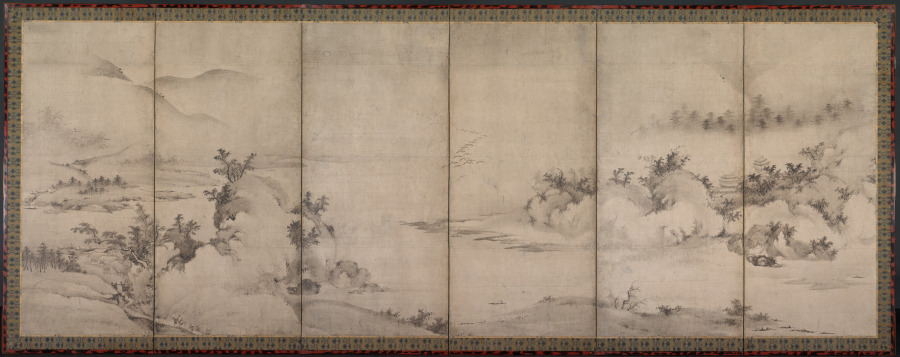 Landscape with Motifs from the Eight Views of Xiao-Xiang