Mahana no atua (Day of the God)
SEE IT IN PERSON
● On view now — Gallery 247
Art Institute of Chicago, Chicago · verified July 2026
Discussion
FROM THE ART INSTITUTE OF CHICAGO’S CATALOG
In this tropical paradise of the artist’s invention, a deity presides over figures walking and resting on an embankment. Rhythmically arranged in groups of two and three, the figures appear more as symbolic forms than as portraits of individuals. Pools of water in interlocking, abstract zones of acidic color surround the feet of a bather, who is flanked by two prone figures—or perhaps the same person seen from two angles. Unlike his other Tahitian-inspired landscapes, this painting was produced in Paris shortly after Paul Gauguin’s first trip to the island. Drawn from fantasy and memory, the psychedelic composition is one of the most abstract and avant-garde works of the artist’s career.
Be the first to share your thoughts.
Sign in to join the discussion.
More by Paul Gauguin



More like this
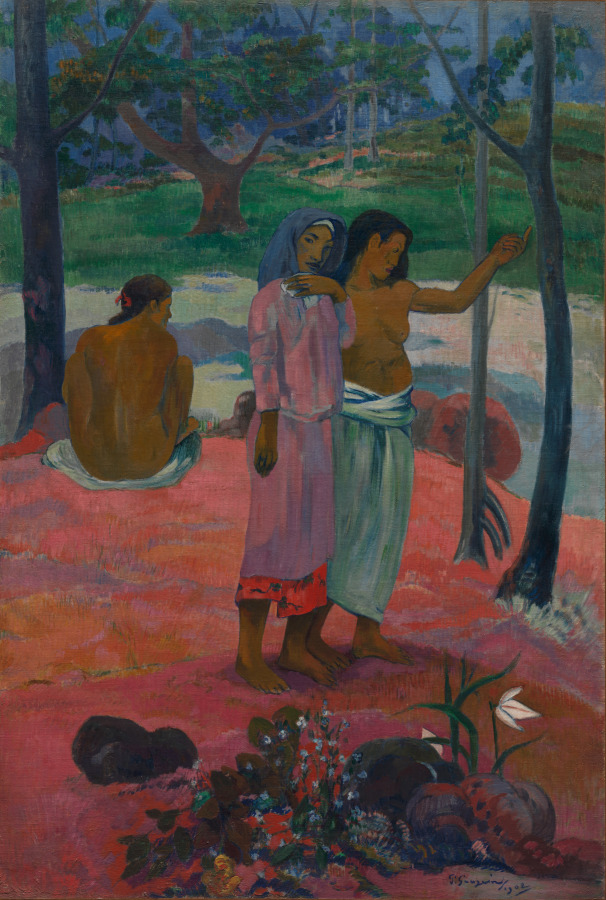 Paul Gauguin (French, 1848–1903) — The Call
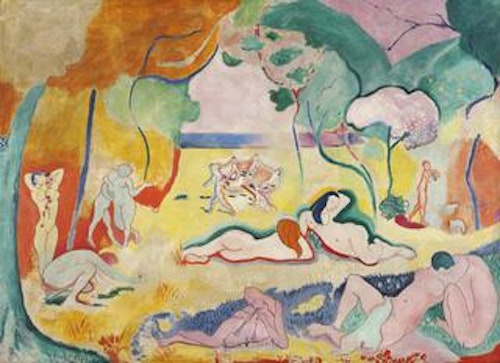 Henri Matisse — Le Bonheur de vivre, also called The Joy of
 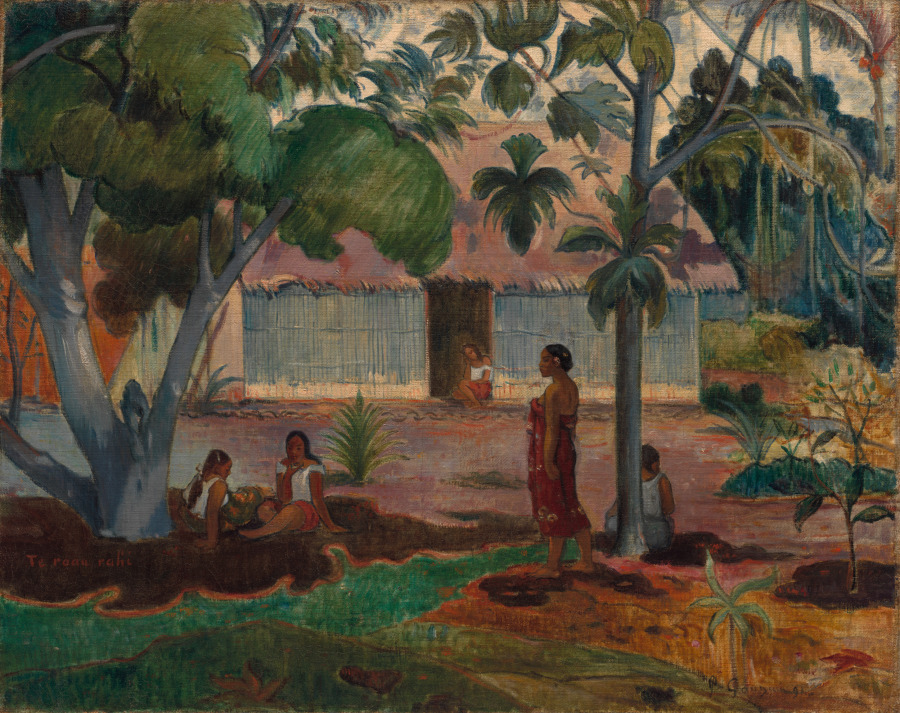 Paul Gauguin (French, 1848–1903) — The Large Tree
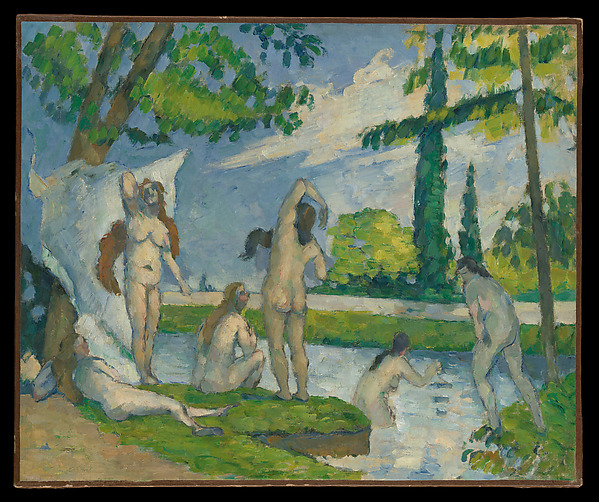 Paul Cézanne — Bathers
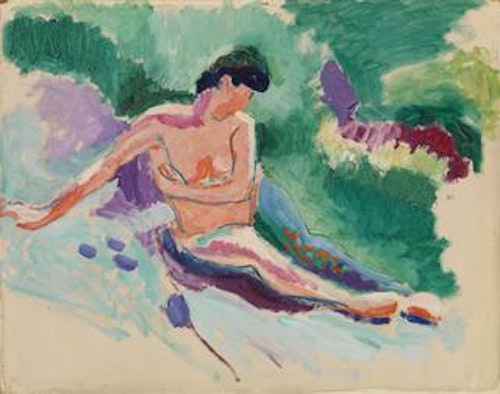 Henri Matisse — Seated Nude
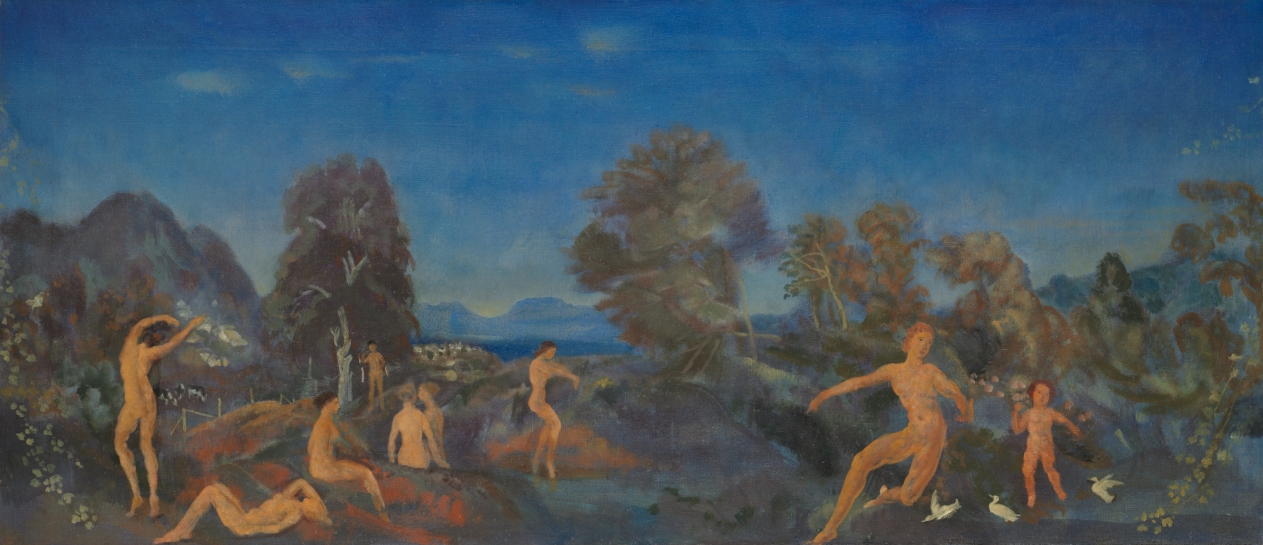 Arthur B. Davies (American, 1862–1928) — Hermes and the Infa
 Paul Signac — In Times of Harmony
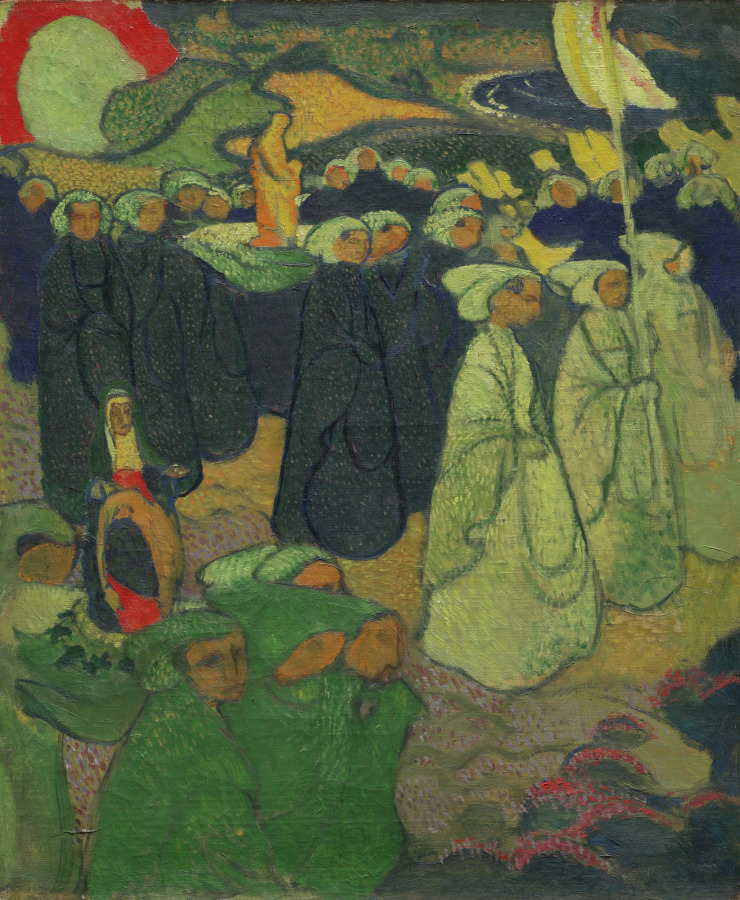 Maurice Denis (French, 1870–1943) — Procession or Pardon at
  Paul Cézanne — Bathers (Baigneurs)
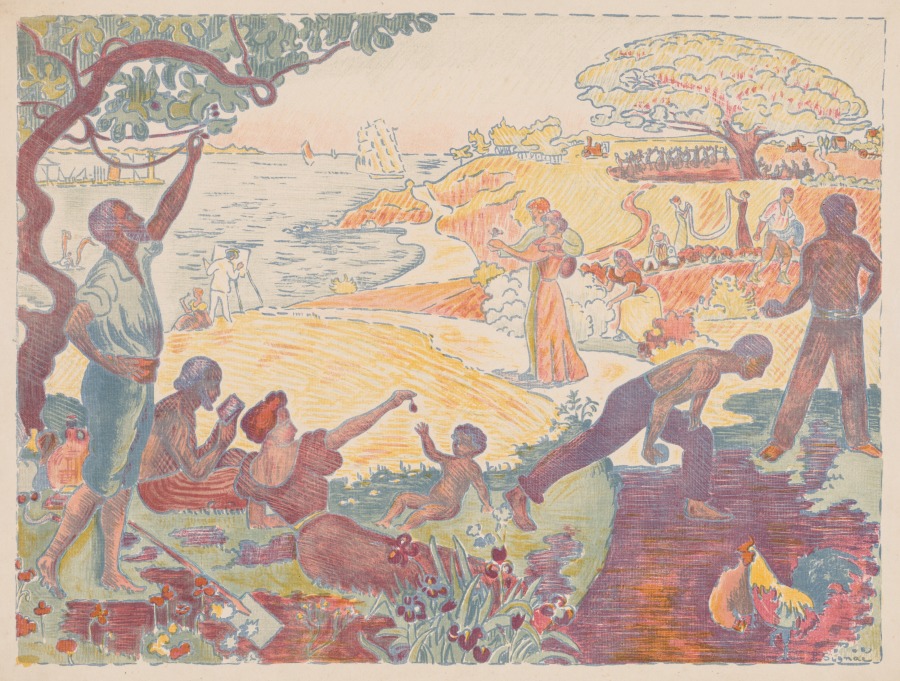 Paul Signac (French, 1863–1935) — Harmonious Times
 Arnold Böcklin — In the Sea
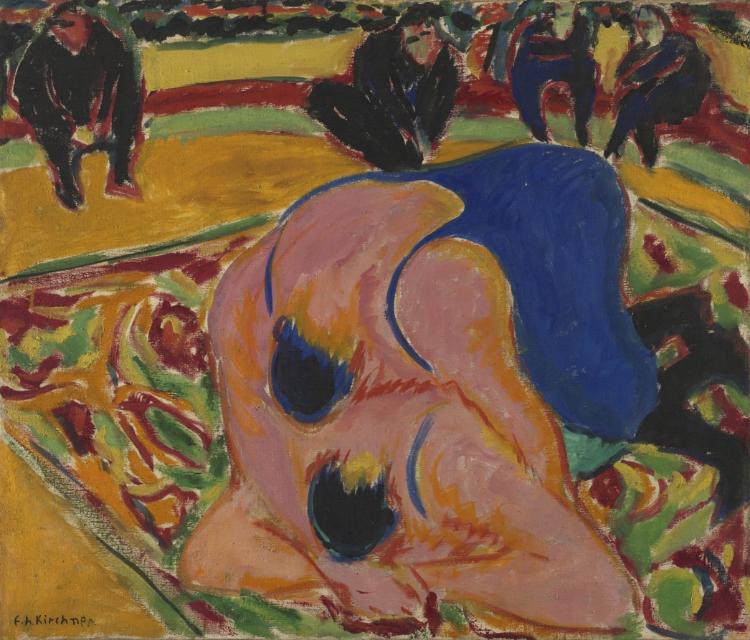 Ernst Ludwig Kirchner (German, 1880–1938) — Wrestlers in a C