FROM THE CLEVELAND MUSEUM OF ART’S CATALOG
The Japanese term for beggar, kojiki, derives from the word kotsujiki, which refers to Buddhist monks taking bowls from door to door to request sustenance. The son of the artist Suian Bunrō, Suian Hirafuku was born in Kakunodate in Japan’s northern Akita prefecture. When he was 16, he went to study in Kyoto. In 1880 he took first place with another painting titled Beggar at the third Akita Prefectural Industrial Exposition, and in 1890, he took second prize for technical achievement with Nursing Tigress at the third National Industrial Exposition.
Source ↗︎
Be the first to share your thoughts.
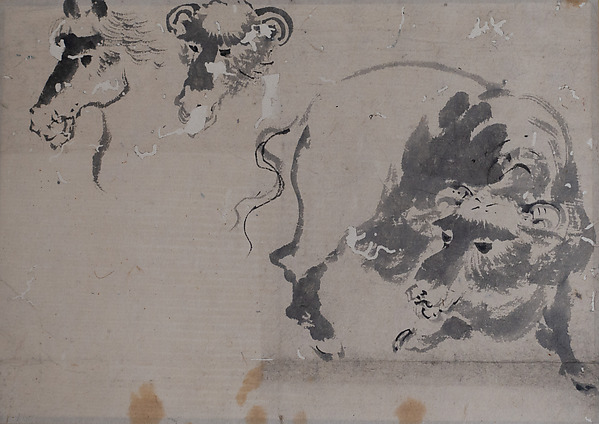 Katsushika Hokusai|Unidentified artist
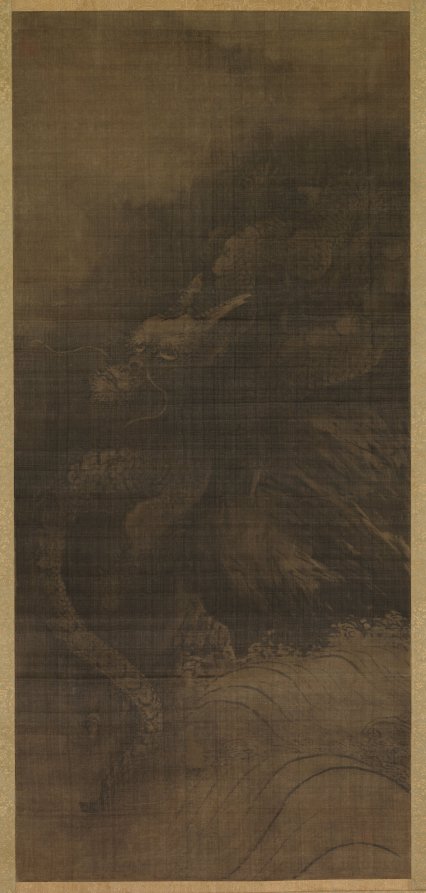 Fachang Muqi (Chinese, 1220–1280) — Dragon
 Yamaguchi Sekkei (Japanese, 1644–1732) — Swallows
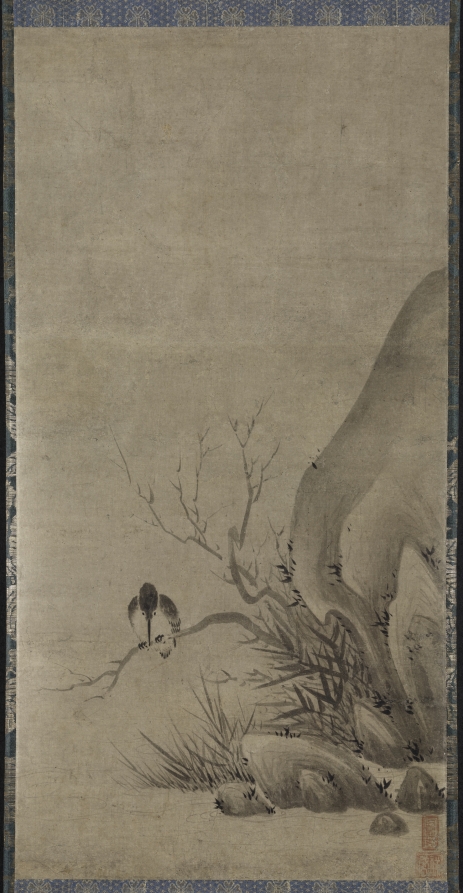 Kenkō Shōkei (Japanese, active 1478–1506) — Kingfisher Perch
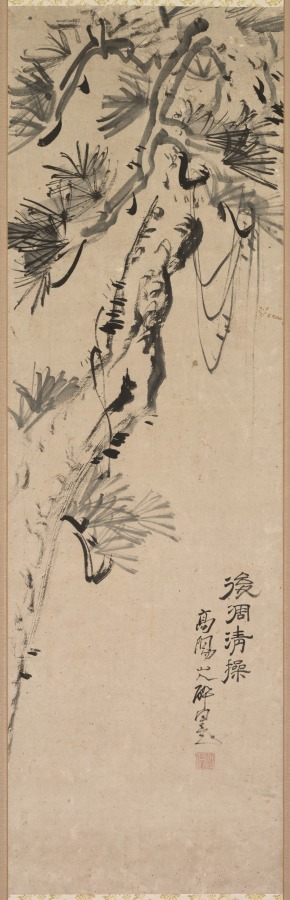 Nakayama Kōyō (Japanese, 1717–1780) — Aged Pine
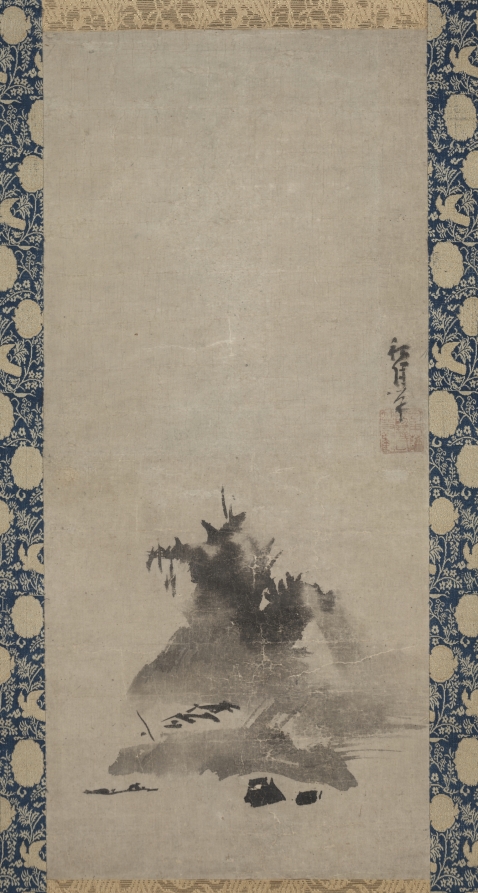 Shūgetsu Tōkan (Japanese, 1440?–1529) — Haboku (Flung-ink) L
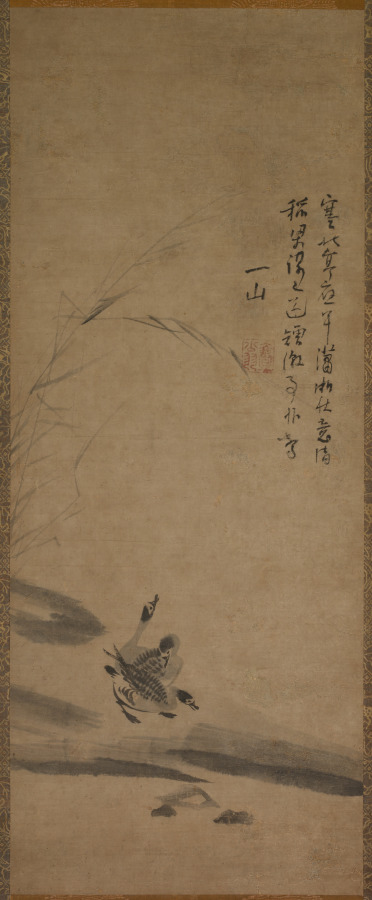 Yishan Yining [Issan Ichinei] (Chinese, 1247–1317) — Reeds a
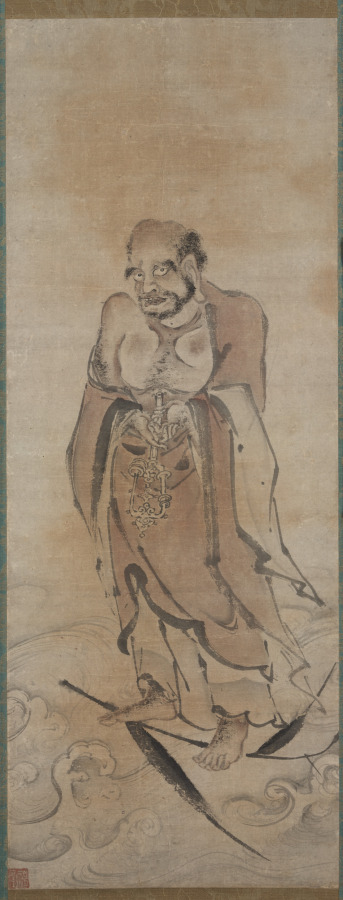 Shingo (Japanese) — Bodhidharma on a Reed
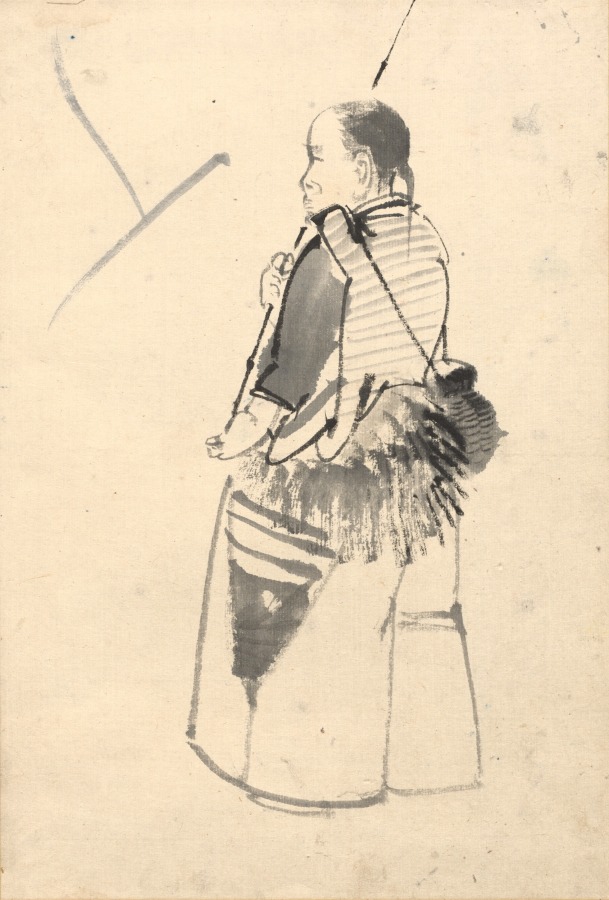 Kono Bairei (Japanese, 1844–1895) — Dancer in a Fisherman's
 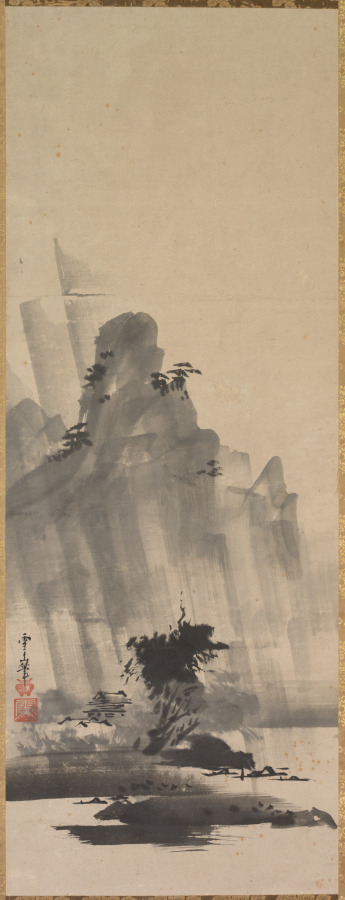 Hirowatari Setsuzan (Japanese, ?-1674) — Mountain and River
 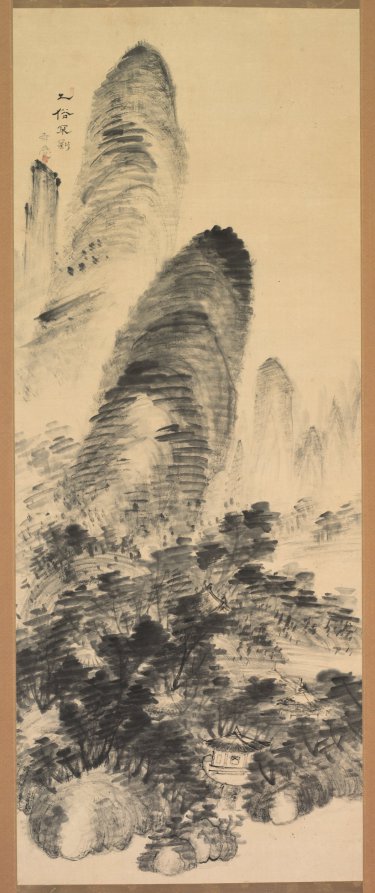 Uragami Gyokudō (Japanese, 1745–1820) — Forbidden to the Vul
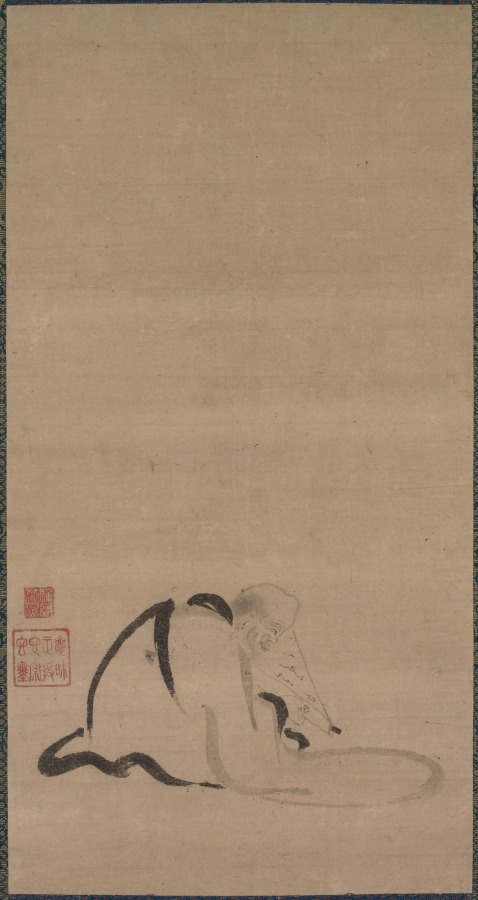 Seated Priest