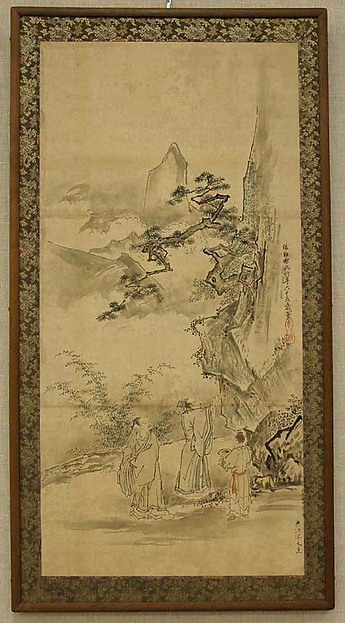
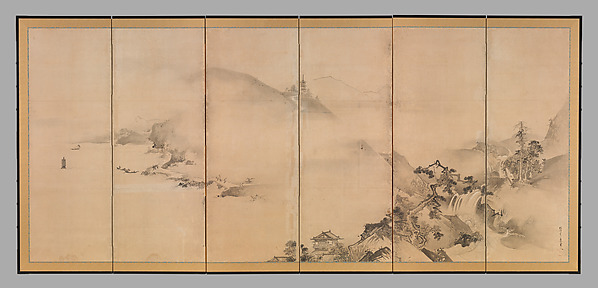
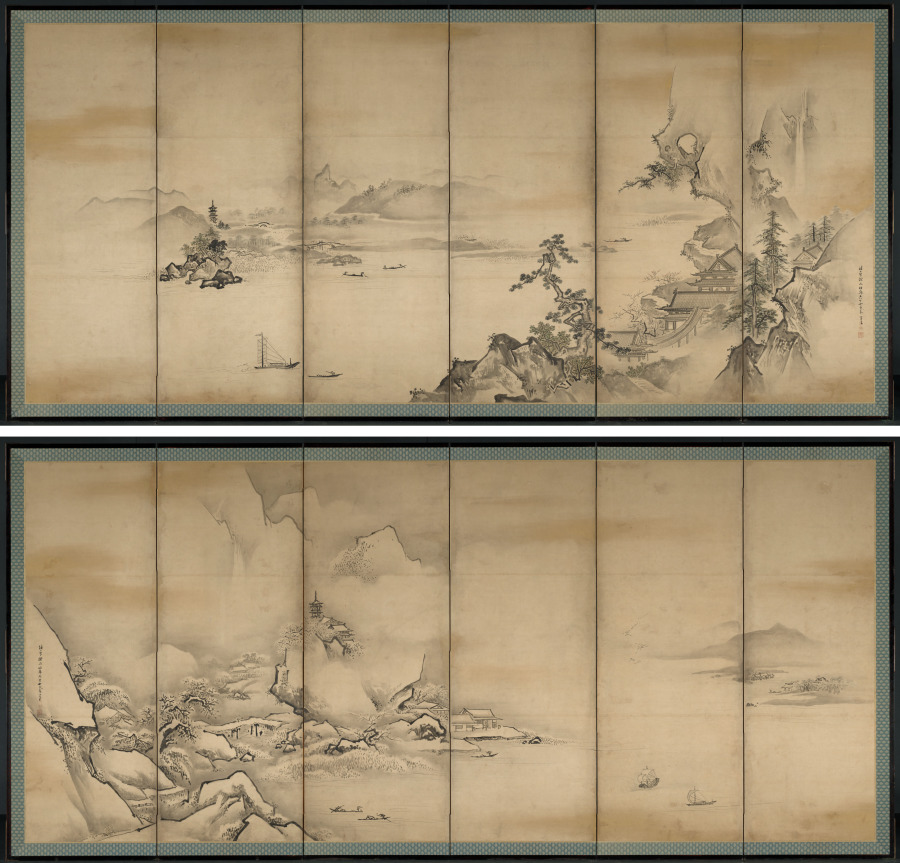
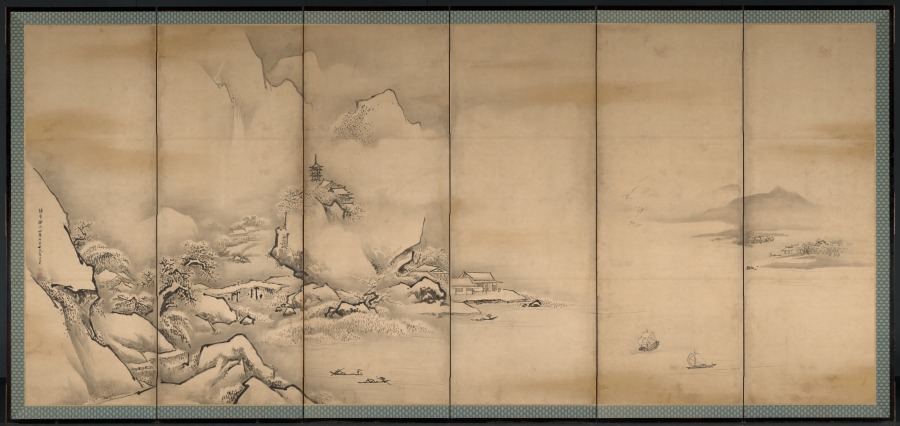
In the collection of Cleveland Museum of Art, Cleveland — check current display status with the museum.
FROM THE CLEVELAND MUSEUM OF ART’S CATALOG
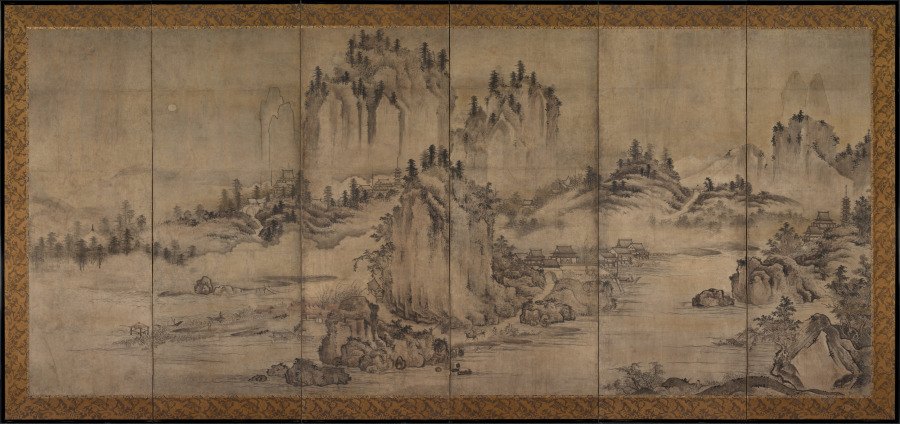
The Kano school was a group of professional artists patronized by the shogun from the late Muromachi period to the Edo period. The group adopted themes of reclusiveness to convey the importance of loyalty to the shogunate. A leader of the Edo Kano school, Kano Tanyu paired Seven Sages of the Bamboo Grove and Four Elders of Mt. Shang to reference a painting of the same theme attributed to Kano Motonobu. Seven Sages of the Bamboo Grove refers to the elites who escaped the social chaos of China’s Wei-Jin period (AD 200s–400s); they fled to a secluded bamboo grove where they could express themselves freely, enjoying pure conversation, music, and wine. The other screen, Four Elders of Mt. Shang , depicts the scholars who left the turbulence of the late Qin dynasty to pursue their scholarly interests in seclusion on Mt. Shang in Shanxi province.
Be the first to share your thoughts.
Sign in to join the discussion.
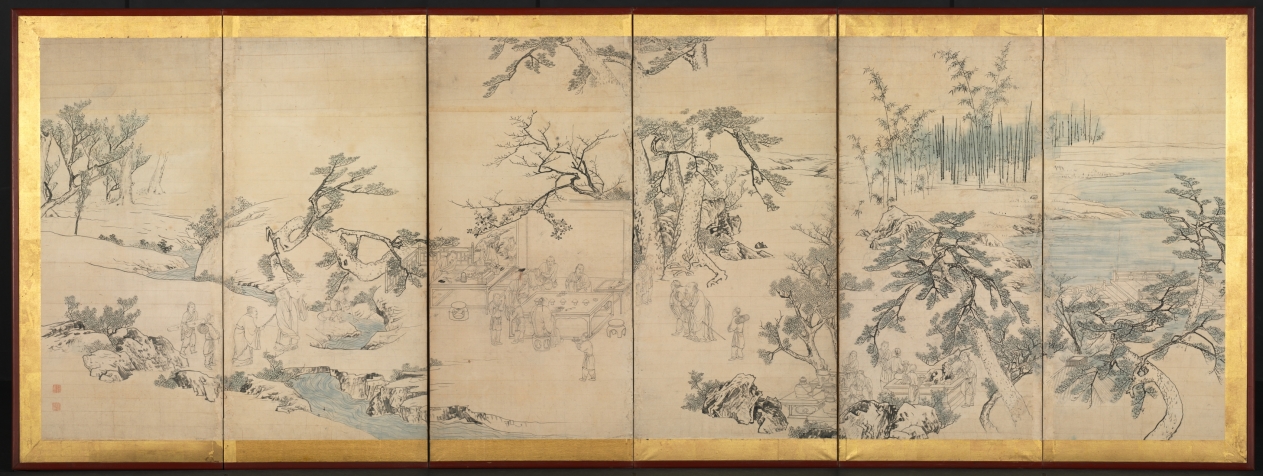 Maruyama Ōkyo (Japanese, 1733–1795) — Literary Gathering in
 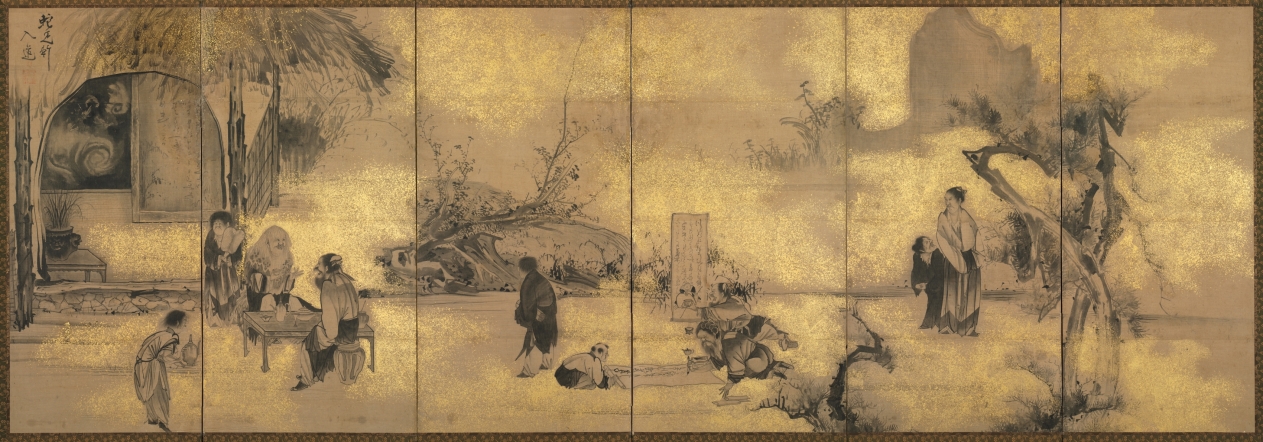 Soga Shōhaku (Japanese, 1730–1781) — The Eight Immortals of
 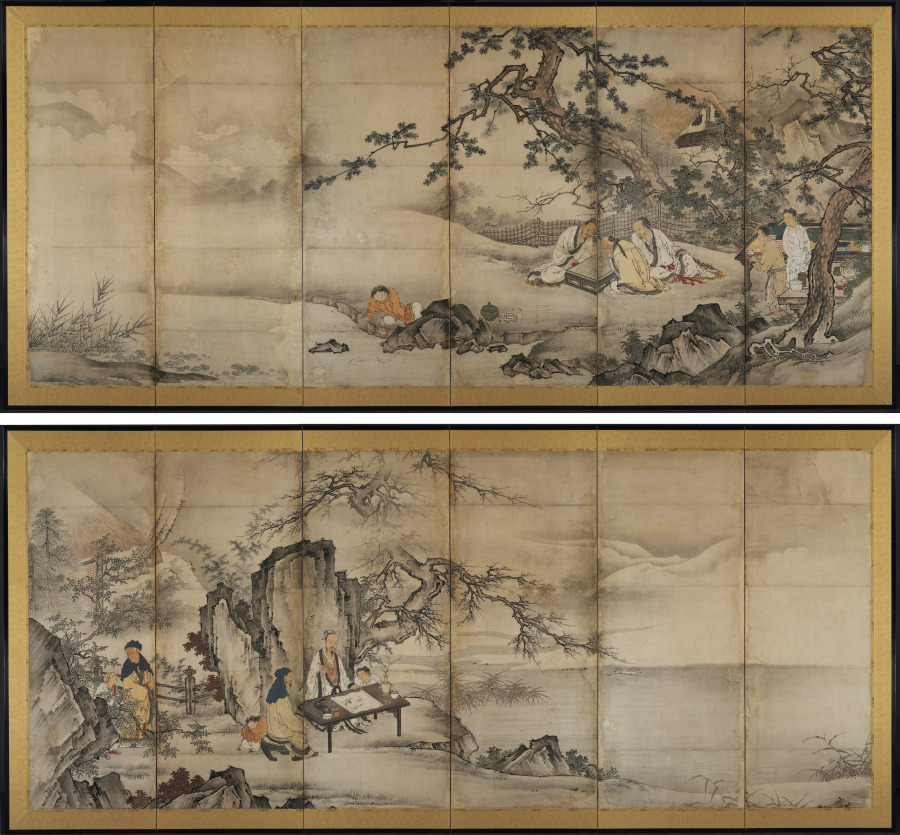 Kano Shōei (Japanese, 1519–1592) — The Four Accomplishments
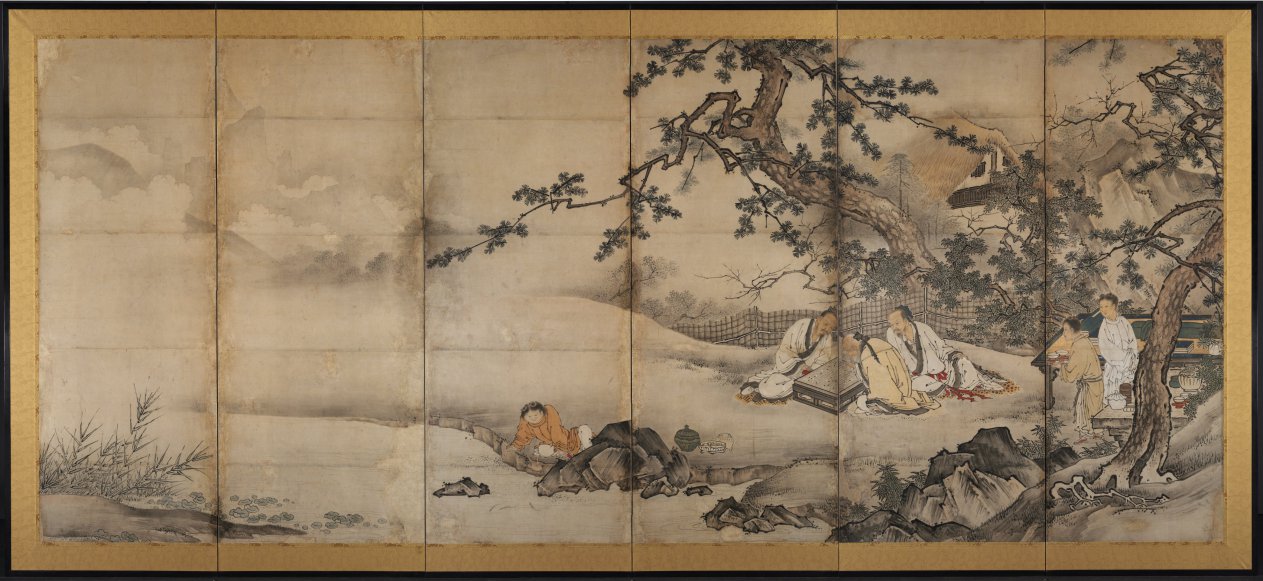 Kano Shōei (Japanese, 1519–1592) — The Four Accomplishments
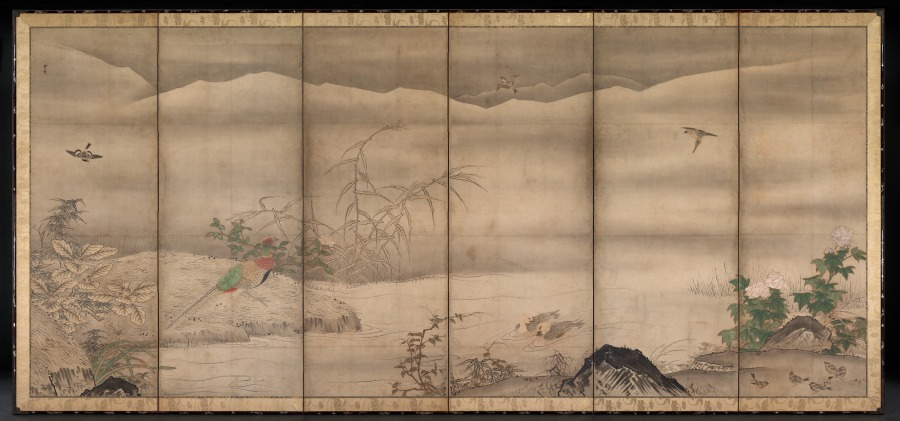 Sesshū Tōyō (Japanese, 1420–1506) — Birds and Flowers in a L
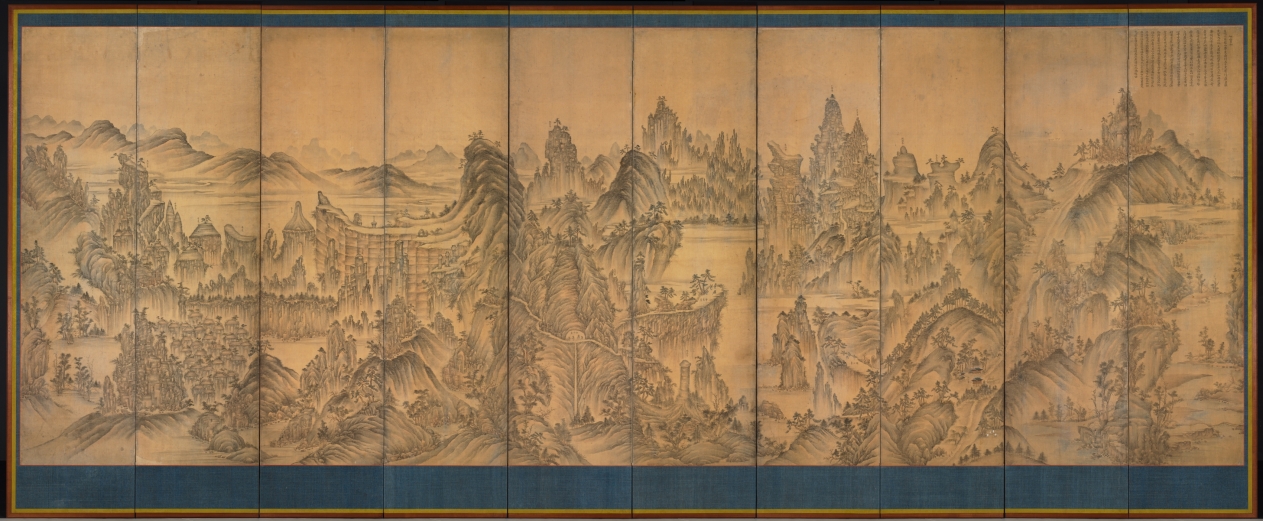 Seven Jeweled Mountain
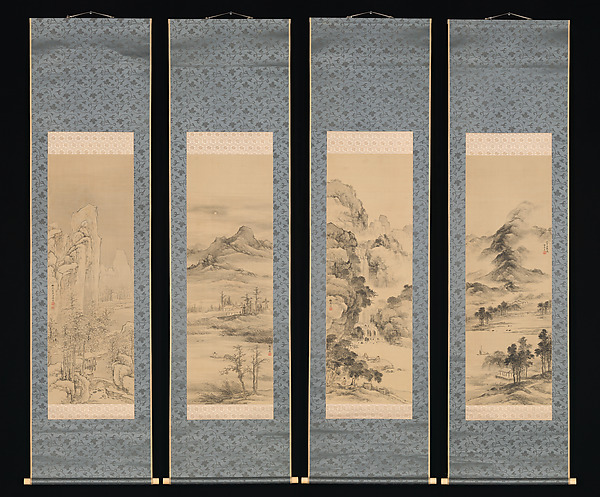 Yamamoto Baiitsu — 山本梅逸筆 四季山水図|Landscapes of the Four Season
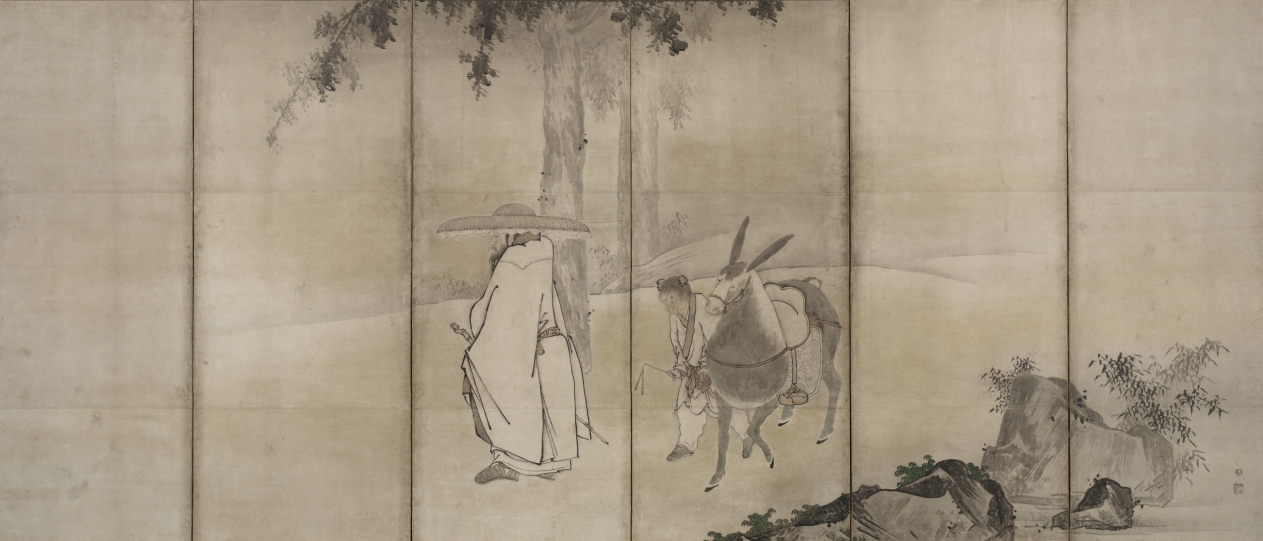 Unkoku Tōgan (Japanese, 1547–1618) — Su Shi (So Shoku)
 Shen Zhenlin
 Landscape
 Unkoku Tōeki (Japanese, 1591–1644?) — Chinese Pavilions in a
 Kano Naonobu (Japanese, 1607–1650) — Summer and Winter Lands