In the collection of Cleveland Museum of Art, Cleveland — check current display status with the museum.
FROM THE CLEVELAND MUSEUM OF ART’S CATALOG
In paintings, Chinese literati often play the instrument in a landscape setting, as the sound of the qin symbolizes harmony between man and nature.
Be the first to share your thoughts.
Sign in to join the discussion.
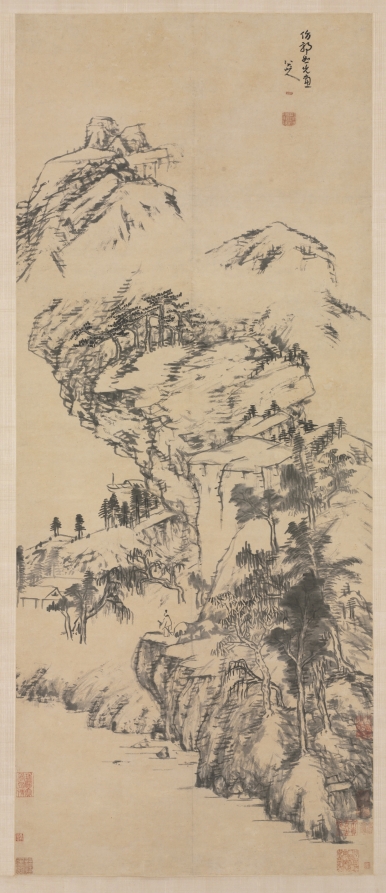 Bada Shanren (Chinese, 1626–1705) — Landscape after Guo Zhon
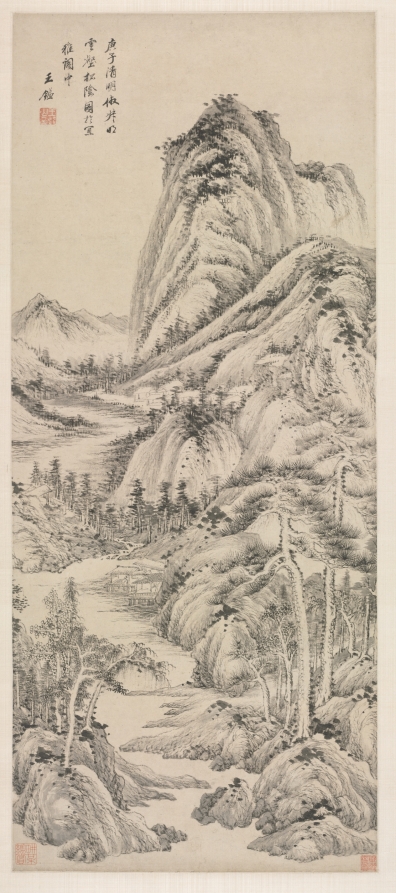 Wang Jian (Chinese, 1598–1677) — Shade of Pines in a Cloudy
 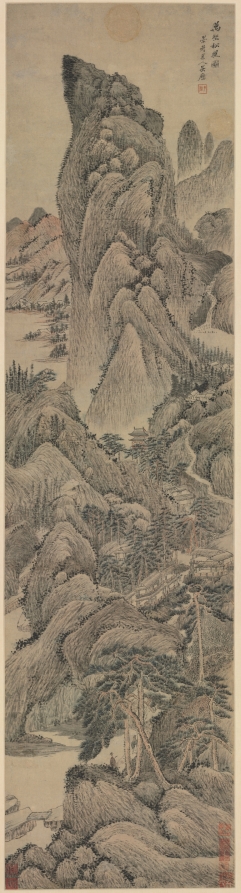 Wu Li (Chinese, 1632–1718) — Pine Wind from Myriad Villages
 Wang Shimin — Landscape after Wang Meng
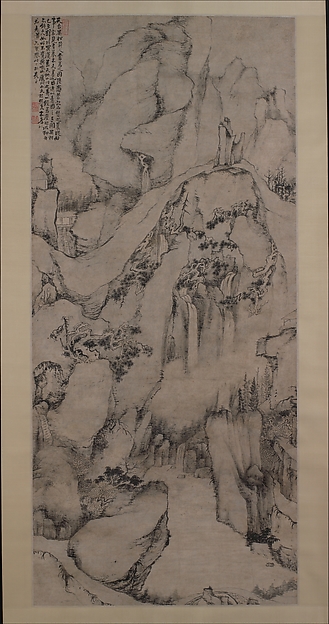 Dai Benxiao — 清 戴本孝 天台異松圖 軸 紙本|The Strange Pines of Mount Ti
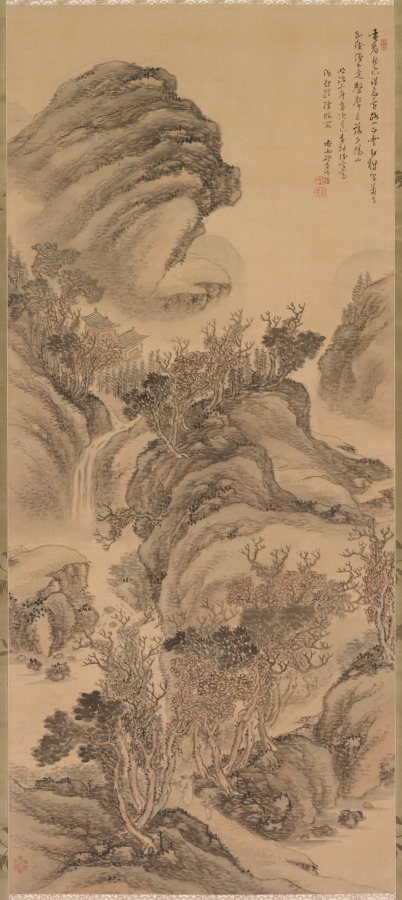 Hoashi Kyōu (Japanese, 1810–1884) — Sunset over Autumn Mount
![Daoist Retreat in Mountain and Stream (Landscape after Ni Zan [1301–1374])](https://openaccess-cdn.clevelandart.org/1962.43/1962.43_web.jpg) Lu Zhi (Chinese, 1496–1576) — Daoist Retreat in Mountain and
Lu Zhi (Chinese, 1496–1576) — Daoist Retreat in Mountain and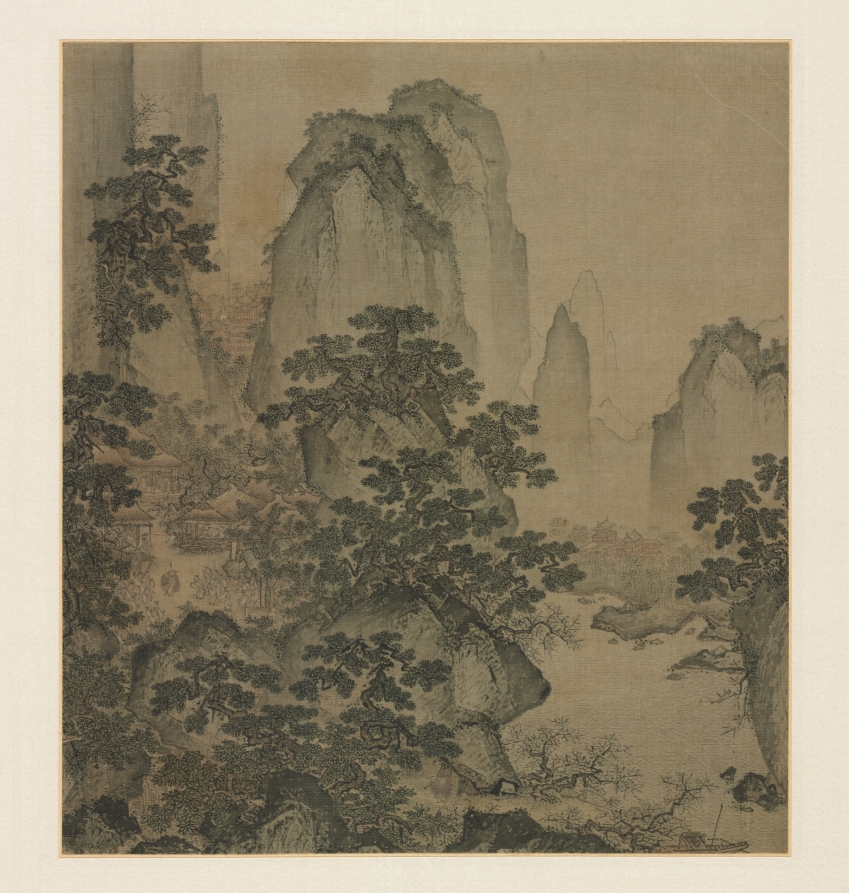 Shi Rui (Chinese, c. 1400-c. 1470) — The Haven of the Peach-
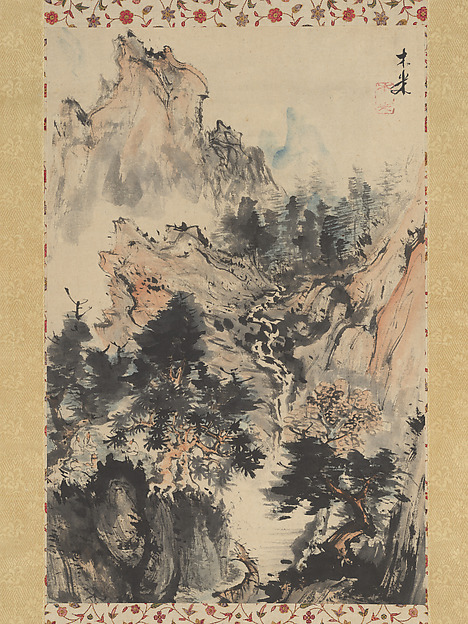 Aoki Mokubei 青木木米 — 緑陰煎茗図 (Ryokuin senmei zu)|Brewing Tea in
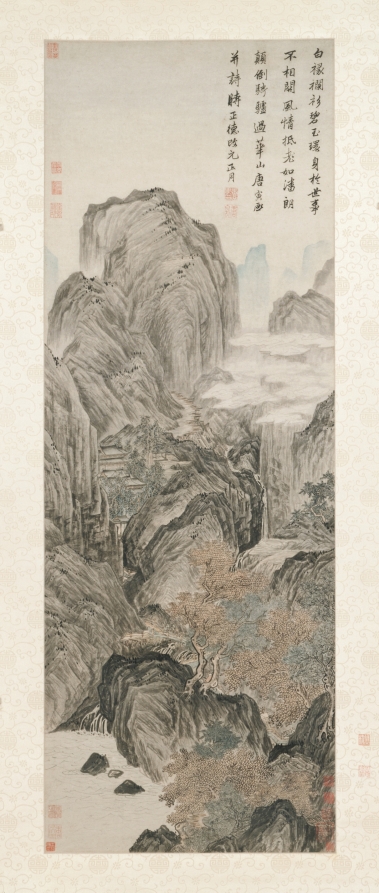 Tang Yin (Chinese, 1470–1523) — Mount Hua
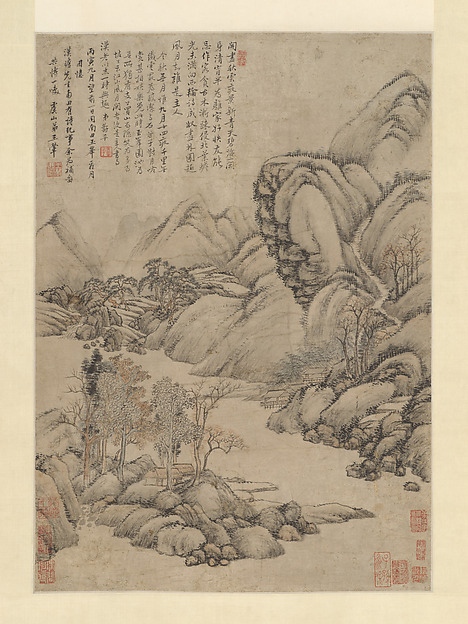 Wang Hui|Unidentified artist — 清 王翬 玉峰看月圖 軸|Landscape: Eve o
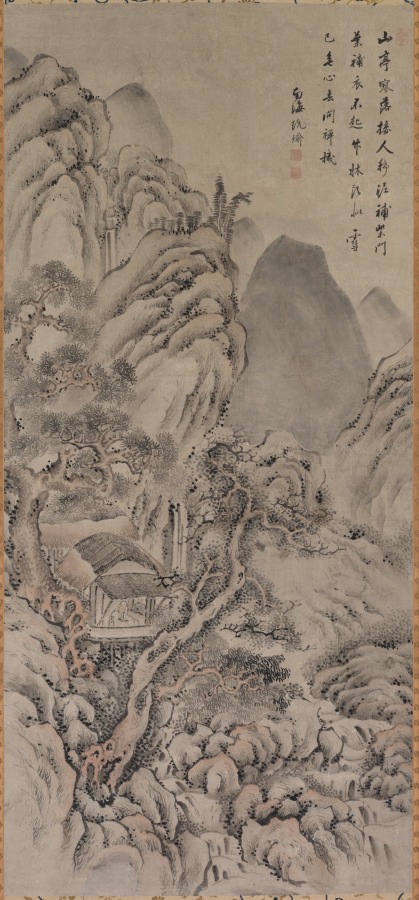 Gion Nankai (Japanese, 1677–1751) — Landscape