In the collection of Cleveland Museum of Art, Cleveland — check current display status with the museum.
FROM THE CLEVELAND MUSEUM OF ART’S CATALOG
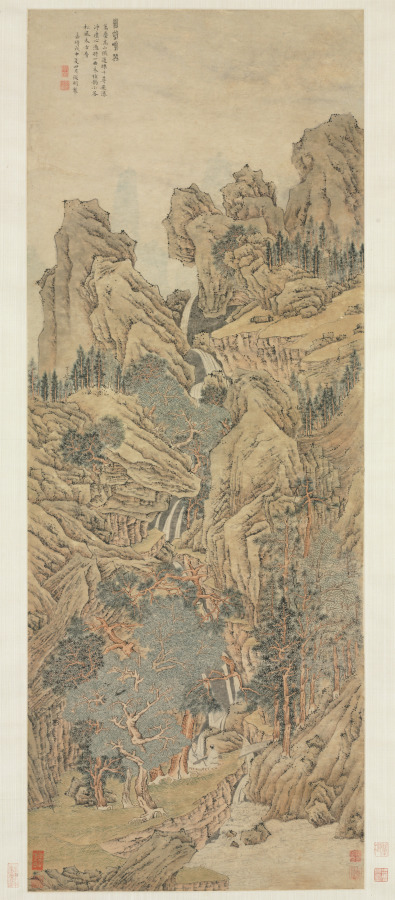
Wen Zhengming was one of the most celebrated calligraphers and painters during the Ming dynasty (1368–1644). His inscription, gracefully written in small characters on the upper left corner, reveals Wen’s emotional mood at that moment of creation. "In the fifteenth day of the fifth month, the year of xinhai [1551], [I], Zhengming, playfully write this Old Trees by a Wintry Brook at eighty-two [sui]." How should we understand a wintery landscape painted in the middle of spring? Was it simply inspired by a surprisingly late spring snow? Or can it be that the “wintery” brook reflects the octogenarian’s feelings about aging and his inevitable, approaching mortality? The junipers’ gnarled forms are a poignant symbol of aging and suffering, yet the ink-dot leaves on some branches suggest that the trees are still alive, awaiting the warmth of spring.
Be the first to share your thoughts.
Sign in to join the discussion.
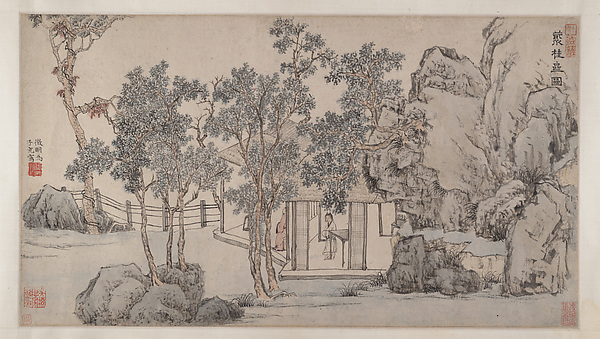
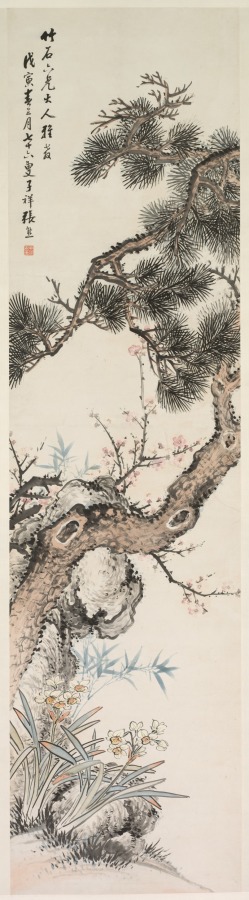 Zhang Xiong (Chinese, 1803–1886) — Three Purities
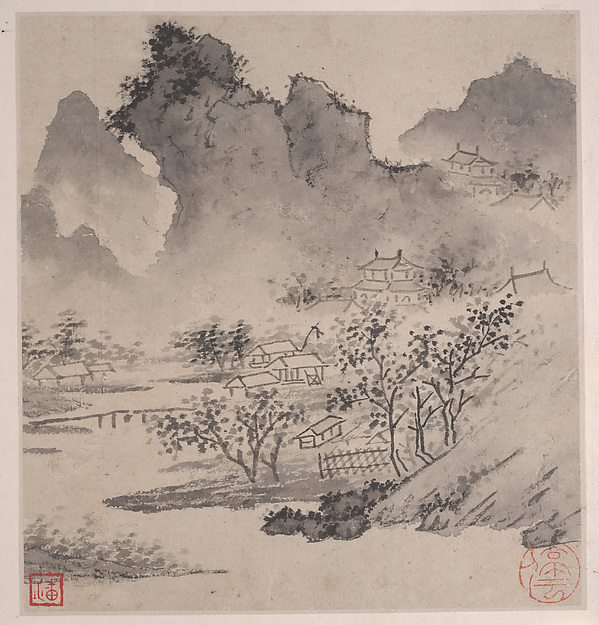
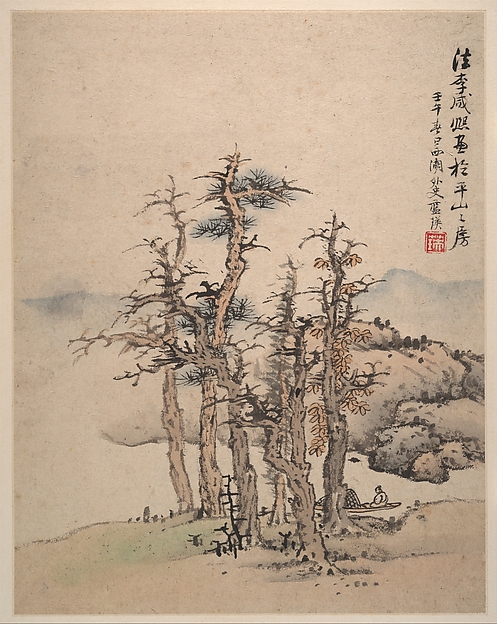 Lan Ying — 明 藍瑛 仿宋元山水圖 冊|Landscapes after Song and Yuan mast
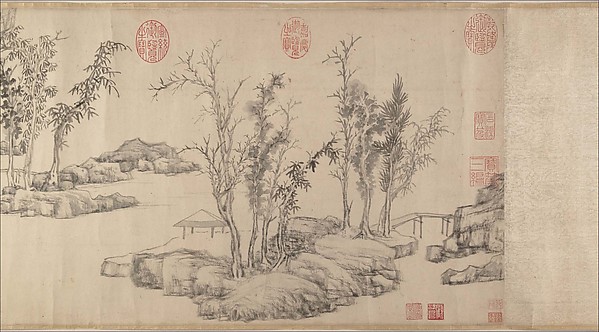
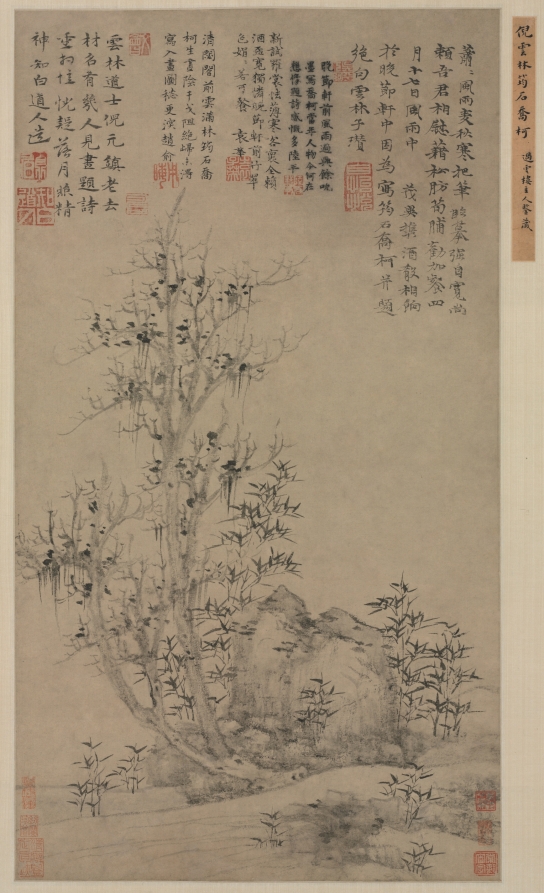 Ni Zan (Chinese, 1301–1374) — Bamboo, Rock, and Tall Tree
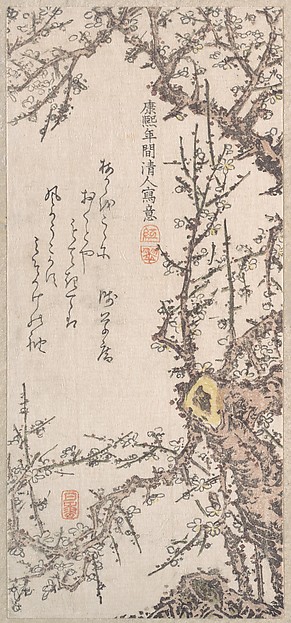 Kitao Shigemasa
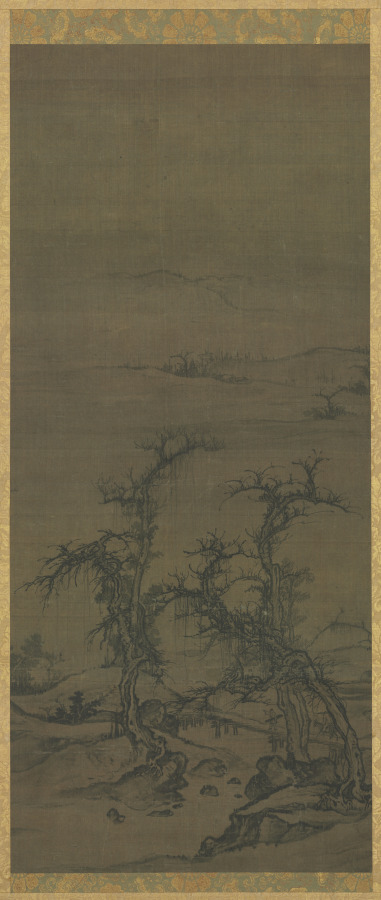 Luo Zhichuan (Chinese, active 1280s–1320s) — Carrying a Qin
 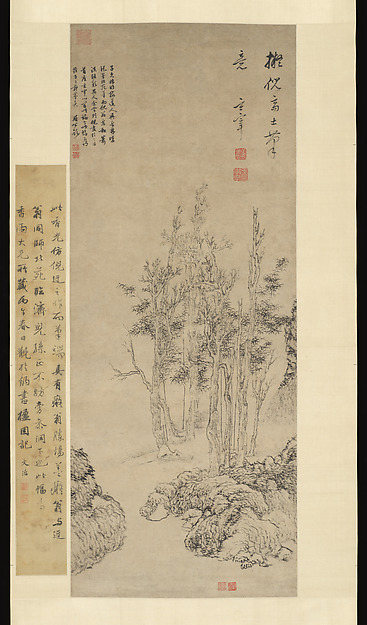 Dong Qichang — 明 董其昌 倣倪瓚山水圖 軸|Landscape with Trees in the
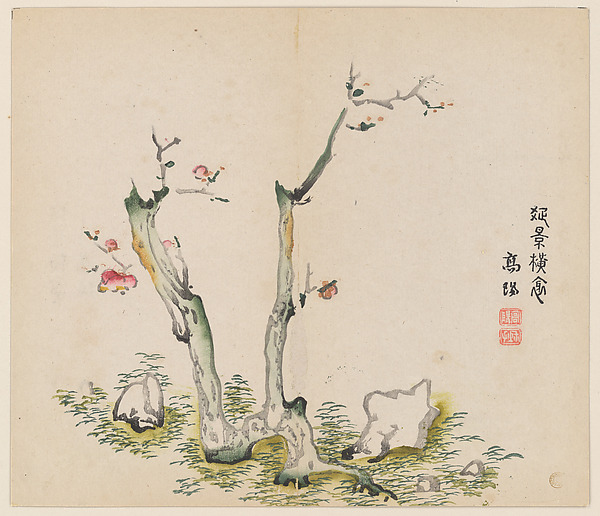 Hu Zhengyan — 明 胡正言 《十竹齋書畫譜》 四開 木版畫|Page from the Ten Ba
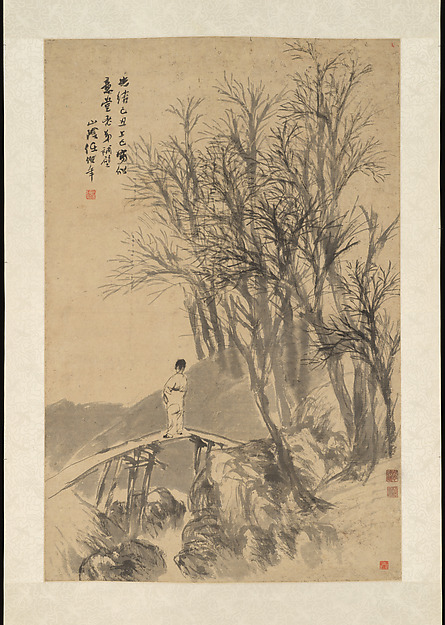 Ren Yi (Ren Bonian) — 清 任頤 軸|Man on a Bridge
 Ni Zan — Twin Trees by the South Bank (Annan shuangshu)
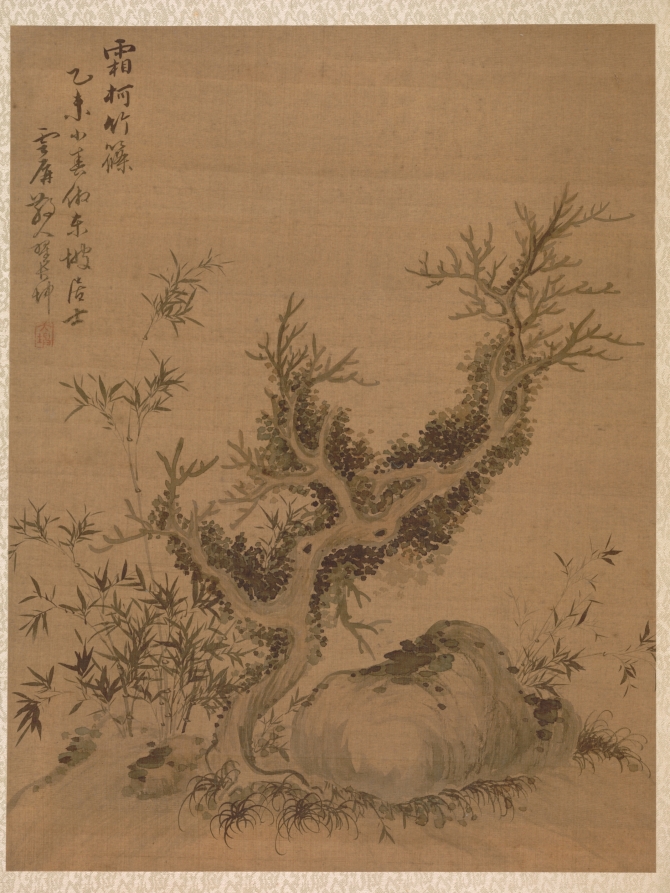 Zhai Dakun (Chinese, d. 1804) — Frosted Branches and Dwarf B
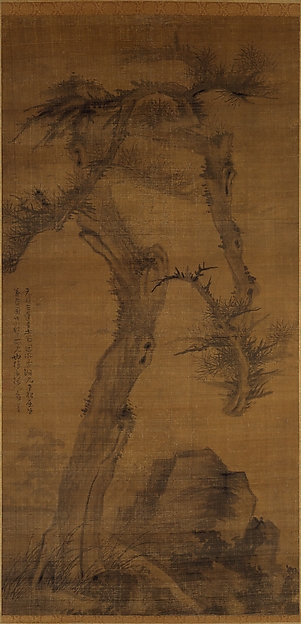 Wu Zhen — 元 吳鎮 老松圖 軸|Crooked Pine
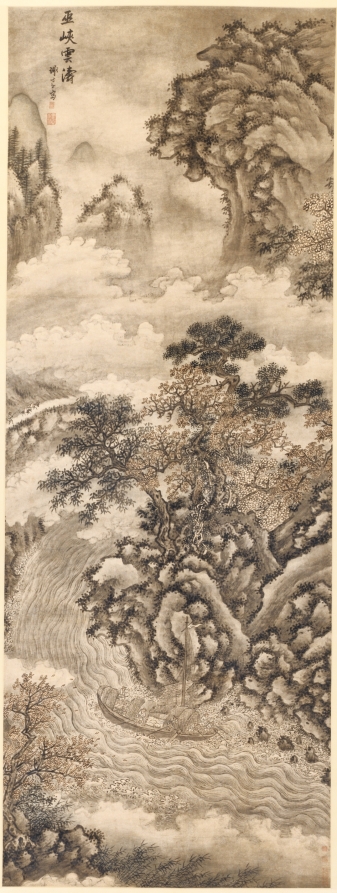 Xie Shichen (Chinese, 1487–after 1567) — Clouds and Waves at