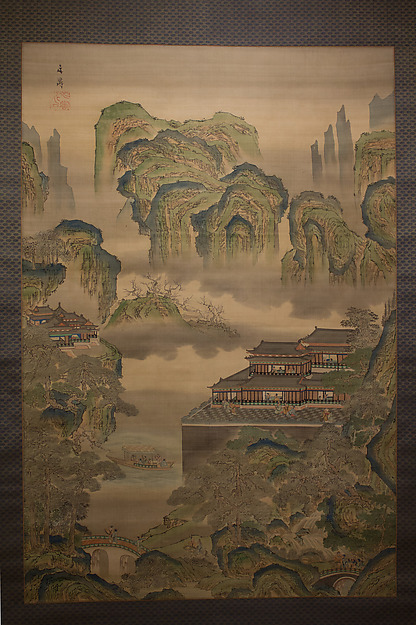
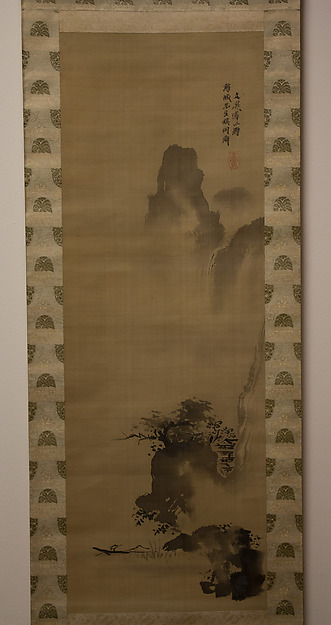
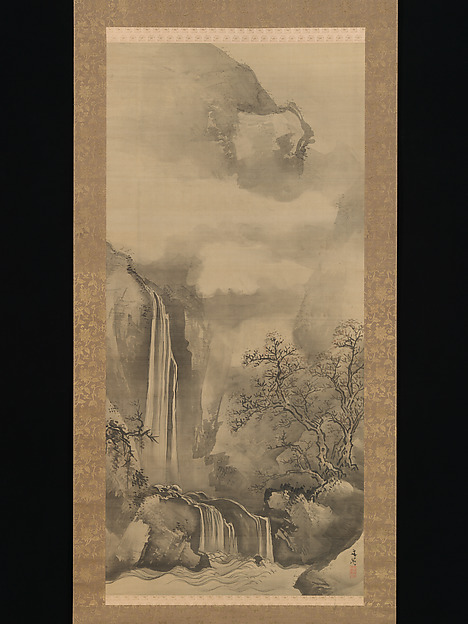
In the collection of Cleveland Museum of Art, Cleveland — check current display status with the museum.
FROM THE CLEVELAND MUSEUM OF ART’S CATALOG
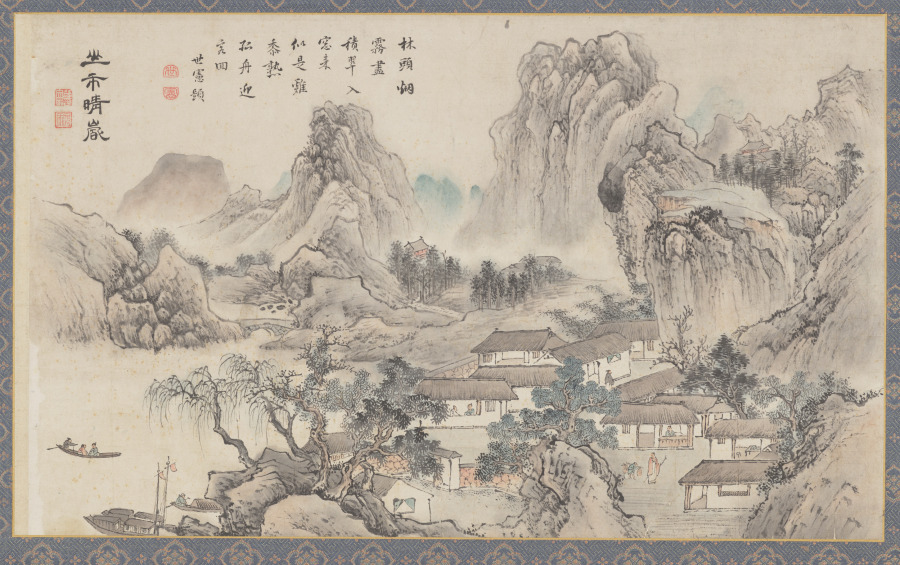
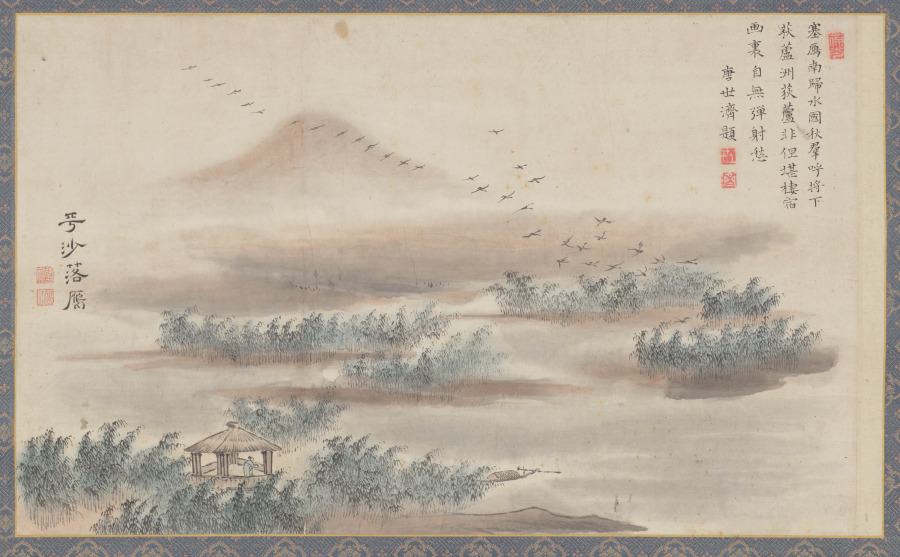
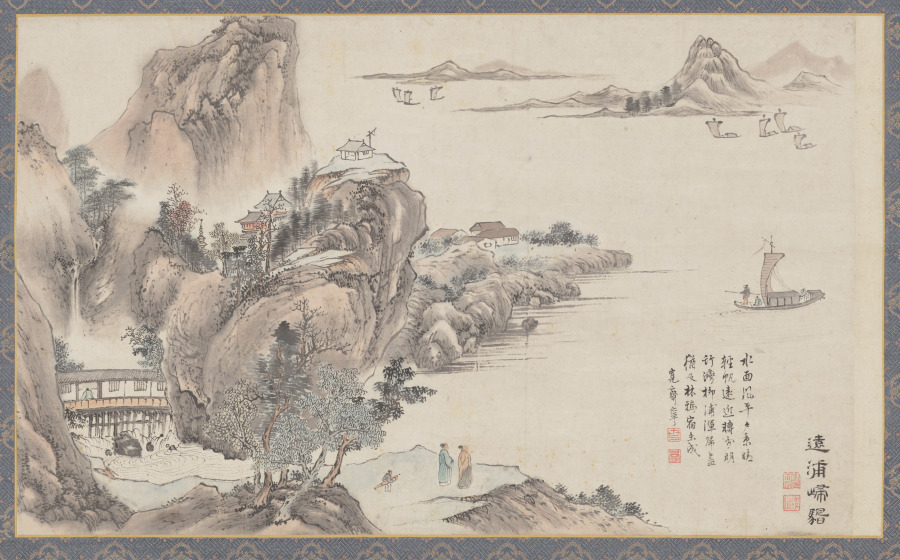
This painting was part of a set of album leaves representing the Eight Views of Xiao-Xiang, a theme originating in Chinese poetry and painting that spread to both Korea and Japan. Southern China’s Xiao-Xiang area, where the mist-covered banks of the Xiang River created a complex landscape shifting like the moods and minds of people, captured the imaginations of generations of painters and calligraphers. Inscriptions on these works suggest that they were possibly ordered by newly prominent Japanese Confucian scholars.
Be the first to share your thoughts.
Sign in to join the discussion.
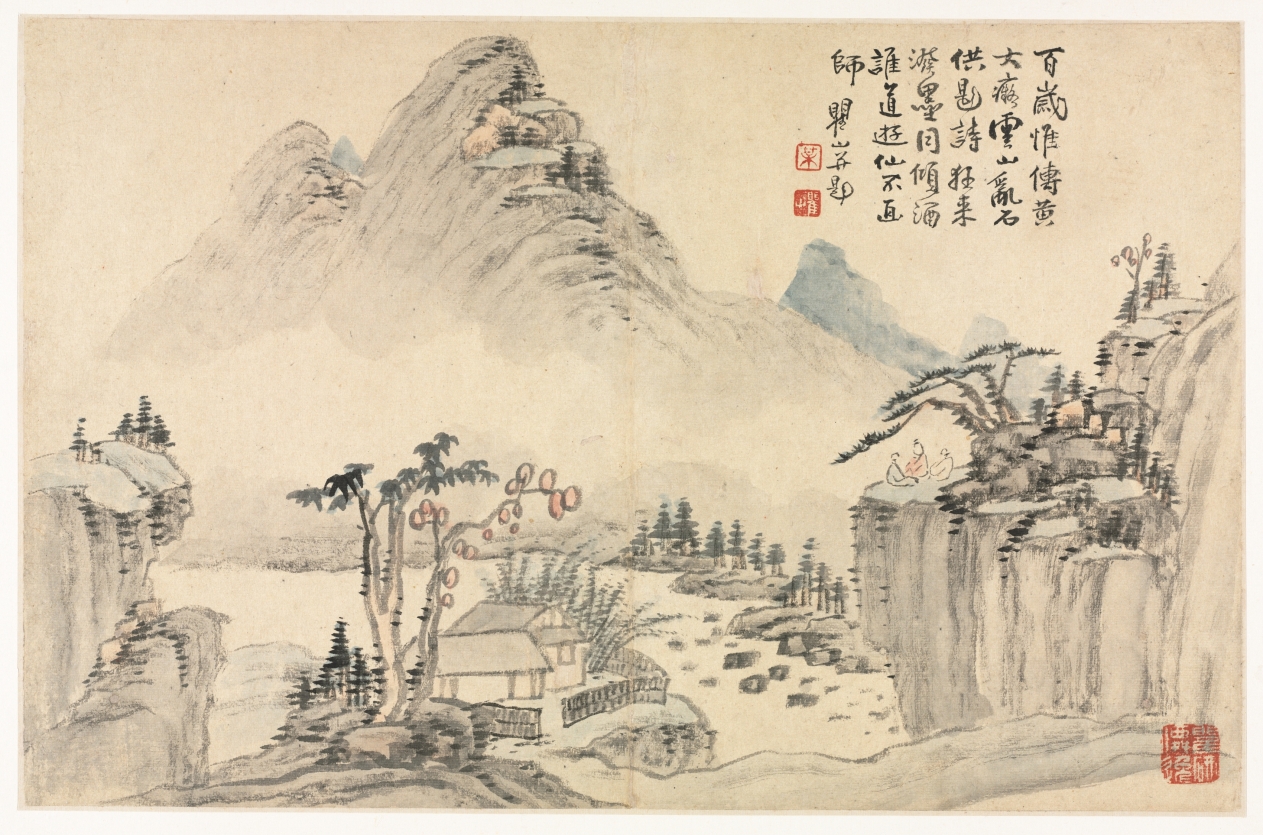 Mei Qing (Chinese, 1623–1697) — Landscapes in Various Styles
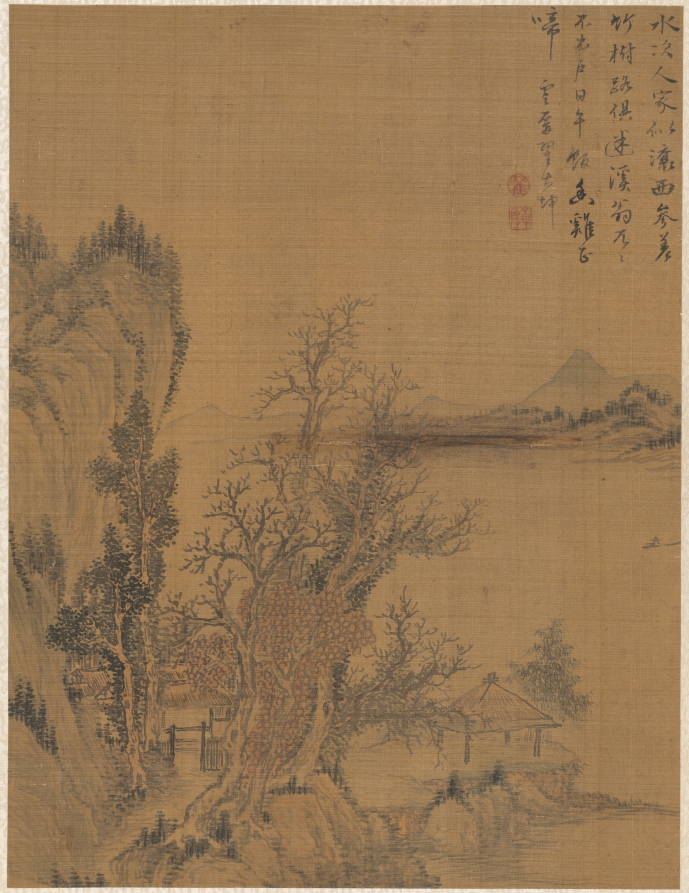 Zhai Dakun (Chinese, d. 1804) — Landscape
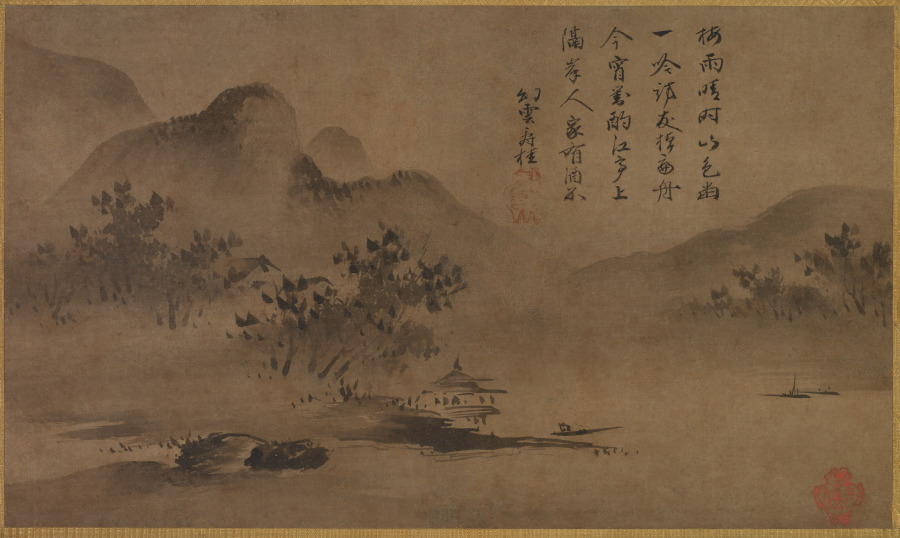 Kano Motonobu (Japanese, c. 1476–1559) — Landscape
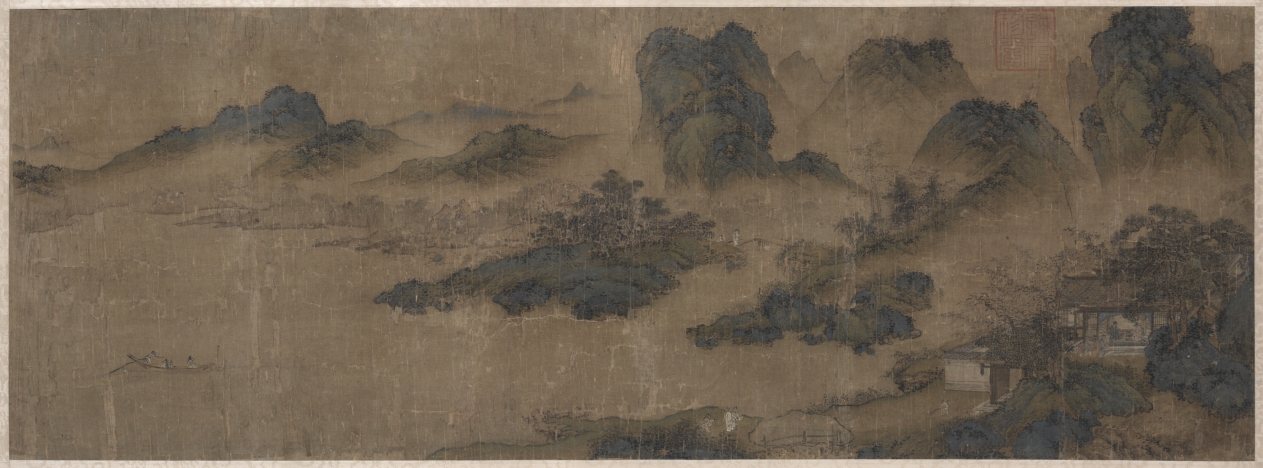 Sheng Mou (Tzu-chao) (Chinese, active c. 1330–1369) — Visiti
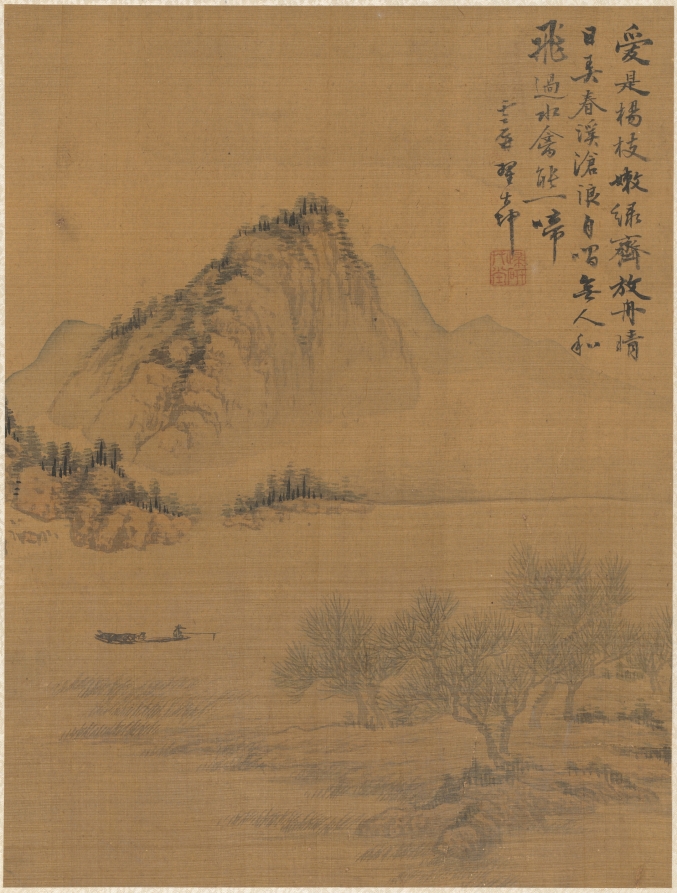 Zhai Dakun (Chinese, d. 1804) — Landscape
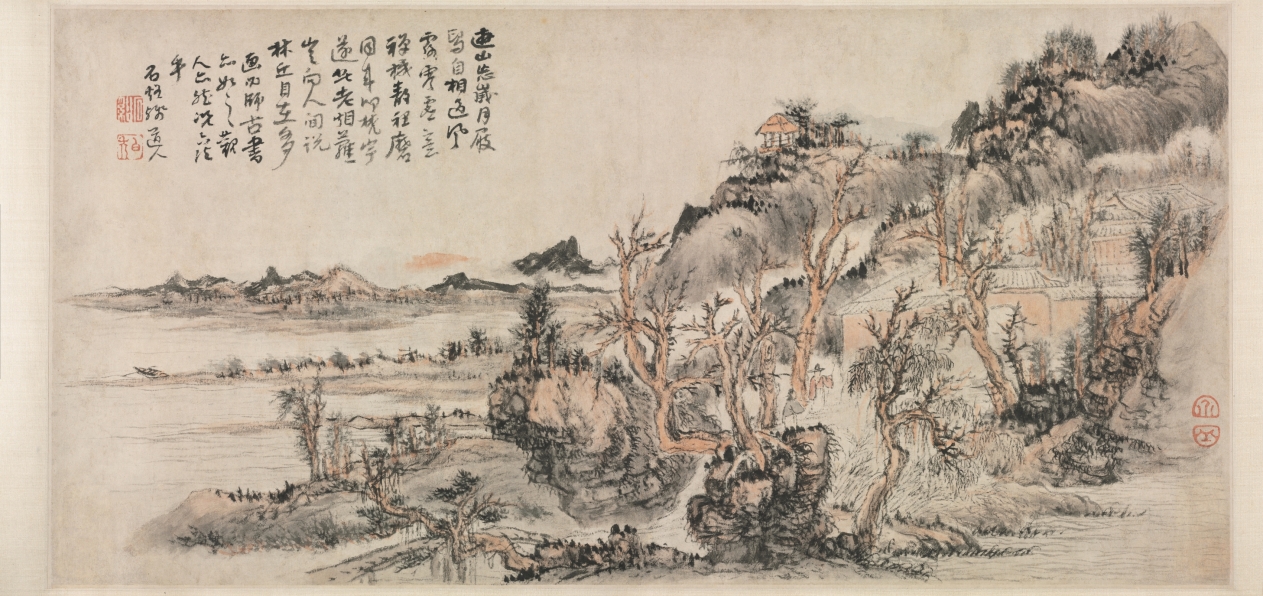 Kuncan (Chinese, 1612–c. 1673) — Spring Landscape
 Tan Song — 清 譚嵩 倣郭熙山水圖 軸|Landscape in the Style of Guo Xi
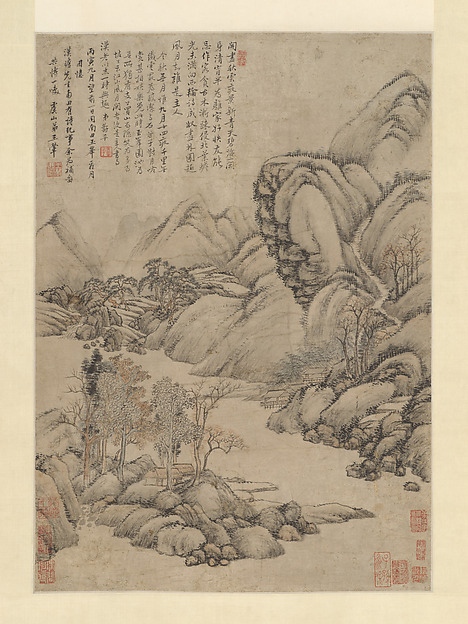 Wang Hui|Unidentified artist — 清 王翬 玉峰看月圖 軸|Landscape: Eve o
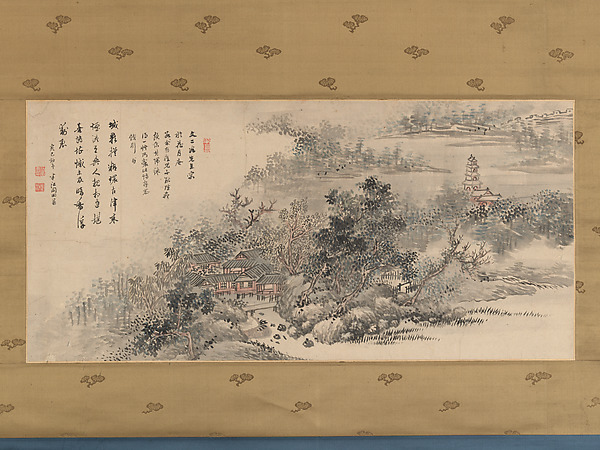 Okada Hankō
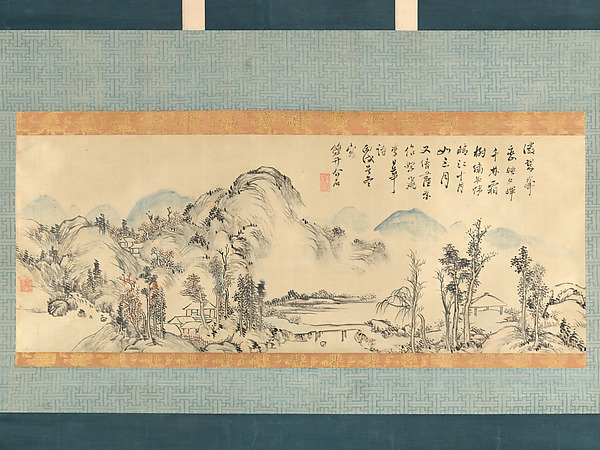 Noro Kaiseki
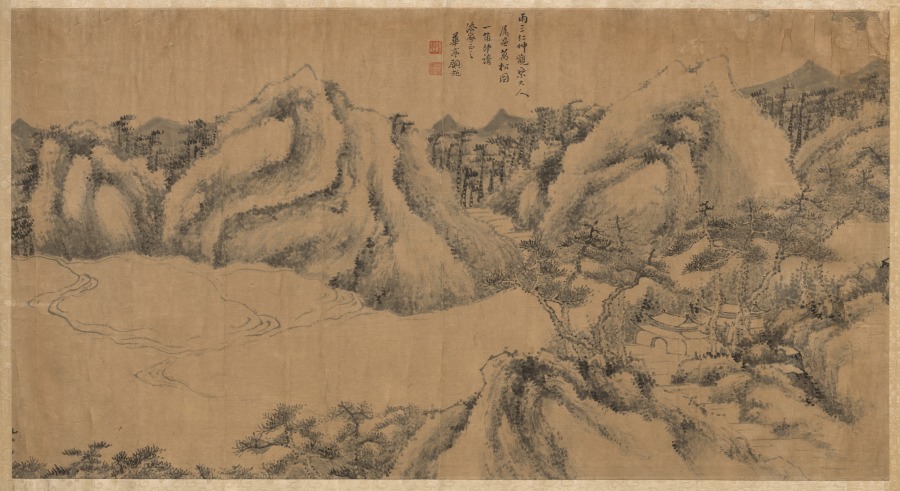 Gu Chao (Chinese, active late 1700s) — Pine-shaded Monastery
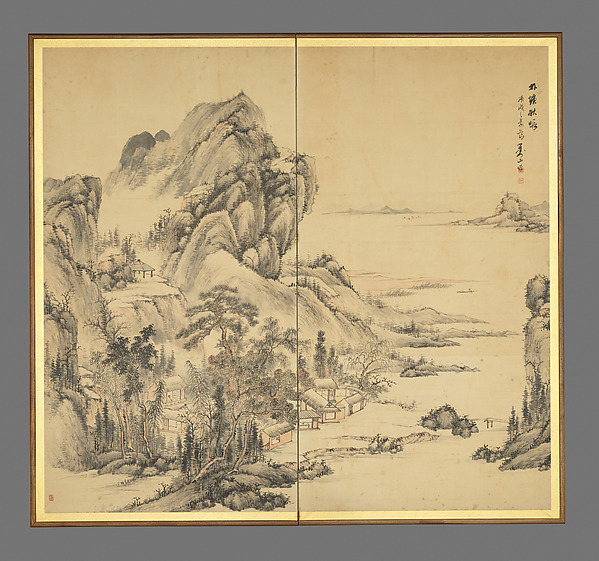 Hine Taizan — 日根対山筆 「林塘秋暇」|“At leisure in a lakeside grove i