The Birth of Rustam, page from a copy of the Shahnama of Firdausi
Safavid dynasty (1501–1722)، dated c.1620
Opaque watercolor and gold on paper
35.6 × 22.8 cm (14 × 9 in)
SEE IT IN PERSON
Not currently on view
In the collection of Art Institute of Chicago, Chicago · as of July 2026
Discussion
Be the first to share your thoughts.
Sign in to join the discussion.
More by Islamic


More like this
 Uzbekistan
Bukhara — Old Man Attended by Visitors
Uzbekistan
Bukhara — Old Man Attended by Visitors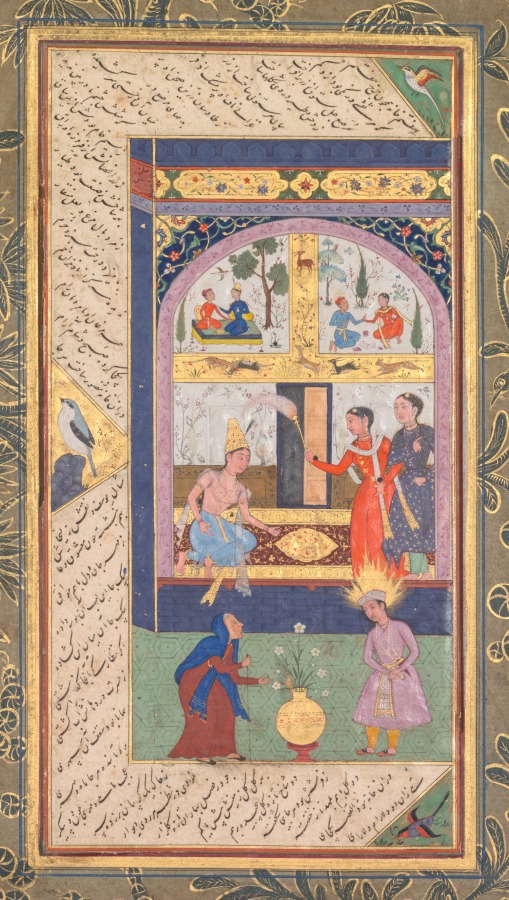 Mushfiq (Indian, active early 1600s) — Zulaykha in her palac
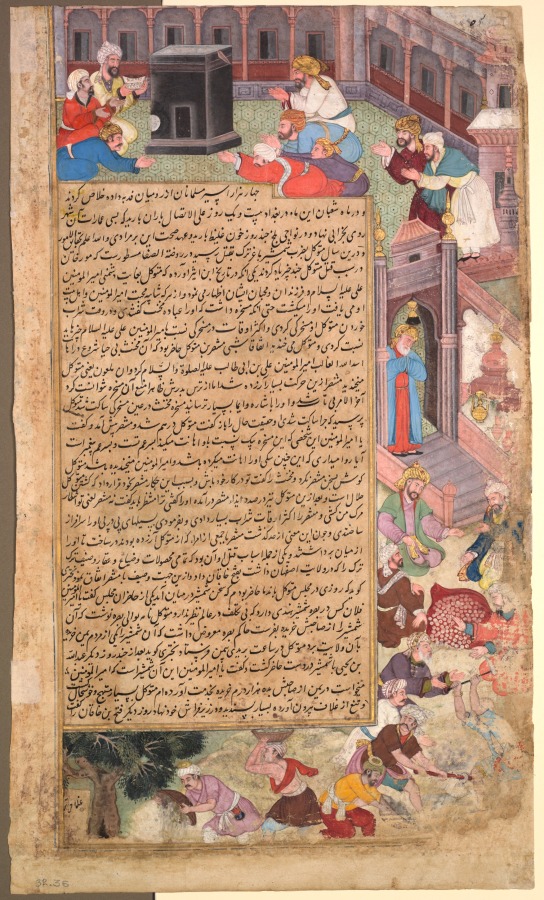 Page of disasters, from the Tarikh-i Alfi (History of a Thou
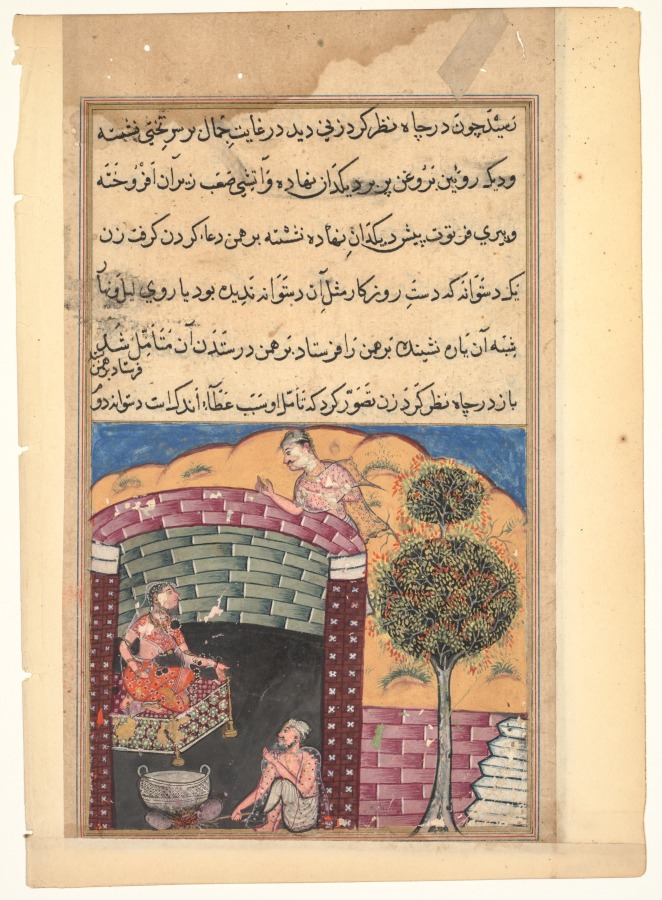 The Brahman gambler sees the daughter of the king of the jin
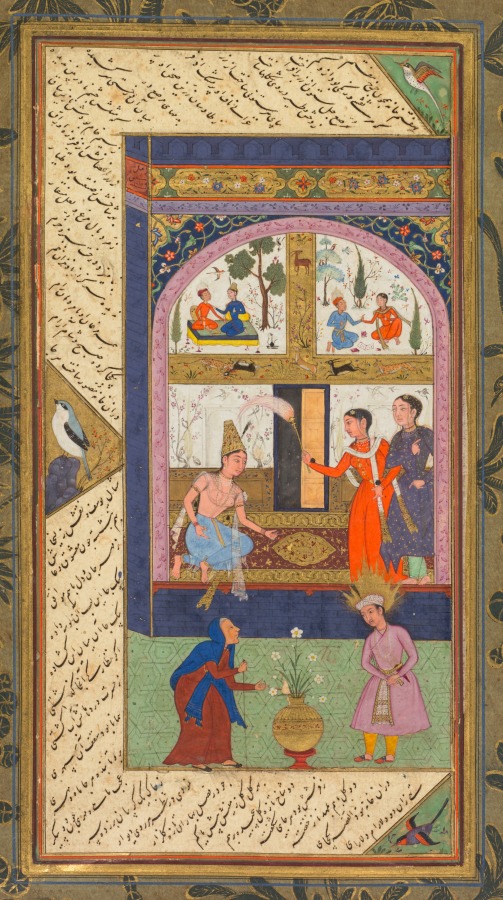 Mushfiq (Indian, active early 1600s) — Zulaykha in her palac
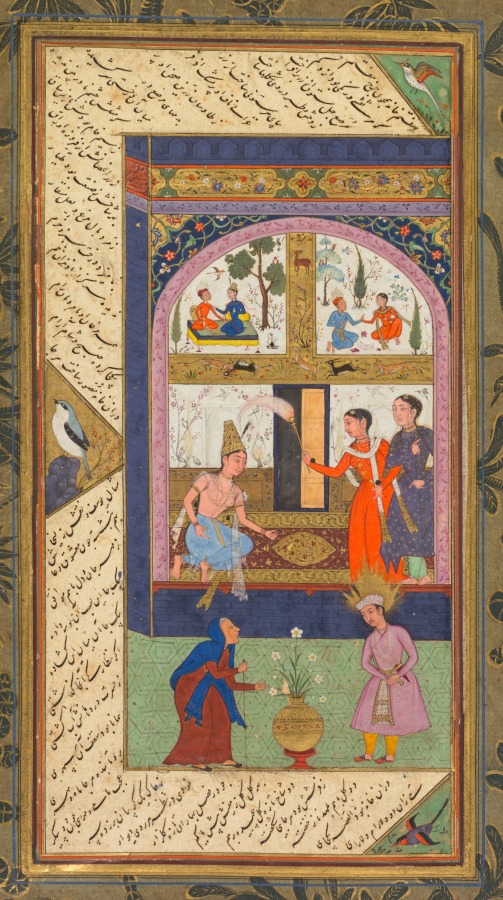 Mushfiq (Indian, active early 1600s) — Folios A and B from t
 Uzbekistan
Bukhara — Judge (Qazi) of Hamadan in a Drunken St
Uzbekistan
Bukhara — Judge (Qazi) of Hamadan in a Drunken St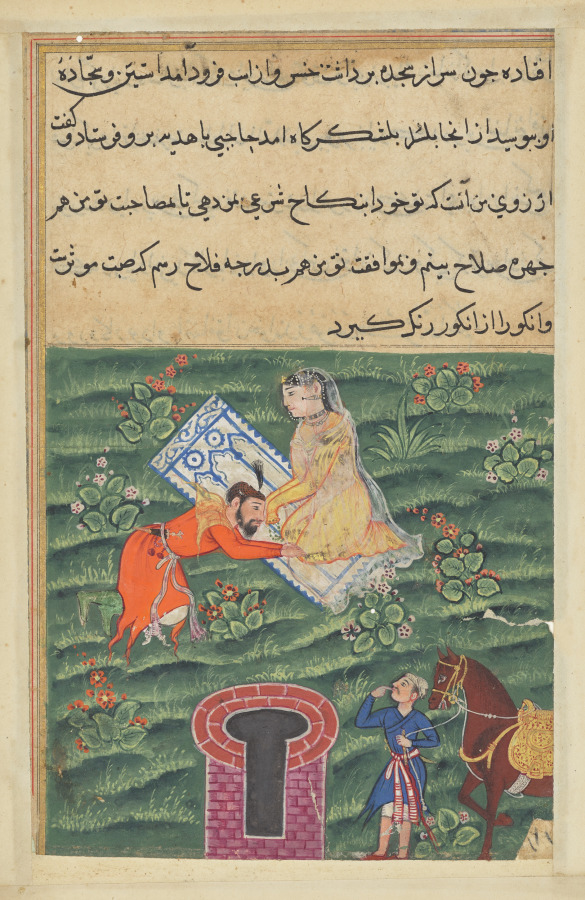 Khusrau, the King of Kings, pays homage to the pious daughte
 Iran
Shiraz, Fars — Iskander Comforts the Dying Darius
Iran
Shiraz, Fars — Iskander Comforts the Dying Darius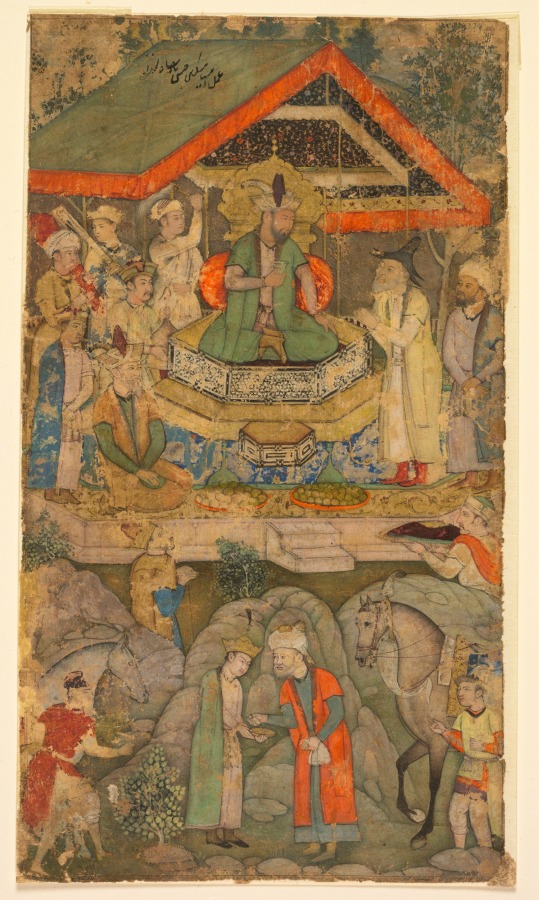 Miskin (Indian, active 1570s–c. 1604) — An Ambassador before
 India — Amir Khusrau Dedicates His Poem to Sultan Ala al-Din
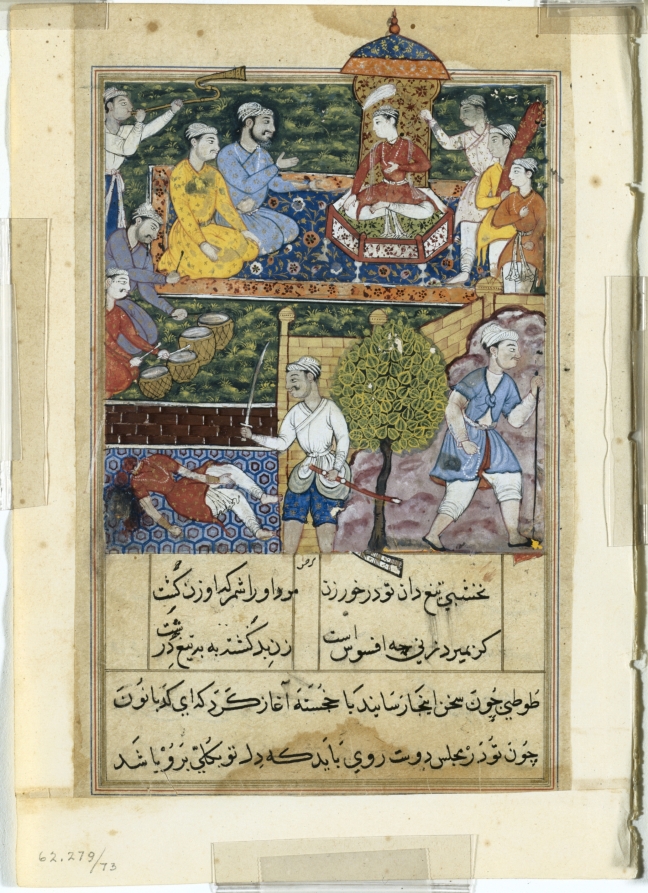 Suraju (Indian) — The young prince is crowned and the wicked