In the collection of Cleveland Museum of Art, Cleveland — check current display status with the museum.
FROM THE CLEVELAND MUSEUM OF ART’S CATALOG
Two gentlemen stand outside a thatched hut in a dense forest; some trees have bare branches indicating that the season is early autumn. Wang Jianzhang’s inscribed poem refers to a chapter called “Autumn Water” from Zhuangzi , a famous Daoist text written in the 3rd century BC: "Cold frost falls on the fences, / Solitary colors scatter the maples. / Reciting the chapter of “The Autumn Water,” / I cannot still the emotion in my old heart." Wang Jianzhang lived through the collapse of the Ming dynasty (1368–1644) and the rise of the Qing dynasty (1644–1911), when China was governed by the Manchus, an ethnic people from Manchuria who were traditionally viewed as “barbarians” by the Chinese. The poetic reference to Zhuangzi ’s “Autumn Water” seems to discreetly convey Wang’s feelings about his country being taken over. “Autumn Water” was about learning to take steps in the foreign way, but not acquiring a foreign tongue. Perhaps Wang was lamenting his conflicted situation. For survival he had to adapt to the new political and social climate, while still trying to maintain his own identity and Chinese traditions.
Be the first to share your thoughts.
Sign in to join the discussion.
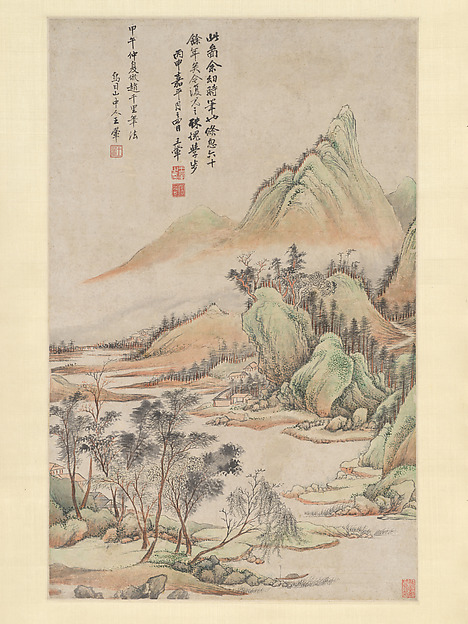 Wang Hui — 倣趙伯駒山水圖 軸|Landscape in the Style of Zhao Boju (Fa
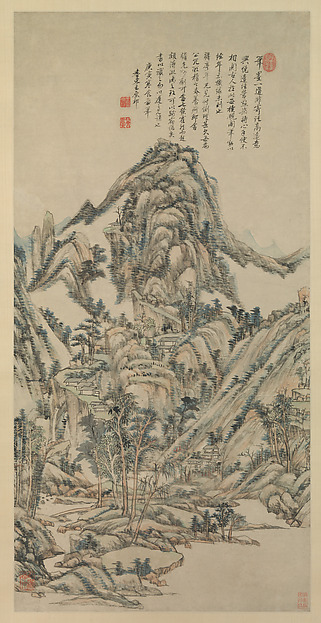 Wang Yuanqi — 清 王原祁 為瞻亭畫七發妙劑圖 軸|Landscape for Zhanting
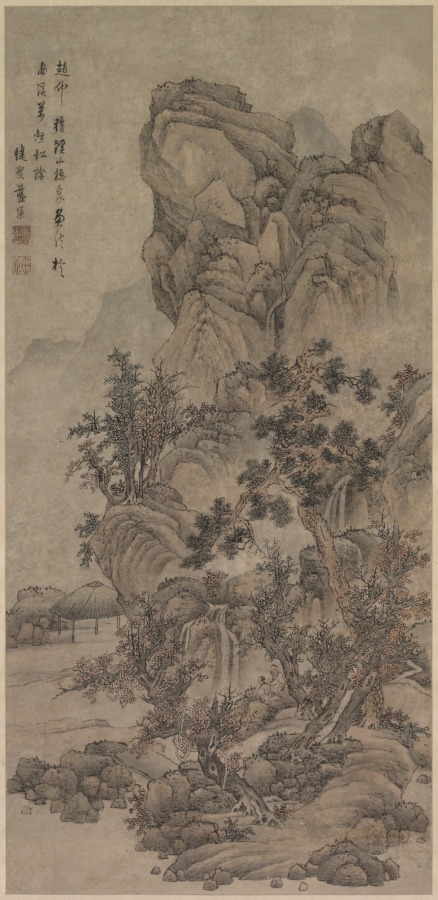 Landscape with Figures
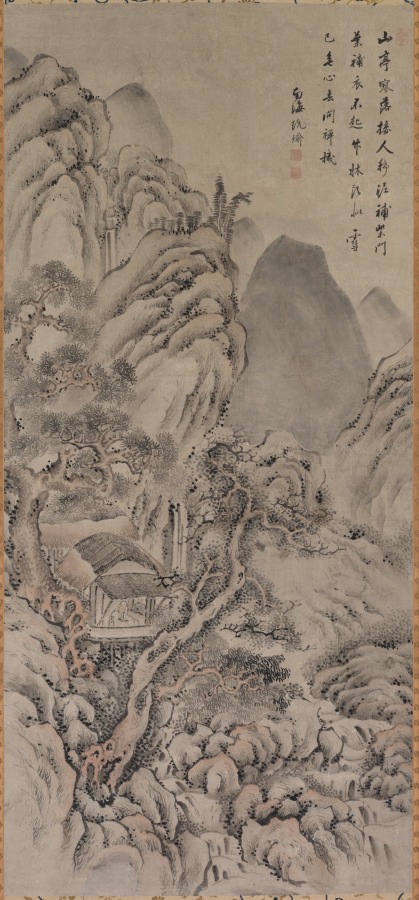 Gion Nankai (Japanese, 1677–1751) — Landscape
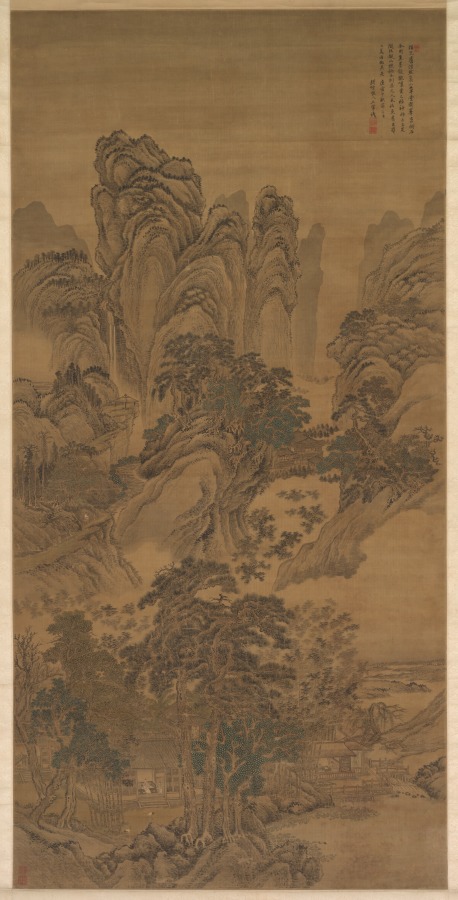 Wang Hui (Chinese, 1632–1717) — Landscape
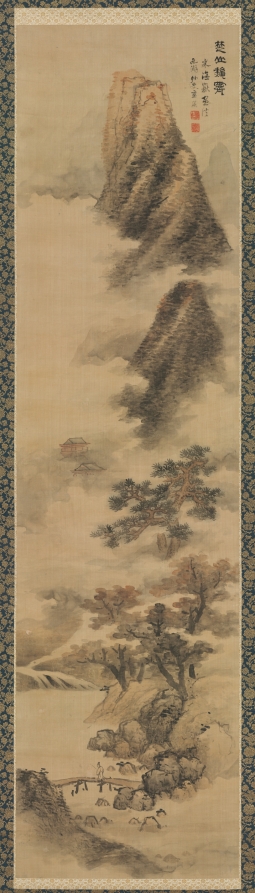 Lan Ying (Chinese, 1585–after 1664) — Clearing Autumn Mists
  Chen Jiru — Landscape
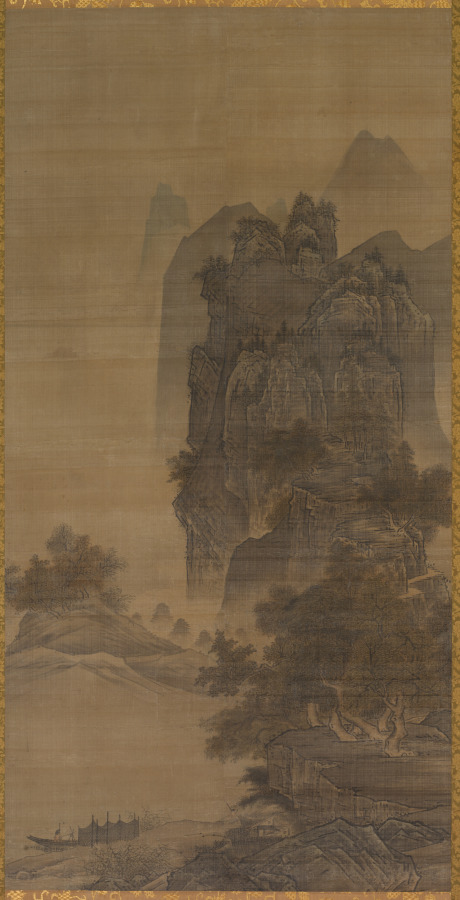 Sesshū Tōyō (Japanese, 1420–1506) — Sunset Glow over a Fishi
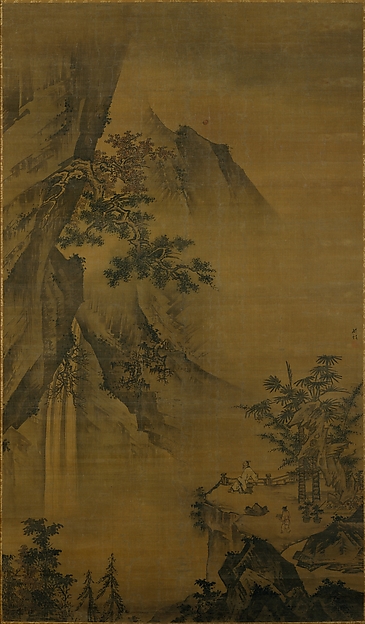 Zhong Li — 明 鍾禮 觀瀑圖 軸|Li Bai gazing at the waterfal
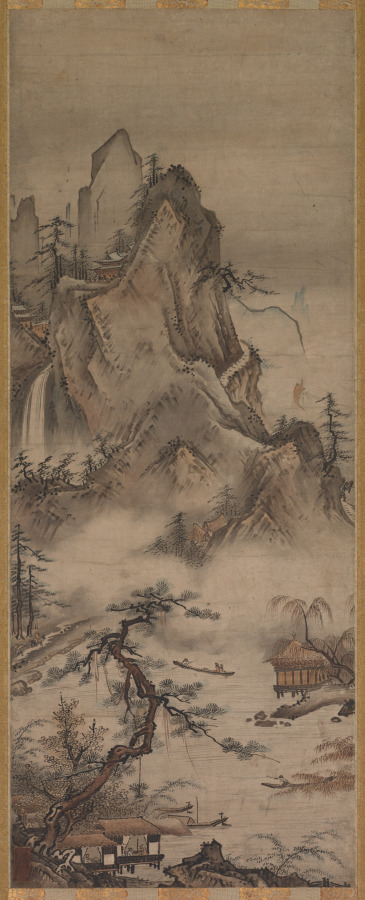 Judō (Japanese, active 16th century) — Landscape
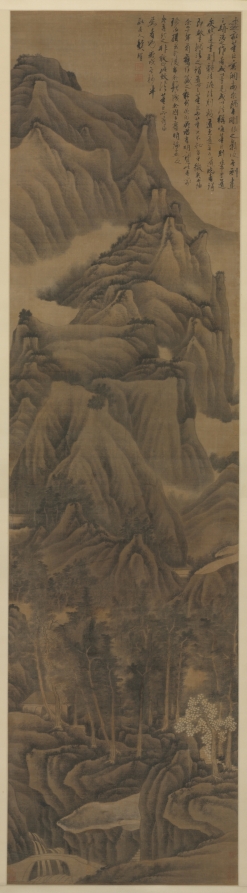 Gong Xian (Chinese, 1599–1689) — Landscape in the Style of D
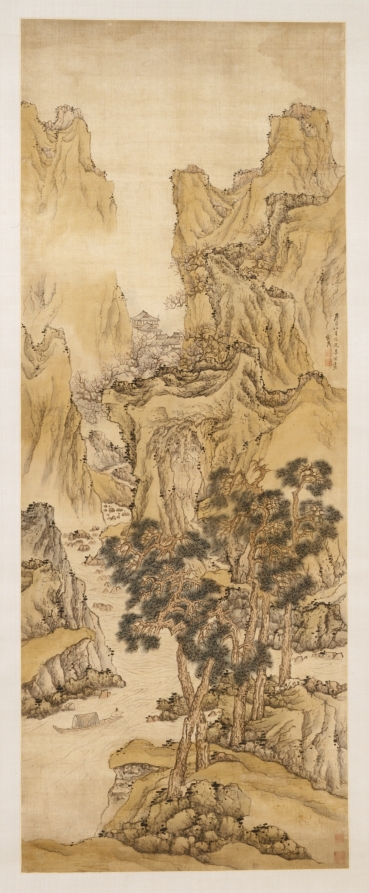 Liu Du (Chinese, active c. 1628-after 1653) — The Peach Blos