In the collection of Cleveland Museum of Art, Cleveland — check current display status with the museum.
FROM THE CLEVELAND MUSEUM OF ART’S CATALOG
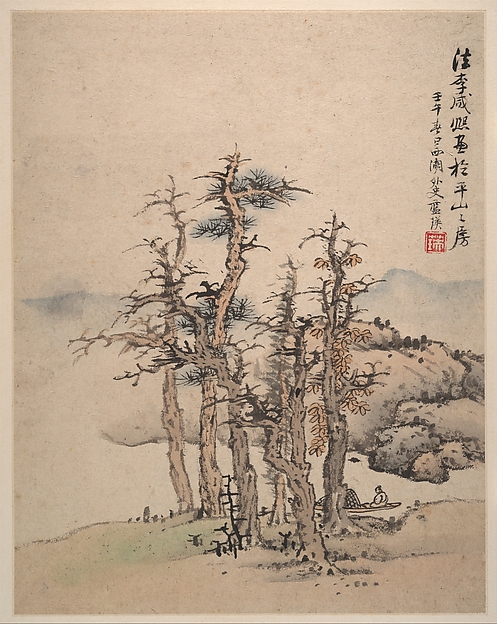
In his inscription Lan Yin states that he uses Mi Fu’s methods to depict this landscape. The ovoid "Mi" dots—Mi Fu’s brush idioms—are applied to give shape to the cloud-enveloped mountains and foreground tree grove for self expression. Engaging in the process of fang (imitation), he acquired the methods of various schools and masters to expand his technical range for creative transformations. Lan Yin developed his unique style and inspired major artists like Liu Du and Chen Hongshou.
Be the first to share your thoughts.
Sign in to join the discussion.
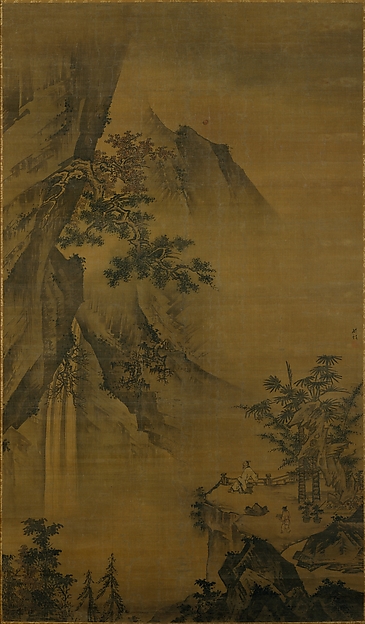 Zhong Li — 明 鍾禮 觀瀑圖 軸|Li Bai gazing at the waterfal
 Fa Ruozhen — 清 法若真 雲山圖軸|Cloudy Mountains
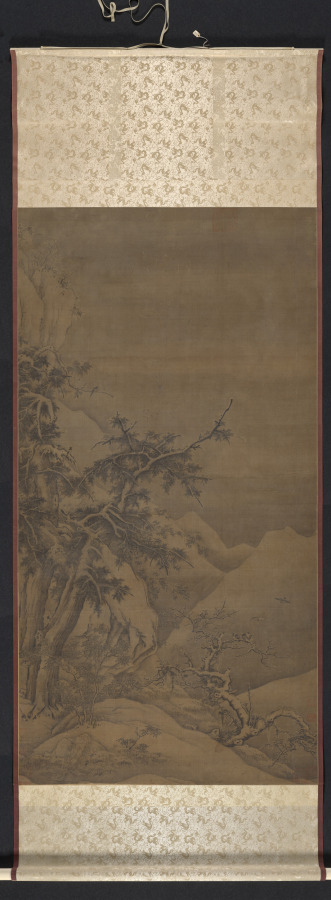 Gao Tao (Chinese, 1100s) — Birds in a Grove in a Mountainous
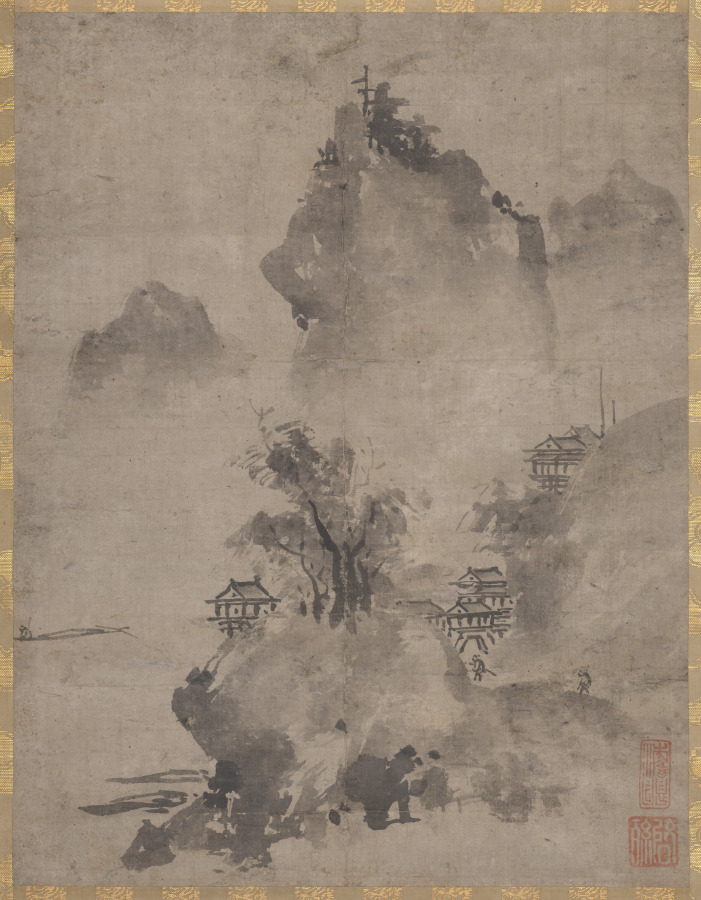 Keison (Japanese, active late 15th to early 16th century) —
 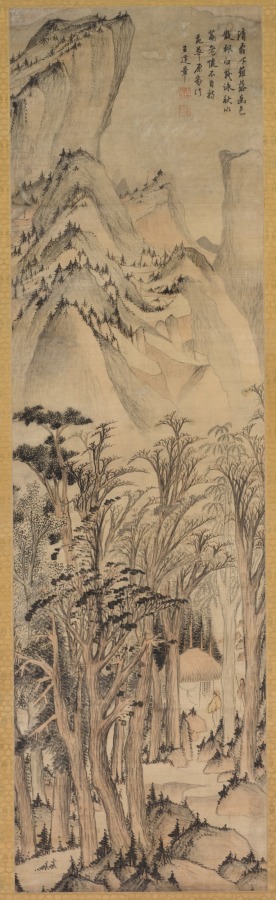 Wang Jianzhang (Chinese, active 1621–1662) — Solitary Colors
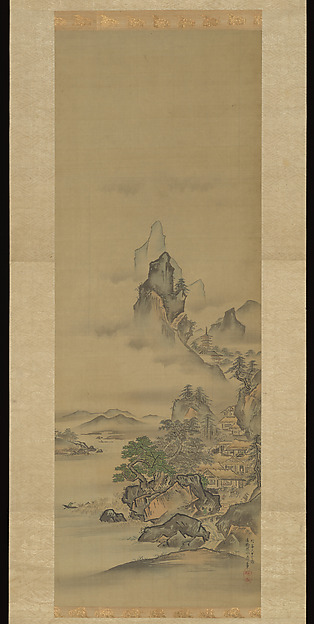 Kano Tansui Moritsune — 狩野探水守常筆 蓬莱山・瀟湘八景図|Mount Penglai with
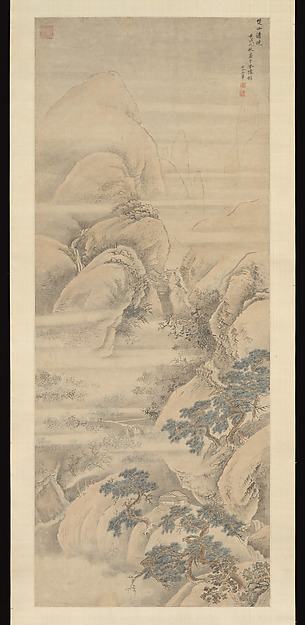 Wang Hui|Unidentified artist — 清 (傳)王翬 雪景山水圖 軸|Snowscape
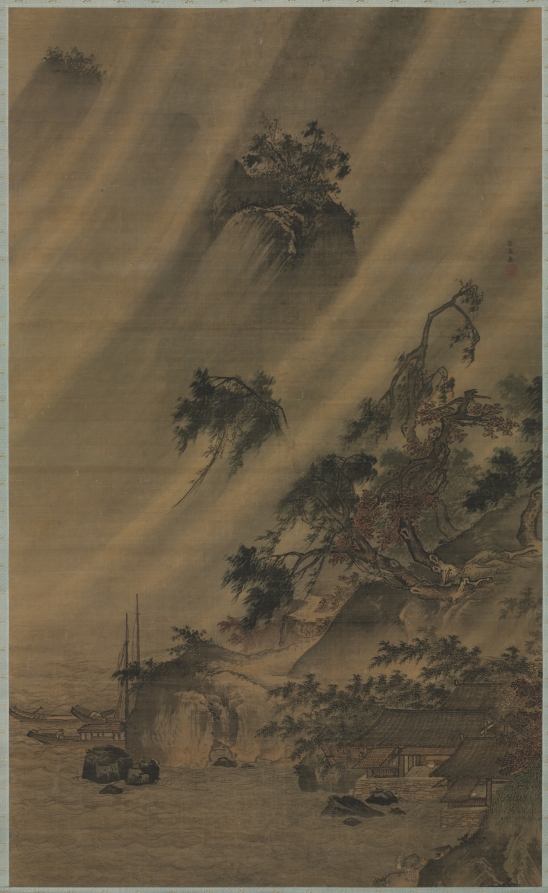 Lu Wenying (Chinese) — River Village in a Rainstorm
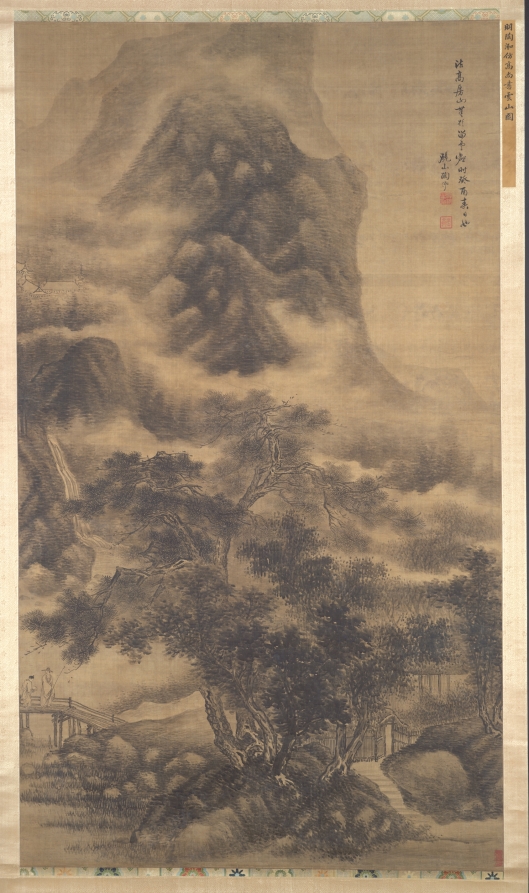 Tao Hong (Chinese, active c. 1610–1640) — Clouds Visiting a
 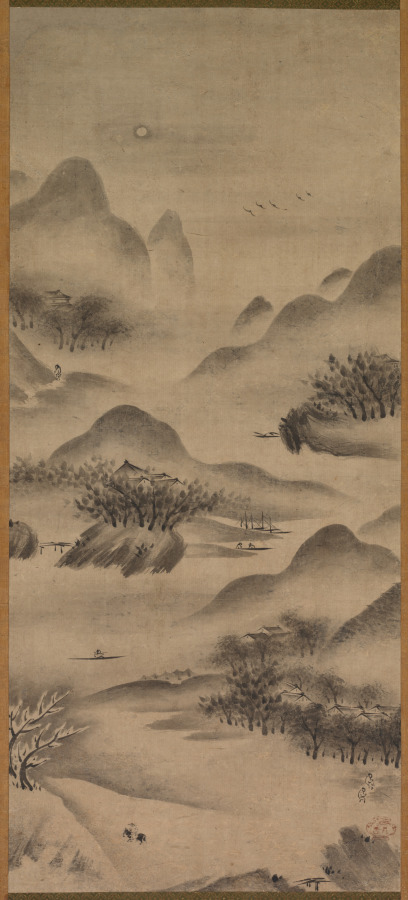 Landscape
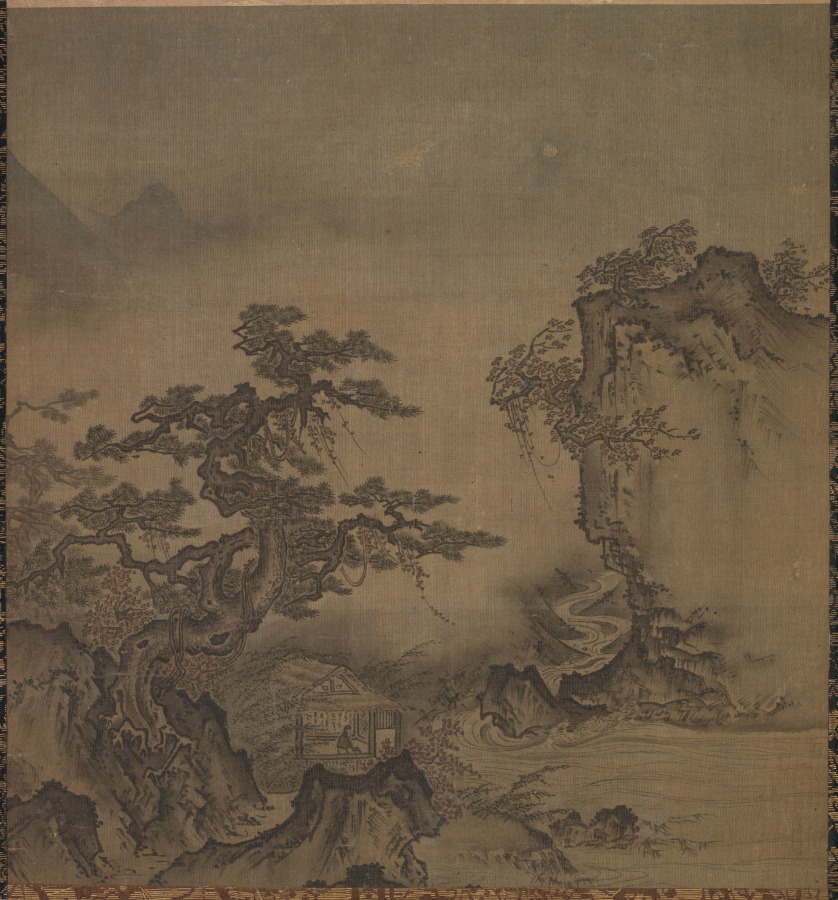 Ishō Tokugan (Japanese, c. 1359–1437) — Landscape
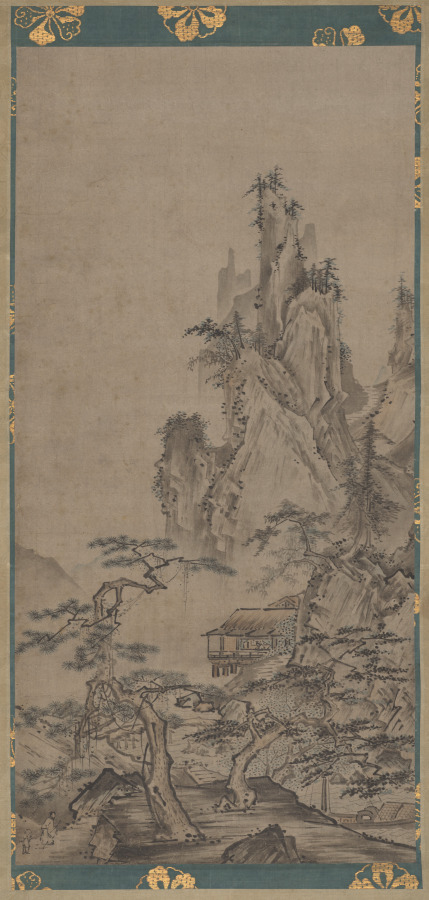 Scholar's Visit