FROM THE CLEVELAND MUSEUM OF ART’S CATALOG
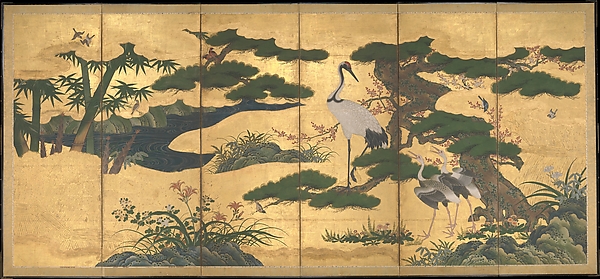
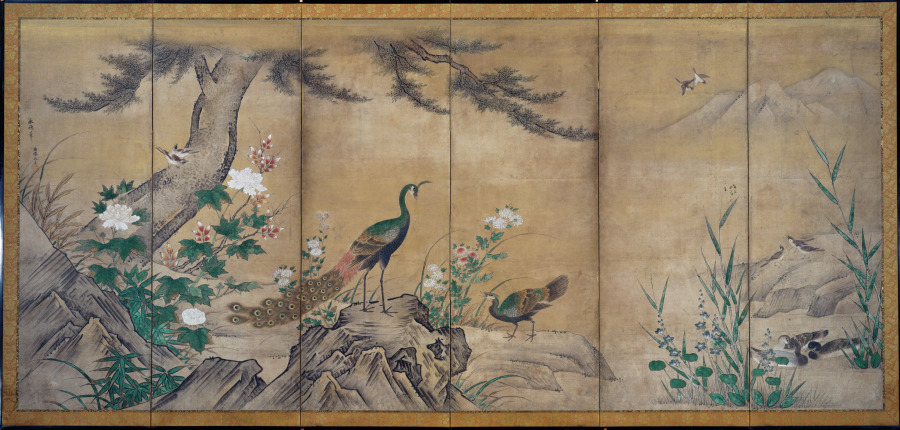
The immense heraldic birds on display in these byøbu reflect the Momoyama era's spirit of newly gained self-confidence and an affinity for grand expressive statements in painting, architecture, the textile and ceramic arts, as well as garden design. While that period preceded the arrival of prosperity, it clearly marked an extra---ordinary moment in Japanese cultural history, one frequently compared with the twelfth century of the Heian period. Through the extensive use of gold-foil backgrounds rather than the somber palette of carefully orchestrated ink tones evident in Muromachi byøbu, patrons colla-borated with artists as well as craftsmen in fostering a decidedly new look in much of Japanese painting. Here for instance there is no imaginary vista suggesting China's vast waterways and mountain ranges. The setting is composed instead of highly stylized lozenges of mineral green paint, suggesting the earth from which clumps of grass, flowering plants, and towering bamboo and paulownia trees emerge. Clusters of lumpy, blue-green rocks dotted with lichen provide stabilizing three-dimensional foils for these islands of vegetation as well as the all-encompassing flat, golden surface.
Source ↗︎
Be the first to share your thoughts.
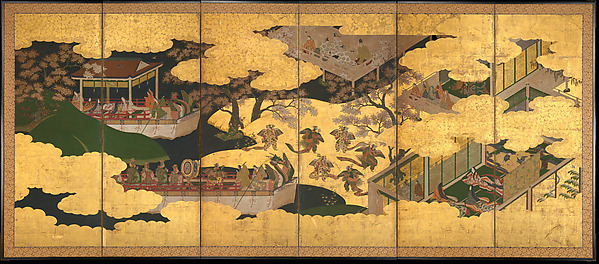 源氏物語図屏風 (胡蝶)|“Butterflies”
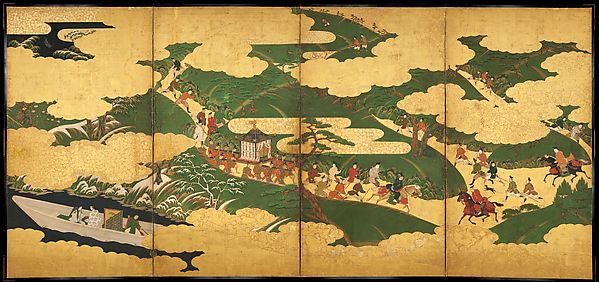 源氏物語図屏風「御幸」・「浮船」・「関谷」|“An Imperial Excursion” (Miyuki), “A B
 Chapter Forty-Four “Bamboo River” from The Tale of Genji
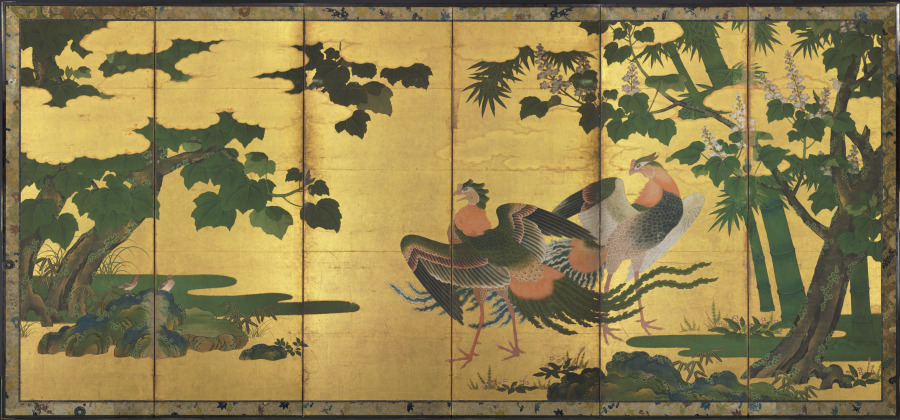 Phoenixes and Paulownia
 Chapter Twenty-Five “Fireflies” from The Tale of Genji
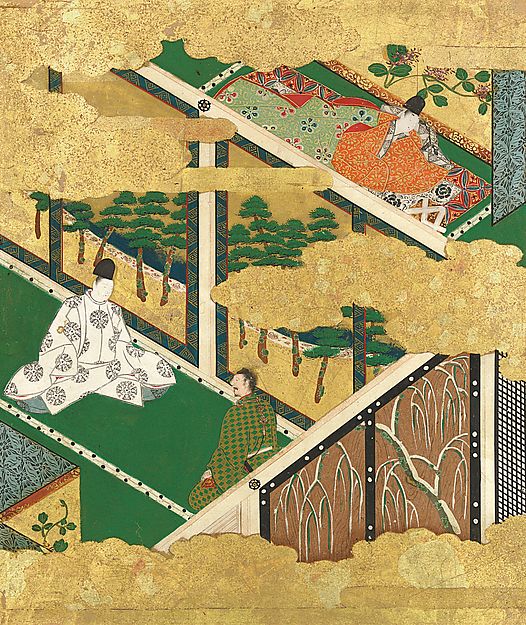 土佐光吉筆 源氏物語図色紙 「柏木」|“The Oak Tree”
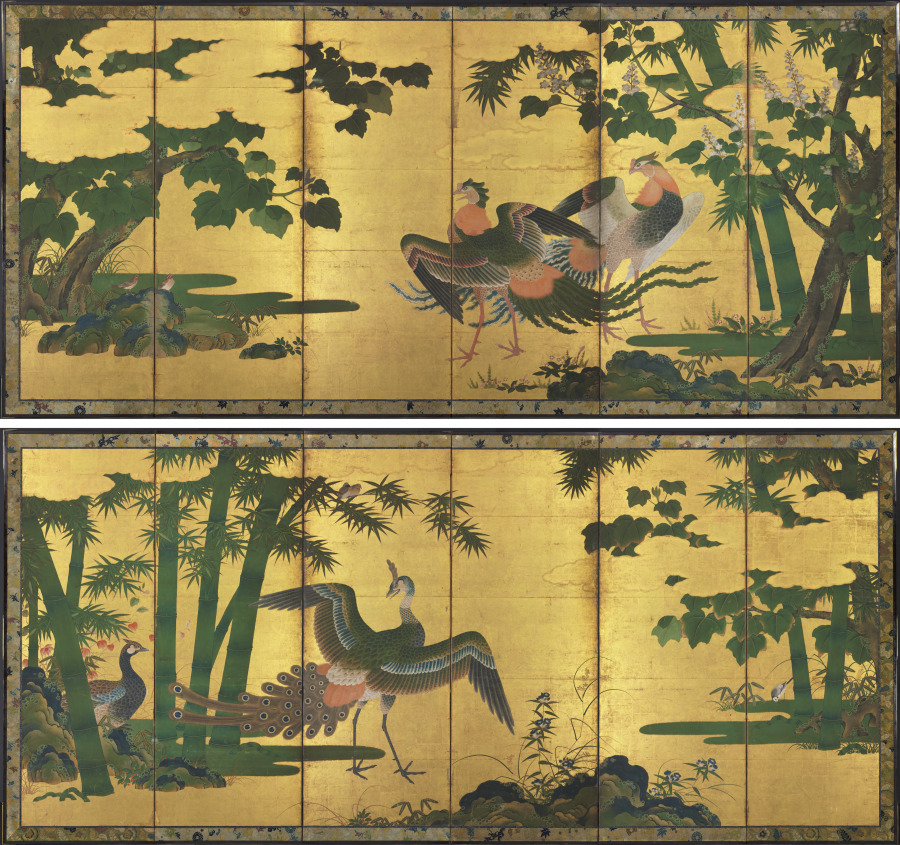 Peafowl and Phoenixes
 Chapter Eight “Festival of the Cherry Blossoms” from The Tal