FROM THE CLEVELAND MUSEUM OF ART’S CATALOG
Folding screens served as temporary dividers in traditional Japanese open-plan architectural spaces. This pair was inspired by Japan’s most celebrated work of literature, the Tale of Genji , written by Murasaki Shikibu, an attendant to the empress in the early 11th-century imperial court. The novel follows the love life of the “Shining Prince” Genji and delves into the psychological states of his many companions. Distinct episodes are nestled within a matrix of golden clouds and landscape elements. Each screen includes six episodes presented in a nonlinear fashion, capturing scattered highlights of the story.
Source ↗︎
Be the first to share your thoughts.
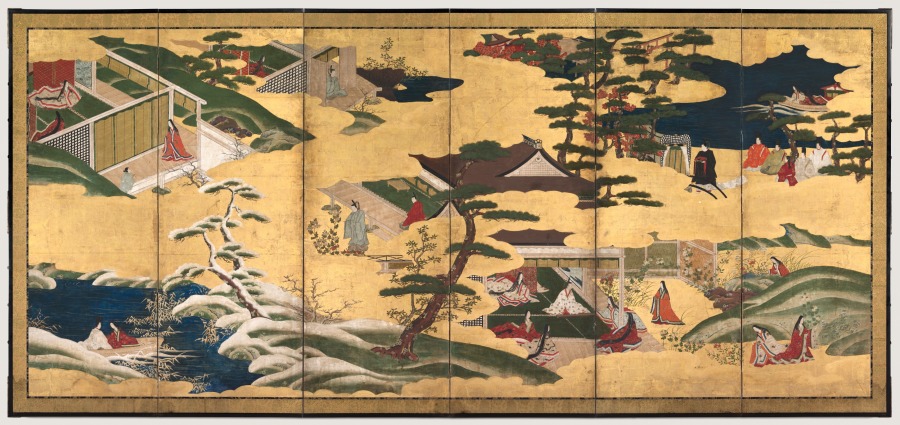 Tosa School (Japanese) — Scenes from the Tale of Genji
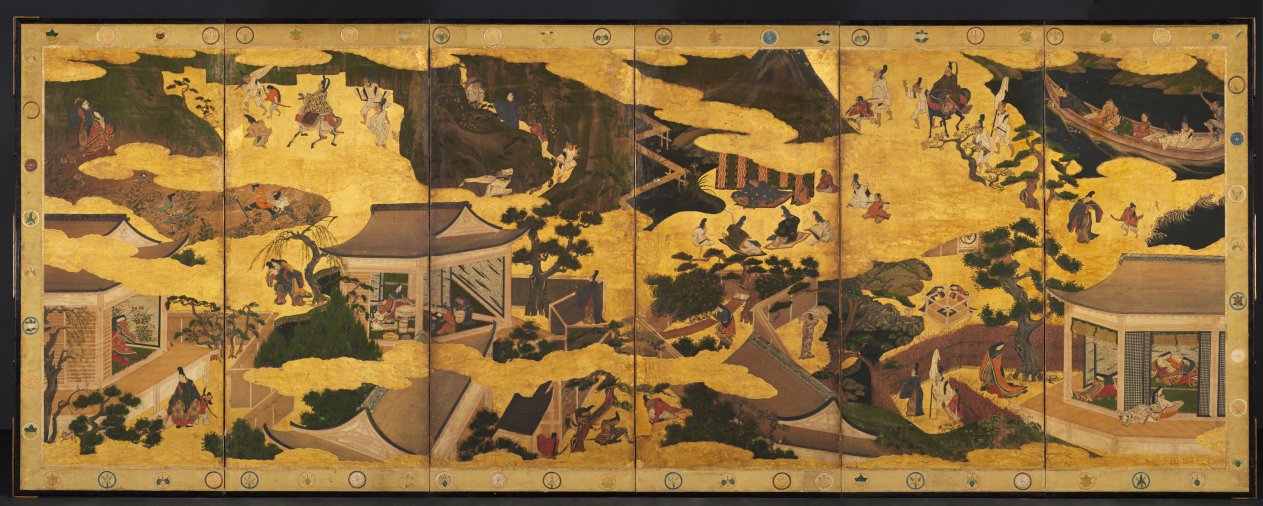 Scenes from the Tales of Ise
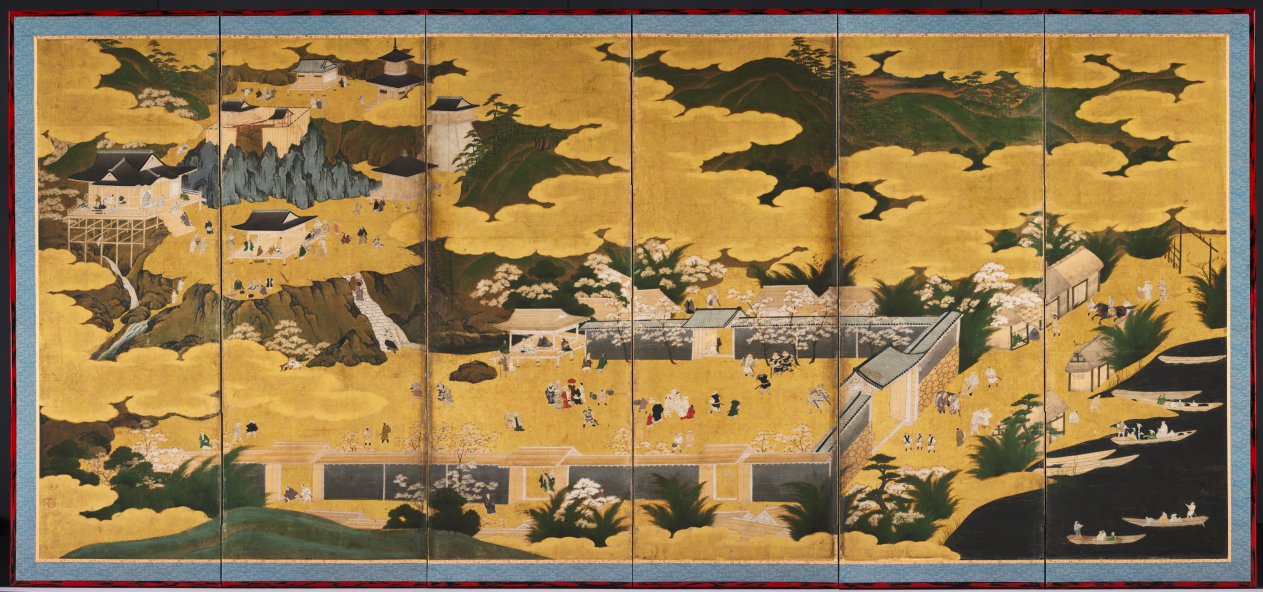 Famous Views of Ōmi
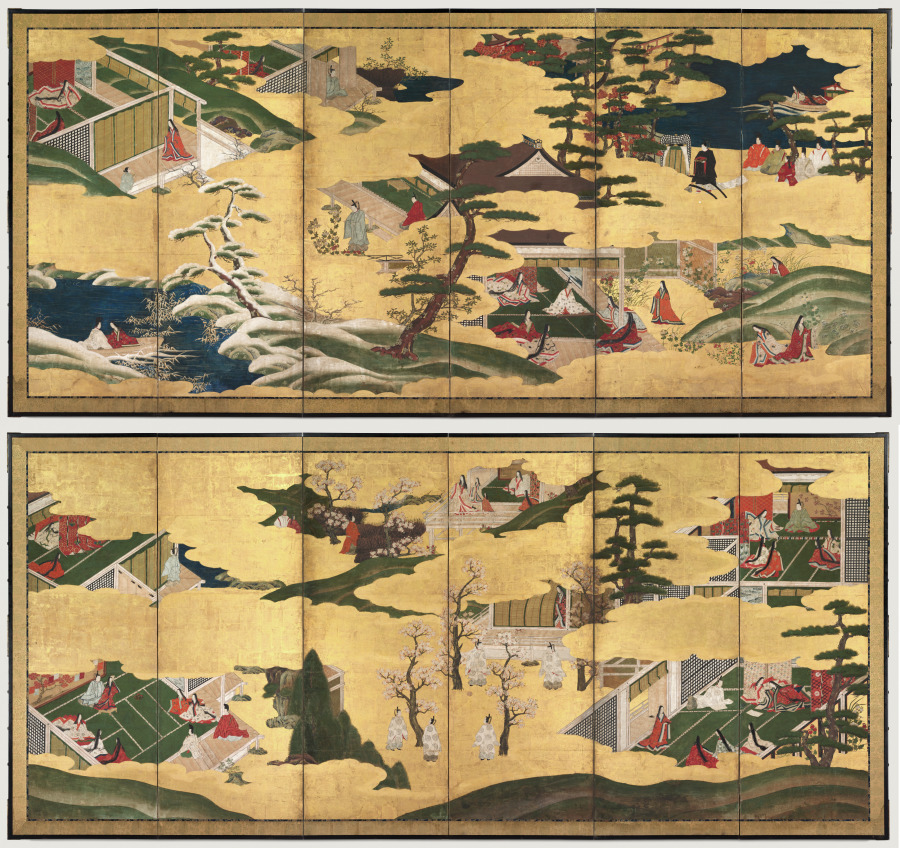 Scenes from the Tale of Genji
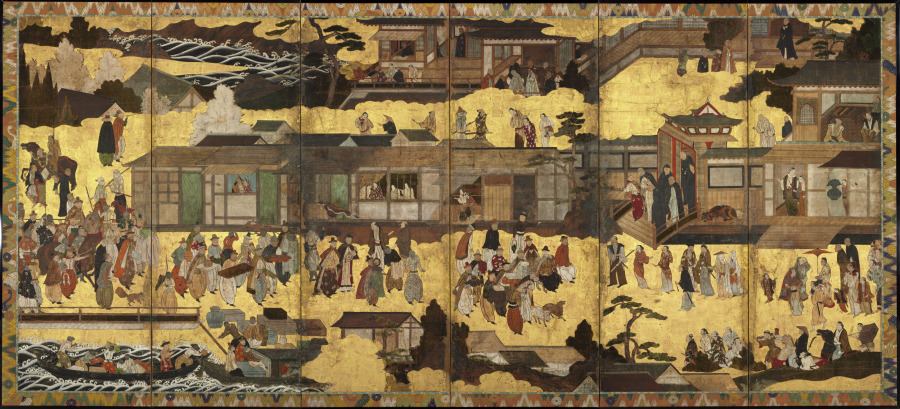 Arrival of the "Southern Barbarians"
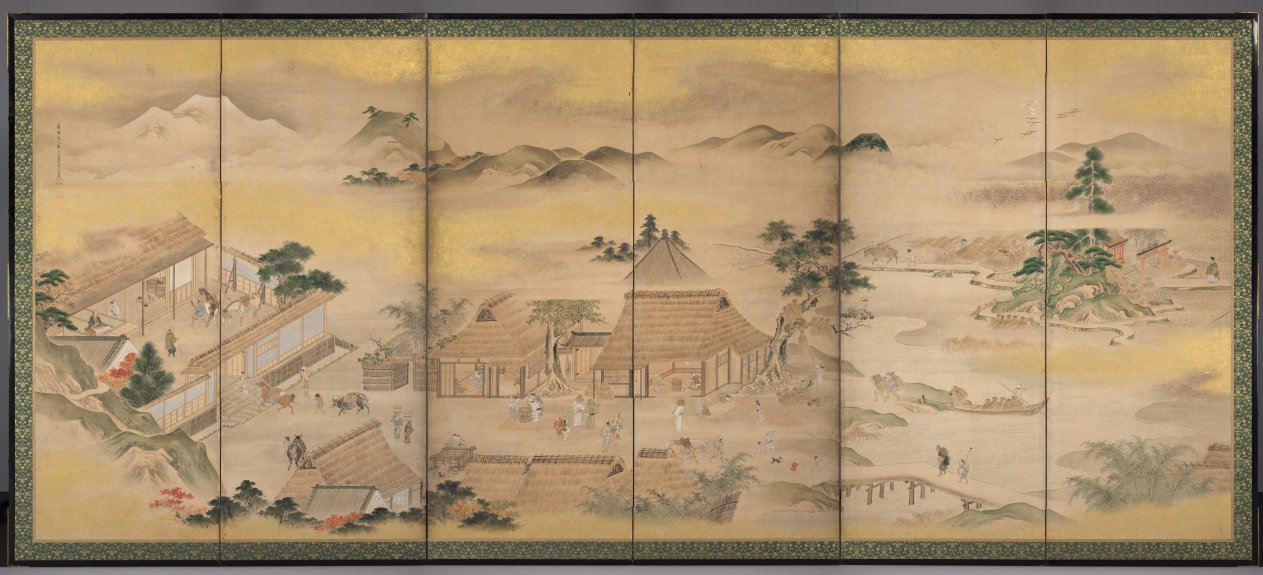 Kō Sūkoku (Japanese, 1730–1804) — Spring and Autumn Farming
 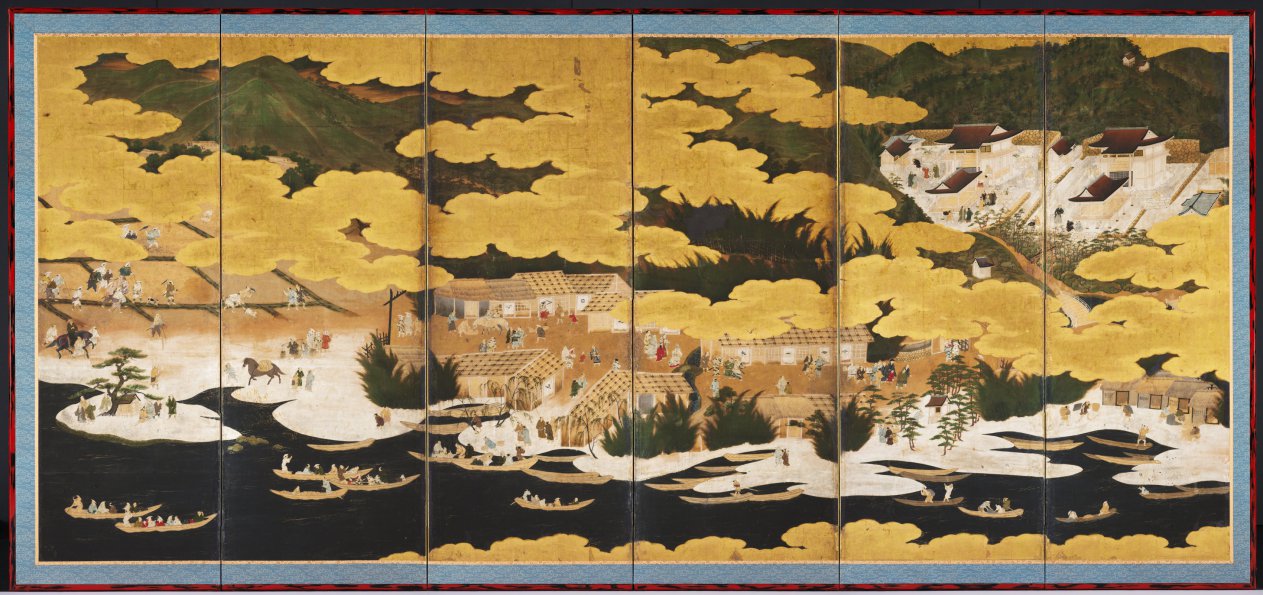 Famous Views of Ōmi
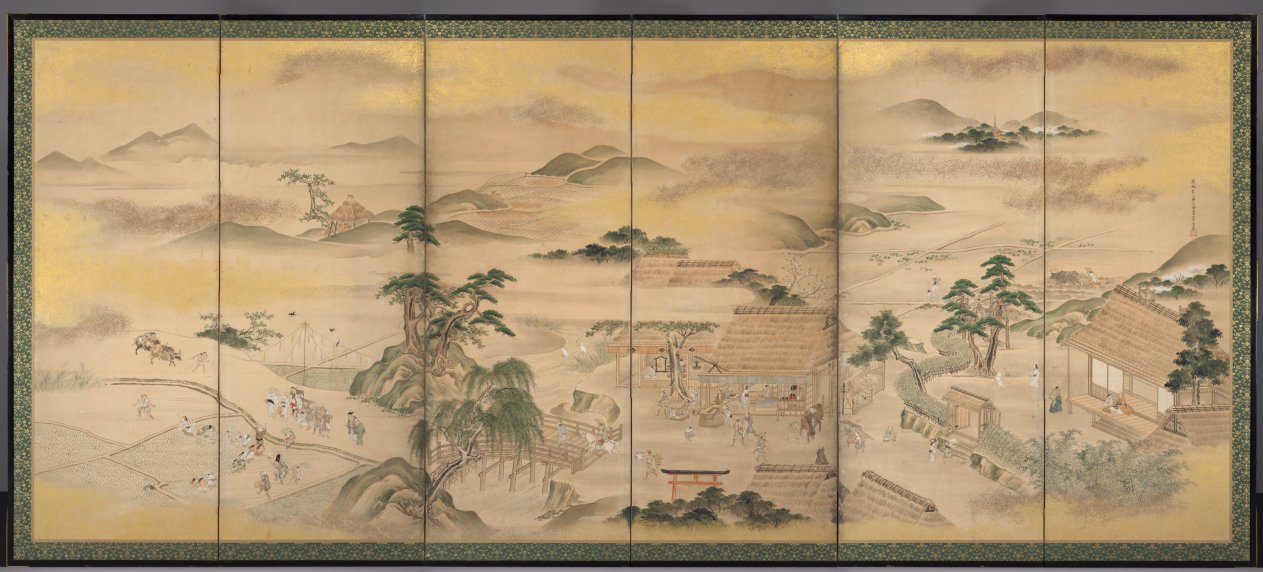 Kō Sūkoku (Japanese, 1730–1804) — Spring and Autumn Farming
 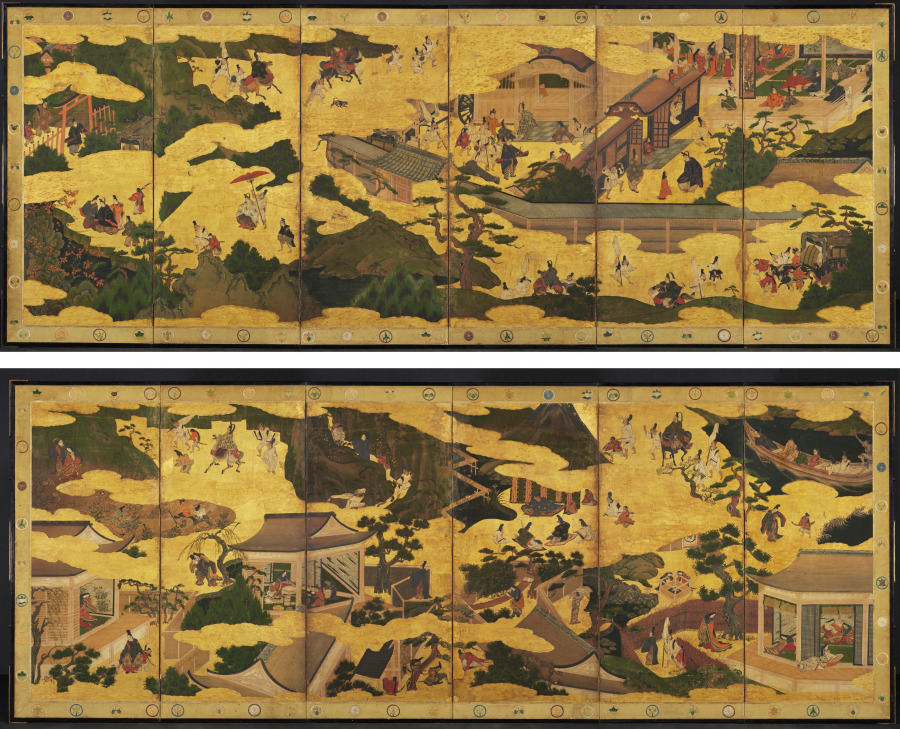 Scenes from the Tales of Ise
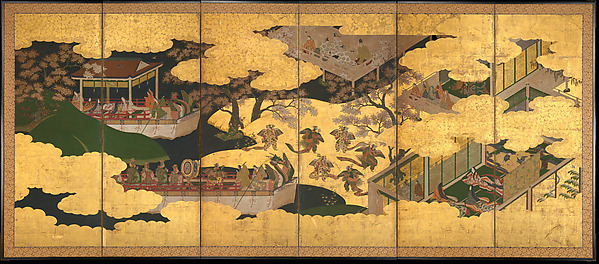 Tosa Mitsuyoshi — 源氏物語図屏風 (胡蝶)|“Butterflies”
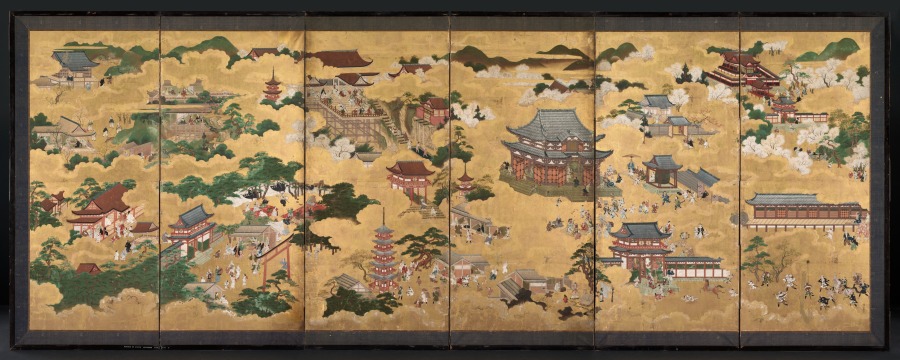 Views of Kyoto
 平家物語図屏風 「小督」 「大原御幸」|"Kogō" and "The Imperial Procession to