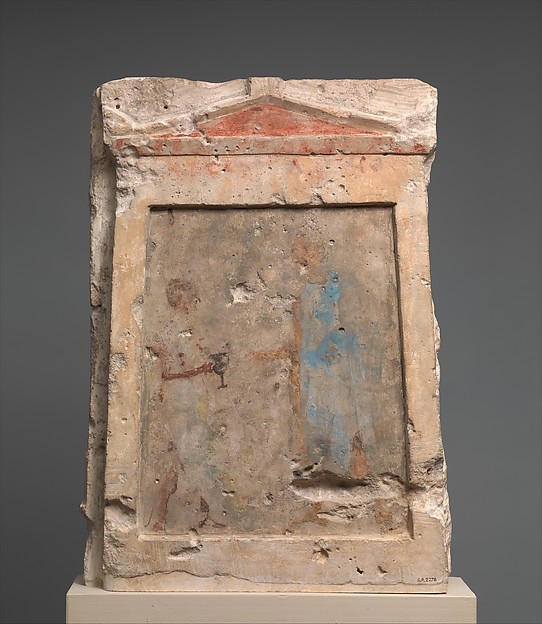
Fragment of a Funerary Naiskos (Monument in the Shape of a Temple)
SEE IT IN PERSON
● On view now — Gallery 151
Art Institute of Chicago, Chicago · verified July 2026
Discussion
FROM THE ART INSTITUTE OF CHICAGO’S CATALOG
Travelers in ancient Greece and Rome regularly encountered large stone monuments like this along the roadsides, marking the burial sites of elite families. They were made in a range of shapes and sizes and often preserve visual hints about who the deceased person was in life. In this example, three larger-than-life-sized figures are chiseled so deeply into the stone that they are carved nearly in the round. The two male individuals are shown clasping hands—a parting gesture common in funerary scenes. While there is no text to conclusively identify the figures, the standing man is likely the person who died, shown sharing a final farewell with his loved ones, perhaps his mother and father.
Be the first to share your thoughts.
Sign in to join the discussion.
More by Ancient Greek
 Figure of a Youth from a Funerary Stele (Monument)
 Tetradrachm (Coin) Portraying Alexander the Great
 Octadrachm (Coin) Portraying Queen Arsinoe II
 Statuette of a Female Figure
 Fragment of a Grave Monument
 Dish
Dish Fragment of a Funerary Lekythos (Monument in the Shape of an
 Tetradrachm (Coin) Depicting the God Zeus
More like this
 Ancient Roman — Side Panel of a Sarcophagus
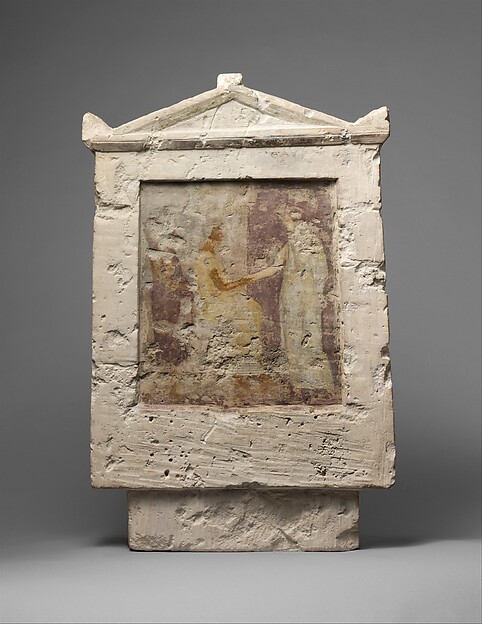 Painted limestone funerary stele with a seated man and two s
 Ancient Roman — Relief Plaque
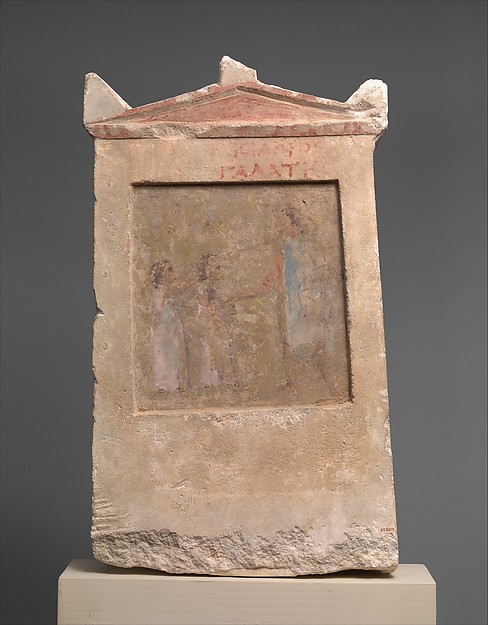 Painted limestone funerary slab with a soldier and two girls
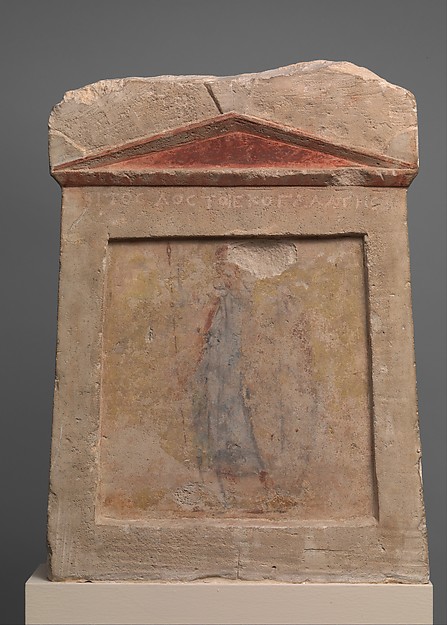 Painted limestone funerary slab with a soldier standing at e
 Ancient Roman — Panel from a Sarcophagus Depicting the Abduc
 Pakistan
Khyber Pakhtunkhwa Province, ancient region of Gand
Pakistan
Khyber Pakhtunkhwa Province, ancient region of Gand Ancient Roman — Statue of Meleager
 Ancient Roman — Relief of a Falling Warrior
 Afghanistan or Pakistan
Ancient region of Gandhara — Walking
Afghanistan or Pakistan
Ancient region of Gandhara — Walking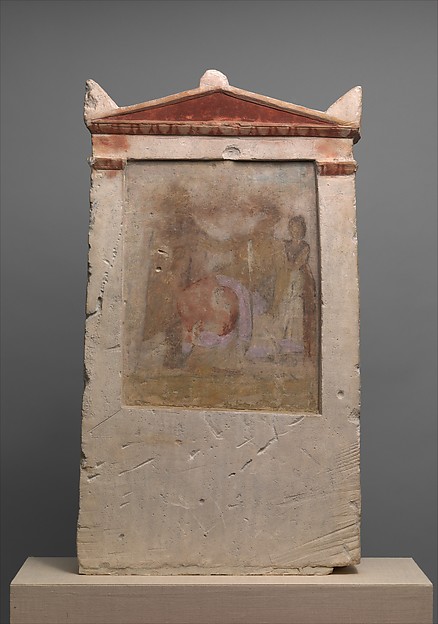 Painted limestone funerary stele with a woman in childbirth
 Painted limestone funerary slab with a soldier taking a kant