Relief of a Falling Warrior
SEE IT IN PERSON
● On view now — Gallery 151
Art Institute of Chicago, Chicago · verified July 2026
Discussion
FROM THE ART INSTITUTE OF CHICAGO’S CATALOG
Around 435 BCE, the Greek sculptor Pheidias adorned the front of the shield at the side of his gold-and-ivory statue of Athena in the Parthenon with scenes of Greeks battling Amazons in the Trojan War. In Roman times, certain figures from this complex struggle were lifted out of their original context and enlarged to become decorative reliefs for the walls of a colonnade or courtyard. Here a wounded Greek warrior collapses to the ground after being struck a mortal blow from behind. The dying warrior’s noble countenance, the fillet or ribbon tied around his forehead, and his powerful, athletic body epitomize what Pheidias and his pupils sought to project as the ideal of mature male dignity in the decade when Athens was at the height of its power in the eastern Mediterranean world. Some five centuries later, collectors such as the Roman emperor Hadrian sought this Pheidian style, translated from a circular golden shield to a rectangular marble relief, to decorate their palaces and villas. Athenian sculptors of the Roman era made a good living creating and exporting such memories of past glories. This relief and a number of others were found near Athens in the harbor of Piraeus, where
Be the first to share your thoughts.
Sign in to join the discussion.
More by Ancient Roman


More like this
 Ancient Greek — Figure of a Youth from a Funerary Stele (Mon
 Ancient Greek — Figurine of a Man
 Ancient Greek — Fragment of a Funerary Naiskos (Monument in
  Ancient Etruscan — Statuette of Herakles
 Roman — Putto with Papal Insignia
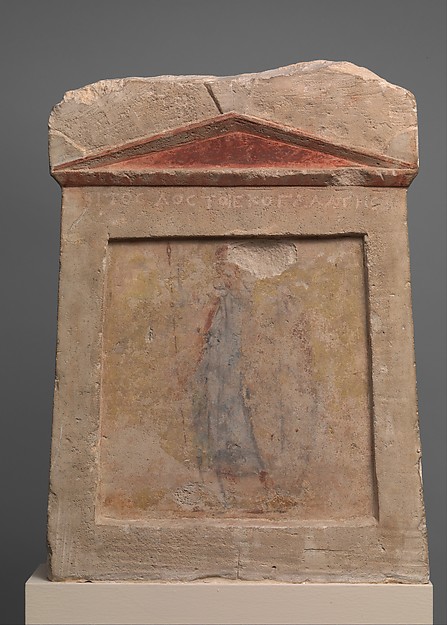 Painted limestone funerary slab with a soldier standing at e
 Ancient Greek — Fragment of a Grave Monument
 Antonin-Marie Moine — Fall of a Cavalier
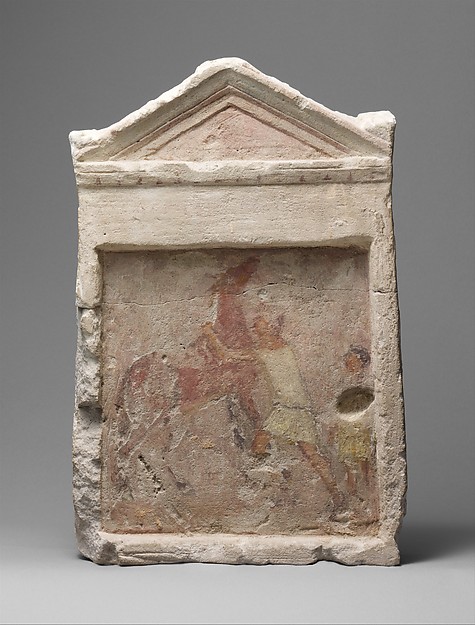 Painted limestone funerary slab with a man controlling a rea
 Cambodia or Vietnam — Horse-Headed Incarnation of God Vishnu
 Afghanistan or Pakistan
Ancient region of Gandhara — Walking
Afghanistan or Pakistan
Ancient region of Gandhara — Walking John Deare — Bacchus Feeding a Panther