What Is Pointillism? The Art of Painting With Dots
Get close and it's chaos — thousands of dots. Step back and a whole sunlit world appears.
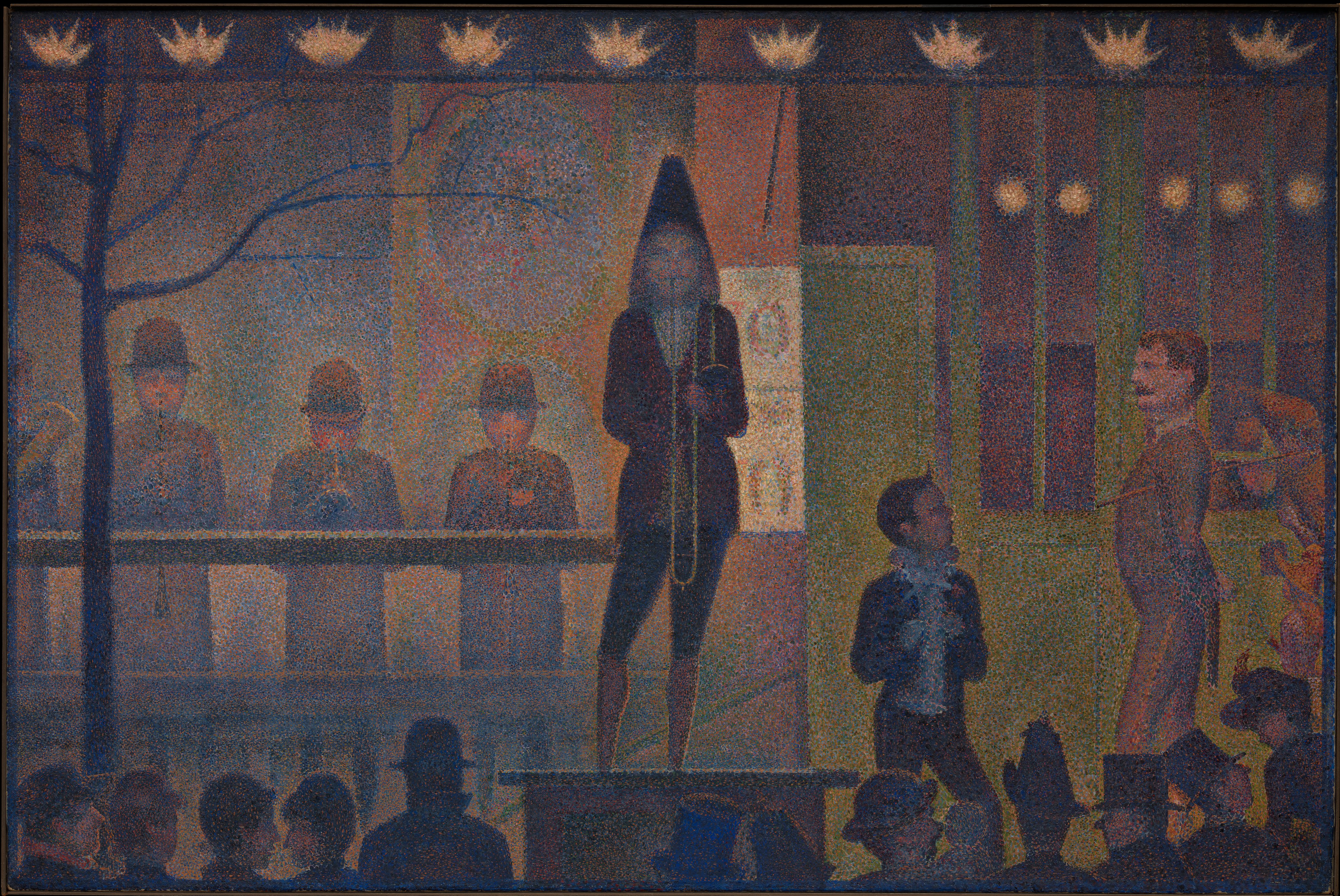
Pointillism is a painting technique in which small, distinct dots of pure color are applied in patterns so that, from a distance, the viewer's eye blends them into fuller tones and forms. Developed by Georges Seurat and Paul Signac in the 1880s (Seurat called it "divisionism"), its landmark work is "A Sunday on La Grande Jatte."
Stand a few inches from a Pointillist painting and you'll see something that looks almost broken: thousands of separate dots, no blending, no smooth transitions. Take a few steps back and the miracle happens. The dots knit themselves into water, grass, parasols, and warm afternoon light. That gap between chaos up close and order at a distance is the whole idea.
How does Pointillism work?
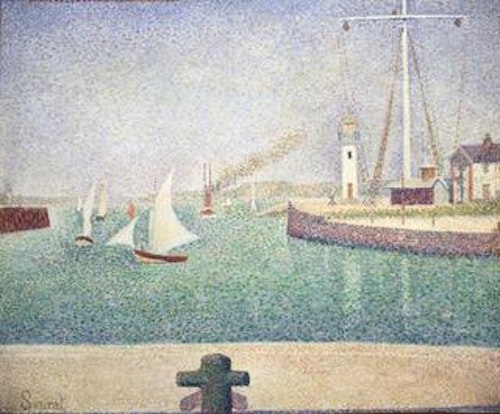
Pointillism works through optical mixing: instead of blending colors on the palette, the painter places small dots of pure color side by side and lets the viewer's eye do the mixing. Put a dot of blue beside a dot of yellow, step back, and your eye reads green — but a green that seems to shimmer rather than sit flat.
The theory, drawn from nineteenth-century color science, held that colors combined this way would look brighter and more luminous than the same tones pre-mixed on the palette. In practice the effect is more subtle than the theory promised, but the shimmer is real, and it gives these paintings their distinctive glow.
That shimmer is also why a Pointillist canvas rewards moving your feet. There is a sweet spot — a few steps back — where the dots snap together and the scene locks into focus. Lean in again and it scatters. The painting is never quite finished; your eye keeps completing it.
Who invented it?
Pointillism was developed in the 1880s by Georges Seurat and his younger colleague Paul Signac, who wanted to put Impressionism's flickering light on a firmer, more systematic footing. Seurat, a serious student of color theory, preferred the term divisionism for the underlying method — dividing color into its components — while Pointillism described the dotted surface itself.
It was a deliberate, patient way of working, the opposite of the Impressionists' quick outdoor dashes. A single large canvas could take Seurat years.
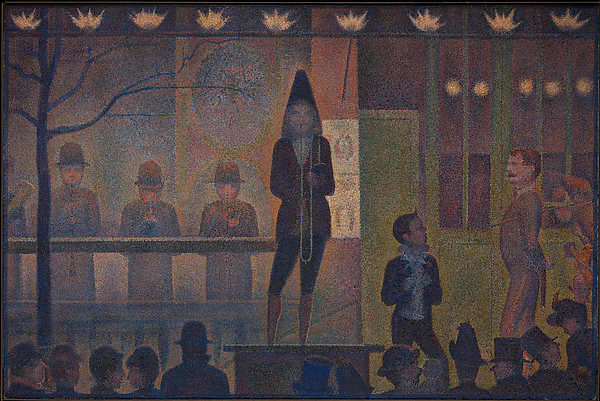
Because it grew out of Impressionism yet pushed toward structure and science, Pointillism belongs to the broader world of Post-Impressionism.
What's the most famous Pointillist painting?
The most famous Pointillist painting is Seurat's A Sunday on La Grande Jatte, a vast, hushed scene of Parisians relaxing by the Seine, now one of the treasures of the Art Institute of Chicago. Millions of dots build its still, almost frozen calm — figures posed as if carved, light held perfectly in place.
It rewards exactly the kind of looking DiscoverArt is built for: read more about what La Grande Jatte is about, then zoom in on the surface and watch the dots dissolve into a summer afternoon.
Sources
Discussion
Be the first to share your thoughts.
Sign in to join the discussion.