Monet vs. Manet: What's the Difference?
Two French painters, one letter apart, endlessly confused — and genuinely connected.
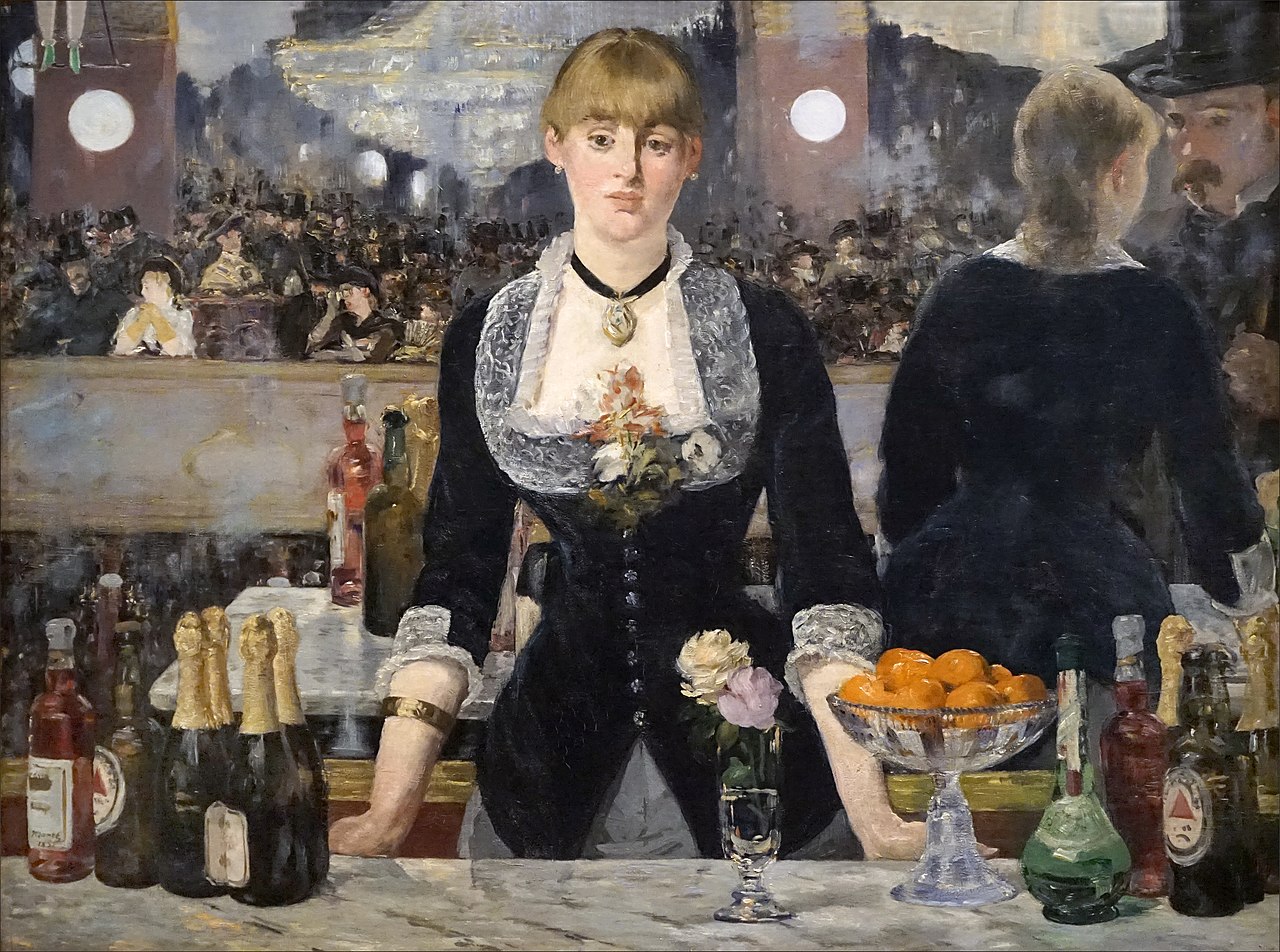
Claude Monet (1840–1926) and Édouard Manet (1832–1883) were different French painters whose names are famously confused. Manet was the older, Paris-based provocateur who bridged Realism and Impressionism with scandalous works like "Olympia." Monet was the younger, quintessential Impressionist who painted light outdoors — haystacks, cathedrals, water lilies. They knew and influenced each other, which only deepens the mix-up.
It is one of art history's most durable typos. Two French painters, born eight years apart, whose surnames differ by a single letter — Monet and Manet — and whose lives overlapped so closely that even careful people mix them up. The confusion is understandable. The good news is that once you know what each man was after, you'll never swap them again.

Who was Manet?
Édouard Manet (1832–1883) was the elder of the two and the great provocateur who helped drag French painting into the modern age. He came from a comfortable Parisian family and trained in the traditional way, but his instincts were anything but traditional. His subjects were modern life — cafés, city figures, the demimonde — painted with a flat, frank directness that scandalized the Salon.
His 1863 Olympia, a nude who stares back at the viewer without shame, caused an uproar when it was finally shown.

Manet is often called a bridge between Realism and Impressionism. He inspired the younger Impressionists and showed them a way forward, yet he rarely exhibited alongside them, preferring to fight for acceptance at the official Salon. His late masterpiece A Bar at the Folies-Bergère still puzzles viewers with its impossible mirror. (More on the fuss in why Manet's Olympia was so scandalous.)
Who was Monet?
Claude Monet (1840–1926) was the younger man and the purest Impressionist of them all. Where Manet stayed close to the figure and the studio, Monet went outdoors and stayed there, chasing the way light falls on water, snow, fog, and stone. His 1872 harbor scene Impression, Sunrise gave the whole movement its name — first as an insult, then as a badge.
He spent his life painting the same motifs at different hours: haystacks, poplars, Rouen Cathedral, and finally the water lilies of his garden at Giverny.

You can read more in who was Claude Monet.
How do you tell them apart?
The quickest test is to ask what the painting is of and where the painter seems to be standing. A tidy contrast:
- Manet — figures and modern city life, worked largely in the studio, courted scandal at the Salon, loved deep blacks and sharp tonal contrast.
- Monet — landscapes and water, worked outdoors in the open air, exhibited with the Impressionists, dissolved everything into shimmering color and light.
One more thing worth knowing: the two were genuine friends and rivals, not strangers who happened to rhyme. Manet even painted Monet at work on his floating studio boat. So the mix-up isn't just a coincidence of spelling — their paths really did cross, again and again.
Both belonged to the broader story of Impressionism, and both reward the kind of slow looking that reveals how different they truly are. Pull up an Olympia and a haystack side by side on DiscoverArt, and let your eye do the sorting.
Sources
Discussion
Be the first to share your thoughts.
Sign in to join the discussion.