Antonello da Messina Paintings Stolen from Sicily’s MuMe: What Was Taken and Why It Matters
Thieves bypassed alarms during Messina’s Assumption celebrations and took four panels by the city’s greatest painter — including most of the San Gregorio Polyptych.

On the evening of August 15, 2026, thieves stole four works by Antonello da Messina from the Museo Regionale di Messina (MuMe) in Sicily: three of the five surviving panels of the San Gregorio Polyptych (1473) and a double-sided panel bearing the Madonna and Child on one face and the dead Christ in pietà on the other. The thieves bypassed the museum’s alarm systems during the city’s Assumption celebrations; the Carabinieri are investigating and no recovery has been announced.
On Saturday evening, while Messina was celebrating the Feast of the Assumption — the biggest night of the Sicilian city's year — thieves walked out of its museum with the heart of its collection.
According to the Associated Press, the theft at the Museo Regionale di Messina, known locally as MuMe, happened just before 10 p.m. on August 15. The thieves bypassed the alarm and security systems and took four works by Antonello da Messina, the Renaissance master who was born in this city, worked here, and gave it his name.
What was taken
Three of the four stolen works are panels from the San Gregorio Polyptych, the altarpiece Antonello signed and dated in 1473. The polyptych was already a survivor: it originally held more panels, and what remained after the earthquake that leveled Messina in 1908 — five panels — became the museum's centerpiece. Three of those five are now gone.
The fourth object is a double-sided panel, painted with the Madonna and Child on one face and the dead Christ in pietà on the other. The AP reports it was removed from an armored display case. CBS News notes the panel last changed hands in 2003, selling for more than $300,000 — a fraction of what any Antonello would command today, if a work this recognizable could be sold at all.

"Messina without Antonello"
The museum's director, Marisa Mercurio, told reporters: "We are devastated by what happened. They were two of Antonello da Messina's most important works." Italy's culture minister, Alessandro Giuli, spoke of dismay and regret over pieces of "extraordinary value for our cultural heritage," and Messina's mayor, Federico Basile, called the theft a "heinous criminal act," adding: "We hope that those responsible will be identified and that our artworks will be returned home."
The city official Enzo Caruso put it most starkly: "Messina without Antonello is deprived of the very essence of the greatest artist."
That is not civic exaggeration. Antonello (c. 1430–1479) is the rare Renaissance master whose name is his hometown, and he repaid the debt by changing Italian painting. He mastered the Netherlandish oil technique — luminous glazes, microscopic detail — and carried it south; as the story goes, Vasari even claimed he learned the secret from Jan van Eyck himself, a legend historians have long since set aside, though the truth of his influence stands. When Antonello worked in Venice in 1475, Giovanni Bellini and an entire generation absorbed what he brought.
The Carabinieri are investigating, and the museum closed the following day so evidence could be gathered. No recovery had been announced as of this writing.
Can paintings this famous even be sold?
Art-crime analysts think not — and that cuts both ways. Lynda Albertson, who heads the Association for Research into Crimes against Art, told the AP that works this recognizable are nearly impossible to move through legitimate channels, and more likely to circulate as collateral inside criminal networks. History offers both endings: stolen icons have come home after years in the dark, and others have never been seen again.
Where you can still see Antonello
Fewer than fifty of his paintings survive anywhere, which is what makes the loss of four in one night so heavy. A handful live in American museums whose collections are on DiscoverArt:
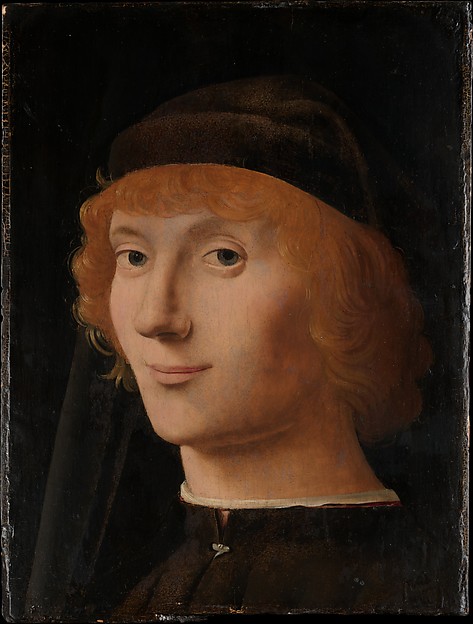

The stolen works remain on Antonello's artist page and on MuMe's page here — we keep them visible in the hope the mayor's words prove right and they come home. The museum's collection also holds the two monumental canvases Caravaggio painted as a fugitive in Messina in 1609, The Raising of Lazarus and the Adoration of the Shepherds — untouched by the thieves, and reason enough on their own to visit a museum that just lost its soul.
Sources
- Thieves steal 4 Renaissance artworks in Sicilian museum heist — AP via ABC News
- Renaissance paintings stolen from museum in Italy — CBS News
- Antonello da Messina Renaissance paintings stolen from Sicilian museum — The Guardian
- Antonello da Messina paintings stolen from Museo Regionale di Messina — New York Post
Discussion
Be the first to share your thoughts.
Sign in to join the discussion.