Cinerary Urn of Plautia Hesperis
SEE IT IN PERSON
Not currently on view
In the collection of Art Institute of Chicago, Chicago · as of July 2026
Discussion
FROM THE ART INSTITUTE OF CHICAGO’S CATALOG
Prior to A.D. 100, the Romans typically cremated their dead and placed the ashes and remaining bones in urns and ossuaries (containers used to hold skeletal remains). The front of this urn is adorned with heart-shaped ivy leaves and an inscription that identifies the deceased, a young woman named Plautia Hesperis. Much like modern headstones, the inscription indicates the length of her life (“Lived 16 years”). The lid is adorned with simple rosettes at the corners, while an eagle, thought by the Romans to carry the deceased’s soul into the realm of the gods, is perched at its center.
Be the first to share your thoughts.
Sign in to join the discussion.
More by Ancient Roman


More like this
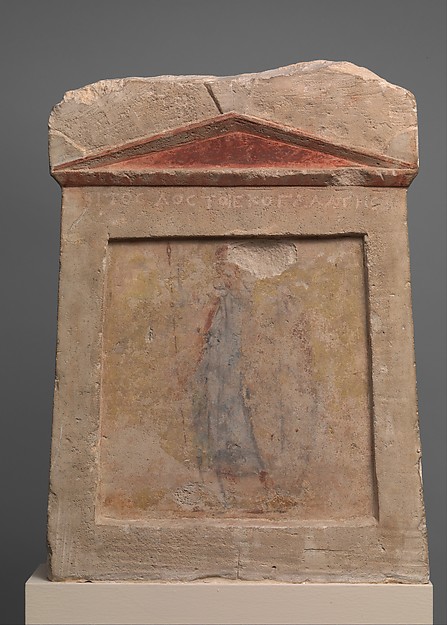 Painted limestone funerary slab with a soldier standing at e
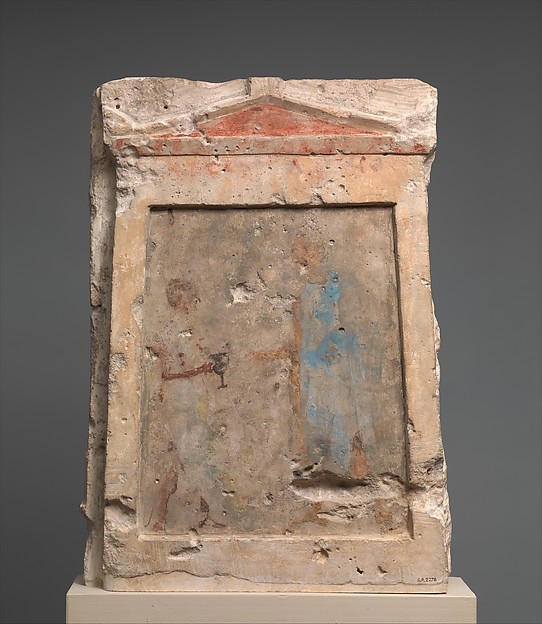 Painted limestone funerary slab with a soldier taking a kant
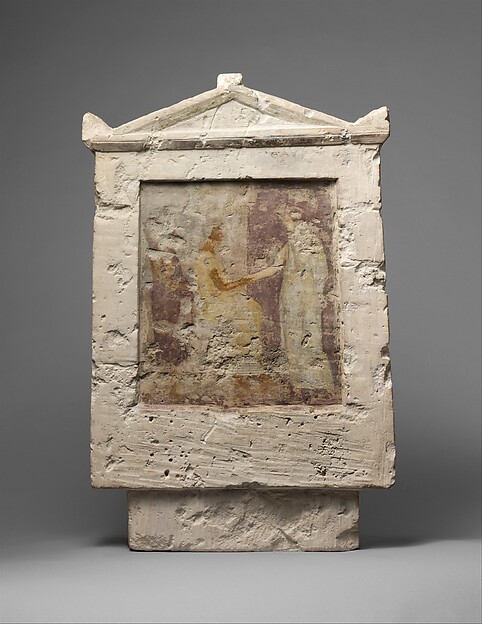 Painted limestone funerary stele with a seated man and two s
 Lombard — Capital with Man Fighting Lion (A) and Riding Grif
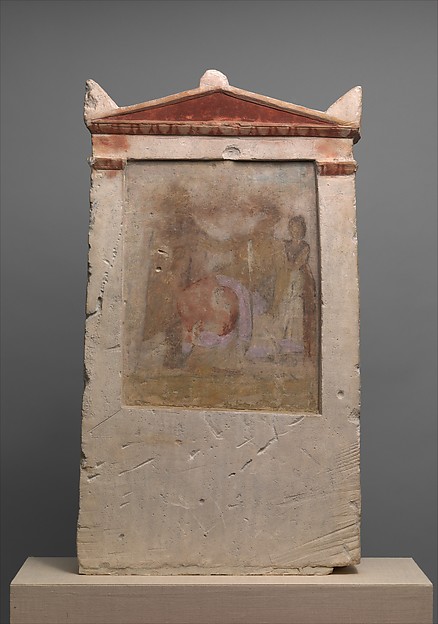 Painted limestone funerary stele with a woman in childbirth
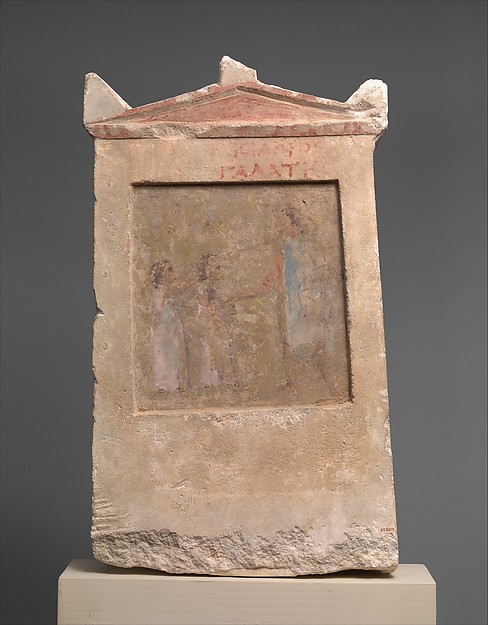 Painted limestone funerary slab with a soldier and two girls
 Byzantine — Table Rim Fragments
 Pakistan
Khyber Pakhtunkhwa Province, ancient region of Gand
Pakistan
Khyber Pakhtunkhwa Province, ancient region of Gand Ancient Greek — Fragment of a Grave Monument
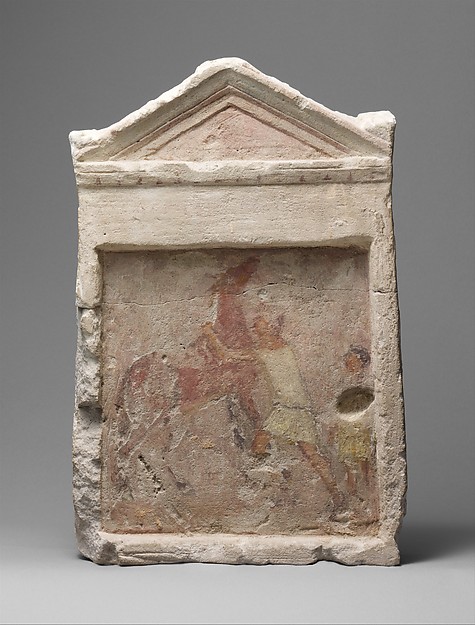 Painted limestone funerary slab with a man controlling a rea
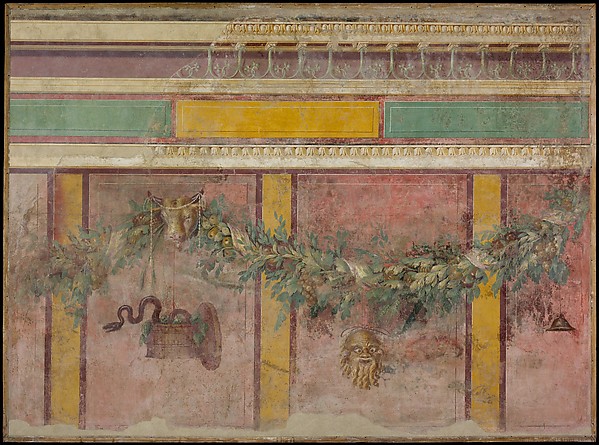 Wall painting from the west wall of Room L of the Villa of P
 Ancient Greek — Fragment of a Funerary Naiskos (Monument in